Davar Khoshnevisan – författare
Visar alla böcker från författaren Davar Khoshnevisan. Handla med fri frakt och snabb leverans.
8 produkter
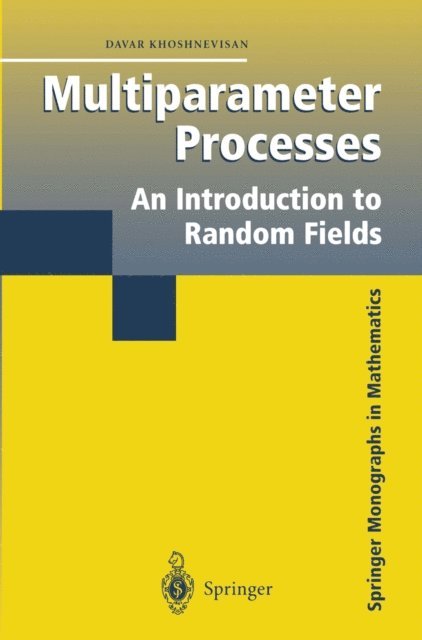
Multiparameter Processes
An Introduction to Random Fields
E-bok, 2006
2599 kr
Lägg i varukorg
Multi-parameter processes extend the existing one-parameter theory in an elegant way and have many applications to other fields in mathematics such as real analysis, functional analysis, group theory, and analytic number theory, to name a few. This book on the vast and rapidly developing subject of …
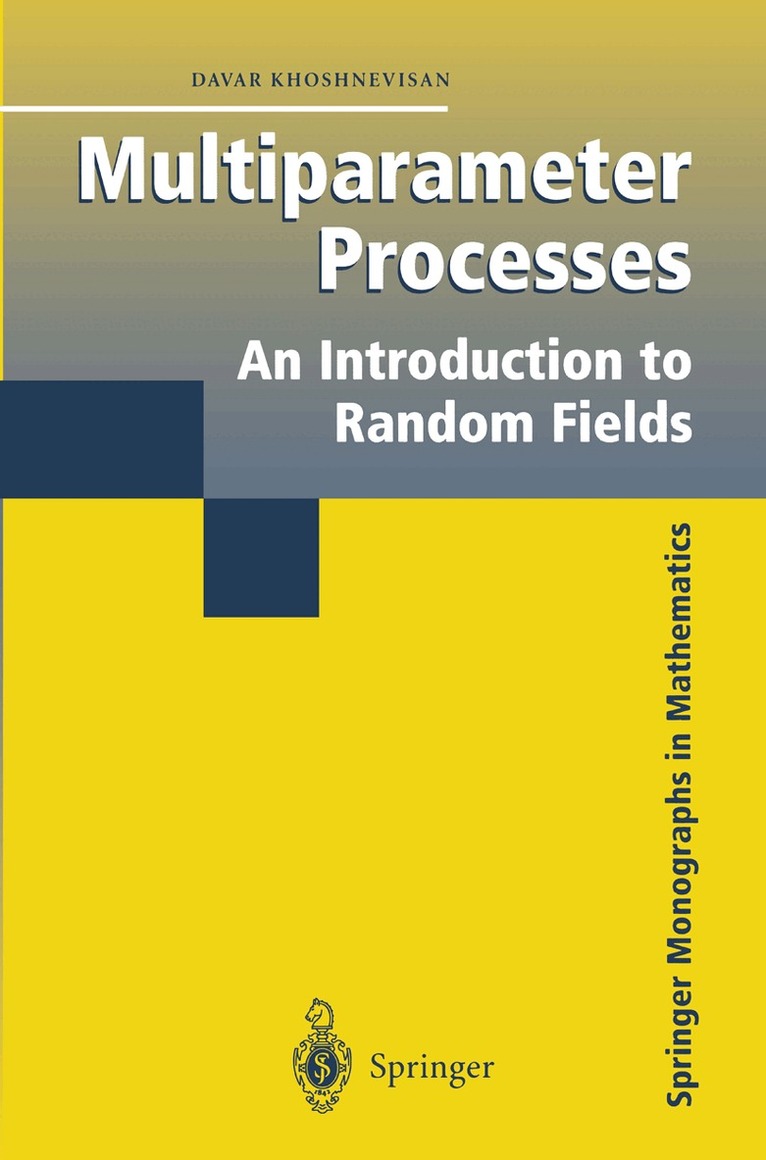
Multiparameter Processes
An Introduction to Random Fields
Inbunden, 2002
1970 kr
Lägg i varukorg
Multi-parameter processes extend the existing one-parameter theory in an elegant way and have many applications to other fields in mathematics such as real analysis, functional analysis, group theory, and analytic number theory, to name a few. This book on the vast and rapidly developing subject of …
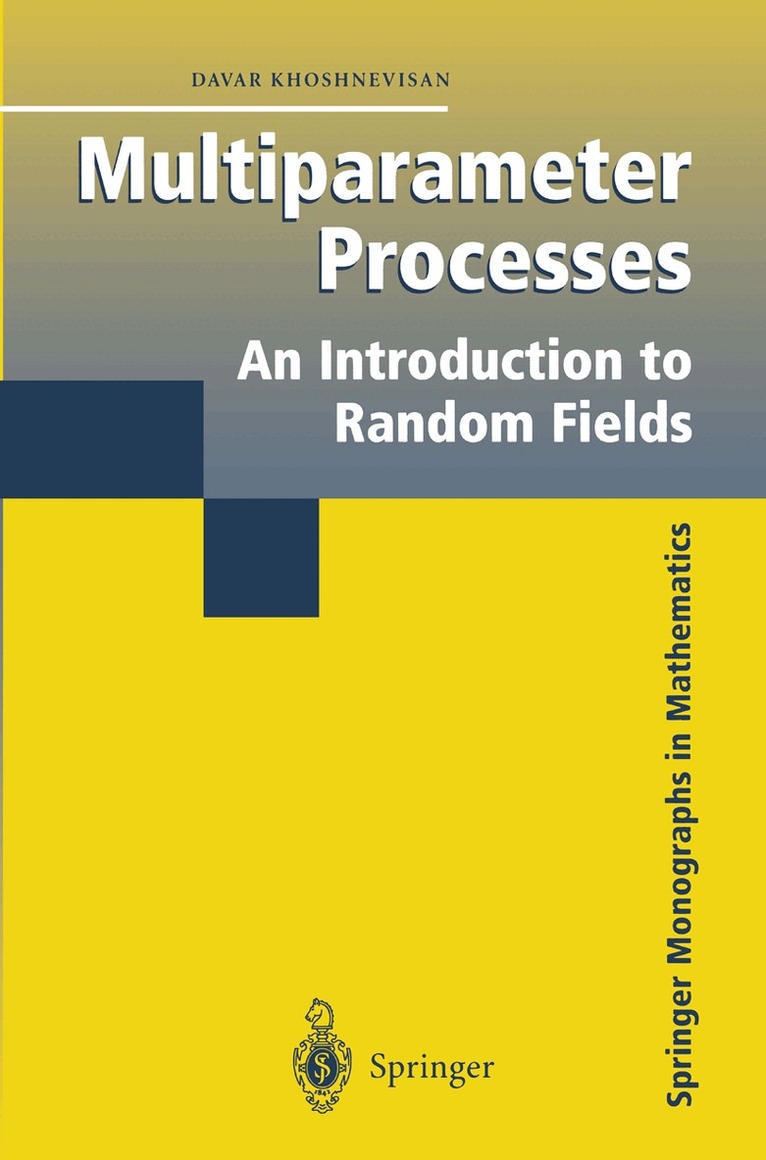
Multiparameter Processes
An Introduction to Random Fields
Häftad, 2011
1970 kr
Lägg i varukorg
Multi-parameter processes extend the existing one-parameter theory in an elegant way and have many applications to other fields in mathematics such as real analysis, functional analysis, group theory, and analytic number theory, to name a few. This book on the vast and rapidly developing subject of …
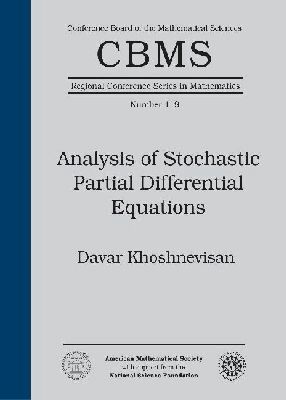
Analysis of Stochastic Partial Differential Equations
Häftad, 2014
512 kr
Lägg i varukorg
The general area of stochastic PDEs is interesting to mathematicians because it contains an enormous number of challenging open problems. There is also a great deal of interest in this topic because it has deep applications in disciplines that range from applied mathematics, statistical mechanics, …
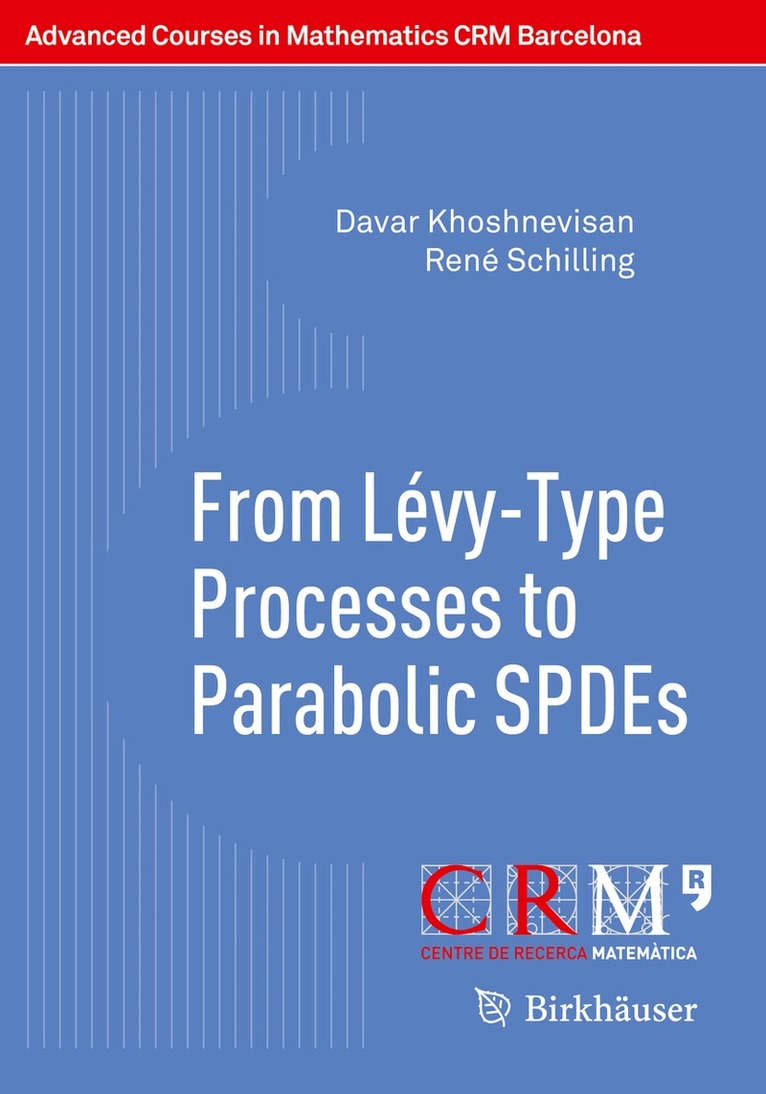
From Lévy-Type Processes to Parabolic SPDEs
Av Davar Khoshnevisan, René Schilling m. fl.
Häftad, 2017
334 kr
Lägg i varukorg
This volume presents the lecture notes from two courses given by Davar Khoshnevisan and René Schilling, respectively, at the second Barcelona Summer School on Stochastic Analysis.René Schilling’s notes are an expanded version of his course on Lévy and Lévy-type processes, the purpose of which is …
From Levy-Type Processes to Parabolic SPDEs
Av Rene Schilling, Davar Khoshnevisan m. fl.
E-bok, 2016
391 kr
Lägg i varukorg
This volume presents the lecture notes from two courses given by Davar Khoshnevisan and René Schilling, respectively, at the second Barcelona Summer School on Stochastic Analysis. René Schilling’s notes are an expanded version of his course on Lévy and Lévy-type processes, the purpose of which is …
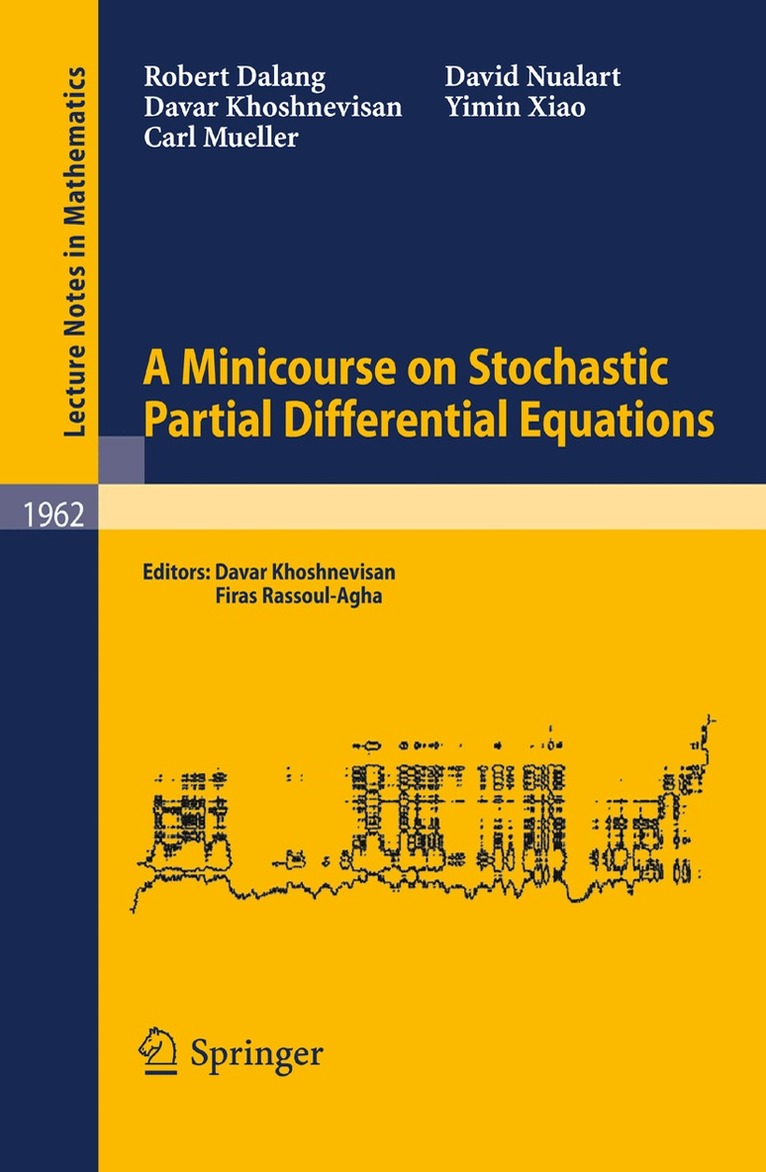
Minicourse on Stochastic Partial Differential Equations
Av Robert Dalang, Davar Khoshnevisan m. fl.
Häftad, 2008
443 kr
Lägg i varukorg
In May 2006, The University of Utah hosted an NSF-funded minicourse on stochastic partial differential equations. The goal of this minicourse was to introduce graduate students and recent Ph.D.s to various modern topics in stochastic PDEs, and to bring together several experts whose research is …
Minicourse on Stochastic Partial Differential Equations
Av Yimin Xiao, David Nualart m. fl.
E-bok, 2008
571 kr
Lägg i varukorg
In May 2006, The University of Utah hosted an NSF-funded minicourse on stochastic partial differential equations. The goal of this minicourse was to introduce graduate students and recent Ph.D.s to various modern topics in stochastic PDEs, and to bring together several experts whose research is …