David A. Mouat – författare
Visar alla böcker från författaren David A. Mouat. Handla med fri frakt och snabb leverans.
13 produkter
13 produkter
Inbunden, Engelska, 1996
1 091 kr
Skickas inom 10-15 vardagar
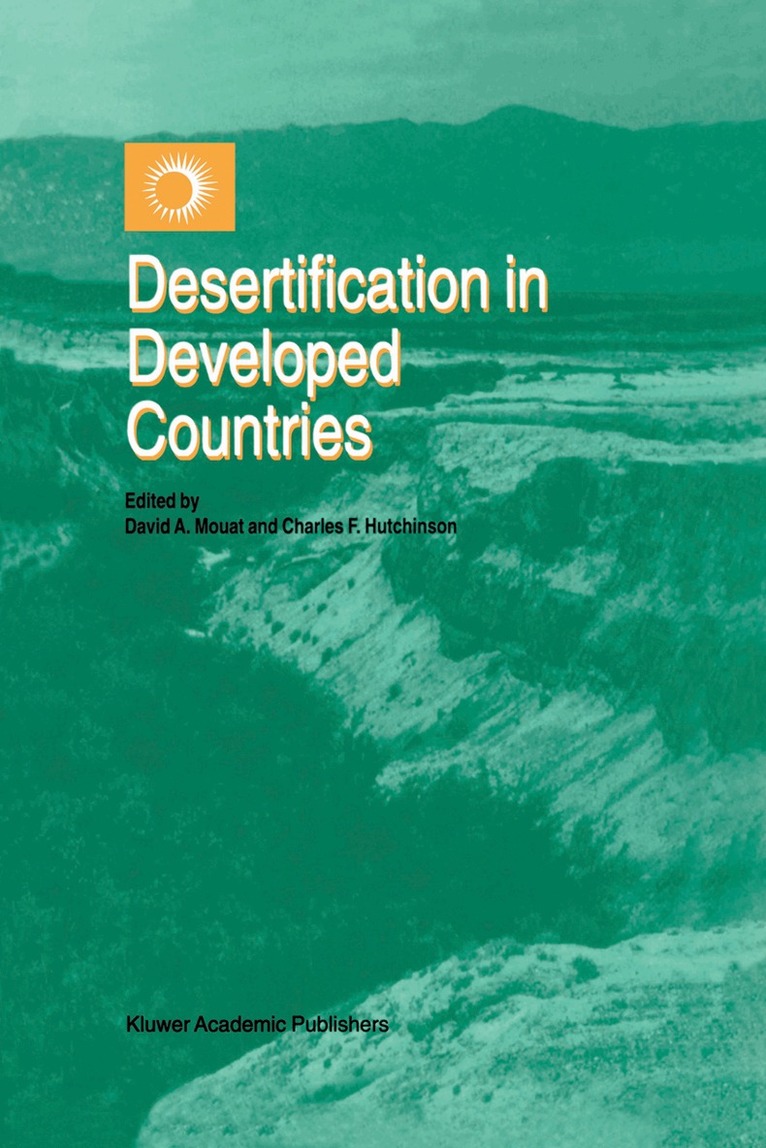
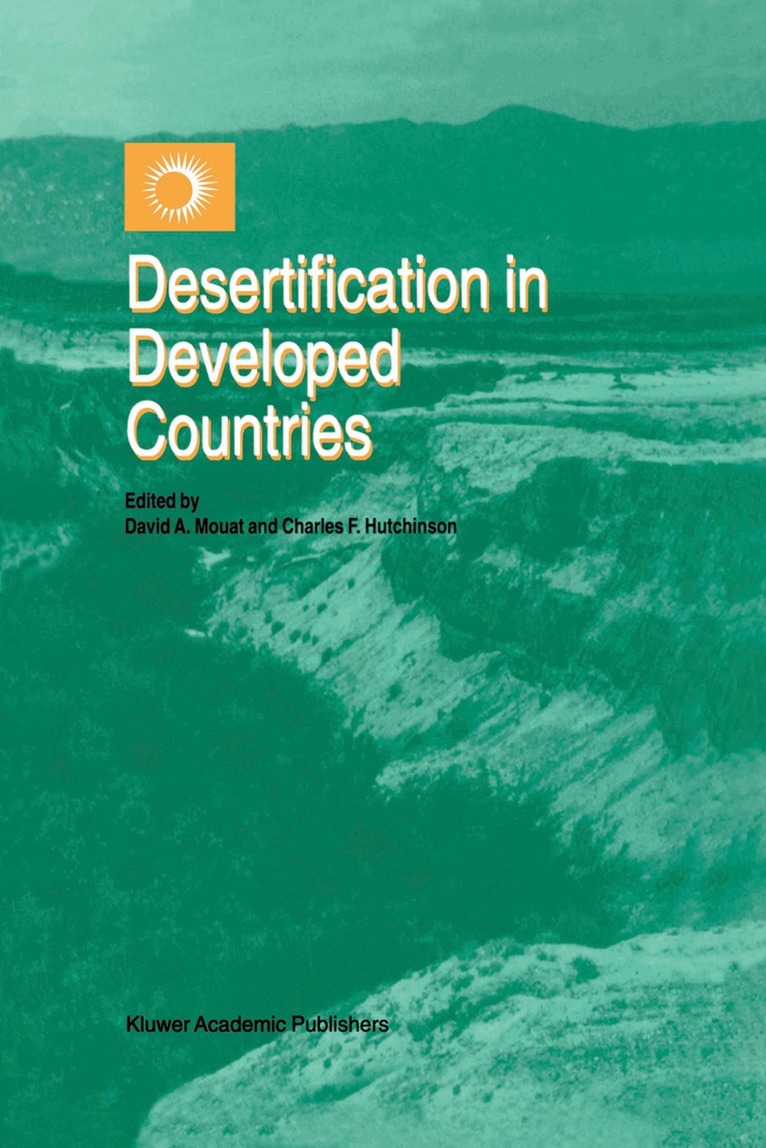
Desertification has re-emerged as a topic of global significance as a consequence of the United Nations conference on environment and development. When first addressed, attention was drawn to the compelling, spectacular images of sand dunes engulfing farmlands and parched cattle dying around wells. Research tended to focus on these events as unusual phenomena that involved the unfortunate collision of climate and "irrational" land use. Since then, the work of many researchers has shown us that desertification is a multifaceted problem that involves climatic, biogeochemical, political, and socio-economic processes that operate more or less continuously but at rates that vary in time and space. No attempts to arrest or reverse desertification that ignore this complexity are likely to succeed. This work describes the multiple dimensions of desertification as well as the novel approaches that have been used to address it within the economies of developed countries.
E-bok
Engelska, 20091 353 kr
Läs direkt efter köp
Any alteration of the natural processes occurring on a piece of land will have expected as well as unanticipated effects, and those effects have little regard for arbitrary human boundaries. Consequently, it is not enough for land managers to consider only how they might maintain the parcels for which they are responsible; they must also anticipate
Häftad, Engelska, 2017
1 176 kr
Skickas inom 10-15 vardagar
Any alteration of the natural processes occurring on a piece of land will have expected as well as unanticipated effects, and those effects have little regard for arbitrary human boundaries. Consequently, it is not enough for land managers to consider only how they might maintain the parcels for which they are responsible; they must also anticipate how changes to neighboring lands might impact their properties. Land Use Scenarios: Environmental Consequences of Development demonstrates how the success of local decision making is largely determined by factors that are difficult to control or forecast. It shows the importance of geographic vulnerability analysis, which takes into consideration possible scenarios about how, where, and when future patterns of land use might develop. It points to the consideration of critical uncertainties—those aspects of the future, that while difficult to predict, may have a profound impact on pending decisions. Detailing research supported by the United States Marine Corps, the text presents a study of the region of Marine Corps Base Camp Pendleton and Air Station Miramar in California. While this area remains largely un-built, but extensively used, ongoing regional growth is having dramatic impact on the land and must be factored into any decision making. This research— Provides a better understanding of the potential consequences of urban development on native flora and fauna Describes theoretical concerns prompted by scenario-based projections Gives an overview of the history of scenario-based techniques for urban and regional planning Helps define measures for maintaining undeveloped lands in rapidly developing areasIn publishing this research, the investigators provide information regarding issues of urban development and possible environmental consequences to stakeholders and jurisdictions whose actions may influence the future of the region. More broadly, the book will aid managers and stakeholders from other areas to engage spatial contingencies toward the goal of developing more resilient landscapes.
Inbunden, Engelska, 2005
3 258 kr
Skickas inom 10-15 vardagar
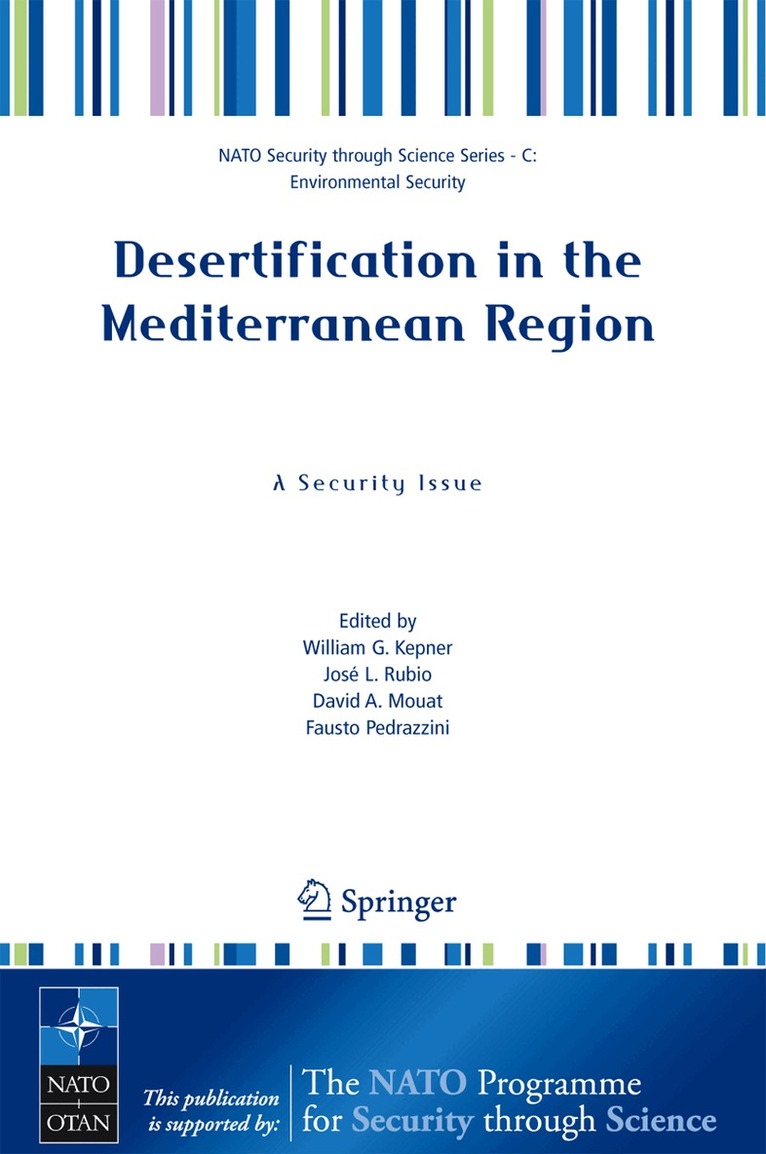
Desertification in the Mediterranean Region: a Security Issue 1 2 William G. Kepner & Jose Luis Rubio 1. U.S. Environmental Protection Agency, Office of Research and Development, P.O. Box 93478, Las Vegas, Nevada, USA, 89193-3478 (kepner.william@epa.gov) 2. Centro de Investigaciones sobre Desertificacion-CIDE, (CSIC, Universitat de Valencia, Generalitat Valenciana),Cami de la Marjal, s/n Apartado Oficial, 46470 Albal, Valencia, Spain (jose.l.rubio@uv.es) Security issues related to desertification in the Mediterranean Region were the subject of a special NATO workshop held on 2-5 December 2003 at the Museum of Sciences Principe Felipe in Valencia, Spain. This workshop was organized by the U.S. Environmental Protection Agency (Las Vegas, Nevada, USA), Centre for Desertification Research (Valencia, Spain), and the Desert Research Institute (Reno, Nevada, USA) on behalf of the NATO Science Committee and the NATO Committee on the Challenges of Modern Society (Public Diplomacy Division). Additionally, the European Society for Soil Conservation participated as a collaborating institution.Other participating institutions included the Spanish Ministry of Environment, Generalitat Valencia (Department of Territory and Housing), the Secretariat of the United Nations Convention to Combat Desertification and the City of Art & Sciences of Valencia which hosted the Meeting.
Häftad, Engelska, 2005
3 258 kr
Skickas inom 10-15 vardagar
Desertification in the Mediterranean Region: a Security Issue 1 2 William G. Kepner & Jose Luis Rubio 1. U.S. Environmental Protection Agency, Office of Research and Development, P.O. Box 93478, Las Vegas, Nevada, USA, 89193-3478 (kepner.william@epa.gov) 2. Centro de Investigaciones sobre Desertificacion-CIDE, (CSIC, Universitat de Valencia, Generalitat Valenciana),Cami de la Marjal, s/n Apartado Oficial, 46470 Albal, Valencia, Spain (jose.l.rubio@uv.es) Security issues related to desertification in the Mediterranean Region were the subject of a special NATO workshop held on 2-5 December 2003 at the Museum of Sciences Principe Felipe in Valencia, Spain. This workshop was organized by the U.S. Environmental Protection Agency (Las Vegas, Nevada, USA), Centre for Desertification Research (Valencia, Spain), and the Desert Research Institute (Reno, Nevada, USA) on behalf of the NATO Science Committee and the NATO Committee on the Challenges of Modern Society (Public Diplomacy Division). Additionally, the European Society for Soil Conservation participated as a collaborating institution.Other participating institutions included the Spanish Ministry of Environment, Generalitat Valencia (Department of Territory and Housing), the Secretariat of the United Nations Convention to Combat Desertification and the City of Art & Sciences of Valencia which hosted the Meeting.
E-bok
PDF, Engelska, 20063 809 kr
Läs direkt efter köp
Inbunden, Engelska, 2008
2 174 kr
Skickas inom 10-15 vardagar
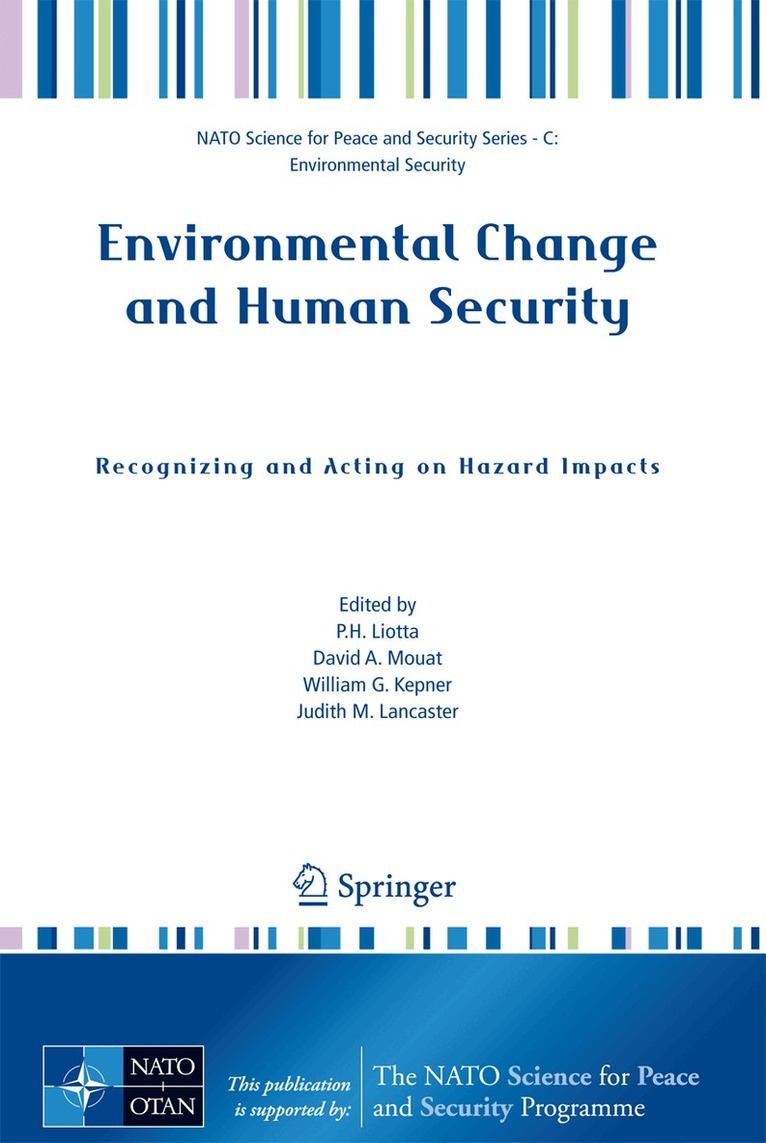
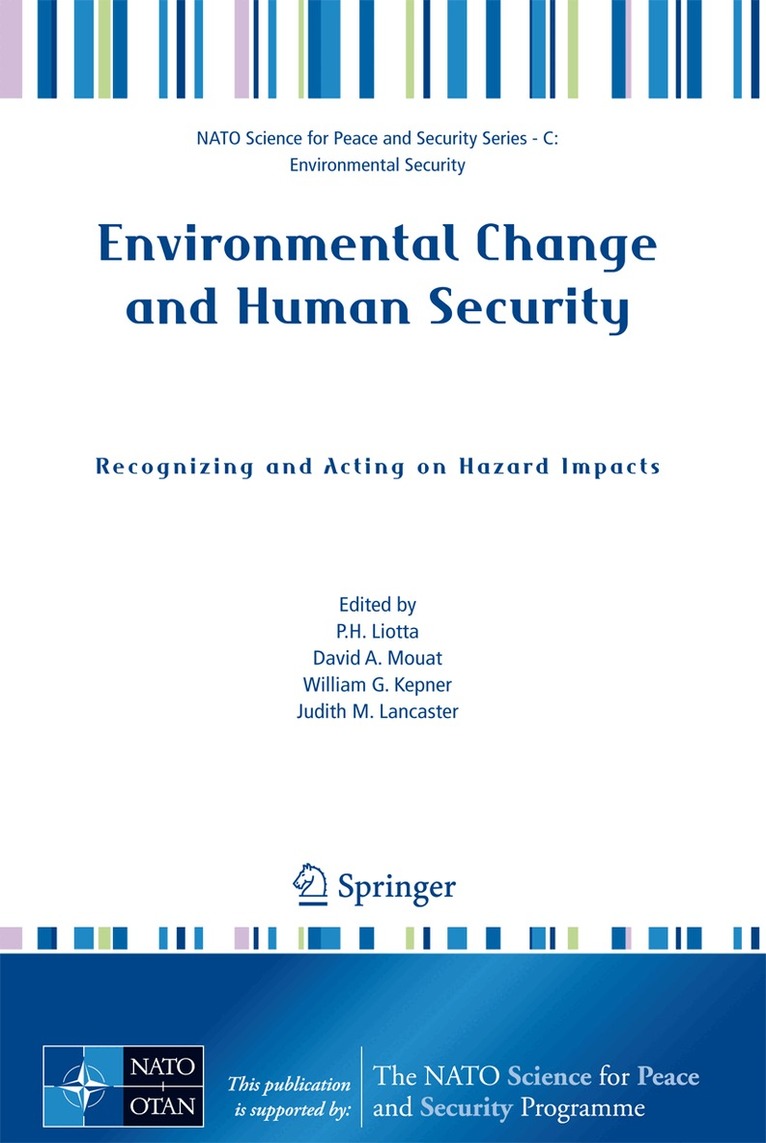
Environmental and Human Security: Then and Now 1 2 ALAN D. HECHT AND P. H. LIOTTA * 1 U. S. Environmental Protection Agency Office of Research and Development 2 Pell Center for International Relations and Public Policy Salve Regina University 1. Nontraditional Threats to Security The events of September 11, 2001 have sharpened the debate over the meaning of being secure. Before 9/11 there were warnings in all parts of the world that social and environmental changes were occurring. While there was prosperity in North America and Western Europe, there was also increasing recognition that local and global effects of ecosystem degradation posed a serious threat. Trekking from Cairo to Cape Town thirty years after living in Africa as a young teacher, for example, travel writer Paul Theroux concluded that development in sub-Saharan Africa had failed to improve the quality of life for 300 million people: “Africa is materially more decrepit than it was when I first knew it—hungrier, poorer, less educated, more pessimistic, more corrupt, and you can’t tell the politicians from the witch-doctors” (2002). While scholars and historians will debate the causes of 9/11 for some time, one message is clear: An often dizzying array of nontraditional threats and complex vulnerabilities define security today. We must understand them, and deal with them, or suffer the consequences. Environmental security has always required att- tion to nontraditional threats linked closely with social and economic well-being.
Häftad, Engelska, 2008
2 174 kr
Skickas inom 10-15 vardagar
Environmental and Human Security: Then and Now 1 2 ALAN D. HECHT AND P. H. LIOTTA * 1 U. S. Environmental Protection Agency Office of Research and Development 2 Pell Center for International Relations and Public Policy Salve Regina University 1. Nontraditional Threats to Security The events of September 11, 2001 have sharpened the debate over the meaning of being secure. Before 9/11 there were warnings in all parts of the world that social and environmental changes were occurring. While there was prosperity in North America and Western Europe, there was also increasing recognition that local and global effects of ecosystem degradation posed a serious threat. Trekking from Cairo to Cape Town thirty years after living in Africa as a young teacher, for example, travel writer Paul Theroux concluded that development in sub-Saharan Africa had failed to improve the quality of life for 300 million people: “Africa is materially more decrepit than it was when I first knew it—hungrier, poorer, less educated, more pessimistic, more corrupt, and you can’t tell the politicians from the witch-doctors” (2002). While scholars and historians will debate the causes of 9/11 for some time, one message is clear: An often dizzying array of nontraditional threats and complex vulnerabilities define security today. We must understand them, and deal with them, or suffer the consequences. Environmental security has always required att- tion to nontraditional threats linked closely with social and economic well-being.
E-bok
PDF, Engelska, 20082 741 kr
Läs direkt efter köp
Environmental and Human Security: Then and Now 1 2 ALAN D. HECHT AND P. H. LIOTTA * 1 U. S. Environmental Protection Agency Office of Research and Development 2 Pell Center for International Relations and Public Policy Salve Regina University 1. Nontraditional Threats to Security The events of September 11, 2001 have sharpened the debate over the meaning of being secure. Before 9/11 there were warnings in all parts of the world that social and environmental changes were occurring. While there was prosperity in North America and Western Europe, there was also increasing recognition that local and global effects of ecosystem degradation posed a serious threat. Trekking from Cairo to Cape Town thirty years after living in Africa as a young teacher, for example, travel writer Paul Theroux concluded that development in sub-Saharan Africa had failed to improve the quality of life for 300 million people: “Africa is materially more decrepit than it was when I first knew it—hungrier, poorer, less educated, more pessimistic, more corrupt, and you can’t tell the politicians from the witch-doctors” (2002). While scholars and historians will debate the causes of 9/11 for some time, one message is clear: An often dizzying array of nontraditional threats and complex vulnerabilities define security today. We must understand them, and deal with them, or suffer the consequences. Environmental security has always required att- tion to nontraditional threats linked closely with social and economic well-being.
Inbunden, Engelska, 2009
3 144 kr
Skickas inom 5-8 vardagar
Any alteration of the natural processes occurring on a piece of land will have expected as well as unanticipated effects, and those effects have little regard for arbitrary human boundaries. Consequently, it is not enough for land managers to consider only how they might maintain the parcels for which they are responsible; they must also anticipate how changes to neighboring lands might impact their properties. Land Use Scenarios: Environmental Consequences of Development demonstrates how the success of local decision making is largely determined by factors that are difficult to control or forecast. It shows the importance of geographic vulnerability analysis, which takes into consideration possible scenarios about how, where, and when future patterns of land use might develop. It points to the consideration of critical uncertainties—those aspects of the future, that while difficult to predict, may have a profound impact on pending decisions. Detailing research supported by the United States Marine Corps, the text presents a study of the region of Marine Corps Base Camp Pendleton and Air Station Miramar in California. While this area remains largely un-built, but extensively used, ongoing regional growth is having dramatic impact on the land and must be factored into any decision making. This research— Provides a better understanding of the potential consequences of urban development on native flora and fauna Describes theoretical concerns prompted by scenario-based projections Gives an overview of the history of scenario-based techniques for urban and regional planning Helps define measures for maintaining undeveloped lands in rapidly developing areasIn publishing this research, the investigators provide information regarding issues of urban development and possible environmental consequences to stakeholders and jurisdictions whose actions may influence the future of the region. More broadly, the book will aid managers and stakeholders from other areas to engage spatial contingencies toward the goal of developing more resilient landscapes.
E-bok
PDF, Engelska, 20091 353 kr
Läs direkt efter köp
Any alteration of the natural processes occurring on a piece of land will have expected as well as unanticipated effects, and those effects have little regard for arbitrary human boundaries. Consequently, it is not enough for land managers to consider only how they might maintain the parcels for which they are responsible; they must also anticipate
E-bok
PDF, Engelska, 20121 367 kr
Läs direkt efter köp
Desertification has re-emerged as a topic of global significance as a consequence of the United Nations Conference on Environment and Development. When first addressed over a generation ago, attention was drawn to the compelling, spectacular images of sand dunes engulfing farmlands and parched cattle dying around wells. Research tended to focus on these events as unusual phenomena that involved the unfortunate collision of climate and `irrational'' land use. Since then, the work of many researchers has shown us that desertification is a multifaceted problem that involves climatic, biogeochemical, political, and socio-economic processes that operate more or less continuously but at rates that vary in time and space. No attempts to arrest or reverse desertification that ignore this complexity are likely to succeed. In a single volume, `Desertification in Developed Countries'' describes the multiple dimensions of desertification as well as the novel approaches that have been used to address it within the economies of developed countries. This is done from the perspectives and experiences of the numerous authors who have contributed to this book.
Häftad, Engelska, 2011
1 091 kr
Skickas inom 10-15 vardagar
Desertification has re-emerged as a topic of global significance as a consequence of the United Nations Conference on Environment and Development. When first addressed over a generation ago, attention was drawn to the compelling, spectacular images of sand dunes engulfing farmlands and parched cattle dying around wells. Research tended to focus on these events as unusual phenomena that involved the unfortunate collision of climate and `irrational' land use. Since then, the work of many researchers has shown us that desertification is a multifaceted problem that involves climatic, biogeochemical, political, and socio-economic processes that operate more or less continuously but at rates that vary in time and space. No attempts to arrest or reverse desertification that ignore this complexity are likely to succeed. In a single volume, `Desertification in Developed Countries' describes the multiple dimensions of desertification as well as the novel approaches that have been used to address it within the economies of developed countries. This is done from the perspectives and experiences of the numerous authors who have contributed to this book.