David A. Wharton – författare
Visar alla böcker från författaren David A. Wharton. Handla med fri frakt och snabb leverans.
3 produkter
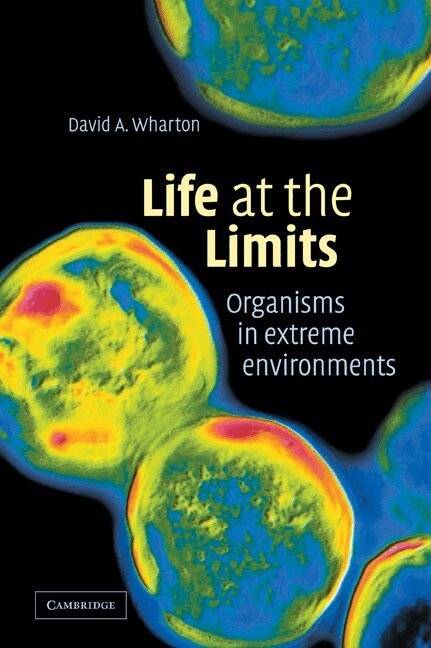
Life at the Limits
Organisms in Extreme Environments
Häftad, 2007
716 kr
Lägg i varukorg
We are fascinated by the seemingly impossible places in which organisms can live. There are frogs that freeze solid, worms that dry out and bacteria that survive temperatures over 100˚C. What seems extreme to us is, however, not extreme to these organisms. In this captivating account, the reader is …
Functional Biology of Nematodes
E-bok, 2012
723 kr
Lägg i varukorg
General Editor: Peter Calow, Department of Zoology, University of Sheffield, England The main aim of this series will be to illustrate and to explain the way organisms ''make a living'' in nature. At the heart of this - their functional biology - is the way organisms acquire and then make use of …
Functional Biology of Nematodes
Häftad, 2012
540 kr
Lägg i varukorg
General Editor: Peter Calow, Department of Zoology, University of Sheffield, England The main aim of this series will be to illustrate and to explain the way organisms 'make a living' in nature. At the heart of this - their functional biology - is the way organisms acquire and then make use of …