David A. White - Böcker
Visar alla böcker från författaren David A. White. Handla med fri frakt och snabb leverans.
10 produkter
10 produkter
2 181 kr
Skickas inom 10-15 vardagar
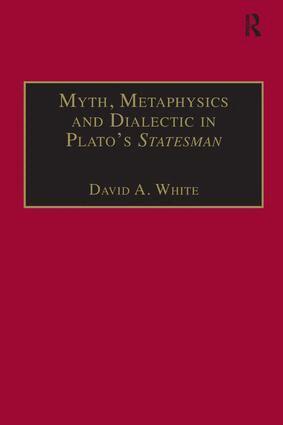
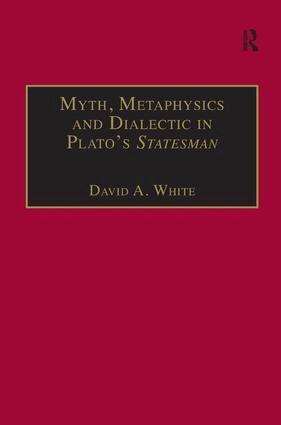
Plato's dialogue The Statesman has often been found structurally puzzling by commentators because of its apparent diffuseness and disjointed transitions. In this book David White interprets the dialogue in ways which account for this problematic structure, and which also connect the primary themes of the dialogue with two subsequent dialogues The Philebus and The Laws. The central interpretive focus of the book is the extended myth, sometimes called the 'myth of the reversed cosmos'. As a result of this interpretative approach, White argues that The Statesman can be recognized (a) as both internally coherent and also profound in implication-the myth is crucial in both regards - and (b) as integrally related to the concerns of Plato's later dialogues.

1 057 kr
Tillfälligt slut
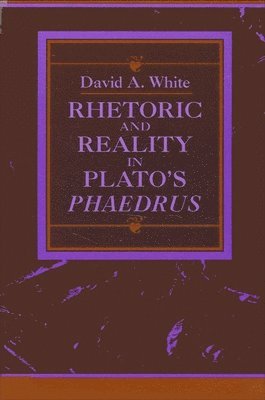
The Phaedrus is well-known for the splendid mythical panorama Socrates develops in his second speech, and for its graphic descriptions of erotic behavior. This book shows how the details of the myth and the accounts of interaction between lovers are based on a carefully articulated metaphysical structure. It follows the dialogue as narrated, showing how passages that may not appear relevant to metaphysics have been deployed to heighten the vision of reality that Socrates develops in his second speech and concludes with an Epilogue in which the metaphysical principles adumbrated in the dialogue are ordered and briefly developed. This Epilogue helps illustrate the continuity between the Phaedrus and subsequent dialogues, such as the Parmenides, Sophist, Statesman, and Philebus, in which methodological and metaphysical concerns are dominant for Plato. As a result, new connections emerge between the metaphysical domain in Plato's thought and the more visible and vibrant areas of the psychology of eros and practical rhetoric.
402 kr
Tillfälligt slut
The Phaedrus is well-known for the splendid mythical panorama Socrates develops in his second speech, and for its graphic descriptions of erotic behavior. This book shows how the details of the myth and the accounts of interaction between lovers are based on a carefully articulated metaphysical structure. It follows the dialogue as narrated, showing how passages that may not appear relevant to metaphysics have been deployed to heighten the vision of reality that Socrates develops in his second speech and concludes with an Epilogue in which the metaphysical principles adumbrated in the dialogue are ordered and briefly developed. This Epilogue helps illustrate the continuity between the Phaedrus and subsequent dialogues, such as the Parmenides, Sophist, Statesman, and Philebus, in which methodological and metaphysical concerns are dominant for Plato. As a result, new connections emerge between the metaphysical domain in Plato's thought and the more visible and vibrant areas of the psychology of eros and practical rhetoric.
218 kr
Skickas inom 3-6 vardagar
202 kr
Skickas inom 3-6 vardagar
256 kr
Skickas inom 3-6 vardagar
768 kr
Skickas inom 10-15 vardagar
Plato's dialogue The Statesman has often been found structurally puzzling by commentators because of its apparent diffuseness and disjointed transitions. In this book David White interprets the dialogue in ways which account for this problematic structure, and which also connect the primary themes of the dialogue with two subsequent dialogues The Philebus and The Laws. The central interpretive focus of the book is the extended myth, sometimes called the 'myth of the reversed cosmos'. As a result of this interpretative approach, White argues that The Statesman can be recognized (a) as both internally coherent and also profound in implication-the myth is crucial in both regards - and (b) as integrally related to the concerns of Plato's later dialogues.

350 kr
Skickas inom 10-15 vardagar
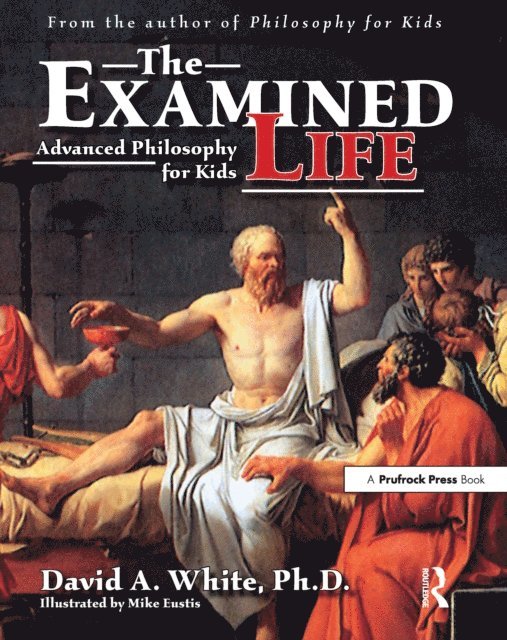
In this book, the follow-up to the best-sellingPhilosophy for Kids, Dr. David White delves deeper into the philosophical questions kids (and adults) care about deeply. Through vibrant discussions and debate, the book offers ways teachers can help students grapple with age-old questions about the nature of friendship (Aristotle), time (Augustine), knowledge (Plato), existence of God (Aquinas), perception (Berkeley), freedom and society (Rousseau), and many more.The book is divided into three sections. Part 1 presents primary source readings that will encourage discussion and debate; Part 2 offers easy-to-use activities that focus on the direct application of philosophy to areas such as critical thinking, language, and the arts; and Part 3 offers a unique perspective just for teachers—a philosophical look at how teachers can become more reflective philosophers themselves. This is an excellent teachers' handbook for using advanced philosophy in the classroom.Grades 7-12
1 142 kr
Skickas inom 10-15 vardagar
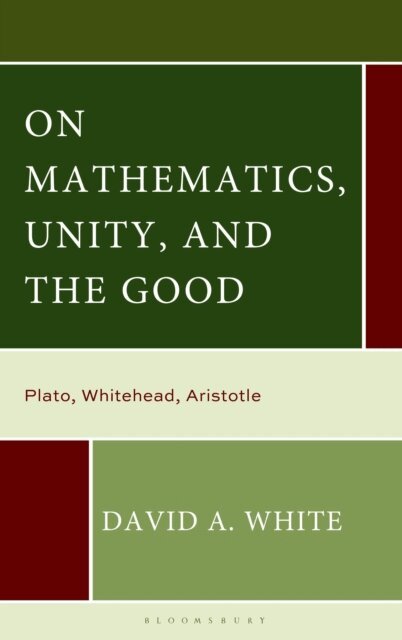
This book demonstrates that mathematical positions are based on metaphysical elements, which in turn provide schemata for evaluating and expanding metaphysical positions. The argument is grounded in the Platonic notion of the good, Whitehead’s late essay on mathematics and the good, and Aristotle’s sustained criticisms of Platonic philosophy of mathematics. Bridging ancient and modern thought, from Phaedo to the modern notion of Abelian groups in mathematics, it demonstrates that both mathematics and metaphysics incorporate contrast-rich experience and context-independent formalism and—at their best—can be partners in helping to discern fundamental features of the fullness of reality. David A. White explores how developments in mathematics and mathematical understanding can indicate, illustrate, and contribute to assessing metaphysical considerations when accounts of reality are approached from the standpoint of an articulated representation of the good.
2 236 kr
Skickas inom 5-8 vardagar
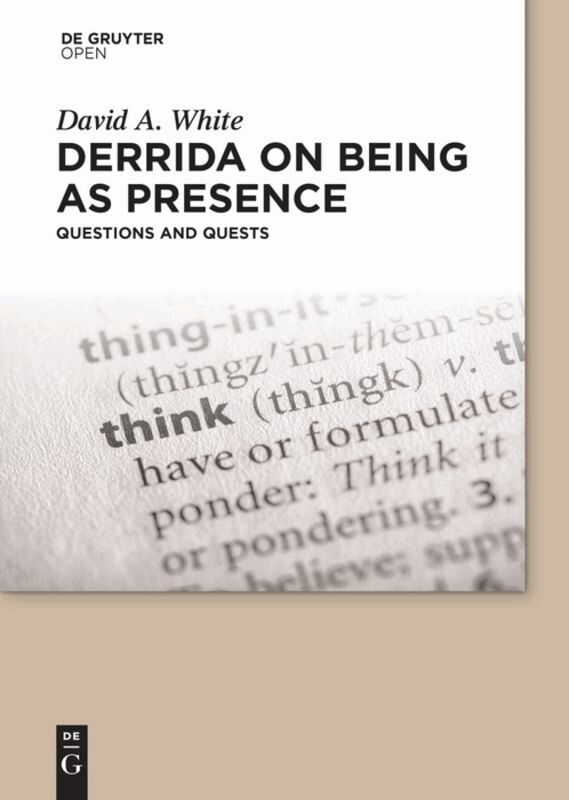
Jacques Derrida’s extensive early writings devoted considerable attention to “being as presence,” the reality underlying the history of metaphysics. In Derrida on Being as Presence: Questions and Quests, David A. White develops the intricate conceptual structure of this notion by close exegetical readings drawn from these writings. White discusses cardinal concepts in Derrida’s revamping of theoretical considerations pertaining to language–signification, context, negation, iterability–as these considerations depend on the structure of being as presence and also as they ground “deconstructive” reading. White’s appraisal raises questions invoking a range of problems. He deploys these questions in conjunction with thematically related quests that arise given Derrida’s conviction that the history of metaphysics, as variations on being as presence, has concealed and skewed vital elements of reality. White inflects this critical apparatus concerning being as presence with texts drawn from that history–e.g., by Plato, Aristotle, Bacon, Hume, Kant, Whitehead. The essay concludes with a speculative ensemble of provisional categories, or zones of specificity. Implementing these categories will ground the possibility that philosophy in general and metaphysics in particular can be pursued in ways which acknowledge the relevance of Derrida’s thought when integrated with the philosophical enterprise as traditionally understood.