David Alan Johnson - Böcker
Visar alla böcker från författaren David Alan Johnson. Handla med fri frakt och snabb leverans.
9 produkter
9 produkter
1 031 kr
Skickas inom 3-6 vardagar
"Founding the Far West" is an ambitious and vividly written narrative of the early years of statehood and statesmanship in three pivotal western territories. Johnson offers a model example of a new approach to history that is transforming our ideas of how America moved west, one that breaks the mold of 'regional' and 'frontier' histories to show why Western history is also American history. Johnson explores the conquest, immigration, and settlement of the first three states of the western region. He also investigates the building of local political customs, habits, and institutions, as well as the socioeconomic development of the region. While momentous changes marked the Far West in the later nineteenth century, distinctive local political cultures persisted. These were a legacy of the pre-Civil War conquest and settlement of the regions but no less a reflection of the struggles for political definition that took place during constitutional conventions in each of the three states. At the center of the book are the men who wrote the original constitutions of these states and shaped distinctive political cultures out of the common materials of antebellum American culture."Founding the Far West" maintains a focus on the individual experience of the constitution writers - on their motives and ambitions as pioneers, their ideological intentions as authors of constitutions, and the successes and failures, after statehood, of their attempts to give meaning to the constitutions they had produced.
Lincoln's Road to War
A Day-by-Day Account of the First 60 Days of Abraham Lincoln's Presidency
Inbunden, Engelska, 2025
383 kr
Skickas inom 3-6 vardagar
299 kr
Skickas inom 5-8 vardagar
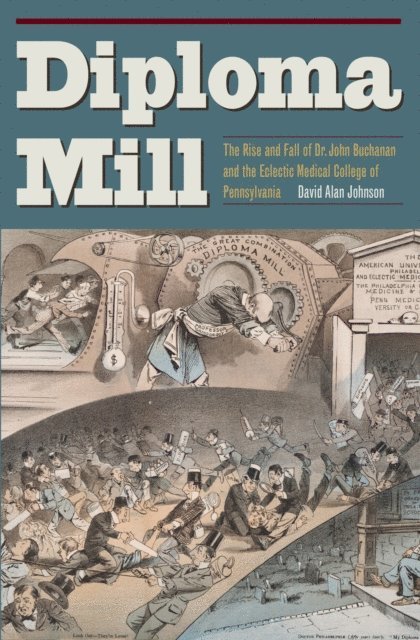
Diploma Mill
The Rise and Fall of Dr. John Buchanan and TheEclectic Medical College of Pennsylvania
Inbunden, Engelska, 2018
570 kr
Skickas inom 3-6 vardagar
The absence of medical licensing laws in most states during the years following the American Civil War made it possible for unscrupulous individuals to exploit the weak oversight and unregulated state issuance of school charters. Diploma Mill traces the rise and spectacular fall of Dr. John Buchanan—educator, author, and criminal—and the Eclectic Medical College of Pennsylvania (EMC) over the course of its three decades’ existence. Founded as a legitimate educational institution, the EMC aspired to carry the banner of eclectic medicine in the eastern United States.Enter Dr. Buchanan, who during his tenure at the EMC assumed control of this small Philadelphia school and issued thousands of dubiously earned diplomas. Buchanan’s political connections shielded his activities at the school for more than a decade. His ambitions for the EMC carried both him and the school into a criminal enterprise, representing the largest and most notorious medical diploma mill in 19th-century America. Despite multiple arrests on various charges during the mid-1870s, Buchanan’s operations at the EMC continued unchecked until an elaborate sting operation in 1880 secured evidence for federal and state charges against him. Hoping to relocate his operations, Buchanan faked his own death and fled the country.The story of John Buchanan and the EMC contains unusually dramatic elements more typical of a novel than a work of history but does not undermine its importance. His activities ultimately resulted in stronger medical licensing laws and cast a shadow upon the minority of physicians practicing eclectic medicine. By relating the history of a criminal enterprise arising within the confines of a legitimate medical school, Diploma Mill represents a unique contribution in the literature of 19th-century American medicine.
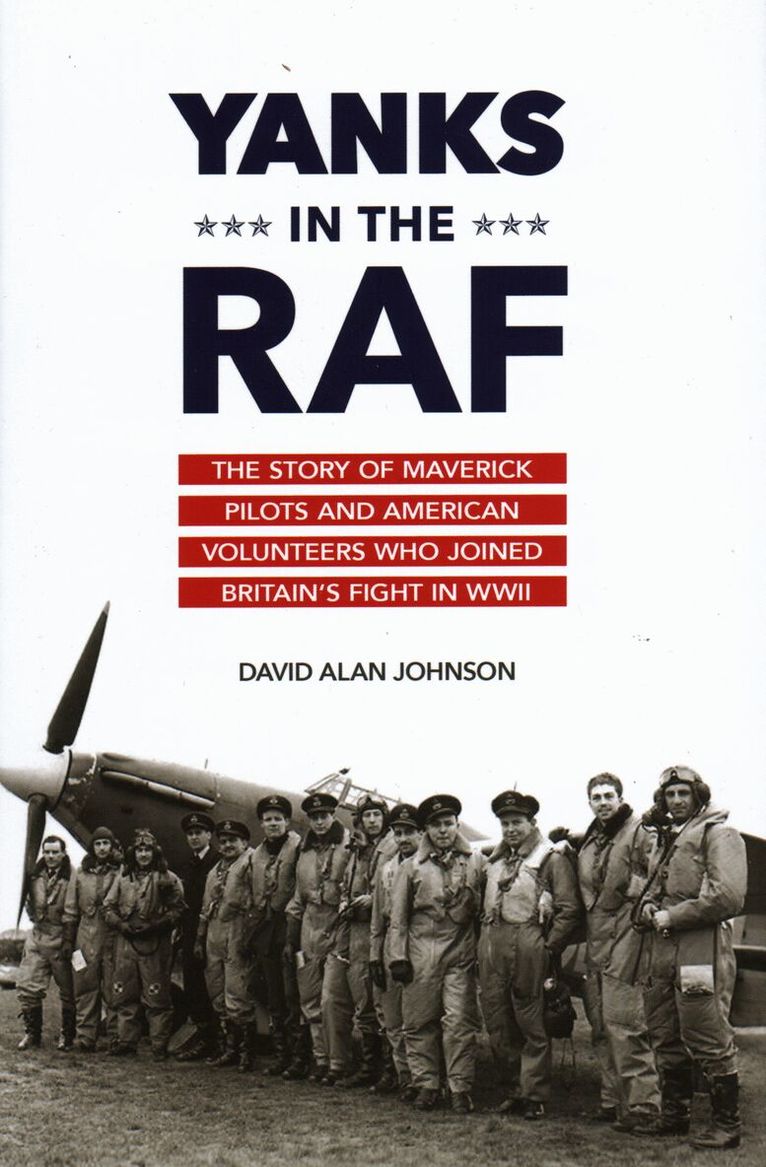
Yanks in the RAF
The Story of Maverick Pilots and American Volunteers Who Joined Britain's Fight in WWII
Inbunden, Engelska, 2015
318 kr
Skickas inom 5-8 vardagar
This is the story of American volunteer pilots who risked their lives in defense of Britain during the earliest days of World War II-more than a year before Pearl Harbor, whenthe United States first became embroiled in the global conflict. Based on interviews, diaries, personal documents, and research in British, American, and German archives, the author has created a colorful portrait of this small group who were our nation's first combatants in World War II.As the author's research shows, their motives were various: some were idealistic; others were simply restless and looking for adventure. And though the British air force needed pilots, cultural conflicts between the raw American recruits and their reserved British commanders soon became evident. Prejudices on both sides and lack of communication had to be overcome.Eventually, the American pilots were assembled into three squadrons known as the Eagle squadrons. They saw action and suffered casualties in both England and France, notably in the attack on Dieppe. By September 1942, after America had entered the war, these now experienced pilots were transferred to the US air force, bringing their expertise and their British Spitfires with them.As much social as military history, Yanks in the RAF sheds new light on a little-known chapter of World War II and the earliest days of the sometimes fractious British-American alliance.
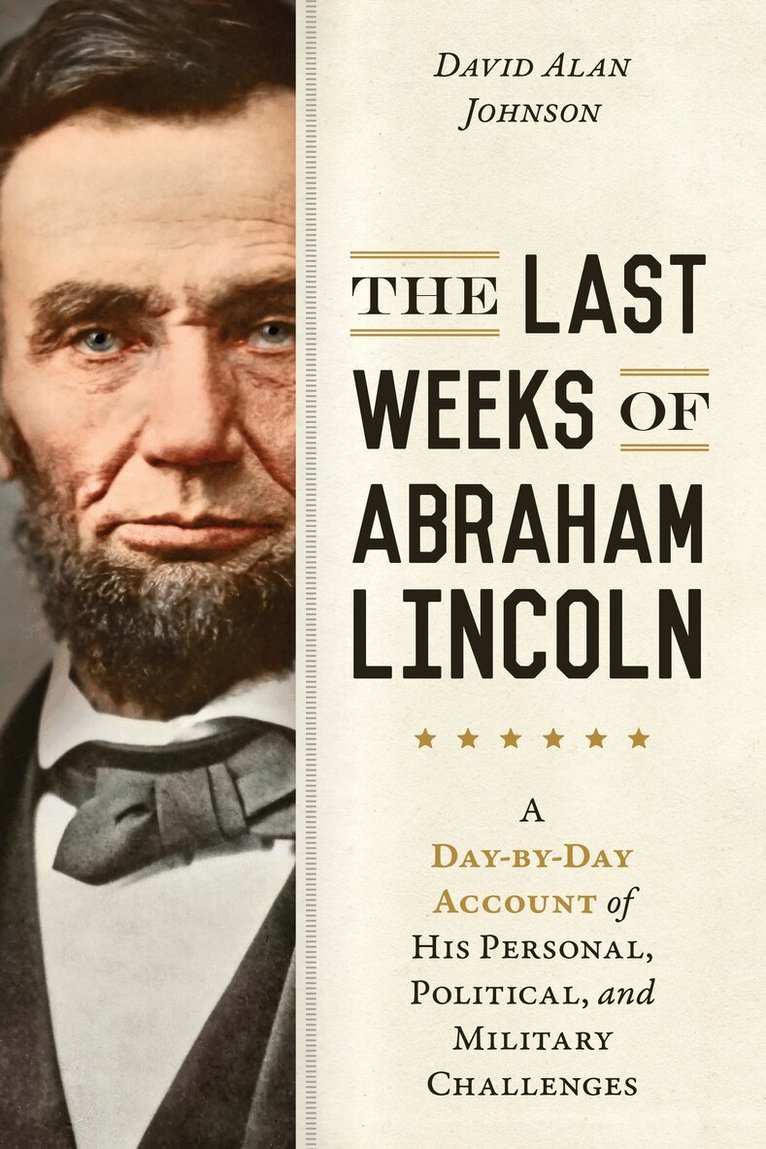
Last Weeks of Abraham Lincoln
A Day-by-Day Account of His Personal, Political, and Military Challenges
Inbunden, Engelska, 2018
290 kr
Tillfälligt slut
This day-by-day account of Abraham Lincoln's last six weeks of life covers a period of extraordinary events, not only for the president himself but for the fate of the nation.From March 4 to April 15, 1865--a momentous time for the nation--Abraham Lincoln delivered his second inaugural address, supervised climatic battles leading up to the end of the Civil War, learned that Robert E. Lee had surrendered to Ulysses S. Grant at Appomattox, and finally was killed by assassin John Wilkes Booth at Ford's Theatre. Weaving an arresting narrative around the historical facts, historian David Alan Johnson brings to life the president's daily routine, as he guided the country through one of the most tumultuous periods of American history.The reader follows the president as he greets visitors at the inaugural ball, asks abolitionist Frederick Douglass's opinion of the inaugural address, confers with Generals Grant and Sherman on the final stages of the war, visits a field hospital for wounded outside City Point, Virginia, and attempts to calm his high-strung wife Mary, who appears on the verge of nervous collapse. We read excerpts from press reviews of Lincoln's second inaugural address, learn that Mrs. Lincoln's ball gown created a sensation, and are given eye-witness accounts of the celebrations and drunken revelry that broke out in Washington when the end of the war was announced.This engagingly written narrative history of a short but extremely important span of days vividly depicts the actions and thoughts of one of our greatest presidents during a time of national emergency.
254 kr
Skickas inom 5-8 vardagar
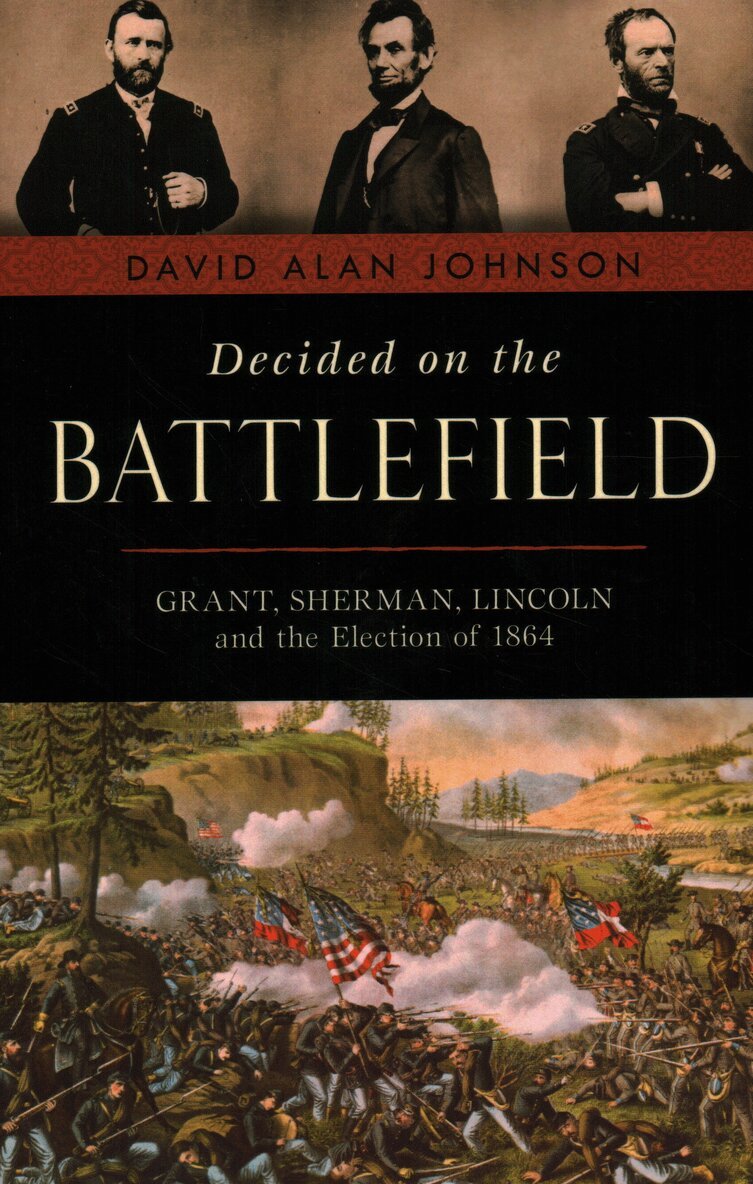
In the summer of 1864, the American Civil War had been dragging on for over three years with no end in sight. Things had not gone well for the Union, and the public blamed the president for the stalemate against the Confederacy and for the appalling numbers of killed and wounded. Lincoln was thoroughly convinced that without a favorable change in the trajectory of the war he would have no chance of winning a second term against former Union general George B. McClellan, whom he had previously dismissed as commander of the Army of the Potomac. This vivid, engrossing account of a critical year in American history examines the events of 1864, when the course of American history might have taken a radically different direction. It's no exaggeration to say that if McClellan had won the election, everything would have been different-McClellan and the Democrats planned to end the war immediately, grant the South its independence, and let the Confederacy keep its slaves. What were the crucial factors that in the end swung public sentiment in favor of Lincoln? Johnson focuses on the battlefield campaigns of Generals Ulysses S. Grant and William Tecumseh Sherman. While Grant was waging a war of attrition with superior manpower against the quick and elusive rebel forces under General Robert E. Lee, Sherman was fighting a protracted battle in Georgia against Confederate general Joseph E. Johnston. But then the president of the Confederacy, Jefferson Davis, made a tactical error that would change the whole course of the war. This lively narrative, full of intriguing historical facts, brings to life an important series of episodes in our nation's history. History and Civil War buffs will not want to put down this real-life page-turner.
Last Weeks of Abraham Lincoln
A Day-by-Day Account of His Personal, Political, and Military Challenges
Häftad, Engelska, 2022
285 kr
Tillfälligt slut
This day-by-day account of Abraham Lincoln's last six weeks of life covers a period of extraordinary events, not only for the president himself but for the fate of the nation.From March 4 to April 15, 1865--a momentous time for the nation--Abraham Lincoln delivered his second inaugural address, supervised climatic battles leading up to the end of the Civil War, learned that Robert E. Lee had surrendered to Ulysses S. Grant at Appomattox, and finally was killed by assassin John Wilkes Booth at Ford's Theatre. Weaving an arresting narrative around the historical facts, historian David Alan Johnson brings to life the president's daily routine, as he guided the country through one of the most tumultuous periods of American history.The reader follows the president as he greets visitors at the inaugural ball, asks abolitionist Frederick Douglass's opinion of the inaugural address, confers with Generals Grant and Sherman on the final stages of the war, visits a field hospital for wounded outside City Point, Virginia, and attempts to calm his high-strung wife Mary, who appears on the verge of nervous collapse. We read excerpts from press reviews of Lincoln's second inaugural address, learn that Mrs. Lincoln's ball gown created a sensation, and are given eye-witness accounts of the celebrations and drunken revelry that broke out in Washington when the end of the war was announced.This engagingly written narrative history of a short but extremely important span of days vividly depicts the actions and thoughts of one of our greatest presidents during a time of national emergency.
400 kr
Skickas inom 3-6 vardagar
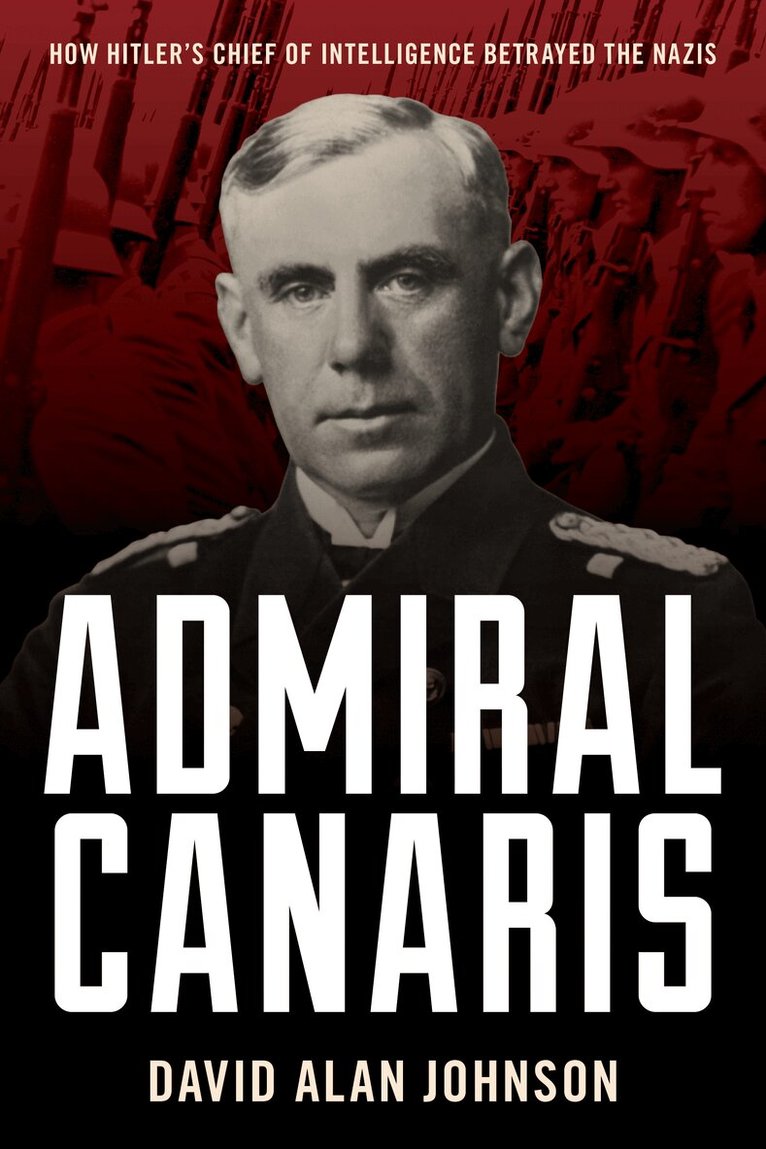
Admiral Wilhelm Canaris, Adolf Hitler’s chief of military intelligence, accomplished something that neither President Franklin D. Roosevelt nor Prime Minister Winston Churchill could ever achieve – he saved the lives of hundreds Jewish refugees and other racial and political undesirables by rescuing them from Nazi Germany and other Nazi-occupied countries. Seen as a quiet and uninteresting career naval officer, Canaris’ unmilitary bearing was actually a cover he had devised for himself, camouflaging a very sharp, and rebellious, mind. Admiral Canaris is a page-turning story of one of the most important and least likely saboteurs within the Third Reich. Initially a supporter of Hitler and the plan to ream Germany, Canaris was appointed to direct the Abwehr – Germany’s miliary intelligence agency – after a long career in the navy built on fostering relationships with foreign agents. But when the Nazis began their campaign of assassination and terror, including the systematic murder of thousands of Jews and other “undesirables,” the admiral became determined to do everything possible to fight Hitler and the Nazis. After the failure of Operation Pastorious, a spy mission to disarm American manufacturing plants, Hitler extolled his executive committee for risking German lives instead of the lives of “criminals or Jews.” That speech gave Canaris an idea. He would go on to disguise refugees as Abwehr agents and sent them to South America, under the official designation of “infiltration agents,” where they joined hundreds of authentic German agents operating in Argentina, Uruguay, Brazil, and nearly every other South American country.Canaris’ anti-Nazi activities, along with some health issues, finally resulted in his dismissal as head of the Abwehr. He was suspected of inefficiency and incompetence by senior Nazi officers – who had no idea that he had turned against the Hitler regime -- and exiled to a desk-job in the Economic Warfare Department. Little did the Fȗhrer know, this placement was the best thing that could have happened to Canaris’ resistance efforts. Through in-depth research and affirming storytelling, author David Alan Johnson paints the picture of a driven and devious mind working amidst the darkest evil to save all those that he could.