David Blanke - Böcker
Visar alla böcker från författaren David Blanke. Handla med fri frakt och snabb leverans.
6 produkter
6 produkter
901 kr
Skickas inom 10-15 vardagar
The decade of the 1910s saw the United States rise above strictly European cultural influences as the mixing of race, ethnicity, class, and gender yielded colorful fusions within American society. Historian David Blanke delves into the cornucopia of activities, trends, and events that shaped and enriched the day-to-day lives of Americans in this decade. Twelve scrupulously researched chapters bring to life all of the important aspects of popular culture in 1910s America: from Birth of a Nation to the Black Sox scandal, the Teddy Bear to Tarzan, breakfast cereal to the first brassiere. This lead title in Greenwood's forthcoming American Popular Culture Through History series shows the many facets of American society merging to form the beginnings of the United States' eclectic 20th century culture.This debut volume launches a series designed to be advanced yet accessible, informative yet fun. Students researching the history of American art, film, literature, music, and sports will be taken beyond the names and dates in their textbooks and learn about the interests, styles, and tastes of past Americans. Series volumes will also include a timeline of significant cultural events as well as a cost comparison list of commonly used items. This valuable reference resource will introduce students to things, activities, and people that enriched and defined the lives of Americans in the seminal years of 1910 to 1919. These collages of culture will enrich the research of high school or college students and help them see how Americans' lives, aspirations, dreams, even the idea of what it is to be American, have evolved in the past—and will continue to change in the future.
351 kr
Skickas inom 10-15 vardagar
The decade of the 1910s saw the United States rise above strictly European cultural influences as the mixing of race, ethnicity, class, and gender yielded colorful fusions within American society. Historian David Blanke delves into the cornucopia of activities, trends, and events that shaped and enriched the day-to-day lives of Americans in this decade. Twelve scrupulously researched chapters bring to life all of the important aspects of popular culture in 1910s America: from Birth of a Nation to the Black Sox scandal, the Teddy Bear to Tarzan, breakfast cereal to the first brassiere. This lead title in Greenwood's forthcoming American Popular Culture Through History series shows the many facets of American society merging to form the beginnings of the United States' eclectic 20th century culture.This debut volume launches a series designed to be advanced yet accessible, informative yet fun. Students researching the history of American art, film, literature, music, and sports will be taken beyond the names and dates in their textbooks and learn about the interests, styles, and tastes of past Americans. Series volumes will also include a timeline of significant cultural events as well as a cost comparison list of commonly used items. This valuable reference resource will introduce students to things, activities, and people that enriched and defined the lives of Americans in the seminal years of 1910 to 1919. These collages of culture will enrich the research of high school or college students and help them see how Americans' lives, aspirations, dreams, even the idea of what it is to be American, have evolved in the past—and will continue to change in the future.
1 108 kr
Skickas inom 10-15 vardagar
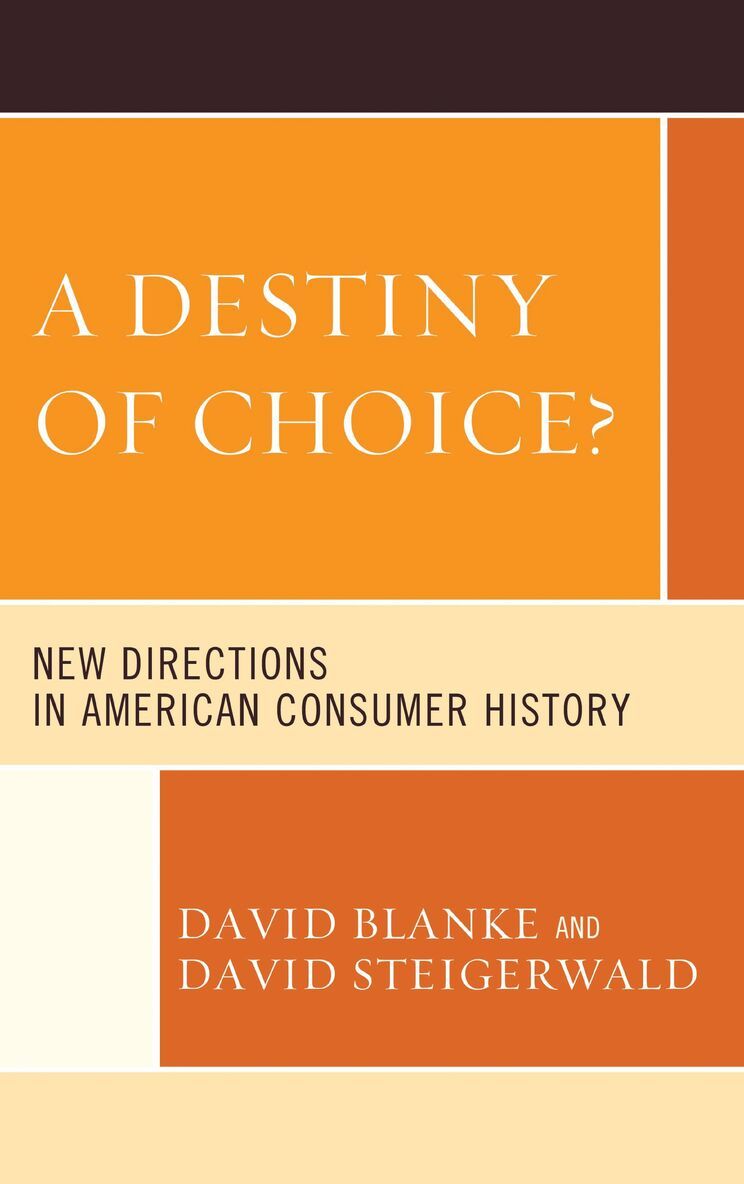
In the twentieth century, Americans thought of the United States as a land of opportunity and equality. To what extent and for whom this was true was, of course, a matter of debate, however especially during the Cold War, many Americans clung to the patriotic conviction that America was the land of the free. At the same time, another national ideal emerged that was far less contentious, that arguably came to subsume the ideals of freedom, opportunity, and equality, and that eventually embodied an unspoken consensus about what constitutes the good society in a postmodern setting. This was the ideal of choice, broadly understood as the proposition that the good society provides individuals with the power to shape the contours of their lives in ways that suit their personal interests, idiosyncrasies, and tastes. By the closing decades of the century, Americans were widely agreed that theirs was—or at least should be—the land of choice.In A Destiny of Choice?, David Blanke and David Steigerwald bring together important scholarship on the tension between two leading interpretations of modern American consumer culture. That modern consumerism reflects the social, cultural, economic, and political changes that accompanied the country’s transition from a local, producer economy dominated by limited choices and restricted credit to a national consumer marketplace based on the individual selection of mass-produced, mass-advertised, and mass-distributed goods. This debate is central to the economic difficulties seen in the United States today.
626 kr
Skickas inom 10-15 vardagar
In the twentieth century, Americans thought of the United States as a land of opportunity and equality. To what extent and for whom this was true was, of course, a matter of debate, however especially during the Cold War, many Americans clung to the patriotic conviction that America was the land of the free. At the same time, another national ideal emerged that was far less contentious, that arguably came to subsume the ideals of freedom, opportunity, and equality, and that eventually embodied an unspoken consensus about what constitutes the good society in a postmodern setting. This was the ideal of choice, broadly understood as the proposition that the good society provides individuals with the power to shape the contours of their lives in ways that suit their personal interests, idiosyncrasies, and tastes. By the closing decades of the century, Americans were widely agreed that theirs was—or at least should be—the land of choice.In A Destiny of Choice?, David Blanke and David Steigerwald bring together important scholarship on the tension between two leading interpretations of modern American consumer culture. That modern consumerism reflects the social, cultural, economic, and political changes that accompanied the country’s transition from a local, producer economy dominated by limited choices and restricted credit to a national consumer marketplace based on the individual selection of mass-produced, mass-advertised, and mass-distributed goods. This debate is central to the economic difficulties seen in the United States today.
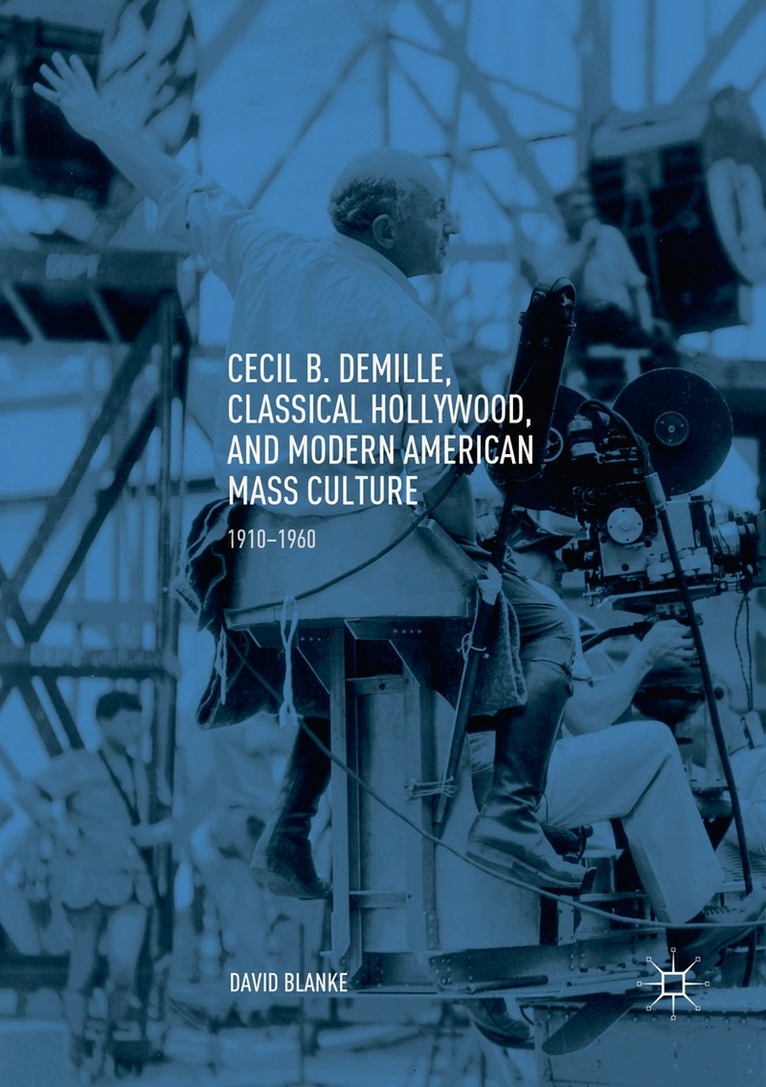
Cecil B. DeMille, Classical Hollywood, and Modern American Mass Culture
1910–1960
Häftad, Engelska, 2018
853 kr
Skickas inom 10-15 vardagar
DeMille’s sudden mid-career shift away from spectator perversity to corporate propagandist permanently tarnished the director’s historical standing among scholars, yet should not overshadow the profound links between his success and the rise and fall of mid-century mass culture.
Cecil B. DeMille, Classical Hollywood, and Modern American Mass Culture
1910–1960
Inbunden, Engelska, 2018
1 170 kr
Skickas inom 10-15 vardagar
DeMille’s sudden mid-career shift away from spectator perversity to corporate propagandist permanently tarnished the director’s historical standing among scholars, yet should not overshadow the profound links between his success and the rise and fall of mid-century mass culture.