David Bogen - Böcker
Visar alla böcker från författaren David Bogen. Handla med fri frakt och snabb leverans.
4 produkter
4 produkter
1 057 kr
Tillfälligt slut
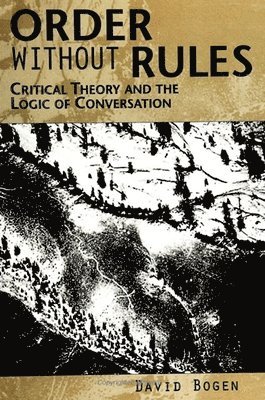
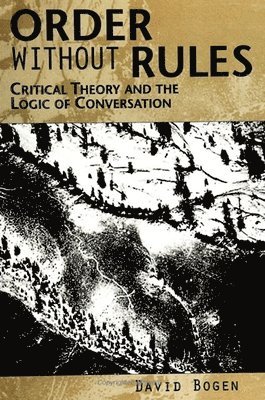
Questions whether the logic of language underlying Habermas's theory of communicative action is in fact the defining feature of conversational practice.Order Without Rules establishes the basic terms for a critical discourse between the theory of communicative action and the tradition of practice-based inquiries inspired by Wittgenstein and elaborated within the field of ethnomethodology. It argues that such a discourse not only is possible, but that it is essential if critical theory is to move beyond the crisis caused by the decline of the great rationalist social projects of the past two centuries and the simultaneous rise of an array of post-enlightenment and anti-rationalist movements waiting to take their place.Since Max Weber social theory has been faced with a paradox-the "problem of rationality"-that seems to challenge the very foundations of critical and humanist visions of modern society. According to Weber, as industrial societies develop they increasingly are dominated by rational procedures for the production of goods, the organization of human resources, and the management of information. The paradox consists in the fact that while modern society is, in this instrumental sense, becoming more rationalized, the prospects for developing political and cultural institutions which are linked to a progressive vision of rational discourse and democratic-will formation are diminished.Order Without Rules addresses the "problem of rationality" in its most contemporary incarnation: the critical theory of the German philosopher and social critic, Jürgen Habermas. Habermas attempts to resolve the Weberian paradox by identifying the rational "core" of communication with universal processes of interpretive understanding that are present in everyday conversation. Drawing upon the work within the Wittgensteinian and ethnomethodological traditions of linguistic and social analysis, this book questions whether the logic of language underlying Habermas's theory of communicative action is in fact the defining feature of conversational practice. It is argued that Habermas's conception of linguistic rules and their connection to rational action is ill-founded, and that a fundamental rethinking of his concept of communicative action is therefore required. Throughout the book, a reflexive orientation is maintained toward questions of method and the internal relationship between disciplinary practices and empirical phenomena.
552 kr
Skickas inom 3-6 vardagar
Questions whether the logic of language underlying Habermas's theory of communicative action is in fact the defining feature of conversational practice.Order Without Rules establishes the basic terms for a critical discourse between the theory of communicative action and the tradition of practice-based inquiries inspired by Wittgenstein and elaborated within the field of ethnomethodology. It argues that such a discourse not only is possible, but that it is essential if critical theory is to move beyond the crisis caused by the decline of the great rationalist social projects of the past two centuries and the simultaneous rise of an array of post-enlightenment and anti-rationalist movements waiting to take their place.Since Max Weber social theory has been faced with a paradox-the "problem of rationality"-that seems to challenge the very foundations of critical and humanist visions of modern society. According to Weber, as industrial societies develop they increasingly are dominated by rational procedures for the production of goods, the organization of human resources, and the management of information. The paradox consists in the fact that while modern society is, in this instrumental sense, becoming more rationalized, the prospects for developing political and cultural institutions which are linked to a progressive vision of rational discourse and democratic-will formation are diminished.Order Without Rules addresses the "problem of rationality" in its most contemporary incarnation: the critical theory of the German philosopher and social critic, Jürgen Habermas. Habermas attempts to resolve the Weberian paradox by identifying the rational "core" of communication with universal processes of interpretive understanding that are present in everyday conversation. Drawing upon the work within the Wittgensteinian and ethnomethodological traditions of linguistic and social analysis, this book questions whether the logic of language underlying Habermas's theory of communicative action is in fact the defining feature of conversational practice. It is argued that Habermas's conception of linguistic rules and their connection to rational action is ill-founded, and that a fundamental rethinking of his concept of communicative action is therefore required. Throughout the book, a reflexive orientation is maintained toward questions of method and the internal relationship between disciplinary practices and empirical phenomena.
1 282 kr
Skickas inom 7-10 vardagar
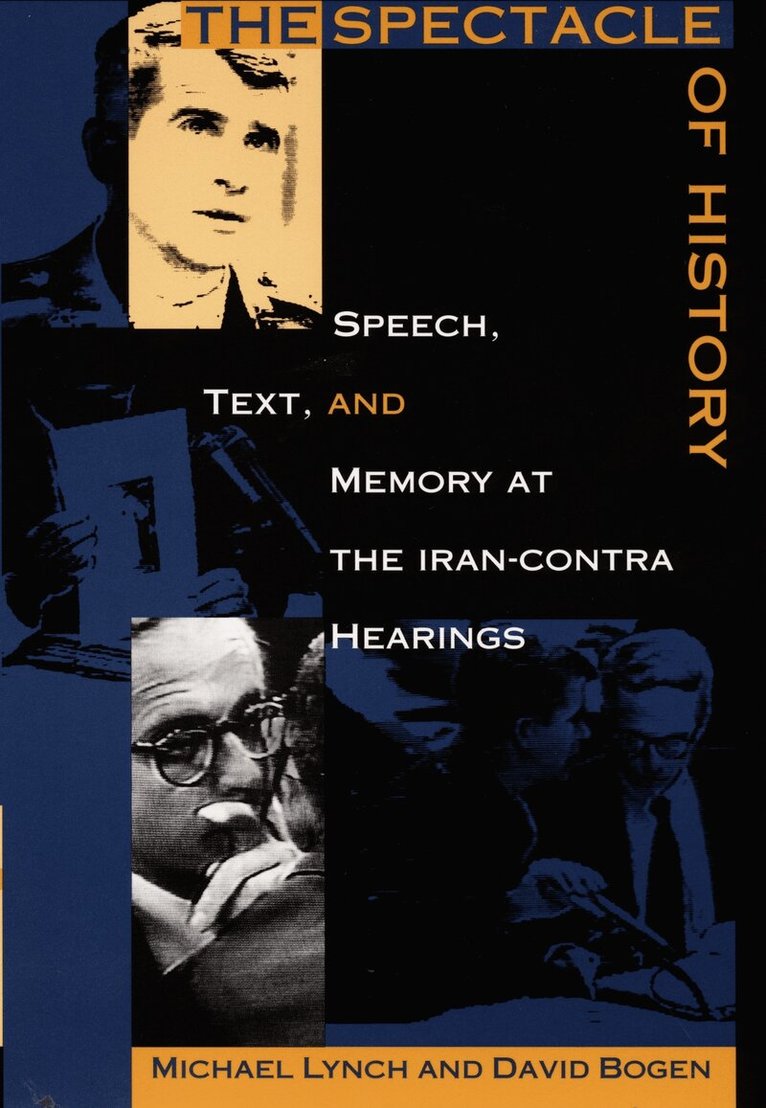
How is history produced? How do individuals write-or rewrite-their parts while engaged in the production of history? Michael Lynch and David Bogen take the example of the Iran-contra hearings to explore these questions. These hearings, held in 1987 by the Joint House-Senate Select Committee on Secret Military Assistance to Iran and the Nicaragua Opposition, provided the nation with a media spectacle and a rare chance to see a struggle over the writing of history. There was Oliver North, prime suspect and designated scapegoat, turning into a hero of the American Right before the very eyes of the nation. How this transformation occurred, with the complicity of the press and the public, becomes disturbingly clear in The Spectacle of History. Lynch and Bogen detail the practices through which the historical agents at the center of the hearings composed, confirmed, used, erased, and denied the historical record. They show how partisan skirmishes over the disclosure of records and testimony led to a divided and irresolute outcome, an outcome further facilitated by the “applied deconstruction” deployed by North and his allies. The Spectacle of History immerses the reader in a crowded field of texts, utterances, visual displays, and media commentaries, but, more than a case study, it develops unique insight into problems at the heart of society and social theory-lying and credibility, the production of civic spectacle, the relationship between testimony and history, the uses of memory, and the interplay between speech and writing. Drawing on themes from sociology, literary theory, and ethnomethodology and challenging prevailing concepts held by contemporary communication and cultural studies, Lynch and Bogen extract valuable theoretical lessons from this specific and troubling historical episode.
428 kr
Skickas inom 7-10 vardagar
How is history produced? How do individuals write-or rewrite-their parts while engaged in the production of history? Michael Lynch and David Bogen take the example of the Iran-contra hearings to explore these questions. These hearings, held in 1987 by the Joint House-Senate Select Committee on Secret Military Assistance to Iran and the Nicaragua Opposition, provided the nation with a media spectacle and a rare chance to see a struggle over the writing of history. There was Oliver North, prime suspect and designated scapegoat, turning into a hero of the American Right before the very eyes of the nation. How this transformation occurred, with the complicity of the press and the public, becomes disturbingly clear in The Spectacle of History. Lynch and Bogen detail the practices through which the historical agents at the center of the hearings composed, confirmed, used, erased, and denied the historical record. They show how partisan skirmishes over the disclosure of records and testimony led to a divided and irresolute outcome, an outcome further facilitated by the “applied deconstruction” deployed by North and his allies. The Spectacle of History immerses the reader in a crowded field of texts, utterances, visual displays, and media commentaries, but, more than a case study, it develops unique insight into problems at the heart of society and social theory-lying and credibility, the production of civic spectacle, the relationship between testimony and history, the uses of memory, and the interplay between speech and writing. Drawing on themes from sociology, literary theory, and ethnomethodology and challenging prevailing concepts held by contemporary communication and cultural studies, Lynch and Bogen extract valuable theoretical lessons from this specific and troubling historical episode.