David C. Dollahite - Böcker
Visar alla böcker från författaren David C. Dollahite. Handla med fri frakt och snabb leverans.
9 produkter
9 produkter
2 103 kr
Skickas inom 10-15 vardagar
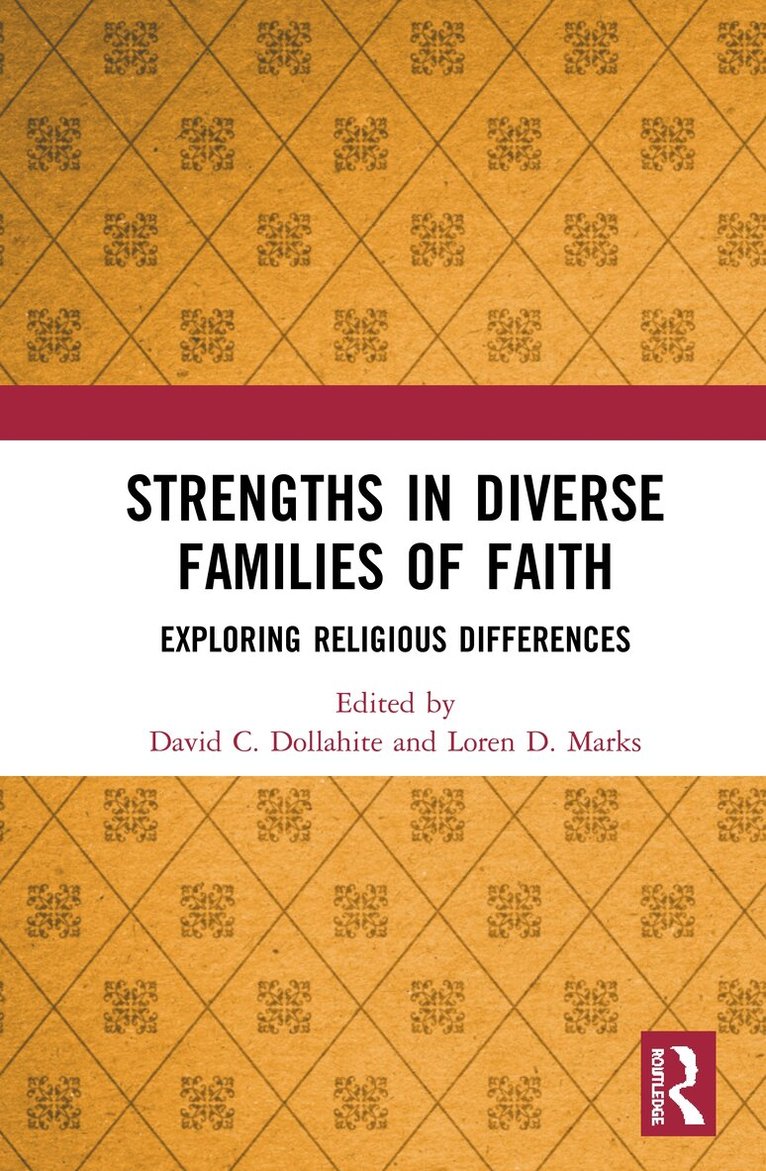
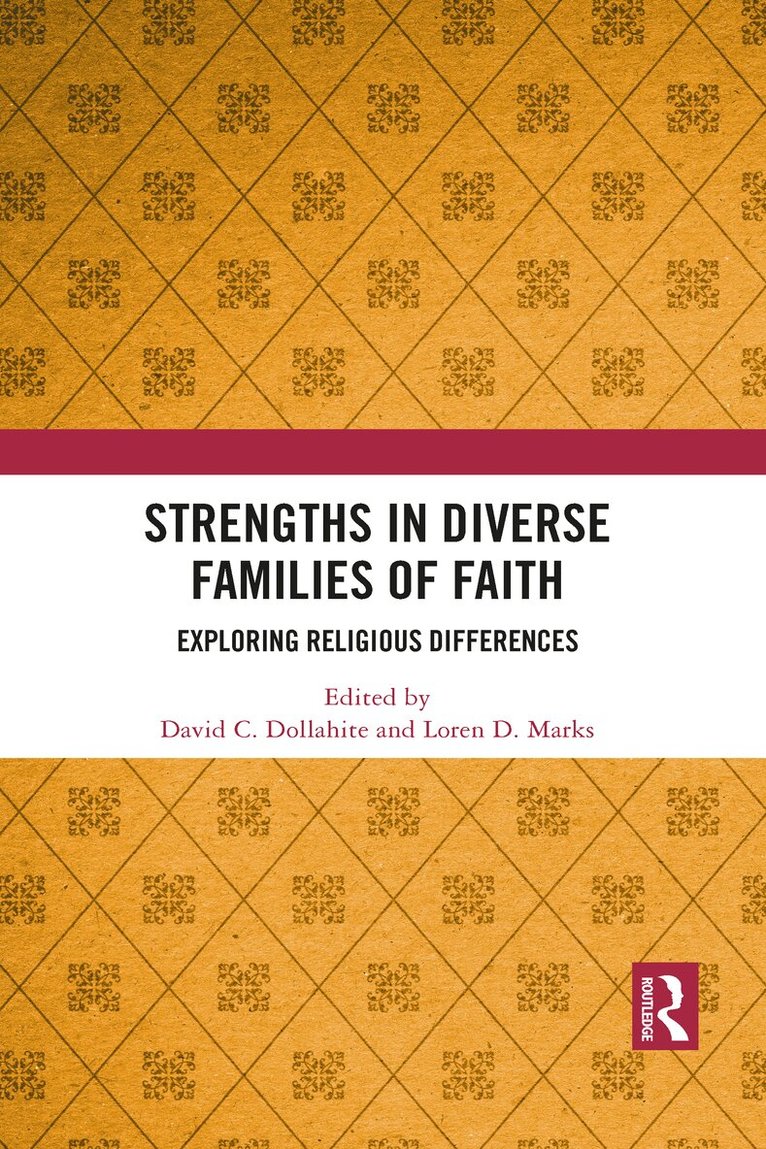
This book explores how religious families draw on their spiritual beliefs, religious practices, and faith communities to help them strengthen their marital relationships and their parenting. Using in-depth interviews from eight religious groups – Asian American Christian; Black Christian; Catholic and Orthodox Christian; Evangelical Christian; Jewish; Latter-day Saint; Mainline Protestant; and Muslim – the book uses the interviewees’ own words to show how their religion impacts their lives and influences their relationships. The book also includes an introductory chapter which describes the study and the sample; a conceptual chapter which places the empirical chapters in theoretical context in sociological study of religious families; and a concluding chapter which describes how the editors and authors developed respect and admiration for religious cultures other than their own.Drawing on such a diverse group of religions in America, this book will be of interest to those studying individual religious groups, as well as wider ecumenism and inter-religious dialogue. This book was originally published as a special issue of the Marriage and Family Review.
Del 3 - Current Issues in the Family
Generative Fathering
Beyond Deficit Perspectives
Inbunden, Engelska, 1997
3 368 kr
Skickas inom 3-6 vardagar
Much of contemporary scholarship on fathers comes from a deficit model, focusing on men's inadequacies as parents. This edited volume assembles a group of prominent scholars who go beyond a deficit model of fatherhood to what the editors call a generative fathering perspective. The generative fathering approach, inspired by the developmental theories of Erik Erikson and building on the pioneering research of John Snary, sees the work fathers do for their children in terms of caring for and contributing to the life of the next generation. The editors describe generative fathering, placing it in contrast to the role-inadequacy perspective of fatherhood. Contributors then elaborate on generative fathering in terms of gender, ethnicity, and historical perspectives and present research that helps us understand generative fathering in challenging life circumstances, such as special-needs children, teenage fathering, and divorce and remarriage. Applications for the generative fathering perspective are presented in terms of family life education, clinical work, and scholarly discourse. The editors conclude the volume with a chapter on ways to teach about generative fathering in college courses. Supported by both qualitative and quantitative research, this book goes beyond the frequent identification of fathers as primarily absent, abusive, deadbeat, deficient, or unnecessary, and helps us to understand fathers as men working to build caring bridges across generations.
Del 3 - Current Issues in the Family
Generative Fathering
Beyond Deficit Perspectives
Häftad, Engelska, 1997
2 446 kr
Skickas inom 3-6 vardagar
Much of contemporary scholarship on fathers comes from a deficit model, focusing on men's inadequacies as parents. This edited volume assembles a group of prominent scholars who go beyond a deficit model of fatherhood to what the editors call a generative fathering perspective. The generative fathering approach, inspired by the developmental theories of Erik Erikson and building on the pioneering research of John Snary, sees the work fathers do for their children in terms of caring for and contributing to the life of the next generation. The editors describe generative fathering, placing it in contrast to the role-inadequacy perspective of fatherhood. Contributors then elaborate on generative fathering in terms of gender, ethnicity, and historical perspectives and present research that helps us understand generative fathering in challenging life circumstances, such as special-needs children, teenage fathering, and divorce and remarriage. Applications for the generative fathering perspective are presented in terms of family life education, clinical work, and scholarly discourse. The editors conclude the volume with a chapter on ways to teach about generative fathering in college courses. Supported by both qualitative and quantitative research, this book goes beyond the frequent identification of fathers as primarily absent, abusive, deadbeat, deficient, or unnecessary, and helps us to understand fathers as men working to build caring bridges across generations.
244 kr
Skickas inom 3-6 vardagar
620 kr
Skickas inom 10-15 vardagar
This book explores how religious families draw on their spiritual beliefs, religious practices, and faith communities to help them strengthen their marital relationships and their parenting. Using in-depth interviews from eight religious groups – Asian American Christian; Black Christian; Catholic and Orthodox Christian; Evangelical Christian; Jewish; Latter-day Saint; Mainline Protestant; and Muslim – the book uses the interviewees’ own words to show how their religion impacts their lives and influences their relationships. The book also includes an introductory chapter which describes the study and the sample; a conceptual chapter which places the empirical chapters in theoretical context in sociological study of religious families; and a concluding chapter which describes how the editors and authors developed respect and admiration for religious cultures other than their own.Drawing on such a diverse group of religions in America, this book will be of interest to those studying individual religious groups, as well as wider ecumenism and inter-religious dialogue. This book was originally published as a special issue of the Marriage and Family Review.
915 kr
Skickas inom 10-15 vardagar
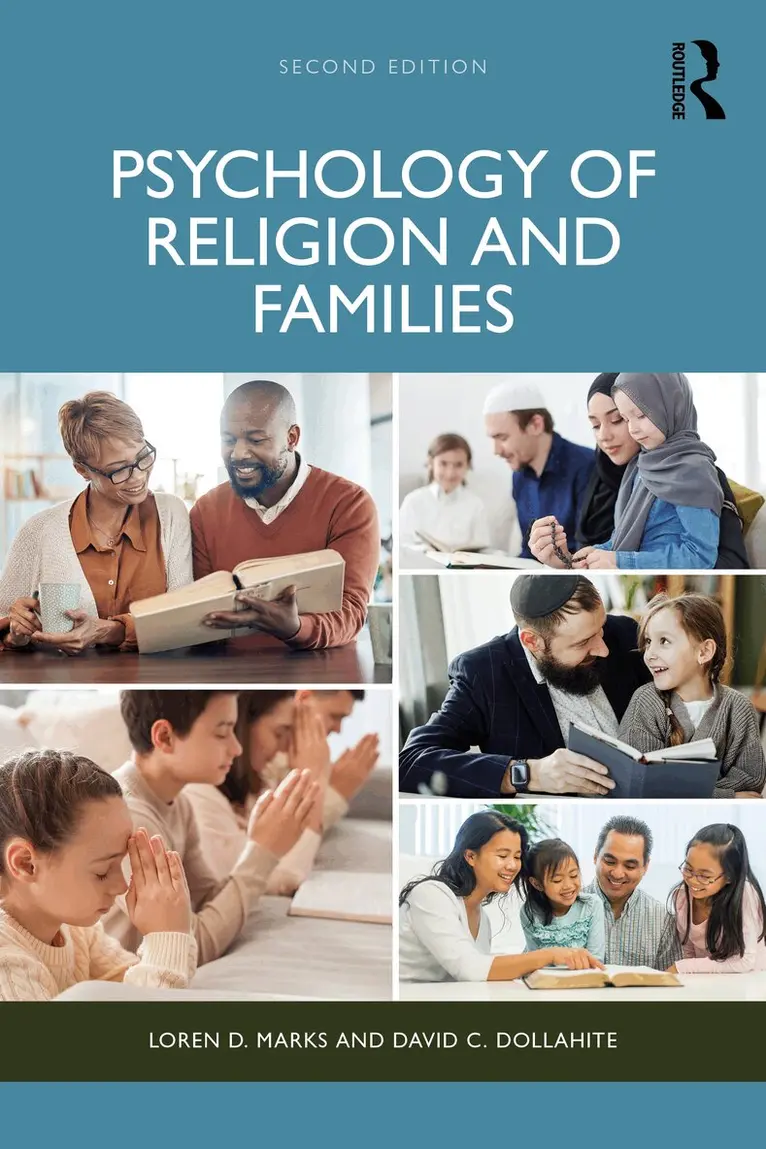
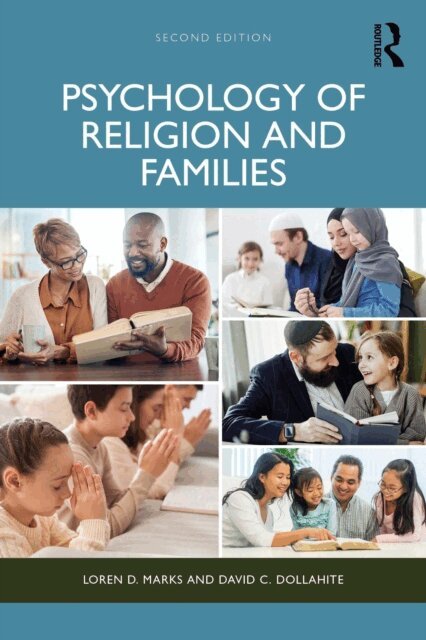
Now in its second edition, this multidisciplinary text addresses the growing scholarly connection between religion and family life while offering an accurate and engaging account of why and how families are impacted by their religion.This updated volume integrates the social science literature from family studies, psychology, sociology, and religion with narratives drawn from in-depth interviews with 300 racially, religiously, and regionally diverse families that bring the concepts to life. Written in a thought-provoking, accessible style by two of the leading researchers in the field, this book reflects the author’s first-hand experience in teaching today’s students about religion’s influence on families. This book examines Christianity, Judaism, and Islam, addresses the impact of religious involvement on longevity, divorce rates, and parenting styles, and considers demographic, family, couple, and individual-level data that relate to prayer and other sacred practices. New chapters explore:The Conflicts, Struggle, and Stressors of ReligionRacial and Ethnic Minorities and ReligionReligion, Sex, and Gender Roles in MarriagePedagogical features include boldfaced key terms defined in the glossary, text boxes, chapter conclusions, summary points, and review questions. Intended as a text for undergraduate courses in family and religion, the psychology or sociology of the family, the psychology or sociology of religion, pastoral/biblical counseling, or family and youth ministry, taught in human development and family studies, psychology, sociology, religion, social work, pastoral counseling, and philosophy, this book is also relevant to family therapists and counselors.
2 098 kr
Skickas inom 10-15 vardagar
Now in its second edition, this multidisciplinary text addresses the growing scholarly connection between religion and family life while offering an accurate and engaging account of why and how families are impacted by their religion.This updated volume integrates the social science literature from family studies, psychology, sociology, and religion with narratives drawn from in-depth interviews with 300 racially, religiously, and regionally diverse families that bring the concepts to life. Written in a thought-provoking, accessible style by two of the leading researchers in the field, this book reflects the author’s first-hand experience in teaching today’s students about religion’s influence on families. This book examines Christianity, Judaism, and Islam, addresses the impact of religious involvement on longevity, divorce rates, and parenting styles, and considers demographic, family, couple, and individual-level data that relate to prayer and other sacred practices. New chapters explore:The Conflicts, Struggle, and Stressors of ReligionRacial and Ethnic Minorities and ReligionReligion, Sex, and Gender Roles in MarriagePedagogical features include boldfaced key terms defined in the glossary, text boxes, chapter conclusions, summary points, and review questions. Intended as a text for undergraduate courses in family and religion, the psychology or sociology of the family, the psychology or sociology of religion, pastoral/biblical counseling, or family and youth ministry, taught in human development and family studies, psychology, sociology, religion, social work, pastoral counseling, and philosophy, this book is also relevant to family therapists and counselors.
2 637 kr
Skickas inom 10-15 vardagar
This is the first multidisciplinary text to address the growing scholarly connection between religion and family life. The latest literature from family studies, psychology, sociology, and religion is reviewed along with narratives drawn from interviews with 200 racially, religiously, and regionally diverse families which bring the concepts to life. Written in a thought-provoking, accessible, and sometimes humorous style by two of the leading researchers in the field, the book reflects the authors’ firsthand experience in teaching today’s students about religion’s impact on families. Prior to writing the book, the authors read the sacred texts of many faiths, interviewed religious leaders, and attended religious services for a wide array of faiths. The result is an accurate and engaging account of why and how families are impacted by their religion. The pedagogical features of the text include boldfaced key terms defined in the glossary, text boxes, chapter conclusions, summary points, and review questions. Religion and Families:Examines several denominations within Christianity, Judaism, and Islam. Reviews findings from racially and ethnically diverse families, from traditional and diverse family forms, and examines gender and life-course issues.Addresses the impact of one’s religious involvement on longevity, divorce rates, and parenting styles.Considers demographic, family-, couple-, and individual-level data that relate to prayer and other sacred practices.Presents a balanced treatment of the latest research and a new model for studying family and religion.Explores the "whys," "hows," and processes at work in the religion-family connection.The book opens with a discussion of why religion and family connections matter. Chapter 2 defines religion and presents a new conceptualization of religion. Empirical research connections between religion and marriage, divorce, family, and parent-child relationships are explored in chapters 3 through 6. The interface between religion and the family in Christianity, Judaism, and Islam are reviewed in chapters 7, 8, and 9. Chapter 10 explores the unique challenges that religion presents for diverse family forms. Prayer as a coping mechanism for life’s challenges such as death and disability are explored in chapter 11. Chapter 12 examines forgiveness in the context of marriages and families. The book concludes with a review of the book’s most important themes and findings. Intended as a text for undergraduate courses in family and religion, the psychology or sociology of the family, the psychology or sociology of religion, pastoral/biblical counseling, or family and youth ministry, taught in human development and family studies, psychology, sociology, religion, social work, pastoral counseling, and sometimes philosophy. This book also appeals to family therapists and counselors.
824 kr
Skickas inom 10-15 vardagar
This is the first multidisciplinary text to address the growing scholarly connection between religion and family life. The latest literature from family studies, psychology, sociology, and religion is reviewed along with narratives drawn from interviews with 200 racially, religiously, and regionally diverse families which bring the concepts to life. Written in a thought-provoking, accessible, and sometimes humorous style by two of the leading researchers in the field, the book reflects the authors’ firsthand experience in teaching today’s students about religion’s impact on families. Prior to writing the book, the authors read the sacred texts of many faiths, interviewed religious leaders, and attended religious services for a wide array of faiths. The result is an accurate and engaging account of why and how families are impacted by their religion. The pedagogical features of the text include boldfaced key terms defined in the glossary, text boxes, chapter conclusions, summary points, and review questions. Religion and Families:Examines several denominations within Christianity, Judaism, and Islam. Reviews findings from racially and ethnically diverse families, from traditional and diverse family forms, and examines gender and life-course issues.Addresses the impact of one’s religious involvement on longevity, divorce rates, and parenting styles.Considers demographic, family-, couple-, and individual-level data that relate to prayer and other sacred practices.Presents a balanced treatment of the latest research and a new model for studying family and religion.Explores the "whys," "hows," and processes at work in the religion-family connection.The book opens with a discussion of why religion and family connections matter. Chapter 2 defines religion and presents a new conceptualization of religion. Empirical research connections between religion and marriage, divorce, family, and parent-child relationships are explored in chapters 3 through 6. The interface between religion and the family in Christianity, Judaism, and Islam are reviewed in chapters 7, 8, and 9. Chapter 10 explores the unique challenges that religion presents for diverse family forms. Prayer as a coping mechanism for life’s challenges such as death and disability are explored in chapter 11. Chapter 12 examines forgiveness in the context of marriages and families. The book concludes with a review of the book’s most important themes and findings. Intended as a text for undergraduate courses in family and religion, the psychology or sociology of the family, the psychology or sociology of religion, pastoral/biblical counseling, or family and youth ministry, taught in human development and family studies, psychology, sociology, religion, social work, pastoral counseling, and sometimes philosophy. This book also appeals to family therapists and counselors.