David C. Hendrickson – författare
Visar alla böcker från författaren David C. Hendrickson. Handla med fri frakt och snabb leverans.
13 produkter
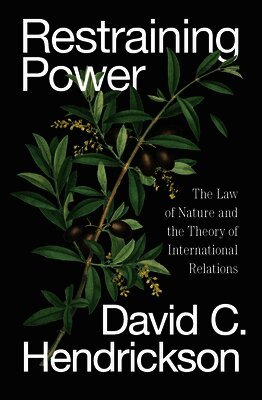
Restraining Power
The Law of Nature and the Theory of International Relations
Häftad, 2026
303 kr
Lägg i varukorg
Restraining Power examines the ethical and strategic dilemmas of sovereign coexistence. Excavating a forgotten tradition of the "law of nature and nations" intended to restrain the violent impulses of states, David C. Hendrickson shows how this perspective emphasizes respect for the rights of other …
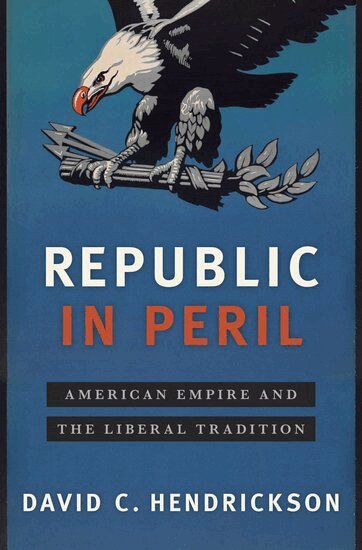
Republic in Peril
American Empire and the Betrayal of the Liberal Tradition
Inbunden, 2017
543 kr
Lägg i varukorg
It has become a staple among critics of American foreign policy to refer to the United States's approach as "liberal imperialism." By this they mean that America's globalist agenda and its willingness to use force in theaters across the globe derives from its desire to evangelize the gospel of …
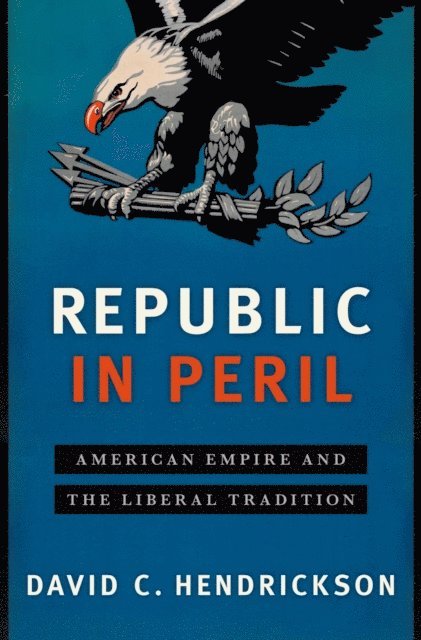
Republic in Peril
American Empire and the Liberal Tradition
E-bok, 2017
453 kr
Lägg i varukorg
In Republic in Peril , David C. Hendrickson advances a powerful critique of American policy since the end of the Cold War. America''s outsized military spending and global commitments, he shows, undermine rather than uphold international order. They raise rather than reduce the danger of war, …
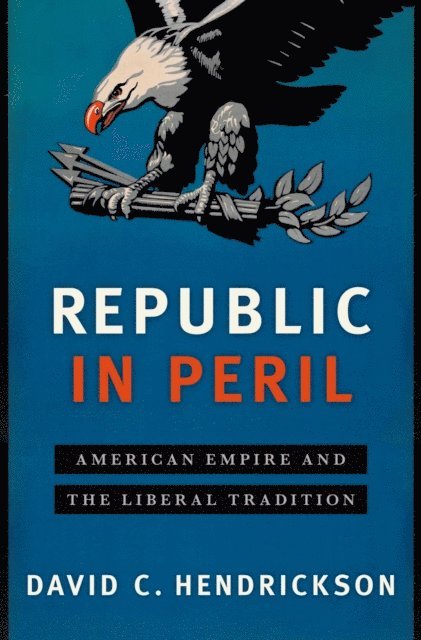
Republic in Peril
American Empire and the Liberal Tradition
E-bok, 2017
453 kr
Lägg i varukorg
In Republic in Peril , David C. Hendrickson advances a powerful critique of American policy since the end of the Cold War. America''s outsized military spending and global commitments, he shows, undermine rather than uphold international order. They raise rather than reduce the danger of war, …
Empire of Liberty
The Statecraft of Thomas Jefferson
Av David C. Hendrickson, Robert W. Tucker
E-bok, 1992
623 kr
Lägg i varukorg
None of the founding fathers seems more elusive than Thomas Jefferson. A Virginian nationalist, a slave-holding philosophe , an aristocratic democrat, a provincial cosmopolitan, a pacific imperialist--the paradoxes loom as meaningful and portentous as America itself. Indeed, they represent the deep …
Empire of Liberty
The Statecraft of Thomas Jefferson
Av David C. Hendrickson, Robert W. Tucker
E-bok, 1992
554 kr
Lägg i varukorg
None of the founding fathers seems more elusive than Thomas Jefferson. A Virginian nationalist, a slave-holding philosophe , an aristocratic democrat, a provincial cosmopolitan, a pacific imperialist--the paradoxes loom as meaningful and portentous as America itself. Indeed, they represent the deep …
Peace Pact
The Lost World of the American Founding
Häftad, 2003
425 kr
Lägg i varukorg
That New England might invade Virginia is inconceivable today. But interstate rivalries and the possibility of intersectional war loomed large in the thinking of the Framers who convened in Philadelphia in 1787 to put on paper the ideas that would bind the federal union together. At the end of the …
Union, Nation, or Empire
The American Debate Over International Relations, 1789-1941
Inbunden, 2009
705 kr
Lägg i varukorg
Most overviews of American history depict an isolationist country finally dragged kicking and screaming onto the world stage by the attack on Pearl Harbor. David Hendrickson shows that Americans instead conducted often-raucous debates over international relations in the long epoch customarily seen …
Peace Pact
The Lost World of the American Founding
E-bok, 2024
436 kr
Lägg i varukorg
Choice Outstanding Title That New England might invade Virginia is inconceivable today. But interstate rivalries and the possibility of intersectional war loomed large in the thinking of the Framers who convened in Philadelphia in 1787 to put on paper the ideas that would bind the federal union …
Union, Nation, or Empire
The American Debate over International Relations, 1789-1941
E-bok, 2025
323 kr
Lägg i varukorg
Most overviews of American history depict an isolationist country finally dragged kicking and screaming onto the world stage by the attack on Pearl Harbor. David Hendrickson shows that Americans instead conducted often-raucous debates over international relations in the long epoch customarily seen …
Great League of Peace and Power
250 Years of American Foreign Policy
Inbunden, 2026
441 kr
Kommande
An authoritative history of American foreign policy—published for the nation’s 250th anniversary—from a veteran scholar and teacher.The Great League of Peace and Power provides a lucid history of American foreign policy and international affairs from the Declaration of Independence in 1776 to its …
Restraining Power
The Law of Nature and the Theory of International Relations
E-bok, 2026
230 kr
Lägg i varukorg
Restraining Power examines the ethical and strategic dilemmas of sovereign coexistence. Excavating a forgotten tradition of the "e;law of nature and nations"e; intended to restrain the violent impulses of states, David C. Hendrickson shows how this perspective emphasizes respect for the …
Revisions in Need of Revising: What Went Wrong in the Iraq War
Av David C. Hendrickson, Robert W. Tucker m. fl.
Häftad, 2014
152 kr
Tillfälligt slut