David Christopher Arnold - Böcker
Visar alla böcker från författaren David Christopher Arnold. Handla med fri frakt och snabb leverans.
2 produkter
2 produkter
207 kr
Skickas inom 10-15 vardagar
On August 14, 1960, a revolution quietly occurred in the reconnaissance capabilities of America. When the Air Force C-119 Flying Boxcar Pelican 9 caught a bucket returning from space with film from a satellite, the American intelligence community gained access to previously denied information about the Soviet Union. The Corona reconnaissance satellite missions that followed lifted the veil of secrecy from the communist bloc, revealing, among other things, that no ""Missile Gap"" existed.This revolution in military intelligence could not have occurred without the development of the command and control systems that made the Space Race possible. In ""Spying from Space"", David Christopher Arnold tells the story of how military officers and civilian contractors built the Air Force Satellite Control Facility (AFSCF) to support the National Reconnaissance Program. The AFSCF also had a unique relationship with the National Reconnaissance Office, a secret organization that the U.S. government officially concealed as late as the 1990s.""Spying from Space"" fills a gap in space history by telling the story of the command and control systems that made rockets and satellites useful. Those interested in space flight or intelligence efforts will benefit from this revealing look into a little-known aspect of American achievement.
356 kr
Skickas inom 5-8 vardagar
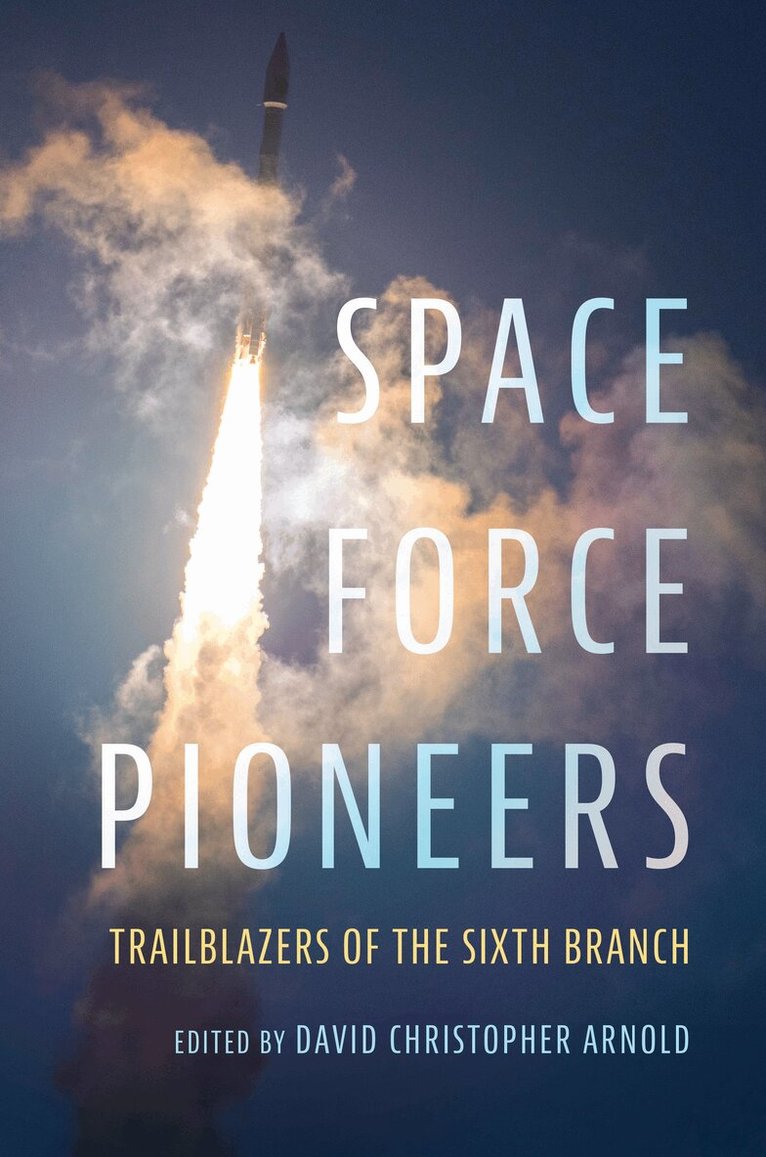
Featuring biographical chapters on the leaders who served in space roles in the U.S. Air Force, Army, or Marine Corps, including officers who experienced the celestial skies firsthand as astronauts, Space Force Pioneers aims to enhance the reader’s understanding of character and leadership in military space from the experiences of these elite, ground-breaking leaders. The opening chapter explains in detail how the United States Space Force evolved from the Air Force. It is followed by ten biographical chapters that examine the stellar careers of space pioneers and illuminate their varied leadership styles. The chapter authors, all experts on the subject matter, engagingly capture the essence of these impressive individuals by incorporating information derived from the personal papers of their subjects and—in some cases—oral histories and interviews, along with other historical sources. They make clear the lasting contributions each of these leaders made to military space while serving in or out of uniform. Space Force Pioneers offers insight and analysis into how these unique leaders have operated in the performance of their duties, as well as chronicling changes in military space over the past four decades. The volume concludes with a broad and probing interpretation of contemporary space leadership, which offers a vehicle for comparing the accomplishments of these distinctive military space leaders.