David Ciccoricco - Böcker
Visar alla böcker från författaren David Ciccoricco. Handla med fri frakt och snabb leverans.
2 produkter
2 produkter
680 kr
Skickas inom 10-15 vardagar
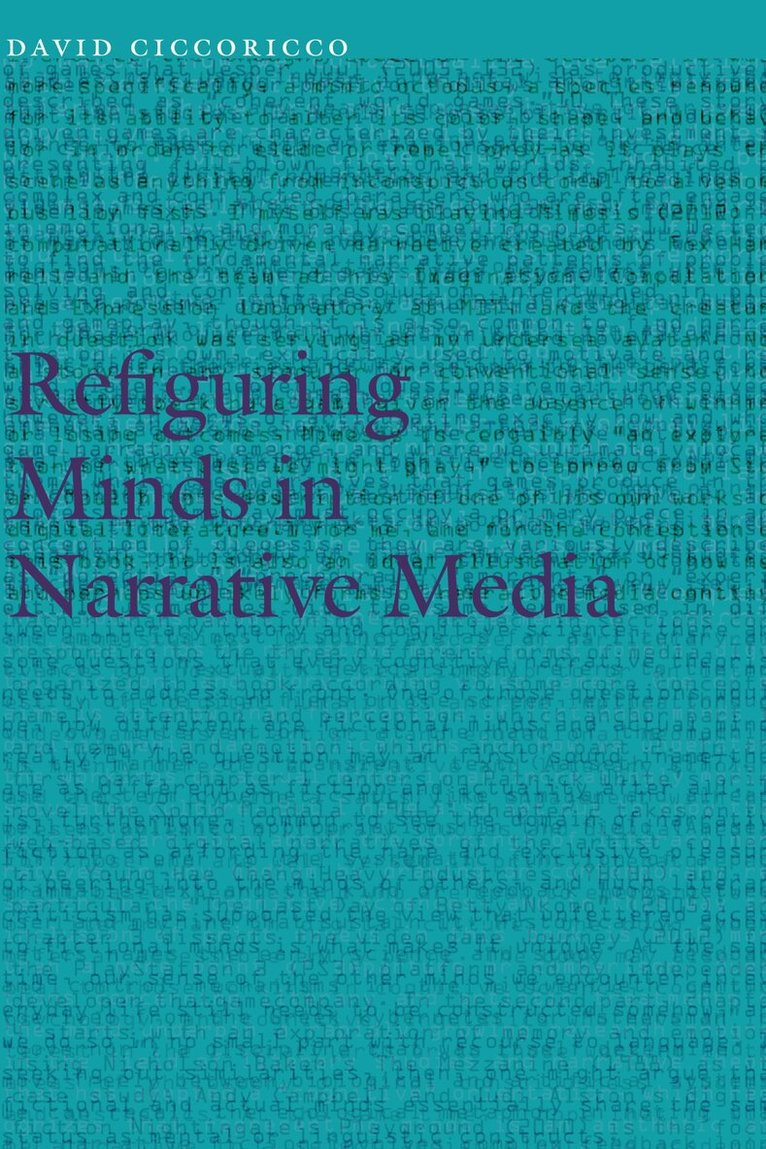
How do writers represent cognition, and what can these representations tell us about how our own minds work? Refiguring Minds in Narrative Media is the first single-author book to explore these questions across media, moving from analyses of literary narratives in print to those found where so much cultural and artistic production occurs today: computer screens.Expanding the domain of literary studies from a focus on representations to the kind of simulations that characterize narratives in digital media, such as those found in interactive, web-based digital fictions and story-driven video games, David Ciccoricco draws on new research in the cognitive sciences to illustrate how the cybernetic and ludic qualities characterizing narratives in new literary media have significant implications for how we understand the workings of actual minds in an increasingly media-saturated culture. Amid continued concern about the impact of digital media on the minds of readers and players today, and the alarming philosophical questions generated by the communion of minds and machines, Ciccoricco provides detailed examples illustrating how stories in virtually any medium can still nourish creative imagination and cultivate critical-and ethical-reflection. Contributing new insights on attention, perception, memory, and emotion, Refiguring Minds in Narrative Media is a book at the forefront of a new wave of media-conscious cognitive literary studies.
415 kr
Skickas inom 7-10 vardagar
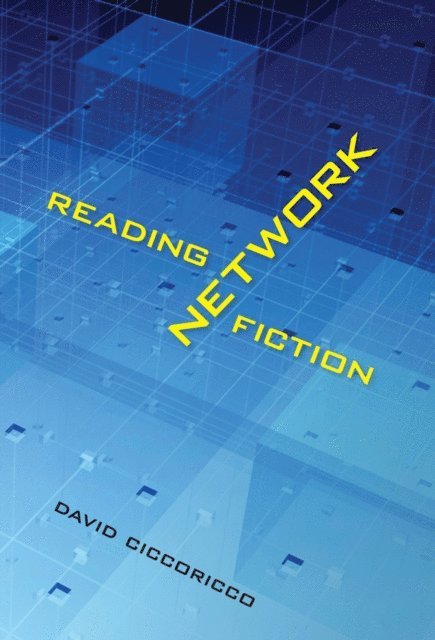
The marriage of narrative and the computer dates back to the 1980s, with the hypertext experiments of luminaries such as Judy Malloy and Michael Joyce. What has been variously called “hypertext fiction”, “literary hypertext“, and “hyperfiction” has surely surrendered any claim to newness in the 21st century.David Ciccoricco establishes the category of “network fiction” as distinguishable from other forms of hypertext and cybertext: network fictions are narrative texts in digitally networked environments that make use of hypertext technology in order to create emergent and recombinant narratives. Though they both pre-date and post-date the World Wide Web, they share with it an aesthetic drive that exploits the networking potential of digital composition and foregrounds notions of narrative recurrence and return.Ciccoricco analyzes innovative developments in network fiction from first-generation writers Michael Joyce (Twilight, a symphony, 1997) and Stuart Moulthrop (Victory Garden, 1991) through Judd Morrissey’s The Jew's Daughter (2000), an acclaimed example of digital literature in its latter instantiations on the Web. Each investigation demonstrates not only what the digital environment might mean for narrative theory but also the ability of network fictions to sustain a mode of reading that might, arguably, be called “literary”. The movement in the arts away from representation and toward simulation, away from the dynamics of reading and interpretation and toward the dynamics of interaction and play, has indeed led to exaggerated or alarmist claims of the endangerment of the literary arts. At the same time, some have simply doubted that the conceptual and discursive intricacy of print fiction can migrate to new media. Against these claims, Reading Network Fiction attests to the verbal complexity and conceptual depth of a body of writing created for the surface of the screen.