David Colclough - Böcker
Visar alla böcker från författaren David Colclough. Handla med fri frakt och snabb leverans.
4 produkter
4 produkter
2 555 kr
Skickas inom 5-8 vardagar
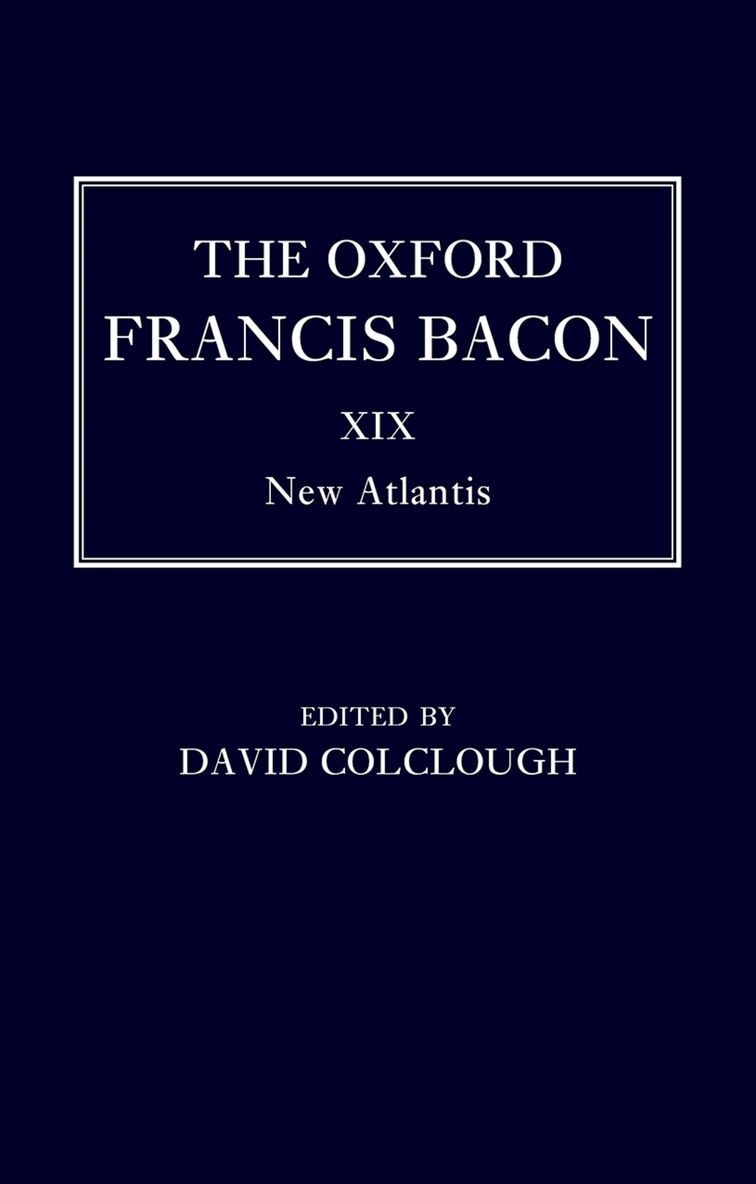
This volume belongs to the new critical edition of the complete works of Francis Bacon (1561-1626). The edition presents the works in broadly chronological order and in accordance with the principles of modern textual scholarship. This volume comprises the first critical edition since the nineteenth century of New Atlantis, Bacon's posthumously published semi-utopian fable of reformed knowledge. New Atlantis is set on an imaginary island whose central institution--Salomon's House--is a fictional embodiment of the kind of research institute Bacon dreamed of founding in order to pursue his vast project, the Instauratio magna, and one which generates works that both expand knowledge and benefit humankind.This edition establishes an authoritative text based on fresh collation of multiple copies of the 1626 edition in close comparison with the 1628 edition. Thorough bibliographical analysis of the 1626 copy-text elucidates the book's passage through the printing house. David Colclough's detailed Introduction sets New Atlantis in the contexts of Bacon's works and of contemporary models of information-gathering and -management, including Iberian examples in the Old and New Worlds. An extensive commentary examines Bacon's sources, traces analogues across his works (especially with Sylva sylvarum, alongside which New Atlantis was originally printed), provides context and background, glosses obsolete or unusual terms, and considers critical interpretations of the text.
Del 3 - Oxford Edition of the Sermons of John Donne
The Oxford Edition of the Sermons of John Donne
Volume 3: Sermons preached at the Court of Charles I
Inbunden, Engelska, 2013
3 971 kr
Skickas inom 7-10 vardagar
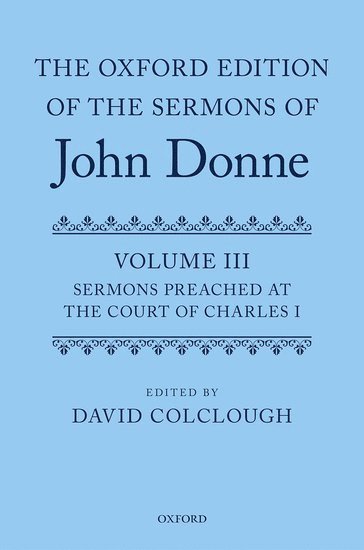
This book is the first volume to be published in The Oxford Edition of the Sermons of John Donne, which presents the largest prose output of one of the most celebrated poets and preachers of the seventeenth century. The edition provides freshly edited texts arranged by place of delivery instead of (often speculative) chronology, and offers a wealth of explanatory material for specialist and non-specialist readers alike. Volume III contains the fourteen sermons preached by Donne at the court of Charles I, between the king's accession in 1625 and Donne's death in 1631. It includes the first sermon preached before Charles as king, and Donne's final sermon, known as Deaths Dvell. In each case an authoritative text has been established by freshly collating multiple copies of the seventeenth-century print editions. The introduction describes the institutional and physical context of Donne's Caroline court sermons and analyses his style of preaching and doctrinal positions. For the first time, the sermons appear with a full critical apparatus: headnotes to each sermon describe its textual state and supply local historical context and suggestions for further reading, while extensive commentaries trace Donne's use of his sources, translate passages in foreign languages, and gloss important and unfamiliar words.
441 kr
Skickas inom 7-10 vardagar
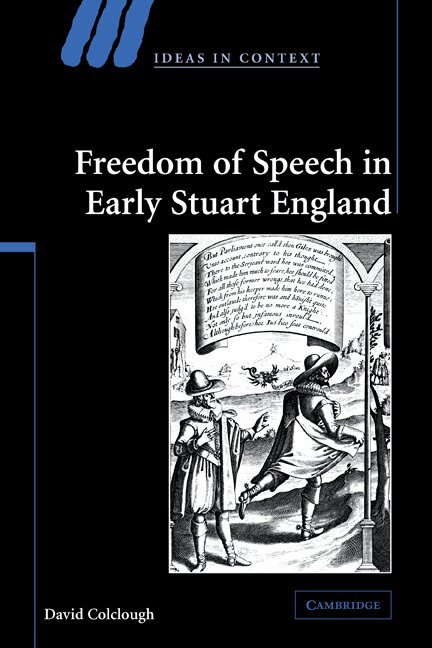
This book discusses a central chapter in the history of free speech in the Western world. The nature and limits of freedom of speech prompted sophisticated debate in a wide range of areas in the early seventeenth century; it was one of the 'liberties of the subject' fought for by individuals and groups across the political landscape. David Colclough argues that freedom of speech was considered to be a significant civic virtue during this period. Discussions of free speech raised serious questions about what it meant to live in a free state, and how far England was from being such a state. Examining a wide range of sources, from rhetorical handbooks to Parliamentary speeches and manuscript miscellanies, Dr Colclough demonstrates how freedom of speech was conceived positively in the period c.1603-28, rather than being defined in opposition to acts of censorship.
1 282 kr
Skickas inom 7-10 vardagar
This book discusses a central chapter in the history of free speech in the Western world. The nature and limits of freedom of speech prompted sophisticated debate in a wide range of areas in the early seventeenth century; it was one of the 'liberties of the subject' fought for by individuals and groups across the political landscape. David Colclough argues that freedom of speech was considered to be a significant civic virtue during this period. Discussions of free speech raised serious questions about what it meant to live in a free state, and how far England was from being such a state. Examining a wide range of sources, from rhetorical handbooks to Parliamentary speeches and manuscript miscellanies, Dr Colclough demonstrates how freedom of speech was conceived positively in the period c.1603-28, rather than being defined in opposition to acts of censorship.