David D. Laitin - Böcker
Visar alla böcker från författaren David D. Laitin. Handla med fri frakt och snabb leverans.
8 produkter
8 produkter
969 kr
Skickas inom 7-10 vardagar
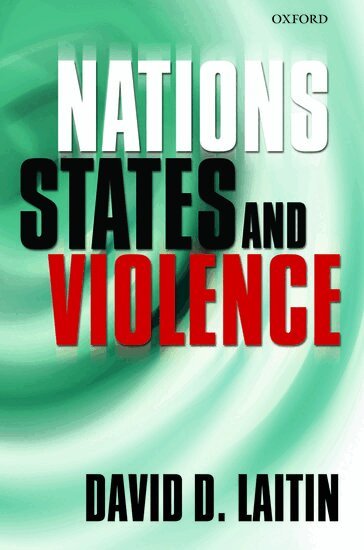
Nations, States, and Violence presents a revisionist view of the sources of nationalism, the relationship of the nation to culture, and the implications of nationalism and cultural heterogeneity for the future of the nation-state. It accepts the now-standard view that national identities are not inherited traits but constructed communities in order to serve political ends. But the resulting national identities do not emerge from some metaphorical plebiscite as had been suggested by some; rather they result from efforts by people to coordinate their identities with people who share at least some cultural traits with them. Coordination leads to powerful social and cultural ties that are hard to unravel, and this explains the persistence of national identities. Understood as the result of coordination dynamics, the implications of national homogeneity and heterogeneity are explored. The book shows that national heterogeneity is not, as it is sometimes accused of being, a source of hatred and r s1ence. Nonetheless, there are advantages to homogeneity for the production of public goods and economic growth. Whatever the positive implications of homogeneity, the book shows that in the current world, classic nation-states are defunct. Heterogeneity is proliferating not only due to migration but also because small groups in many states once thought to be homogeneous are coordinating to demand national recognition. With the prohibitive costs of eliminating cultural heterogeneity, citizens and leaders need to learn how best to manage, or even take advantage of, national diversity within their countries. Management of diversity demands that we understand the coordination aspects of national heterogeneity, a perspective that this book provides. In addition to providing a powerful theory of coordination and cultural diversity, the book provides a host of engaging vignettes of Somalia, Spain, Estonia, and Nigeria, where the author has conducted original field research. The result is a book where theory is combined with interpretations of current issues on nationalism, economic growth, and ethnic violence.
274 kr
Skickas inom 7-10 vardagar
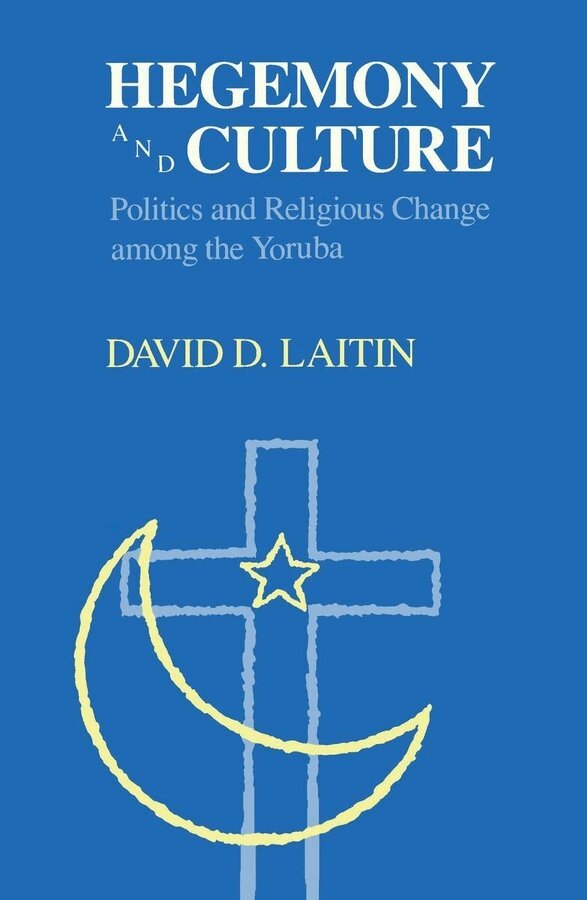
In this ambitious work, David D. Laitin explores the politics of religious change among the Yoruba of Nigeria, then uses his findings to expand leading theories of ethnic and religious politics.
477 kr
Tillfälligt slut
428 kr
Skickas inom 7-10 vardagar
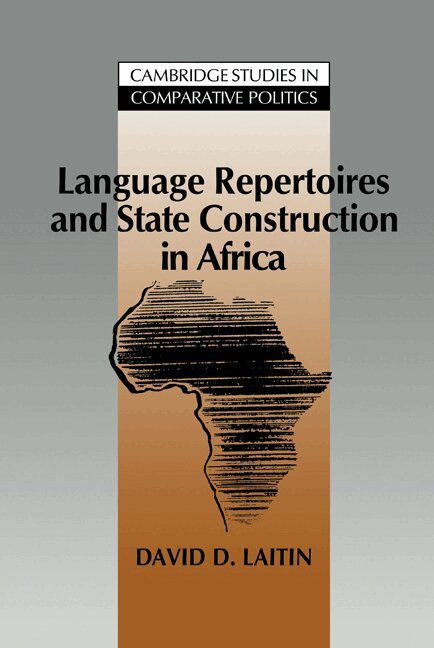
Most African countries have a population composed of a multitude of language groups and most African citizens have a varied repertoire allowing them to rely on different languages for use in the home, at school, in the market, at work and in communicating with political authorities. Language Repertoires and State Construction in Africa analyses the complex language scene in Africa today and asks whether this distinctive web of language use is symptomatic of the early stage of state construction. If so, one would expect that as each of these states develops there will be a rationalisation of language use and agreement on a common language within the country's borders. Alternately, Africa's language scene may be the result of a particular historical context of state construction, with the implication that political development will not lead to the one-state, one-language outcome typical of the idealised nation-state.
1 192 kr
Skickas inom 7-10 vardagar
Most African countries have a population composed of a multitude of language groups and most African citizens have a varied repertoire allowing them to rely on different languages for use in the home, at school, in the market, at work and in communicating with political authorities. Language Repertoires and State Construction in Africa analyses the complex language scene in Africa today and asks whether this distinctive web of language use is symptomatic of the early stage of state construction. If so, one would expect that as each of these states develops there will be a rationalisation of language use and agreement on a common language within the country's borders. Alternately, Africa's language scene may be the result of a particular historical context of state construction, with the implication that political development will not lead to the one-state, one-language outcome typical of the idealised nation-state.
297 kr
Skickas inom 10-15 vardagar
Amid mounting fears of violent Islamic extremism, many Europeans ask whether Muslim immigrants can integrate into historically Christian countries. In a groundbreaking ethnographic investigation of France’s Muslim migrant population, Why Muslim Integration Fails in Christian-Heritage Societies explores this complex question. The authors conclude that both Muslim and non-Muslim French must share responsibility for the slow progress of Muslim integration.“Using a variety of resources, research methods, and an innovative experimental design, the authors contend that while there is no doubt that prejudice and discrimination against Muslims exist, it is also true that some Muslim actions and cultural traits may, at times, complicate their full integration into their chosen domiciles. This book is timely (more so in the context of the current Syrian refugee crisis), its insights keen and astute, the empirical evidence meticulous and persuasive, and the policy recommendations reasonable and relevant.”—A. Ahmad, Choice
1 563 kr
Skickas inom 10-15 vardagar
Since the collapse of the Soviet Union, nationality groups have claimed sovereignty in the new republics bearing their names. With the ascendance of these titular nationality groups, Russian speakers living in the post-Soviet republics face a radical crisis of identity. That crisis is at the heart of David D. Laitin's keenly awaited book. Laitin portrays these Russian speakers as a "beached diaspora" since the populations did not cross international borders; the borders themselves receded. He asks what will become of these populations. Will they learn the languages of the republics in which they live and prepare their children for assimilation? Will they return to a homeland many have never seen? Or will they become loyal citizens of the new republics while maintaining a Russian identity? Through questions such as these and on the basis of ethnographic field research, discourse analysis, and mass surveys, Laitin analyzes trends in four post-Soviet republics: Estonia, Latvia, Kazakhstan, and Ukraine. Laitin concludes that the "Russian-speaking population" is a new category of identity in the post-Soviet world. This conglomerate identity of those who share a language is analogous, Laitin suggests, to such designations as "Palestinian" in the Middle East and "Hispanic" in the United States. The development of this new identity has implications both for the success of the national projects in these states and for interethnic peace.
406 kr
Skickas inom 10-15 vardagar
Since the collapse of the Soviet Union, nationality groups have claimed sovereignty in the new republics bearing their names. With the ascendance of these titular nationality groups, Russian speakers living in the post-Soviet republics face a radical crisis of identity. That crisis is at the heart of David D. Laitin's keenly awaited book. Laitin portrays these Russian speakers as a "beached diaspora" since the populations did not cross international borders; the borders themselves receded. He asks what will become of these populations. Will they learn the languages of the republics in which they live and prepare their children for assimilation? Will they return to a homeland many have never seen? Or will they become loyal citizens of the new republics while maintaining a Russian identity? Through questions such as these and on the basis of ethnographic field research, discourse analysis, and mass surveys, Laitin analyzes trends in four post-Soviet republics: Estonia, Latvia, Kazakhstan, and Ukraine. Laitin concludes that the "Russian-speaking population" is a new category of identity in the post-Soviet world. This conglomerate identity of those who share a language is analogous, Laitin suggests, to such designations as "Palestinian" in the Middle East and "Hispanic" in the United States. The development of this new identity has implications both for the success of the national projects in these states and for interethnic peace.