David de Boer - Böcker
Visar alla böcker från författaren David de Boer. Handla med fri frakt och snabb leverans.
7 produkter
7 produkter
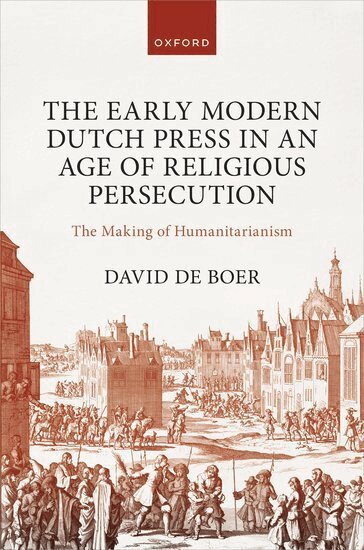
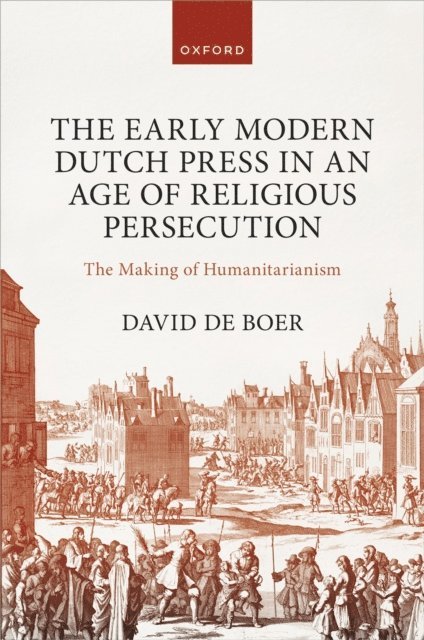
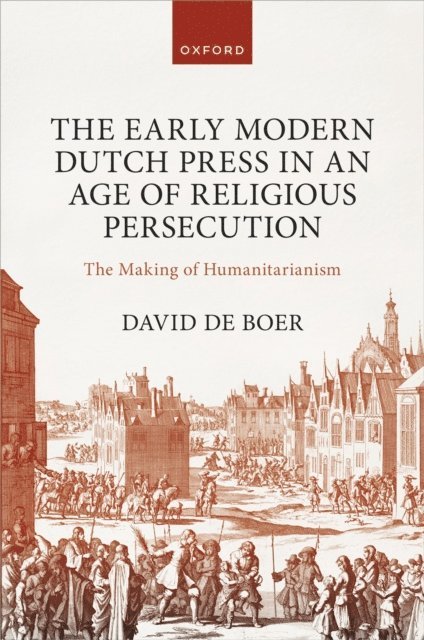
The Early Modern Dutch Press in an Age of Religious Persecution
The Making of Humanitarianism
Inbunden, Engelska, 2023
1 010 kr
Skickas inom 5-8 vardagar
This is an open access title available under the terms of a CC BY-NC-ND 4.0 International licence. It is free to read at Oxford Scholarship Online and offered as a free PDF download from OUP and selected open access locations.For victims of persecution around the world, attracting international media attention for their plight is often a matter of life and death. This study takes us back to the news revolution of seventeenth-century Europe, when people first discovered in the press a powerful new weapon to combat religiously inspired maltreatments, executions, and massacres. To affect and mobilize foreign audiences, confessional minorities and their advocates faced an acute dilemma, one that we still grapple with today: how to make people care about distant suffering? David de Boer argues that by answering this question, they laid the foundations of a humanitarian culture in Europe.As consuming news became an everyday practice for many Europeans, the Dutch Republic emerged as an international hub of printed protest against religious violence. De Boer traces how a diverse group of people, including Waldensians refugees, Huguenot ministers, Savoyard office holders, and many others, all sought access to the Dutch printing presses in their efforts to raise transnational solidarity for their cause. By generating public outrage, calling out rulers, and pressuring others to intervene, producers of printed opinion could have a profound impact on international relations. But crying out against persecution also meant navigating a fraught and dangerous political landscape, marked by confessional tension, volatile alliances, and incessant warfare. Opinion makers had to think carefully about the audiences they hoped to reach through pamphlets, periodicals, and newspapers. But they also had to reckon with the risk of reaching less sympathetic readers outside their target groups.By examining early modern publicity strategies, de Boer deepens our understanding of how people tried to shake off the spectre of religious violence that had haunted them for generations, and create more tolerant societies, governed by the rule of law, reason, and a sense of common humanity.
2 091 kr
Skickas inom 10-15 vardagar
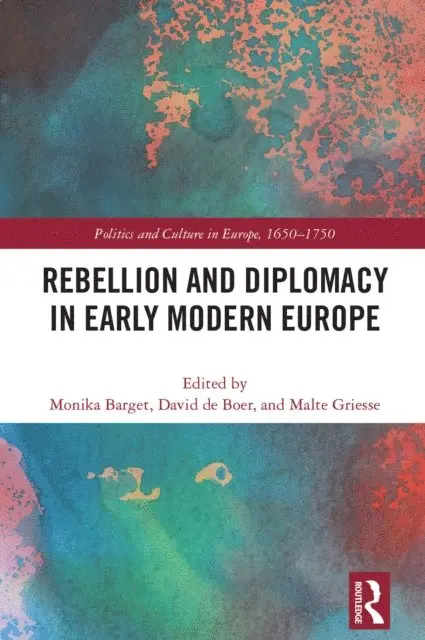
In the seventeenth century, riots, rebellions, and revolts flared around Europe. Concerned about their internal stability, many states responded by closely observing the violent upheavals that plagued their neighbors. Rebellion and Diplomacy in Early Modern Europe investigates how in this struggle for intelligence about internal discord, diplomats emerged as key information brokers and interpreters of Europe’s tumultuous political landscape.The contributions in this volume uncover how diplomatic actors interacted with rulers, opposition leaders, informers, media entrepreneurs, and different audiences in their efforts to understand, communicate, and draw lessons from the insurrections in their time. Rebellion and Diplomacy also examines how diplomats actively tried to shape the course of internal conflicts by managing the dissemination of news, supporting political factions at their court of residence, and even instigating violence.Covering different European regions from the Iberian Peninsula to Scandinavia and from the British Isles to the Carpathian Basin, the book will appeal to all students and researchers interested in early modern diplomacy, politics, and news cultures.
638 kr
Skickas inom 10-15 vardagar
In the seventeenth century, riots, rebellions, and revolts flared around Europe. Concerned about their internal stability, many states responded by closely observing the violent upheavals that plagued their neighbors. Rebellion and Diplomacy in Early Modern Europe investigates how in this struggle for intelligence about internal discord, diplomats emerged as key information brokers and interpreters of Europe’s tumultuous political landscape.The contributions in this volume uncover how diplomatic actors interacted with rulers, opposition leaders, informers, media entrepreneurs, and different audiences in their efforts to understand, communicate, and draw lessons from the insurrections in their time. Rebellion and Diplomacy also examines how diplomats actively tried to shape the course of internal conflicts by managing the dissemination of news, supporting political factions at their court of residence, and even instigating violence.Covering different European regions from the Iberian Peninsula to Scandinavia and from the British Isles to the Carpathian Basin, the book will appeal to all students and researchers interested in early modern diplomacy, politics, and news cultures.
83 kr
Skickas inom 5-8 vardagar
1 177 kr
Skickas inom 10-15 vardagar
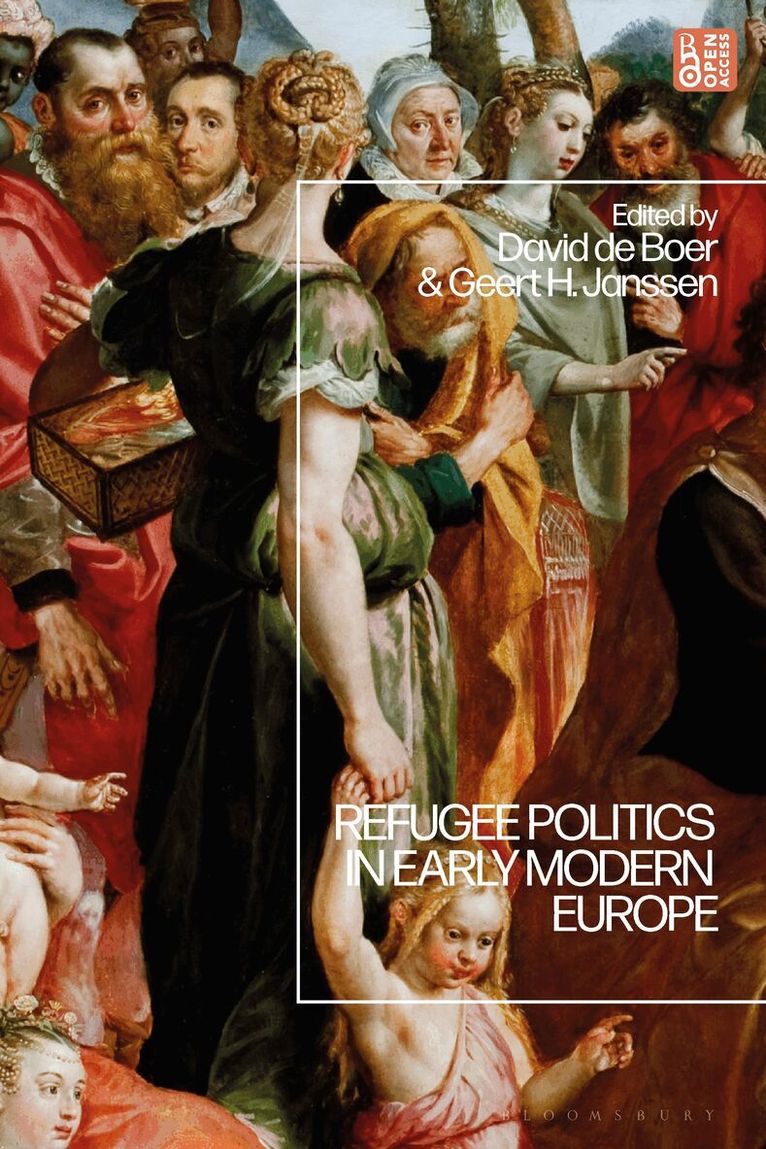
Refugees have existed since ancient times, but it was in the early modern era that they were first recognized as a social category. This open access book maps the invention of the refugee and uncovers their impact on local, regional, and transnational politics.With case studies ranging from Scandinavia to the Mediterranean Basin, Refugee Politics in Early Modern Europe traces how refugees transformed the European continent. Topics explored include: the discursive strategies of exiles to distinguish themselves from other migrants; the role of displaced people in forging humanitarian networks; and the agency of religious minorities in migration management and imperialism. Moving beyond common images of refugees as passive victims of repression, this collection of essays shines a spotlight on the political interplay between displaced people, persecuting authorities, transnational support groups, and receiving societies – drawing a fuller picture of the many decision-making processes that determined the lives of newcomers and their hosts. The result is a sophisticated comparative study of mobility, identity, power, and politics, which will be vital reading to all scholars of migration history.The open access edition of this book is available under a CC BY-NC-ND 4.0 license on www.bloomsburycollections.com. Open access was funded by the Netherlands Organization for Scientific Research (NWO).
499 kr
Kommande
Refugees have existed since ancient times, but it was in the early modern era that they were first recognized as a social category. This open access book maps the invention of the refugee and uncovers their impact on local, regional, and transnational politics.With case studies ranging from Scandinavia to the Mediterranean Basin, Refugee Politics in Early Modern Europe traces how refugees transformed the European continent. Topics explored include: the discursive strategies of exiles to distinguish themselves from other migrants; the role of displaced people in forging humanitarian networks; and the agency of religious minorities in migration management and imperialism. Moving beyond common images of refugees as passive victims of repression, this collection of essays shines a spotlight on the political interplay between displaced people, persecuting authorities, transnational support groups, and receiving societies – drawing a fuller picture of the many decision-making processes that determined the lives of newcomers and their hosts. The result is a sophisticated comparative study of mobility, identity, power, and politics, which will be vital reading to all scholars of migration history.The open access edition of this book is available under a CC BY-NC-ND 4.0 license on www.bloomsburycollections.com. Open access was funded by the Netherlands Organization for Scientific Research (NWO).
Del 54 - Brill’s Studies on Art, Art History, and Intellectual History
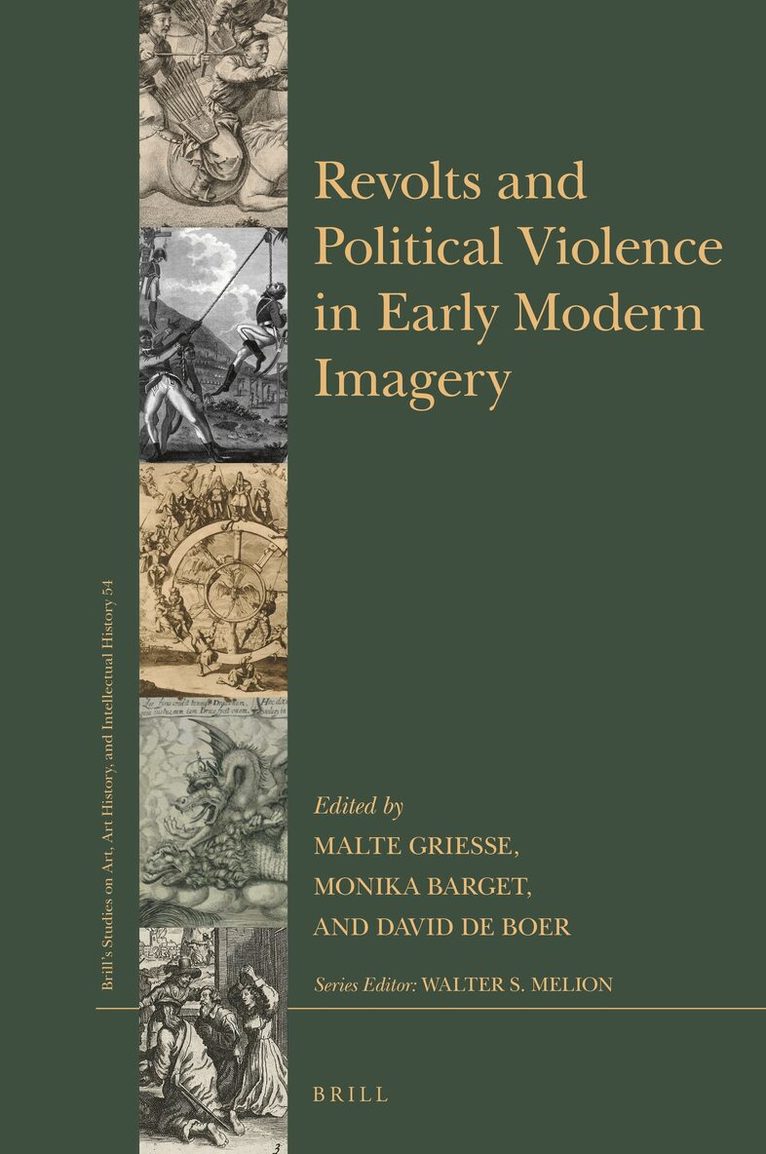
Revolts and Political Violence in Early Modern Imagery
Inbunden, Engelska, 2021
1 687 kr
Skickas inom 5-8 vardagar
In the early modern period, images of revolts and violence became increasingly important tools to legitimize or contest political structures. This volume offers the first in-depth analysis of how early modern people produced and consumed violent imagery, and assesses its role in memory practices, political mobilization, and the negotiation of cruelty and justice. Critically evaluating the traditional focus on Western European imagery, the case studies in this book draw on evidence from Russia, China, Hungary, Portugal, Germany, North America, and other regions. The contributors highlight the distinctions among visual cultures of violence, as well as their entanglements in networks of intensive transregional communication, early globalization, and European colonization.Contributors: Monika Barget, David de Boer, Nóra G. Etényi, Fabian Fechner, Joana Fraga, Malte Griesse, Alain Hugon, Gleb Kazakov, Nancy Kollmann, Ya-Chen Ma, Galina Tirnanić, and Ramon Voges.