David Décary-Hétu – författare
Visar alla böcker från författaren David Décary-Hétu. Handla med fri frakt och snabb leverans.
6 produkter
6 produkter
673 kr
Skickas inom 10-15 vardagar
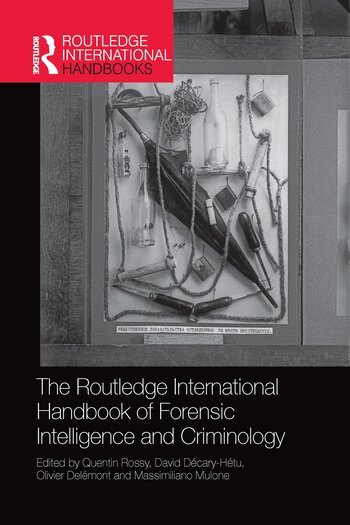
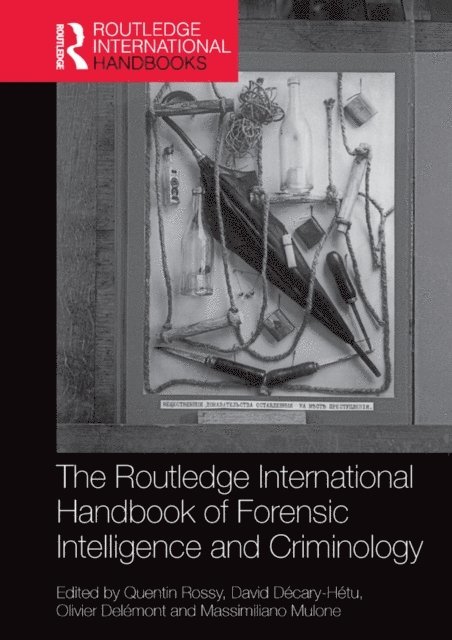
Despite a shared focus on crime and its ‘extended family’, forensic scientists and criminologists tend to work in isolation rather than sharing the data, methods and knowledge that will broaden the understanding of the criminal phenomenon and its related subjects.Bringing together perspectives from international experts, this book explores the intersection between criminology and forensic science and considers how knowledge from both fields can contribute to a better understanding of crime and offer new directions in theory and methodology.This handbook is divided into three parts: Part I explores the epistemological and historical components of criminology and forensic science, focusing on their scientific and social origins.Part II considers how collaboration between these disciplines can bring about a better understanding of the organizations and institutions that react to crime, including the court, intelligence, prevention, crime scene investigation and policing.Part III discusses the phenomena and actors that produce crime, including a reflection on the methodological issues, challenges and rewards regarding the sharing of these two disciplines. The objective of this handbook is to stimulate a ‘new’ interdisciplinary take on the study of crime, to show how both forensic and criminological theories and knowledge can be combined to analyse crime problems and to open new methodological perspectives. It will be essential reading for students and researchers engaged with forensic science, criminology, criminal behaviour, criminal investigation, crime analysis and criminal justice.
1 944 kr
Skickas inom 10-15 vardagar
The first of two volumes, this book about the criminology of Carlo Morselli includes diverse contributions that study the social inter-dependence of criminal phenomena. It presents various studies on the importance and impact of social ties on offenders, victims and the social response to crime.The idea that social relationships are central to the understanding of human phenomena draws its roots from Jacob Moreno’s work in 1934, whose contribution – among others made at about the same time – paved the way for social network analysis (SNA), a set of methods and approaches that study dyadic relationships and their connections to other dyads in the same network. Surprisingly, SNA was not widely adopted in criminology until the end of the 20th century. It took researchers like Carlo Morselli to apply the principles of SNA and graph theory to criminological objects. As a researcher, Morselli embodied SNA; he was a so-called ‘broker’ in his network of social scientists, linking dozens of excellent researchers that he collaborated with, directly or not. Granovetter showed that ‘weak ties’ – or acquaintances – were important in the diffusion of new ideas, and Morselli put that insight to practice in criminology. This collection of works from experts in the field takes on questions that Morselli worked on throughout his career, drawing on his theoretical insights, his methods, and even his general conceptualisation of what organised crime is, and isn’t, to deliver rich and fertile scholarship on the study of social networks in criminology.The Criminology of Carlo Morselli - Part I will be a key resource for academics, researchers, and advanced students of Criminology and Criminal Justice, Sociology, and Social Sciences. The chapters included in this book were originally published as a special issue of Global Crime.
531 kr
Skickas inom 10-15 vardagar
The first of two volumes, this book about the criminology of Carlo Morselli includes diverse contributions that study the social inter-dependence of criminal phenomena. It presents various studies on the importance and impact of social ties on offenders, victims and the social response to crime.The idea that social relationships are central to the understanding of human phenomena draws its roots from Jacob Moreno’s work in 1934, whose contribution – among others made at about the same time – paved the way for social network analysis (SNA), a set of methods and approaches that study dyadic relationships and their connections to other dyads in the same network. Surprisingly, SNA was not widely adopted in criminology until the end of the 20th century. It took researchers like Carlo Morselli to apply the principles of SNA and graph theory to criminological objects. As a researcher, Morselli embodied SNA; he was a so-called ‘broker’ in his network of social scientists, linking dozens of excellent researchers that he collaborated with, directly or not. Granovetter showed that ‘weak ties’ – or acquaintances – were important in the diffusion of new ideas, and Morselli put that insight to practice in criminology. This collection of works from experts in the field takes on questions that Morselli worked on throughout his career, drawing on his theoretical insights, his methods, and even his general conceptualisation of what organised crime is, and isn’t, to deliver rich and fertile scholarship on the study of social networks in criminology.The Criminology of Carlo Morselli - Part I will be a key resource for academics, researchers, and advanced students of Criminology and Criminal Justice, Sociology, and Social Sciences. The chapters included in this book were originally published as a special issue of Global Crime.
1 944 kr
Skickas inom 10-15 vardagar
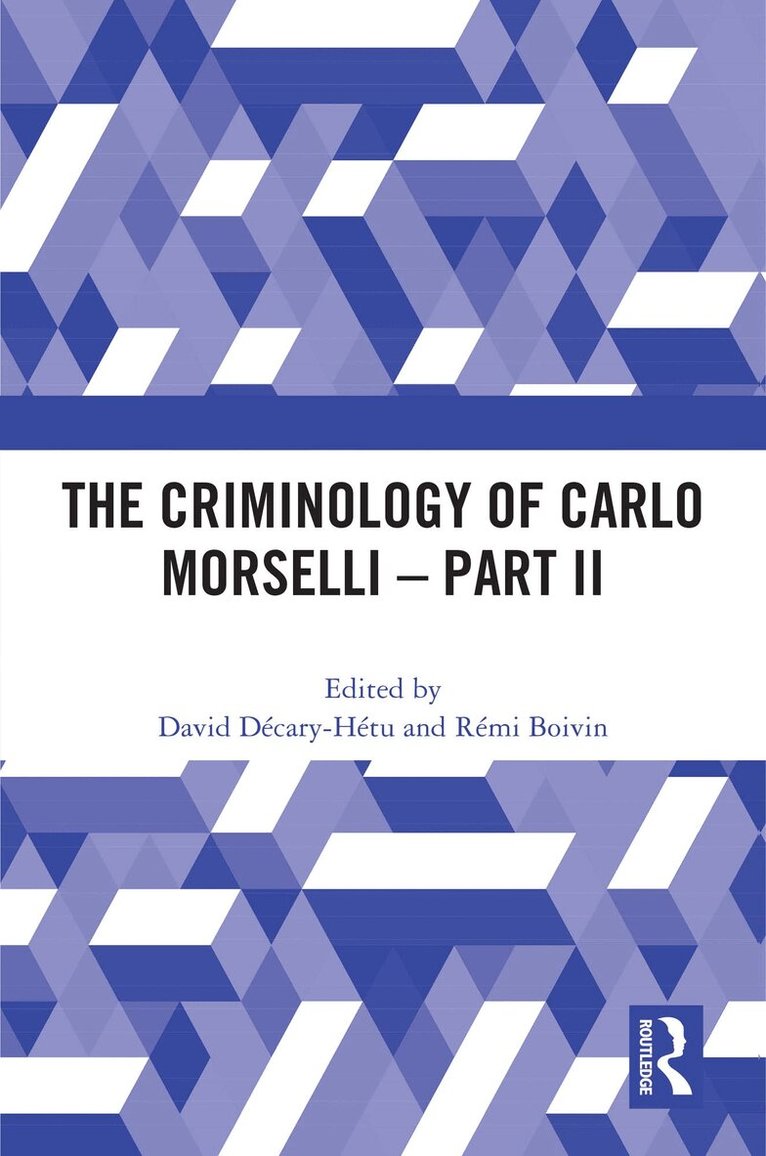
The second of two volumes, this book about the criminology of Carlo Morselli includes a diversity of contributions that study the social inter-dependence of criminal phenomena. It presents various studies on the importance and impact of social ties on offenders, victims and the social response to crime.The idea that social relationships are central to the understanding of human phenomena draws its roots from Jacob Moreno’s work in 1934, whose contribution – among others made at about the same time – paved the way for social network analysis (SNA), a set of methods and approaches that study dyadic relationships and their connections to other dyads in the same network. Surprisingly, SNA was not widely adopted in criminology until the end of the 20th century. It took researchers like Carlo Morselli to apply the principles of SNA and graph theory to criminological objects. As a researcher, Morselli embodied SNA; he was a so-called ‘broker’ in his network of social scientists, linking dozens of excellent researchers that he collaborated with, directly or not. Granovetter showed that ‘weak ties’ – or acquaintances – were important in the diffusion of new ideas, and Morselli put that insight to practice in criminology. While it is impossible to summarise Carlo Morselli’s work in a single paper or book, the breadth of his contributions to criminology are highlighted in the six chapters of this volume, which all draw from a specific area of interest of Carlo Morselli.The Criminology of Carlo Morselli - Part II will be a key resource for academics, researchers, and advanced students of Criminology and Criminal Justice, Sociology, Social Sciences. The chapters included in this book were originally published as a special issue of Global Crime.
531 kr
Skickas inom 10-15 vardagar
The second of two volumes, this book about the criminology of Carlo Morselli includes a diversity of contributions that study the social inter-dependence of criminal phenomena. It presents various studies on the importance and impact of social ties on offenders, victims and the social response to crime.The idea that social relationships are central to the understanding of human phenomena draws its roots from Jacob Moreno’s work in 1934, whose contribution – among others made at about the same time – paved the way for social network analysis (SNA), a set of methods and approaches that study dyadic relationships and their connections to other dyads in the same network. Surprisingly, SNA was not widely adopted in criminology until the end of the 20th century. It took researchers like Carlo Morselli to apply the principles of SNA and graph theory to criminological objects. As a researcher, Morselli embodied SNA; he was a so-called ‘broker’ in his network of social scientists, linking dozens of excellent researchers that he collaborated with, directly or not. Granovetter showed that ‘weak ties’ – or acquaintances – were important in the diffusion of new ideas, and Morselli put that insight to practice in criminology. While it is impossible to summarise Carlo Morselli’s work in a single paper or book, the breadth of his contributions to criminology are highlighted in the six chapters of this volume, which all draw from a specific area of interest of Carlo Morselli.The Criminology of Carlo Morselli - Part II will be a key resource for academics, researchers, and advanced students of Criminology and Criminal Justice, Sociology, Social Sciences. The chapters included in this book were originally published as a special issue of Global Crime.
3 200 kr
Skickas inom 10-15 vardagar
Despite a shared focus on crime and its ‘extended family’, forensic scientists and criminologists tend to work in isolation rather than sharing the data, methods and knowledge that will broaden the understanding of the criminal phenomenon and its related subjects.Bringing together perspectives from international experts, this book explores the intersection between criminology and forensic science and considers how knowledge from both fields can contribute to a better understanding of crime and offer new directions in theory and methodology.This handbook is divided into three parts: Part I explores the epistemological and historical components of criminology and forensic science, focusing on their scientific and social origins.Part II considers how collaboration between these disciplines can bring about a better understanding of the organizations and institutions that react to crime, including the court, intelligence, prevention, crime scene investigation and policing.Part III discusses the phenomena and actors that produce crime, including a reflection on the methodological issues, challenges and rewards regarding the sharing of these two disciplines.The objective of this handbook is to stimulate a ‘new’ interdisciplinary take on the study of crime, to show how both forensic and criminological theories and knowledge can be combined to analyse crime problems and to open new methodological perspectives. It will be essential reading for students and researchers engaged with forensic science, criminology, criminal behaviour, criminal investigation, crime analysis and criminal justice.