David Dilks - Böcker
Visar alla böcker från författaren David Dilks. Handla med fri frakt och snabb leverans.
4 produkter
4 produkter
595 kr
Skickas inom 7-10 vardagar
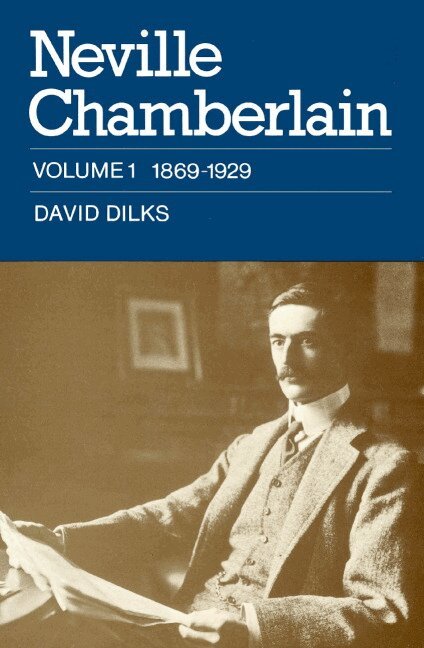
This is the first volume of a major two-volume biography of Neville Chamberlain (1869-1940), which matches his ample collection of private papers against the public records, and brings in from other collections of papers letters written to or by Chamberlain. This first volume tells the story of the first sixty years of Chamberlain's life. As well as his role in national politics, it covers his endeavours to prove himself in a different sphere by building up his business concerns in Birmingham, and through service to the city. Chamberlain's family letters and diaries are freely drawn upon. There is much material about Chamberlain's personal relations with his half-brother Austen, Lloyd George, Baldwin and Churchill. Chamberlain is revealed as a figure of wide culture, many international connections, and much reserve in his personal dealings, but with astonishing energy and resourcefulness in administration and boldness in policy.
509 kr
Skickas inom 5-8 vardagar
Sir Alexander Cadogan was one of the most outstanding civil servants Britain has ever known. He kept a diary from 1933 until the year of his death, 1968, at the age of eighty-three. This volume concentrates on the crucial years from 1938 to 1945. In 1938 Sir Alexander became the Under-Secretary of State at the Foreign Office. He was to hold that position for the next eight years. As chief adviser to three Foreign Secretaries, Eden (for two periods), Halifax and Bevin, working under three Prime Ministers in Chamberlain, Churchill and Attlee, Cadogan had longer consecutive service at the centre of British affairs than any of them. His tenure of office lasted from the first rumblings of the Czechoslovak and Munich crises through the entire war years to the establishment of the United Nations Organization (in the birth of which - and later as Britain's Permanent Representative - he had a profound and formative role admired on both sides of the Iron Curtain). As head of the Foreign Office, trusted and respected by statesmen and colleagues alike for his calm courage, integrity and 'common sense and judgement carried to the point where they almost amounted to genius', Cadogan played a vital part in the conduct and decision-making if his country's affairs. For eight years he attended the most important Cabinet and Cabinet Committee meetings, ran a great Department of State, and accompanied Churchill on his many wartime journeys to the Big Power conferences at Washington, Moscow, Cairo, Tehran and Yalta.Sir Alexander's meticulously kept private record of those years is a document of the highest historical value. It illumines the workings of the Foreign Office and the Cabinet, the conduct of alliances and international diplomacy at a time of unparalleled importance. From these diaries and the more personal 'diary letters' sent by Sir Alexander to his wife when he travelled abroad, David Dilks has produced a book of lasting importance.On 15 August 1945, with the announcement of the Japanese surrender, Cadogan wrote: ' . . . here is the culmination. The problems in front of us are manifold and awful. But I've lived through England's finest hour . . . ' In essence, The Diaries of Sir Alexander Cadogan are a record of the part played in that hour by one of England's finest servants.
726 kr
Skickas inom 3-6 vardagar
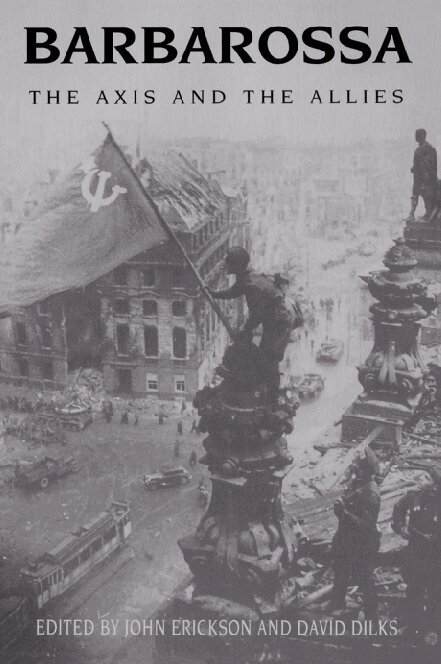
On 22 June 1941, German tanks rolled into the Soviet Union in an offensive which was to claim the lives of nearly 49 million people. Until the opening of Soviet archives, however, and the easing of their ideological grip, 'Operation Barbarossa' remained a mystery.Now, through the distinguished contributions of people like President Yeltsin's adviser, Colonel-General Dmitri Volkogonov, and the German historian Professor Klaus-Jurgen Muller, comes a book which for the first time challenges the official Soviet historiography and offers the first truly global picture of the war in Russia. From Nazi-Soviet relations at the start of the war, and the Soviet Union's response to the German attack, Barbarossa moves to the little examined subject of the invasion's aftermath. And offering dramatic new evidence on Hitler's objectives, Stalin's strategy and readiness for war, the Battle of Moscow, and Japan's wartime policy towards the Soviet Union, this book also deals with the previously taboo subjects of the personalities and politics of collaboration and the massive human toll of the invasion.
305 kr
Skickas inom 10-15 vardagar
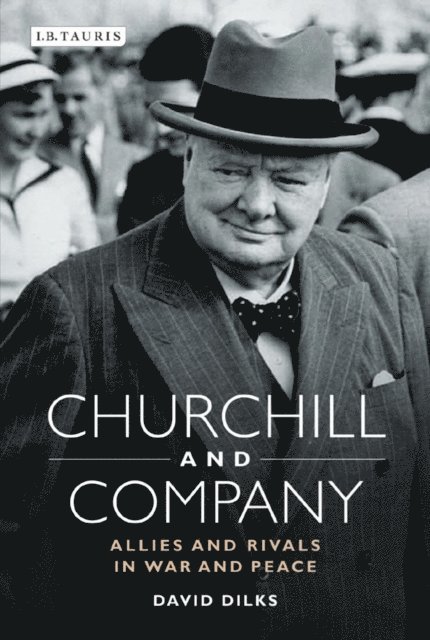
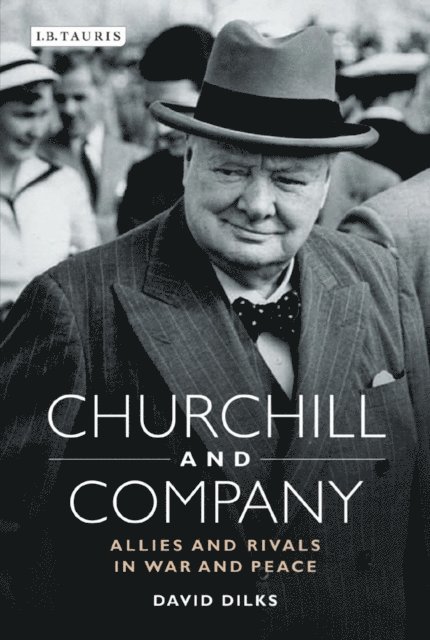
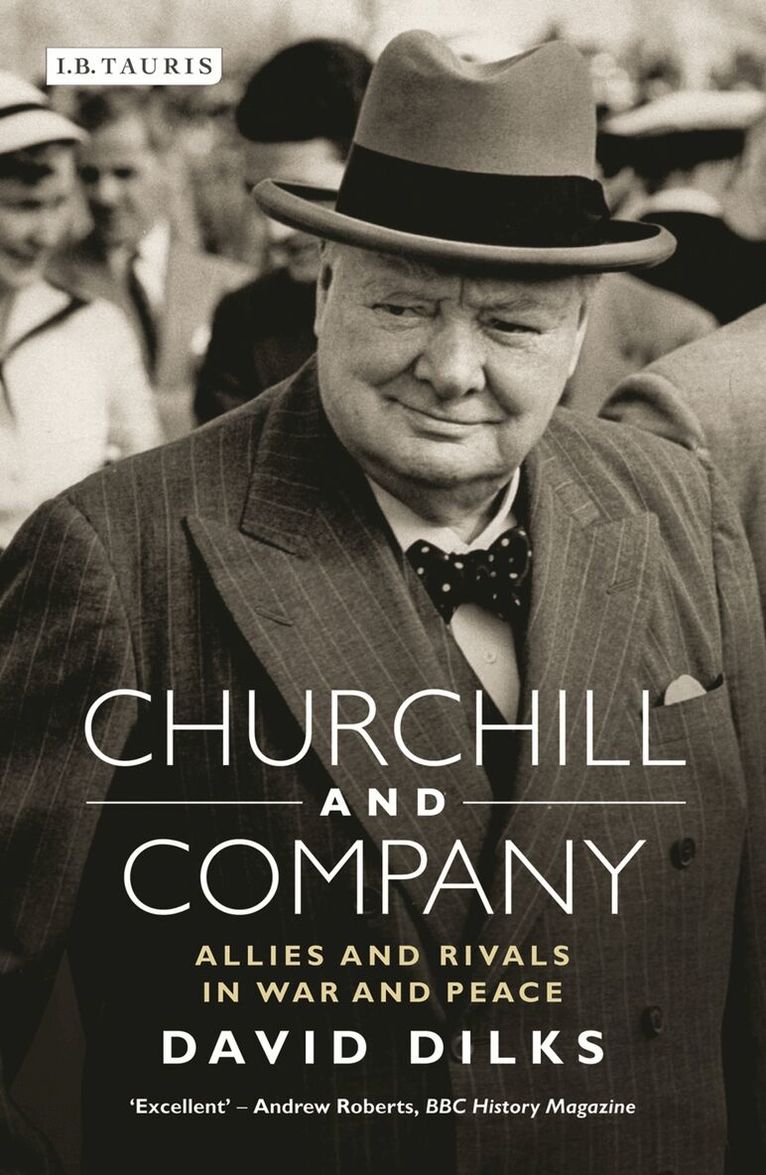
Winston Churchill, the great wartime leader and peacetime Prime Minister, is one of the dominating figures of the 20th century. In this stimulating and original book, David Dilks - the eminent historian of modern Britain and a leading Churchill scholar - provides a fascinating source of new discoveries and insights. He shows Churchill, not only as a war leader and international statesman, but also as a private person - with a rich variety of interests, enthusiasms, friendships and rivalries. Churchill's relations with other leading politicians and statesmen of the age - both within Britain and internationally - illuminate his handling of friends and enemies. Sometimes these categories were not easily separated; for a long while, Churchill thought of Stalin as a friend or at least a comrade in arms, and only with extreme reluctance did he come to look upon him ultimately as an enemy. He regarded Roosevelt with admiration and gratitude, yet the balance of evidence suggests that the President felt less warmly towards him, especially after 1943.Dilks casts new and penetrating light on Churchill during World War II, including his dramatic and troubled relationship with Charles de Gaulle - where political problems were softened by Churchill's love of France. The aftermath of World War II, relations with Stalin, the Soviet Union and the Cold War all dominated Churchill's subsequent career. The last chapter draws attention to the influence of 'history' on statesmen and others, not least because no public man of the last century - with the possible exception of de Gaulle - has influenced on Churchill's scale, or with his effectiveness, the writing and the making of history. Whether in or out of office, Churchill's influence has been felt in all areas of British politics and national life. David Dilks brings Churchill to life for all those interested modern British and international history whether student, specialist or general reader.