David Emanuel Andersson - Böcker
Visar alla böcker från författaren David Emanuel Andersson. Handla med fri frakt och snabb leverans.
8 produkter
8 produkter
862 kr
Skickas inom 7-10 vardagar
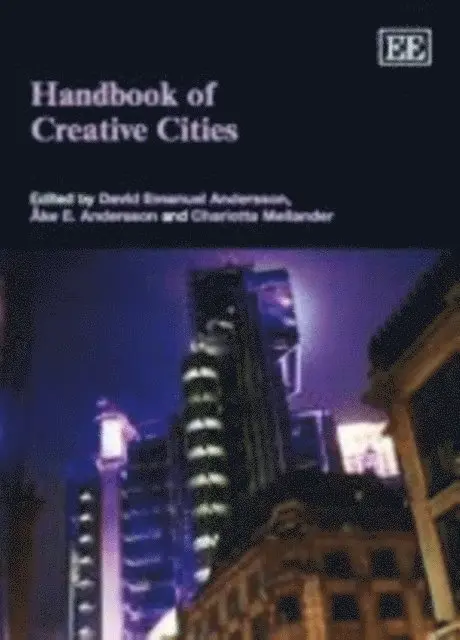
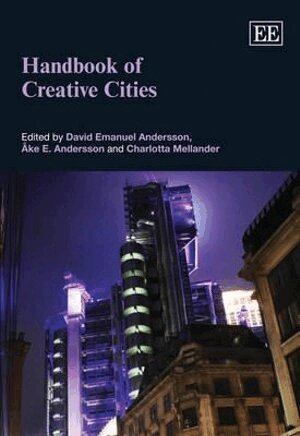
With the publication of The Rise of the Creative Class by Richard Florida in 2002, the 'creative city' became the new hot topic among urban policy makers, planners and economists. Florida has developed one of three path-breaking theories about the relationship between creative individuals and urban environments. The economist Ake E. Andersson and the psychologist Dean Simonton are the other members of this 'creative troika'. In the Handbook of Creative Cities, Florida, Andersson and Simonton appear in the same volume for the first time. The expert contributors in this timely Handbook extend their insights with a varied set of theoretical and empirical tools. The diversity of the contributions reflect the multidisciplinary nature of creative city theorizing, which encompasses urban economics, economic geography, social psychology, urban sociology, and urban planning. The stated policy implications are equally diverse, ranging from libertarian to social democratic visions of our shared creative and urban future. Being truly international in its scope, this major Handbook will be particularly useful for policy makers that are involved in urban development, academics in urban economics, economic geography, urban sociology, social psychology, and urban planning, as well as graduate and advanced undergraduate students across the social sciences and in business.
1 537 kr
Skickas inom 7-10 vardagar
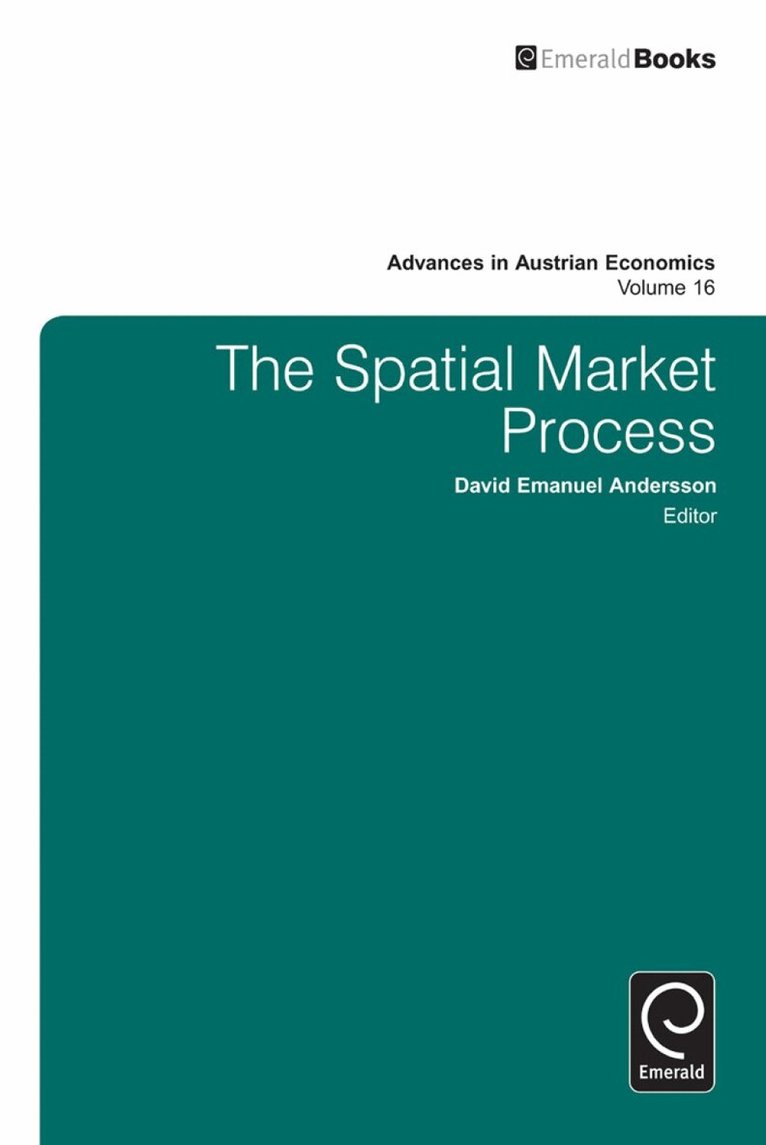
Key features of Austrian economic theory are the use of methodological individualism, the view that entrepreneurs cause development, and the recognition that local knowledge is largely tacit and thus difficult to communicate. The contributors to The Spatial Market Process show how these and other Austrian features provide an alternative foundation for understanding the spatial manifestation of economic phenomena. Many chapters elaborate upon theoretical insights first formulated by F.A. Hayek. The work of urban theorist Jane Jacobs, the entrepreneurship theories of both Joseph Schumpeter and Israel Kirzner, transaction costs in the Coasean tradition, and Fritz Machlup's notion of "knowledge conveyors" are examples of other theoretical constructs that are integrated into new spatial theories by the contributors; combining classical Austrian theories with contemporary breakthroughs.
1 923 kr
Skickas inom 7-10 vardagar
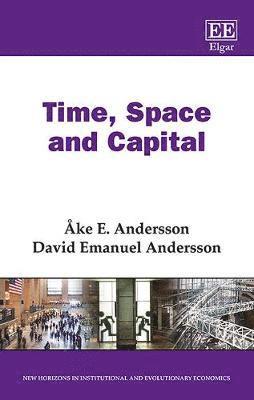
In this challenging book, the authors demonstrate that economists tend to misunderstand capital. Frank Knight was an exception, as he argued that because all resources are more or less durable and have uncertain future uses they can consequently be classed as capital. Thus, capital rather than labor is the real source of creativity, innovation, and accumulation. But capital is also a phenomenon in time and in space. Offering a new and path-breaking theory, they show how durable capital with large spatial domains - infrastructural capital such as institutions, public knowledge, and networks - can help explain the long-term development of cities and nations. This is a crucial book for spatial and institutional economists and anyone working outside the neoclassical mainstream. Academics and students of economic history, urban and regional planning, and economic sociology will also find it an illuminating and accessible exploration of time, space and capital.
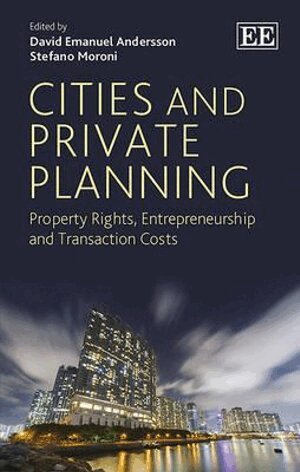
Cities and Private Planning
Property Rights, Entrepreneurship and Transaction Costs
Inbunden, Engelska, 2014
1 979 kr
Skickas inom 7-10 vardagar
Through comprehensive case studies of privately planned cities and neighborhood in Asia, Europe and North America, this book characterizes the theoretical basis and empirical manifestations of private urban planning. In this innovative volume, Andersson and Moroni develop an under-studied aspect of urban planning and re-evaluate conceptions of our urban future.Urban planning is often construed only as a form of public planning. This misinterpretation is revealed through an empirical focus on how cities have been planned in the past and how the capacity of private actors will shape planning in the future. Private planning is responsible for most small-scale infill developments, ranging from single-family housing to hotels. However, examples of non-governmental actors that plan larger areas, such as homeowners' associations in the United States and private cities in India, are becoming manifest. Private urban planners are guided by price signals to supply infrastructure and regulations that make land more valuable. Using analytical tools from theoretical traditions such as Austrian and new institutional economics, the contributors to this book eschew the mainstream assumptions that underlie much of the critique of profit-seeking entrepreneurship among urban planners, sociologists and geographers.This volume will be invaluable for urban planners. Economists in a variety of fields will also be interested in the diverse application of economic theory, including applied urban economists, Austrian economists, new institutional economists and public choice economists.Contributors: N. Alfasi, D.E. Andersson, W.E. Block, E. Buitelaar, W. Cox, F.E. Foldvary, M. Galle, P. Gordon, R.G. Holcombe, L.W-C. Lai, A. Lowi, S. MacCallum, T. Margalit, S. Moroni, R. O'Toole, S. Rajagopalan, N. Sorel, A. Tabarrok
2 364 kr
Skickas inom 7-10 vardagar
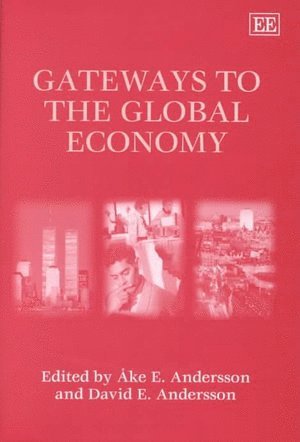
In the post-industrial network economy, international gateway regions are becoming increasingly important. These gateway regions are the nodes (defined as a city or a city region) that act as saddle points between a region and the global economy. While gateway regions have existed ever since inter-regional trade was first practised, new non-trade networks, and the wider global economy, have made these regions more complex. The book includes discussions of infrastructure networks such as the internet and air transport, as well as networking activities such as long-distance scientific cooperation, financial networks and direct investments. The contributors have expertise in fields such as regional economics, economic geography, institutional economics and business administration.The book offers in-depth analysis of both existing and developing gateway regions in three sections:North AmericaAsia-PacificEuropeEconomists and researchers with an interest in regions, the knowledge economy and institutions will find this book of great value. It will also be of interest to economic geographers, regional planners and development agencies.
1 675 kr
Skickas inom 7-10 vardagar
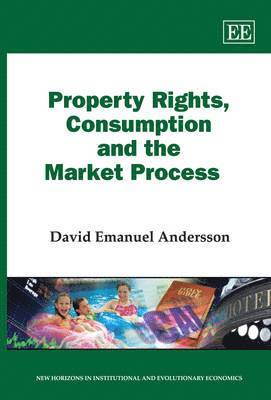
Property Rights, Consumption and the Market Process extends property rights theory in new and exciting directions by combining complementary insights from Austrian, institutional and evolutionary economics. Mainstream economics tends to analyse property rights within a static equilibrium framework. In this book David Andersson reformulates property rights theory as an evolutionary theory of the market process.This original work includes many valuable insights and new analysis such as:combining Yoram Barzel's theory of property rights, Ludwig Lachmann's theory of capital, the resource-based view of the firm and the entrepreneurship theories of Frank Knight, Joseph Schumpeter and Israel Kirznerapplying Ronald Inglehart's theory of value change to discontinuities in how imitative behaviour influences consumer choicea new distributional perspective on the Hayekian knowledge problema model of consumer choice that combines lexicographic characteristics and learning processesa methodological approach that considers the perceived causal and evidential utilities of a theoryoriginal empirical material (hedonic price functions and case studies) and new areas of application for important computer simulation results.David Andersson's book will be warmly welcomed by heterodox economists and new institutional economists, as well as economists of entrepreneurship studies, regional development and urban planning.
3 627 kr
Skickas inom 7-10 vardagar
With the publication of The Rise of the Creative Class by Richard Florida in 2002, the 'creative city' became the new hot topic among urban policy makers, planners and economists. Florida has developed one of three path-breaking theories about the relationship between creative individuals and urban environments. The economist Ake E. Andersson and the psychologist Dean Simonton are the other members of this 'creative troika'. In the Handbook of Creative Cities, Florida, Andersson and Simonton appear in the same volume for the first time. The expert contributors in this timely Handbook extend their insights with a varied set of theoretical and empirical tools. The diversity of the contributions reflect the multidisciplinary nature of creative city theorizing, which encompasses urban economics, economic geography, social psychology, urban sociology, and urban planning. The stated policy implications are equally diverse, ranging from libertarian to social democratic visions of our shared creative and urban future. Being truly international in its scope, this major Handbook will be particularly useful for policy makers that are involved in urban development, academics in urban economics, economic geography, urban sociology, social psychology, and urban planning, as well as graduate and advanced undergraduate students across the social sciences and in business.
Future of the Post-industrial Society
Individualism, Creativity and Entrepreneurship
Inbunden, Engelska, 2023
482 kr
Skickas inom 10-15 vardagar
This book studies the ongoing transition from an industrial to a creative (or post-industrial) society and how the creative society depends on a ‘soft infrastructure’ of individualist values and institutions. It explains this by looking first at the key actors in the creative society: creative individuals and entrepreneurial individuals, using insights from social and cognitive psychology and the economic theory of entrepreneurship. It shows how individual creativity and entrepreneurship are supported by both cultural individualism, based on the work of political scientists Ronald Inglehart and Christian Welzel, as well as political individualism, the principles of a democratic market economy guided by classical liberalism. The book offers a number of policy implications that result from the connection of this multidisciplinary reconceptualization of individualism to economic creativity. It discusses a system of property rights that accommodates the creation of new property, ranging from the result of what we normally think of as product innovation to larger-scale innovations embodied in the formation of new lifestyle communities. It also considers examples such as universities that are more open to experimentation and more autonomous from government regulation, and a more liberal immigration policy that may result from the positive association between population diversity and creativity. This book is intended to support further interdisciplinary and multidisciplinary research on the creative society (also known as post-industrialism, the postmodern society or the knowledge-based society). It will be of interest to academics and postgraduate students working in political economy, entrepreneurship, institutional economics, Austrian economics, and public policy.