David Ferranti - Böcker
Visar alla böcker från författaren David Ferranti. Handla med fri frakt och snabb leverans.
4 produkter
4 produkter
434 kr
Skickas inom 10-15 vardagar
In recent years, the developing world has seen a burst of efforts to reduce corruption, increase transparency and accountability, and improve governance. Needless to say, this is an important and encouraging development. However, the lack of a reliable compass to describe where a country is at a given momentand where it could be heading in the absence or acceptance of proposed reformscan result in disastrous missteps. The unfortunate absence of such a guide has helped lead to innumerable failed governments or ineffective regimes. This important book aims to fill that void.How to Improve Governance emphasizes the need for an overall analytical framework that can be applied to different countries to help analyze their current situations, identify potential areas for improvement, and assess their relative feasibility and the steps needed to promote them. A country-specific analysis needs to be comprehensive, in the sense that it includes the four concepts of transparency, accountability, governance, and anticorruption throughout the calculus. Without such an analytic framework, any reform attempt is likely to flounder for lack of a shared understanding of the underlying problems and of the feasible reforms. The book gives special emphasis to the potential for civil society groups to play a stronger role in holding governments accountable for their use of public resources, and to the importance of developing politically feasible, prioritized country strategies for reform.""Whether one looks at how to increase domestic demand for good governance, how to make government more accountable to the public, or how to build democratic processes that deliver results, the underlying issues are essentially the same.... As development actors of various types... seek to help, more and more of them are calling for a clearer conceptual framework to guide their efforts.""From the Introduction
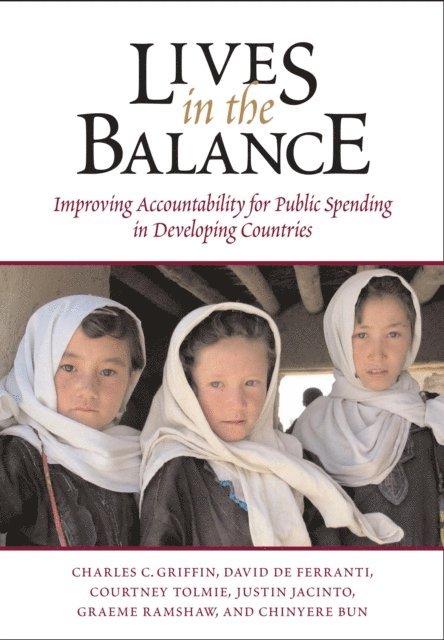
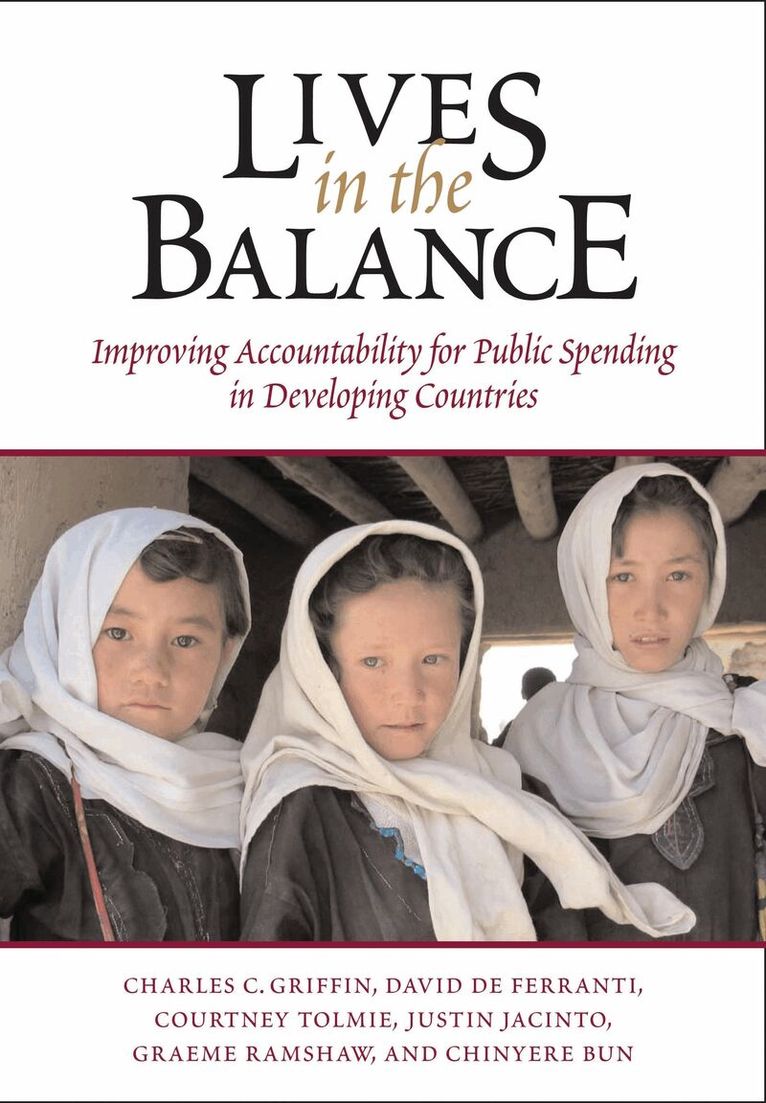
Lives in the Balance
Improving Accountability for Public Spending in Developing Countries
Häftad, Engelska, 2010
287 kr
Skickas inom 10-15 vardagar
Because of its potential impact, and, in some cases, the harm it has brought, foreign aid is under the microscope. Donor countries, who don't want simply to give money away; recipient nations, who need to make the most of what they have and get; and analysts, policymakers, and writers are all scrutinizing how much is spent and where it goes. Perhaps more important, aid is only a small part of what developing country governments spend. Their own resources finance 80 percent or more of health and education spending except in the most aid-dependent countries. Lives in the Balance investigates a vital aspect of this landscapehow best to ensure that public spending, including aid money, gets to the right destination.The development of democratic institutions and the spread of cheap communications technology in developing countries make it possible for the ""demand-side""citizens and civil society institutionsto advocate for improved transparency, stronger accountability, better priorities, reduced corruption, and more emphasis on helping the poor. Securing real reform will depend not only on knowledge of how the recipient government operates, but also how to work with partner entitiesthe media, the private sector, other organizations, and legislatorsto raise awareness and compel change.
338 kr
Skickas inom 10-15 vardagar
Investing in education, opening up to new technologies through foreign trade and investment, and encouraging private sector research and development (R&D) are the keys to unlocking the potential of technology to speed up economic growth in Latin America and the Caribbean (LAC). This work advises Latin American and Caribbean governments to address the region's deficits in skills and technology, thereby boosting productivity which is essential to improving growth prospects. To close the ""productivity gap"" in LAC, the report calls for a range of policy approaches and strategies, depending on a country's level of development. This World Bank study identifies three progressive stages in a country's technological evolution - adoption, adaptation and creation - and observes that policies should be designed to address the particular challenges that accompany each stage.
382 kr
Skickas inom 10-15 vardagar
With the exception of Sub-Saharan Africa, Latin America and the Caribbean has been one of the regions of the world with the greatest inequality. Inequality in Latin America and the Caribbean: Breaking with History? explores why the region suffers from such persistent inequality, identifies how it hampers development, and suggests ways to achieve greater equity in the distribution of wealth, incomes and opportunities. The study draws on data from 20 countries based on household surveys covering 3.6 million people, and reviews extensive economic, sociological and political science studies on inequality in Latin America. To address the deep historical roots of inequality in Latin America, and the powerful contemporary economic, political and social mechanisms that sustain it, Inequality in Latin America and the Caribbean outlines four broad areas for action by governments and civil society groups to break this destructive pattern: Build more open political and social institutions, that allow the poor and historically subordinate groups to gain a greater share of agency, voice and power in society. Ensure that economic institutions and policies seek greater equity, through sound macroeconomic management and equitable, efficient crisis resolution institutions, that avoid the large regressive redistributions that occur during crises, and that allow for saving in good times to enhance access by the poor to social safety nets in bad times. Increase access by the poor to high-quality public services, especially education, health, water and electricity, as well as access to farmland and the rural services. Protect and enforce the property rights of the urban poor. Reform income transfer programs so that they reach the poorest families.