David G. Mandelbaum - Böcker
Visar alla böcker från författaren David G. Mandelbaum. Handla med fri frakt och snabb leverans.
10 produkter
10 produkter
1 031 kr
Skickas inom 3-6 vardagar
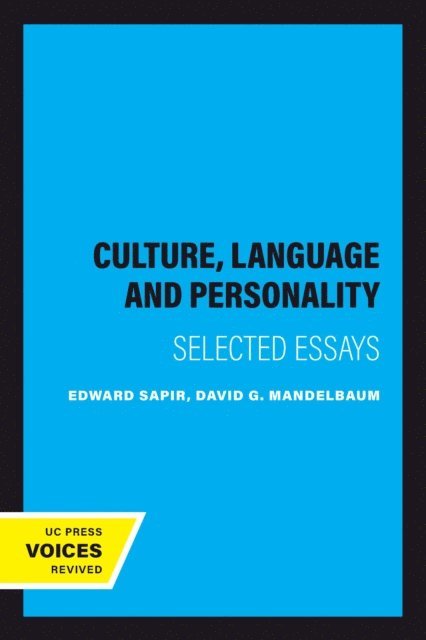
Selected Writings of Edward Sapir in Language, Culture and Personality, edited by David G. Mandelbaum, brings together the essential work of one of the most brilliant and wide-ranging intellectuals of the twentieth century. Sapir’s genius lay in his ability to combine meticulous analysis of linguistic data with sweeping theoretical insight. His contributions in linguistics spanned Germanic, Indo-European, and Semitic traditions, but his most groundbreaking work came from the study of American Indian languages, where he demonstrated the structural complexity and creativity of nonwritten traditions. For Sapir, however, the study of language could not be reduced to phonetics and grammar; speech was a cultural and social phenomenon, deeply intertwined with environment, thought, and personality. This volume reflects his dual commitment to rigorous linguistic science and to anthropology more broadly conceived, situating language within the patterns of culture and the dynamics of human life.The collection also highlights Sapir’s remarkable versatility, extending from studies of phonemes and symbolic sound patterns to essays on music, literature, religion, and the interplay of culture and personality. His classic Time Perspective in Aboriginal American Culture stands alongside reflections on English semantics, cultural change, and psychiatric anthropology, revealing a scholar equally at home in formal analysis and in probing the human condition. Sapir’s writings are marked by clarity, aesthetic sensibility, and a distinctive ability to illuminate the connections between small details and vast theoretical questions. Mandelbaum’s careful selection and framing provide scholars with both the breadth and coherence of Sapir’s legacy. For linguists, anthropologists, historians of science, and cultural theorists, this volume serves not only as an indispensable reference but also as a reminder of the intellectual power and creativity of a figure whose work continues to shape the human sciences.This title is part of UC Press's Voices Revived program, which commemorates University of California Press’s mission to seek out and cultivate the brightest minds and give them voice, reach, and impact. Drawing on a backlist dating to 1893, Voices Revived makes high-quality, peer-reviewed scholarship accessible once again using print-on-demand technology. This title was originally published in 1949.
788 kr
Skickas inom 3-6 vardagar
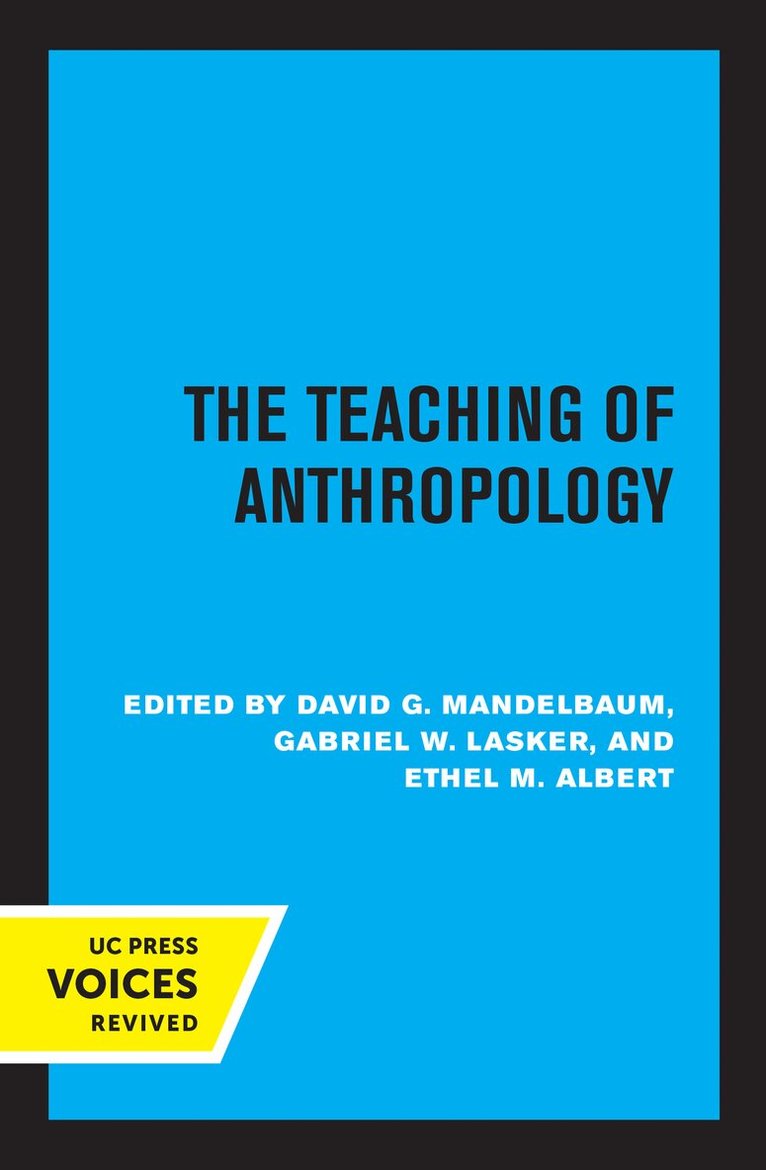
The Teaching of Anthropology (Abridged Edition), edited by David G. Mandelbaum, Gabriel W. Lasker, and Ethel M. Albert, is a landmark appraisal of how anthropology should be taught, particularly at the undergraduate level in the United States. Emerging at a moment of expanding enrollments, proliferating subfields, and growing institutional demands, the volume grapples with the central pedagogical challenge of transmitting anthropology’s unique culture of inquiry. Its contributors argue that anthropology’s value lies in its holistic scope, its grounding in field research, and its insistence on viewing human variation through scientific method—qualities that not only illuminate diverse peoples but also provide students with transferable analytic habits for understanding their own world.The collection ranges across the major subfields—biological, archaeological, linguistic, and cultural/social anthropology—while also treating applied anthropology, graduate training, and the discipline’s broader academic context. Essays emphasize the unity of anthropology through the central concept of culture, advocate for carefully chosen case studies to balance scope with depth, and show how applied and comparative studies can clarify theory. With a focus on practical teaching concerns—curricular sequencing, course design, and coordination within expanding departments—the book demonstrates how anthropology can remain scientifically rigorous, pedagogically compelling, and socially relevant. In presenting both points of consensus and unresolved debates, it provides a foundational guide for instructors, departments, and planners committed to sustaining anthropology’s vitality in higher education.This title is part of UC Press's Voices Revived program, which commemorates University of California Press’s mission to seek out and cultivate the brightest minds and give them voice, reach, and impact. Drawing on a backlist dating to 1893, Voices Revived makes high-quality, peer-reviewed scholarship accessible once again using print-on-demand technology. This title was originally published in 1963.
665 kr
Skickas inom 3-6 vardagar
This title is part of UC Press's Voices Revived program, which commemorates University of California Press’s mission to seek out and cultivate the brightest minds and give them voice, reach, and impact. Drawing on a backlist dating to 1893, Voices Revived makes high-quality, peer-reviewed scholarship accessible once again using print-on-demand technology. This title was originally published in 1974.
684 kr
Skickas inom 3-6 vardagar
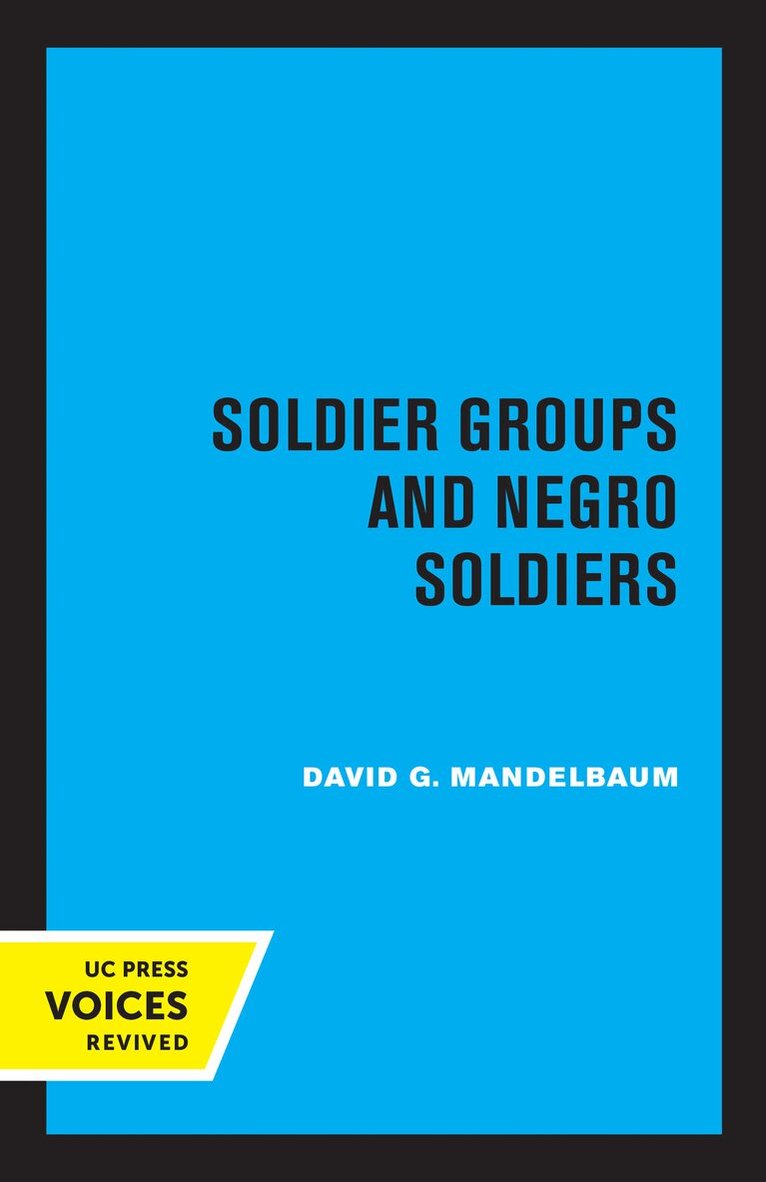
Soldier Groups and Negro Soldiers is a sociological and historical examination of the informal dynamics that shape military life, with particular attention to the U.S. Army’s treatment of African American troops. The study is organized into two broad parts: the role of the “primary group” in sustaining morale and performance within military organizations, and the history and consequences of racially segregated units. Building on Ardant du Picq’s classic insights about morale and esprit de corps, the book argues that soldiers’ effectiveness depends not only on formal command structures but also on the informal, face-to-face networks of comradeship that form within companies. These primary groups—small clusters of soldiers bound by trust, mutual reliance, and shared risk—mediate the rigid patterns of army bureaucracy, enabling cooperation, resilience under stress, and adaptation to the realities of combat. Drawing on data from World War II research, psychiatric studies, and sociological fieldwork, the analysis highlights how informal groups coexist with, and sometimes compensate for, the limitations of hierarchical command.The second half of the book explores the distinctive challenges and outcomes for African American soldiers in the twentieth century. It traces the evolution of racial policies from exclusion in the Navy and segregation in the Army to gradual integration in the Air Force and, eventually, the Army itself. By situating Negro soldiers’ experiences within the framework of primary group dynamics, the study reveals how segregation hindered the formation of cohesive combat groups and weakened both morale and performance. Conversely, moments of integration in Korea and beyond demonstrated the potential for interracial primary groups to foster solidarity and effectiveness, undermining the rationale for segregation. Soldier Groups and Negro Soldiers thus contributes to both military sociology and the history of race in the armed forces, showing how informal group processes intersect with institutional policies to shape military culture, combat performance, and the broader struggle for racial equality in the U.S. armed services.This title is part of UC Press's Voices Revived program, which commemorates University of California Press’s mission to seek out and cultivate the brightest minds and give them voice, reach, and impact. Drawing on a backlist dating to 1893, Voices Revived makes high-quality, peer-reviewed scholarship accessible once again using print-on-demand technology. This title was originally published in 1952.
1 616 kr
Skickas inom 3-6 vardagar
Selected Writings of Edward Sapir in Language, Culture and Personality, edited by David G. Mandelbaum, brings together the essential work of one of the most brilliant and wide-ranging intellectuals of the twentieth century. Sapir’s genius lay in his ability to combine meticulous analysis of linguistic data with sweeping theoretical insight. His contributions in linguistics spanned Germanic, Indo-European, and Semitic traditions, but his most groundbreaking work came from the study of American Indian languages, where he demonstrated the structural complexity and creativity of nonwritten traditions. For Sapir, however, the study of language could not be reduced to phonetics and grammar; speech was a cultural and social phenomenon, deeply intertwined with environment, thought, and personality. This volume reflects his dual commitment to rigorous linguistic science and to anthropology more broadly conceived, situating language within the patterns of culture and the dynamics of human life.The collection also highlights Sapir’s remarkable versatility, extending from studies of phonemes and symbolic sound patterns to essays on music, literature, religion, and the interplay of culture and personality. His classic Time Perspective in Aboriginal American Culture stands alongside reflections on English semantics, cultural change, and psychiatric anthropology, revealing a scholar equally at home in formal analysis and in probing the human condition. Sapir’s writings are marked by clarity, aesthetic sensibility, and a distinctive ability to illuminate the connections between small details and vast theoretical questions. Mandelbaum’s careful selection and framing provide scholars with both the breadth and coherence of Sapir’s legacy. For linguists, anthropologists, historians of science, and cultural theorists, this volume serves not only as an indispensable reference but also as a reminder of the intellectual power and creativity of a figure whose work continues to shape the human sciences.This title is part of UC Press's Voices Revived program, which commemorates University of California Press’s mission to seek out and cultivate the brightest minds and give them voice, reach, and impact. Drawing on a backlist dating to 1893, Voices Revived makes high-quality, peer-reviewed scholarship accessible once again using print-on-demand technology. This title was originally published in 1949.
1 428 kr
Skickas inom 3-6 vardagar
The Teaching of Anthropology (Abridged Edition), edited by David G. Mandelbaum, Gabriel W. Lasker, and Ethel M. Albert, is a landmark appraisal of how anthropology should be taught, particularly at the undergraduate level in the United States. Emerging at a moment of expanding enrollments, proliferating subfields, and growing institutional demands, the volume grapples with the central pedagogical challenge of transmitting anthropology’s unique culture of inquiry. Its contributors argue that anthropology’s value lies in its holistic scope, its grounding in field research, and its insistence on viewing human variation through scientific method—qualities that not only illuminate diverse peoples but also provide students with transferable analytic habits for understanding their own world.The collection ranges across the major subfields—biological, archaeological, linguistic, and cultural/social anthropology—while also treating applied anthropology, graduate training, and the discipline’s broader academic context. Essays emphasize the unity of anthropology through the central concept of culture, advocate for carefully chosen case studies to balance scope with depth, and show how applied and comparative studies can clarify theory. With a focus on practical teaching concerns—curricular sequencing, course design, and coordination within expanding departments—the book demonstrates how anthropology can remain scientifically rigorous, pedagogically compelling, and socially relevant. In presenting both points of consensus and unresolved debates, it provides a foundational guide for instructors, departments, and planners committed to sustaining anthropology’s vitality in higher education.This title is part of UC Press's Voices Revived program, which commemorates University of California Press’s mission to seek out and cultivate the brightest minds and give them voice, reach, and impact. Drawing on a backlist dating to 1893, Voices Revived makes high-quality, peer-reviewed scholarship accessible once again using print-on-demand technology. This title was originally published in 1963.
753 kr
Skickas inom 7-10 vardagar
This title is part of UC Press's Voices Revived program, which commemorates University of California Press’s mission to seek out and cultivate the brightest minds and give them voice, reach, and impact. Drawing on a backlist dating to 1893, Voices Revived makes high-quality, peer-reviewed scholarship accessible once again using print-on-demand technology. This title was originally published in 1974.
1 012 kr
Skickas
Soldier Groups and Negro Soldiers is a sociological and historical examination of the informal dynamics that shape military life, with particular attention to the U.S. Army’s treatment of African American troops. The study is organized into two broad parts: the role of the “primary group” in sustaining morale and performance within military organizations, and the history and consequences of racially segregated units. Building on Ardant du Picq’s classic insights about morale and esprit de corps, the book argues that soldiers’ effectiveness depends not only on formal command structures but also on the informal, face-to-face networks of comradeship that form within companies. These primary groups—small clusters of soldiers bound by trust, mutual reliance, and shared risk—mediate the rigid patterns of army bureaucracy, enabling cooperation, resilience under stress, and adaptation to the realities of combat. Drawing on data from World War II research, psychiatric studies, and sociological fieldwork, the analysis highlights how informal groups coexist with, and sometimes compensate for, the limitations of hierarchical command.The second half of the book explores the distinctive challenges and outcomes for African American soldiers in the twentieth century. It traces the evolution of racial policies from exclusion in the Navy and segregation in the Army to gradual integration in the Air Force and, eventually, the Army itself. By situating Negro soldiers’ experiences within the framework of primary group dynamics, the study reveals how segregation hindered the formation of cohesive combat groups and weakened both morale and performance. Conversely, moments of integration in Korea and beyond demonstrated the potential for interracial primary groups to foster solidarity and effectiveness, undermining the rationale for segregation. Soldier Groups and Negro Soldiers thus contributes to both military sociology and the history of race in the armed forces, showing how informal group processes intersect with institutional policies to shape military culture, combat performance, and the broader struggle for racial equality in the U.S. armed services.This title is part of UC Press's Voices Revived program, which commemorates University of California Press’s mission to seek out and cultivate the brightest minds and give them voice, reach, and impact. Drawing on a backlist dating to 1893, Voices Revived makes high-quality, peer-reviewed scholarship accessible once again using print-on-demand technology. This title was originally published in 1952.
244 kr
Skickas inom 7-10 vardagar
427 kr
Skickas inom 3-6 vardagar
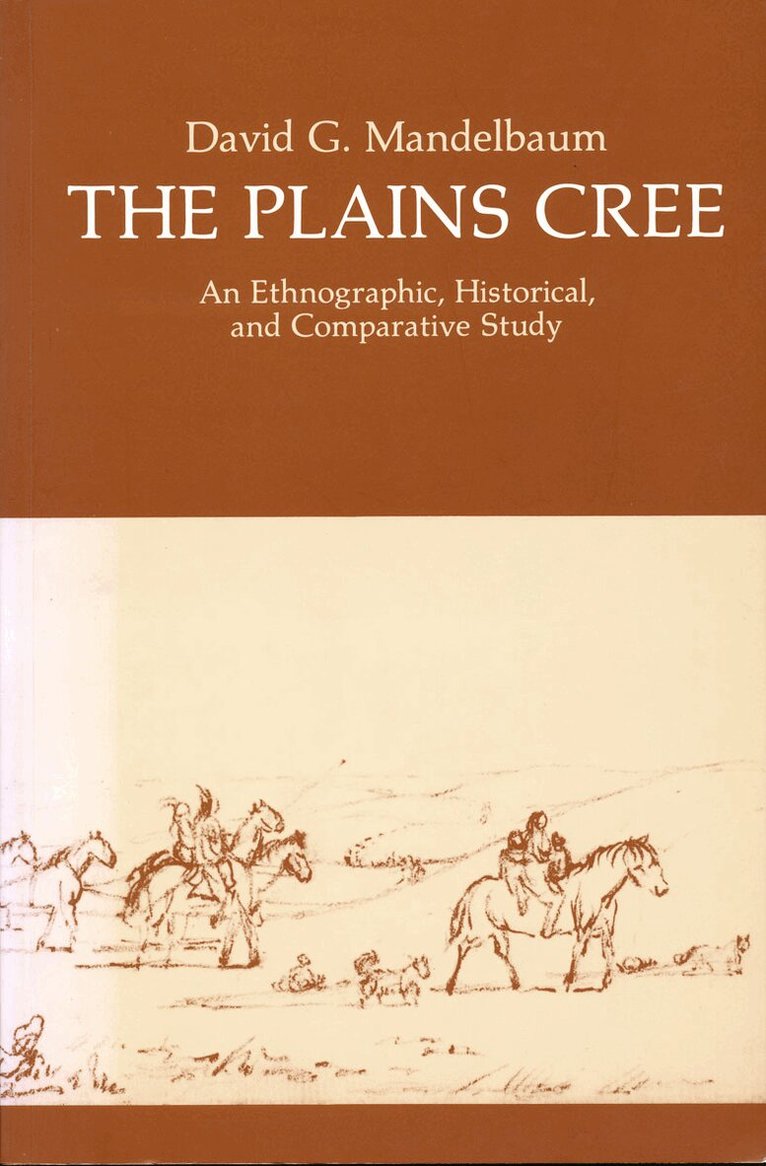
First published in 1940, David Mandelbaum's study remains the definitive account of the Plains Cree. In this revised edition, first reprinted in 1978, Part One contains the original material dealing with Plains Cree history and ethnology. Part Two is a two-fold comparative study: the first section compares the Plains Cree to other groups east of the Plains: the Eastern Cree, various Ojibwa groups, the bands of the Labrador Peninsula, the Menomini, and other Central Woodlands tribes; the second section compares Plains Cree culture to other Plains tribes, mainly those of the northern Plains.