David George Haskell – författare
Visar alla böcker från författaren David George Haskell. Handla med fri frakt och snabb leverans.
17 produkter
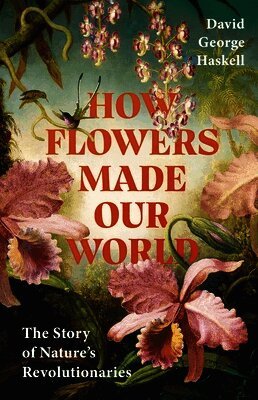
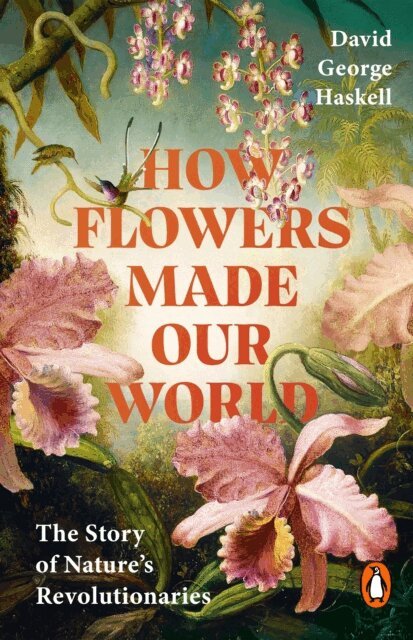
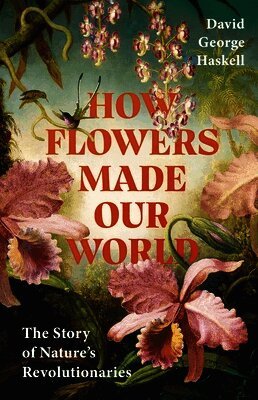
How Flowers Made Our World
The Story of Nature's Revolutionaries
Inbunden, 2026
240 kr
Lägg i varukorg
ONE OF NEW SCIENTIST'S BEST BOOKS OF THE YEAR In How Flowers Made Our World, biologist David George Haskell redefines our understanding of flowers, casting them as powerful revolutionaries at the heart of Earth's story.'Flowering plants as you've never seen them before ... Science writing with …
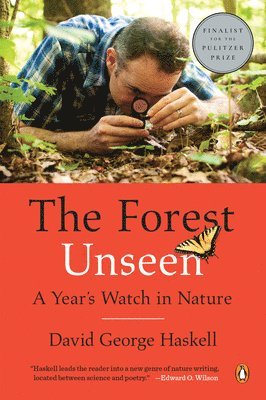
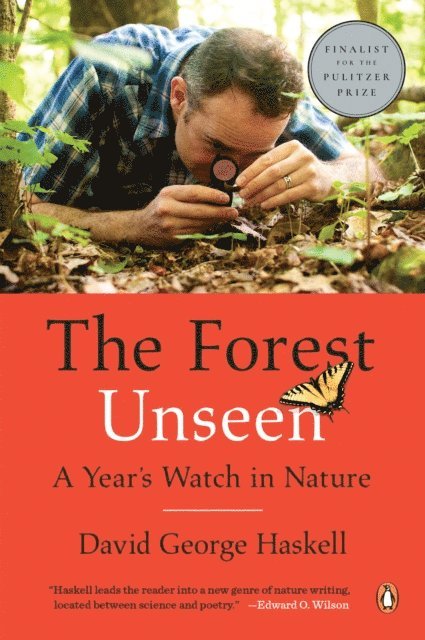
Forest Unseen
A Year's Watch in Nature
Häftad, 2013
189 kr
Lägg i varukorg
Finalist for the Pulitzer Prize and the PEN/E.O. Wilson Literary Science Writing Award “Injects much-needed vibrancy into the stuffy world of nature writing.” — Outside , “The Outdoor Books That Shaped the Last Decade” The biologist and author of Sounds Wild and Broken combines elegant writing with …
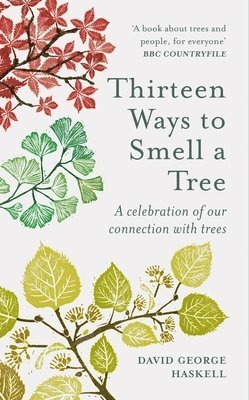
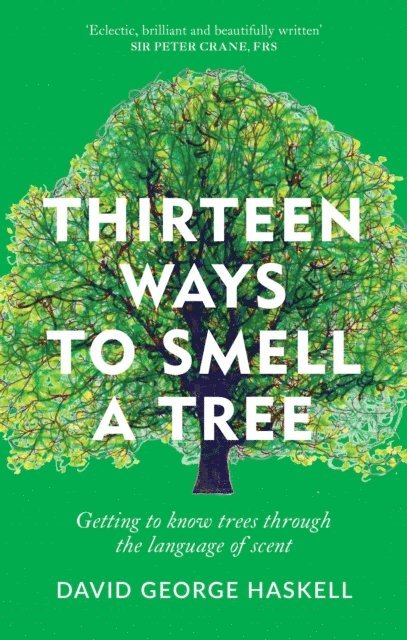
Thirteen Ways to Smell a Tree
A celebration of our connection with trees
Häftad, 2022
146 kr
Lägg i varukorg
'My favourite book of the year' - Kate Humble, Radio Times'This is a book for literary connoisseurs, fact-lovers and environmentalists. In short, it is a book about trees and people, for everyone.' - BBC Countryfile'Eclectic, brilliant and beautifully written, David Haskell reboots our aromatic …
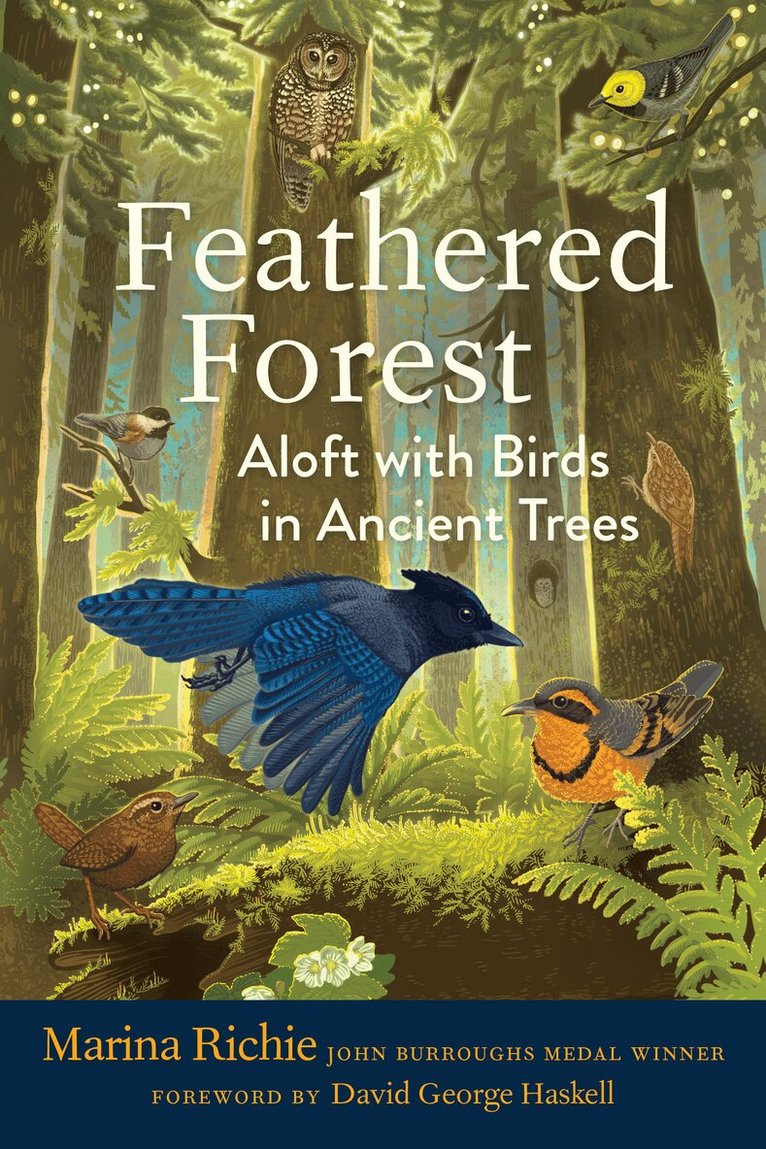
Feathered Forest
Aloft with Birds in Ancient Trees
Av Marina Richie, David George Haskell
Inbunden, 2026
256 kr
Lägg i varukorg
“Luminous.”—Bill McKibben, author of Here Comes the SunAcclaimed nature writer Marina Richie guides us into a vertical world of old-growth forests through the eyes of the birds that inhabit them—exploring her journey as an environmentalist in her signature verdant prose. With exquisite prose and …
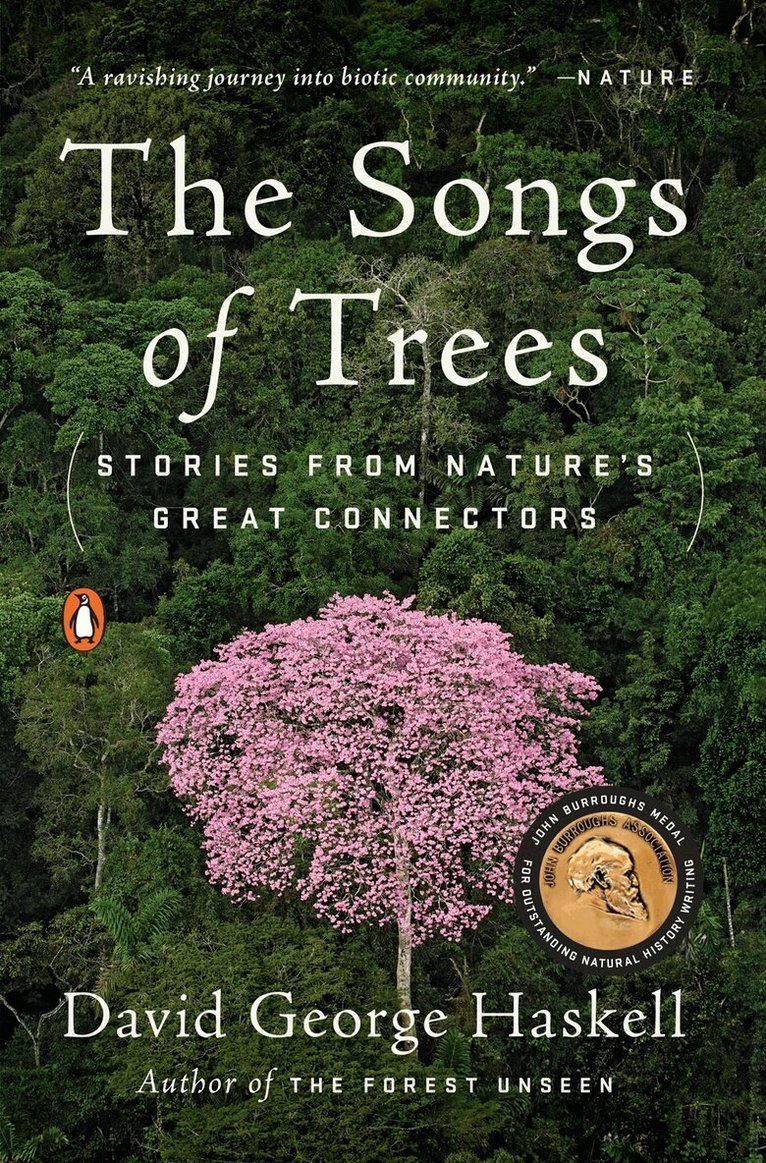
Songs of Trees
Häftad, 2018
160 kr
Lägg i varukorg
WINNER OF THE 2018 JOHN BURROUGHS MEDAL FOR OUTSTANDING NATURAL HISTORY WRITING “Both a love song to trees, an exploration of their biology, and a wonderfully philosophical analysis of their role they play in human history and in modern culture.” — Science Friday The author of Sounds Wild and …
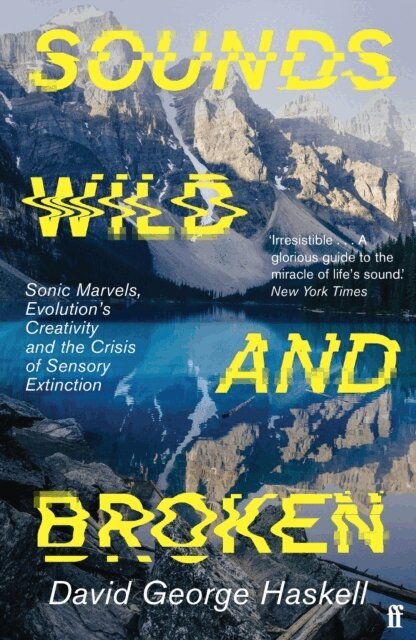
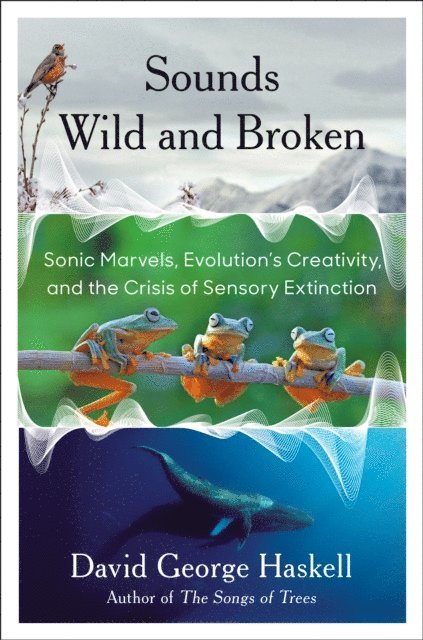
Sounds Wild and Broken
Häftad, 2023
145 kr
Lägg i varukorg
An awe-inspiring exploration of the sounds of the living Earth, and the joys and threats of human music, language and noise. 'A symphony, filled with the music of life . . . fascinating, heartbreaking, and beautifully written.'ELIZABETH KOLBERT, author of The Sixth Extinction'Sounds Wild and Broken …
Sounds Wild and Broken
E-bok, 2022
157 kr
Lägg i varukorg
An awe-inspiring exploration of the sounds of the living Earth, and the joys and threats of human music, language and noise. 'A symphony, filled with the music of life . . . fascinating, heartbreaking, and beautifully written.'ELIZABETH KOLBERT, author of The Sixth Extinction'Sounds Wild and Broken …
Songs of Trees
Stories from Nature''s Great Connectors
E-bok, 2017
34 kr
Lägg i varukorg
The author of the Pulitzer Prize finalist The Forest Unseen visits with nature’s most magnificent networkers — trees “Fluent, compelling, and intoxicatingly rich.” – Times Literary Supplement SELECTED by NPR''s "Science Friday" and "Brainpickings" as one of the best science books of 2017 David …
Forest Unseen
A Year''s Watch in Nature
E-bok, 2012
229 kr
Lägg i varukorg
A biologist reveals the secret world hidden in a single square meter of old-growth forest--a finalist for the Pulitzer Prize and the Pen/E.O. Wilson Literary Science Writing Award Look out for David Haskell''s new book, The Songs of Tree: Stories From Nature''s Great Connectors , coming in April of …
How Flowers Made Our World
The Story of Nature's Revolutionaries
E-bok, 2026
170 kr
Lägg i varukorg
ONE OF NEW SCIENTIST'S BEST BOOKS OF THE YEAR In How Flowers Made Our World, biologist David George Haskell redefines our understanding of flowers, casting them as powerful revolutionaries at the heart of Earth's story.'Flowering plants as you've never seen them before ... Science writing with …
How Flowers Made Our World
The Story of Nature's Revolutionaries
Häftad, 2027
133 kr
Kommande
ONE OF NEW SCIENTIST'S BEST BOOKS OF THE YEAR In How Flowers Made Our World, biologist David George Haskell redefines our understanding of flowers, casting them as powerful revolutionaries at the heart of Earth's story.'Flowering plants as you've never seen them before ... Science writing with …
Thirteen Ways to Smell a Tree
A celebration of our connection with trees
E-bok, 2021
45 kr
Lägg i varukorg
Thirteen Ways to Smell a Tree takes you on a journey to connect with trees through the sense most aligned to our emotions and memories. Thirteen essays are included that explore the evocative scents of trees, from the smell of a book just printed as you first open its pages, to the calming scent of …
Sounds Wild and Broken: Sonic Marvels, Evolution's Creativity, and the Crisis of Sensory Extinction
Häftad, 2023
213 kr
Lägg i varukorg
En un metro de bosque
E-bok, 2016
113 kr
Lägg i varukorg
Un hombre se sienta cada día durante un año en la misma piedra del mismo bosque, a veces bien abrigado contra el frío y la lluvia, otras a pleno sol, a veces sin que pase nada, otras asistiendo a acontecimientos increíbles, y lo narra en un libro. Un año oyendo cantar a los pájaros, viendo caer y …
Flowers Made Our World
The Story of Nature's Revolutionaries
Häftad, 2026
177 kr
Tillfälligt slut
In Flowers Made Our World , biologist David Haskell redefines our understanding of flowers, casting them as powerful revolutionaries at the heart of Earth's story. Far from being mere ornaments, flowers have shaped the very fabric of life on our planet. When they first evolved, they triggered a …