David Goldfrank - Böcker
Visar alla böcker från författaren David Goldfrank. Handla med fri frakt och snabb leverans.
5 produkter
5 produkter
454 kr
Skickas inom 3-6 vardagar
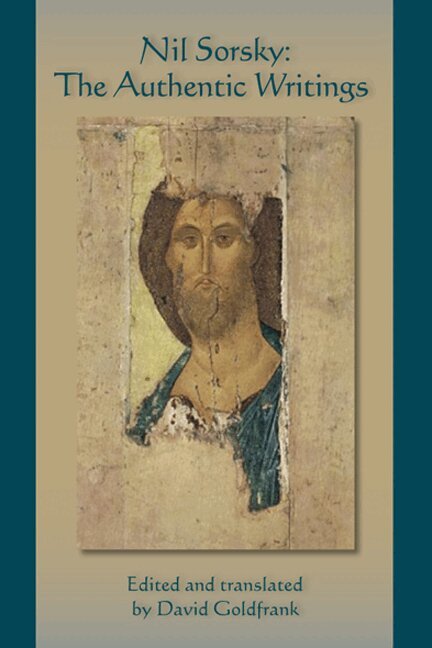
Nil Sorsky (1433/34-1508), founder of the Sora Hermitage and initiator of 'scete ' life in among Russian Christians, is closely identified with the Orthodox contemplative prayer known as hesychasm, 'stillness. ' In these translations, Nil's own voice speaks across five hundred years to modern readers. The introduction and notes accurately place him within the Russian monastic tradition and identify the Slavic sources on which he drew. This introduction to the life and works of pre-modern Russia's outstanding teacher and writer allows English readers to share in celebrations of the 500th anniversary of Nil's death, to be marked in Russia by a symposium in the cloister of first his tonsure, by special seminars, and learned conferences.David Goldfrank, a specialist in Russian studies, is Professor of History at Georgetown University. His previous translation and study of fifteenth-century Russian monasticism, The Monastic Rule of Iosif Volotsky, was first published in 1983 and revised and reissued in 2000.
350 kr
Skickas inom 5-8 vardagar
421 kr
Skickas inom 5-8 vardagar
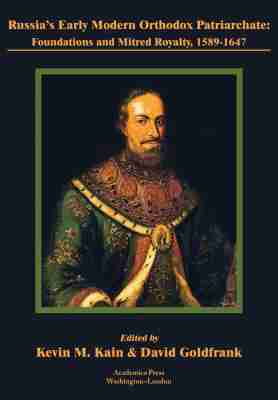
Russia's Early Modern Orthodox Patriarchate
Foundations and Mitred Royalty, 1589-1647
Inbunden, Engelska, 2020
1 495 kr
Skickas inom 10-15 vardagar
Focusing on one of Russia’s most powerful and wide-reaching institutions in a period of shattering dynastic crisis and immense territorial and administrative expansion, this book addresses manifestations of religious thought, practice, and artifacts revealing the permeability of political boundaries and fluid transfers of ideas, texts, people, objects, and “sacred spaces” with the rest of the Christian world. The historical background to the establishment Russia’s Patriarchate, its chief religious authority, in various eparchies from Late Antiquity sets the stage. “The Tale of the Establishment of the Patriarchate,” crucial for legitimizing and promoting both this institution and close cooperation with the established tetrarchy of Eastern Orthodox patriarchs emerged in the 1620s. Their attitude remained mixed, however, with persisting unease concerning Russian pretensions to equality. Regarding the most crucial “other” for Christianity’s self-identification, the contradictions inherent in Christianity’s appropriation of the Old Testament became apparent in, for example, the realm’s imperfectly enforced ban on resident Jews. The concept of ordained royalty emerged in the purported co-rulership of the initial Romanov Tsar Michael and his father, Patriarch Filaret. As a pertinent foil to Moscow’s patriarchs, challenges arose from Petro Mohyla, a metropolitan of the then totally separate Kievan church, whose Academy became the most important educational institution for the Russian Orthodox Church into the eighteenth century, combining a Romanian regal, Polish aristocratic, and Ukrainian Orthodox self-identity.
1 495 kr
Skickas inom 10-15 vardagar
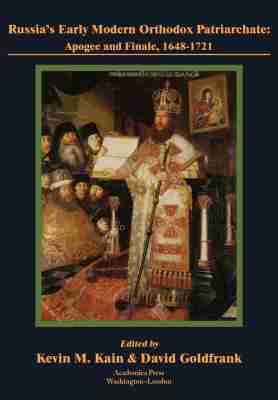
Patriarch Nikon, the most energetic, creative, influential, and obstinate of Russia’s early religious leaders, dominates this book. As Patriarch of the Russian Orthodox Church, Nikon’s most important initiative was to bring Russian religious rituals into line with Greek Orthodox tradition, from which Russia’s practices had diverted. Kiev’s Monastery of the Caves served as a medium for his transmission of Greek notions. Nikon and Tsar Alexis I (r. 1645-1676) envisioned Russia’s transformed into a new Holy Land. Eventually, Nikon became a challenger for Imperial authority. While his reforms endure, failed policies and poor political judgment were decisive in his fall and in the Patriarchate’s reduction in status. Ultimately, the reforms of Peter the Great (r. 1682-1725) led to its replacement by a new, government-controlled body, the Holy Synod, which nevertheless carried out a continuity of Nikon’s policies. This exceptional volume contextualizes Nikon’s Patriarchate as part of the broader continuities in Russian History and serves as a bridge to the present, where Russia is forging new relationships between Church and power.