David Golumbia - Böcker
Visar alla böcker från författaren David Golumbia. Handla med fri frakt och snabb leverans.
4 produkter
4 produkter
406 kr
Skickas inom 10-15 vardagar
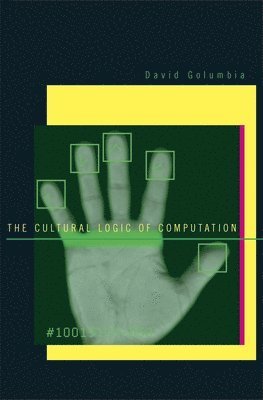
Advocates of computers make sweeping claims for their inherently transformative power: new and different from previous technologies, they are sure to resolve many of our existing social problems, and perhaps even to cause a positive political revolution. In The Cultural Logic of Computation, David Golumbia, who worked as a software designer for more than ten years, confronts this orthodoxy, arguing instead that computers are cultural “all the way down”—that there is no part of the apparent technological transformation that is not shaped by historical and cultural processes, or that escapes existing cultural politics. From the perspective of transnational corporations and governments, computers benefit existing power much more fully than they provide means to distribute or contest it. Despite this, our thinking about computers has developed into a nearly invisible ideology Golumbia dubs “computationalism”—an ideology that informs our thinking not just about computers, but about economic and social trends as sweeping as globalization. Driven by a programmer’s knowledge of computers as well as by a deep engagement with contemporary literary and cultural studies and poststructuralist theory, The Cultural Logic of Computation provides a needed corrective to the uncritical enthusiasm for computers common today in many parts of our culture.
125 kr
Skickas inom 7-10 vardagar
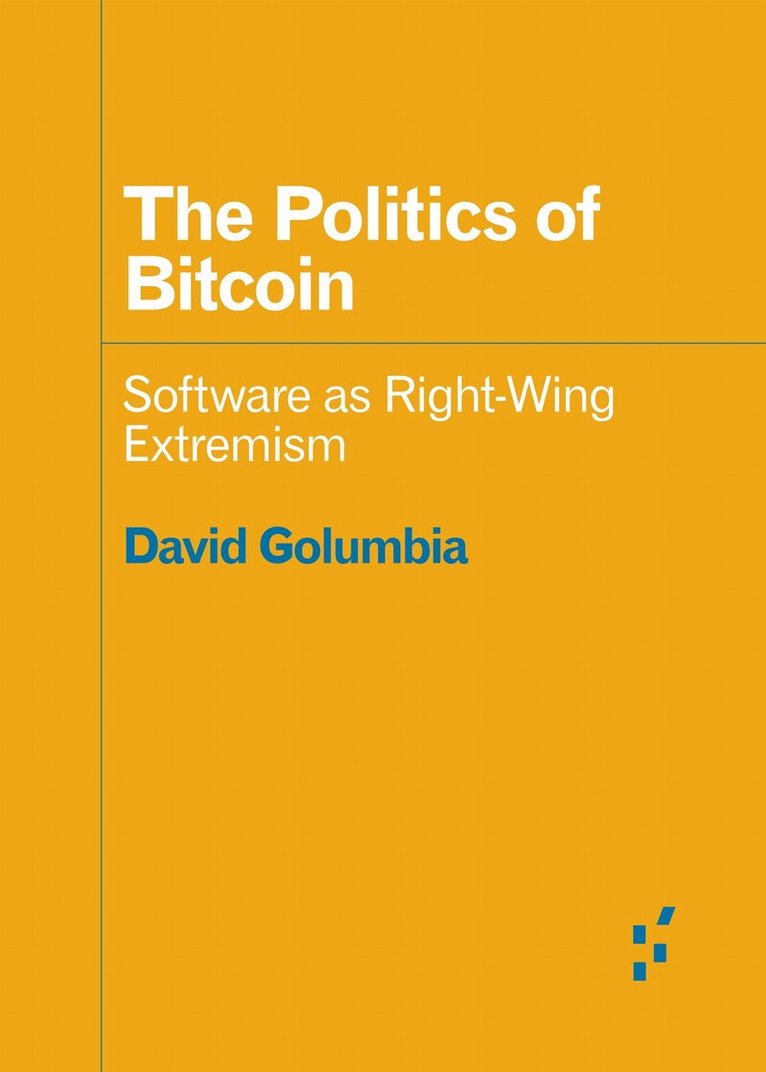
Since its introduction in 2009, Bitcoin has been widely promoted as a digital currency that will revolutionize everything from online commerce to the nation-state. Yet supporters of Bitcoin and its blockchain technology subscribe to a form of cyberlibertarianism that depends to a surprising extent on far-right political thought. The Politics of Bitcoin exposes how much of the economic and political thought on which this cryptocurrency is based emerges from ideas that travel the gamut, from Milton Friedman, F.A. Hayek, and Ludwig von Mises to Federal Reserve conspiracy theorists. Forerunners: Ideas First is a thought-in-process series of breakthrough digital publications. Written between fresh ideas and finished books, Forerunners draws on scholarly work initiated in notable blogs, social media, conference plenaries, journal articles, and the synergy of academic exchange. This is gray literature publishing: where intense thinking, change, and speculation take place in scholarship.
1 466 kr
Skickas inom 7-10 vardagar
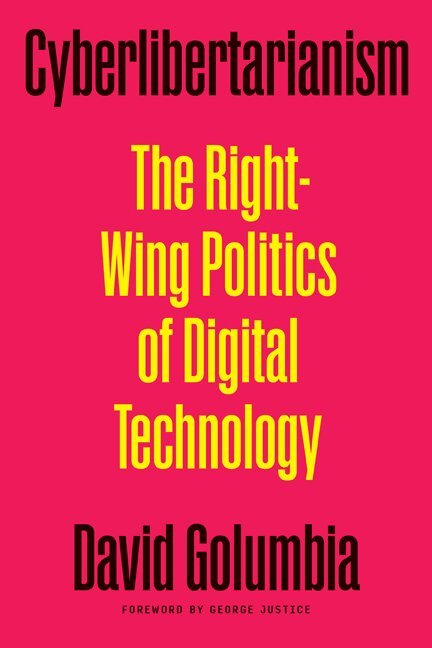
An urgent reckoning with digital technology’s fundamentally right-wing legal and economic underpinningsIn a timely challenge to the potent political role of digital technology, Cyberlibertarianism argues that right-wing ideology was built into both the technical and social construction of the digital world from the start. Leveraging more than a decade of research, David Golumbia traces how digital evangelism has driven the worldwide shift toward the political right, concealing inequality, xenophobia, dishonesty, and massive corporate concentrations of wealth and power beneath the utopian presumption of digital technology as an inherent social good. Providing an incisive critique of the push for open access and open-source software and the legal battles over online censorship and net neutrality, Cyberlibertarianism details how the purportedly democratic internet has been employed as an organizing tool for terror and hate groups and political disinformation campaigns. As he unpacks our naively utopian conception of the digital world, Golumbia highlights technology’s role in the advancement of hyperindividualist and antigovernment agendas, demonstrating how Silicon Valley corporations and right-wing economists; antiestablishment figures such as Julian Assange, Elon Musk, Peter Thiel, Edward Snowden, and Mark Zuckerberg; and seemingly positive voices such as John Perry Barlow, Cory Doctorow, the Electronic Freedom Foundation, and Wikipedia all have worked to hamper regulation and weaken legal safeguards against exploitation. Drawing from a wide range of thought in digital theory, economics, law, and political philosophy as well as detailed research and Golumbia’s own experience as a software developer, Cyberlibertarianism serves as a clarion call to reevaluate the fraught politics of the internet. In the hope of providing a way of working toward a more genuinely democratic and egalitarian future for digital technology, this magisterial work insists that we must first understand the veiled dogmas from which it has been constructed. Retail e-book files for this title are screen-reader friendly.
353 kr
Skickas inom 7-10 vardagar
An urgent reckoning with digital technology’s fundamentally right-wing legal and economic underpinningsIn a timely challenge to the potent political role of digital technology, Cyberlibertarianism argues that right-wing ideology was built into both the technical and social construction of the digital world from the start. Leveraging more than a decade of research, David Golumbia traces how digital evangelism has driven the worldwide shift toward the political right, concealing inequality, xenophobia, dishonesty, and massive corporate concentrations of wealth and power beneath the utopian presumption of digital technology as an inherent social good. Providing an incisive critique of the push for open access and open-source software and the legal battles over online censorship and net neutrality, Cyberlibertarianism details how the purportedly democratic internet has been employed as an organizing tool for terror and hate groups and political disinformation campaigns. As he unpacks our naively utopian conception of the digital world, Golumbia highlights technology’s role in the advancement of hyperindividualist and antigovernment agendas, demonstrating how Silicon Valley corporations and right-wing economists; antiestablishment figures such as Julian Assange, Elon Musk, Peter Thiel, Edward Snowden, and Mark Zuckerberg; and seemingly positive voices such as John Perry Barlow, Cory Doctorow, the Electronic Freedom Foundation, and Wikipedia all have worked to hamper regulation and weaken legal safeguards against exploitation. Drawing from a wide range of thought in digital theory, economics, law, and political philosophy as well as detailed research and Golumbia’s own experience as a software developer, Cyberlibertarianism serves as a clarion call to reevaluate the fraught politics of the internet. In the hope of providing a way of working toward a more genuinely democratic and egalitarian future for digital technology, this magisterial work insists that we must first understand the veiled dogmas from which it has been constructed. Retail e-book files for this title are screen-reader friendly.