David Hollins – författare
Visar alla böcker från författaren David Hollins. Handla med fri frakt och snabb leverans.
8 produkter
Horoscopes of 100 Great Horses, Containing Rules for Determining the Speed, Gait and Sex
Inbunden, 2025
371 kr
Lägg i varukorg
Horoscopes of 100 Great Horses, Containing Rules for Determining the Speed, Gait and Sex
Häftad, 2025
214 kr
Lägg i varukorg
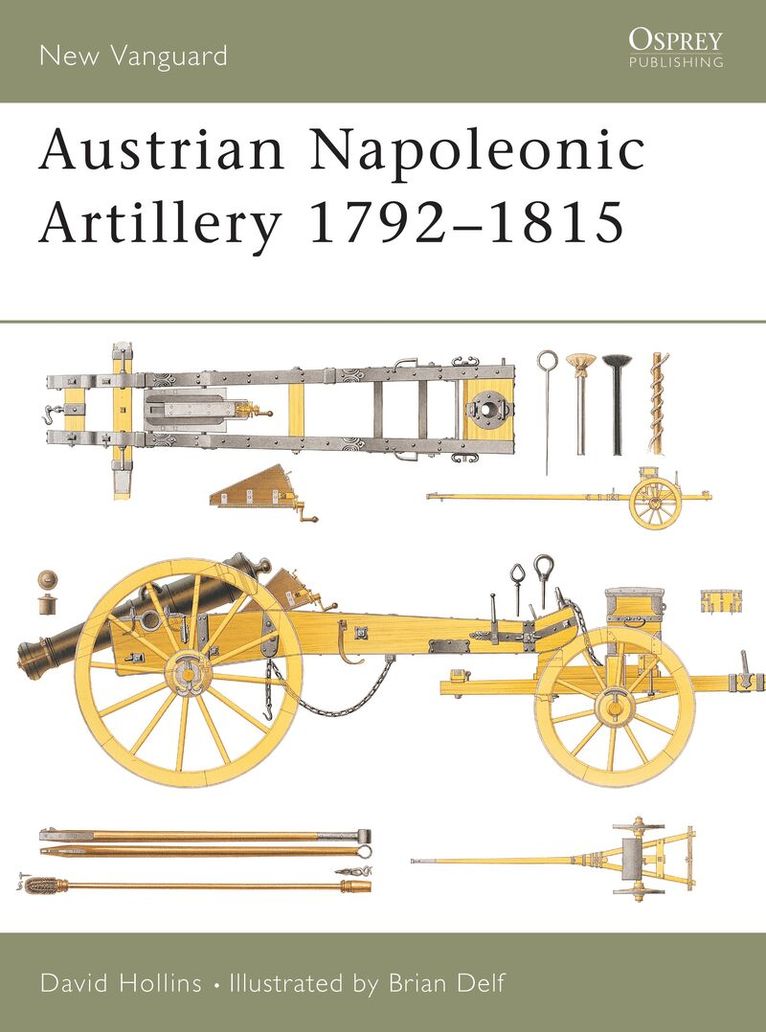
Austrian Napoleonic Artillery 1792–1815
Häftad, 2003
162 kr
Lägg i varukorg
The Austrian artillery of the Revolutionary and Napoleonic Wars was a creation of the renowned Lichtenstein system of the early 1750s.This weight system produced a series of weapons of 3-, 6- and 12-pdr. calibre along with 7- and 10-pdr. howitzers. In the 1780s they were joined by Cavalry artillery …
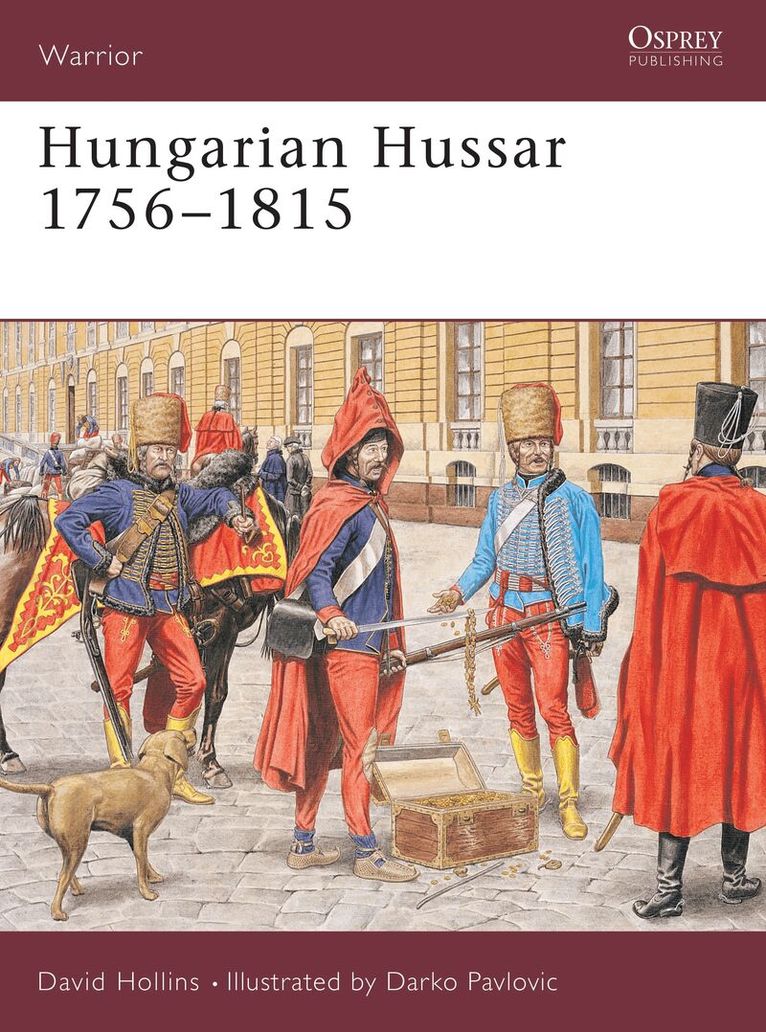
Hungarian Hussar 1756–1815
Häftad, 2003
186 kr
Lägg i varukorg
The Hussars were the skilled, daring and flamboyant light cavalrymen first drawn for Hapsburg service, from what is now northern Croatia, Serbia, Slovakia and Hungary in the late 17th century.Before long, major European nations adopted Hussar formations, uniform and equipment. This title covers a …
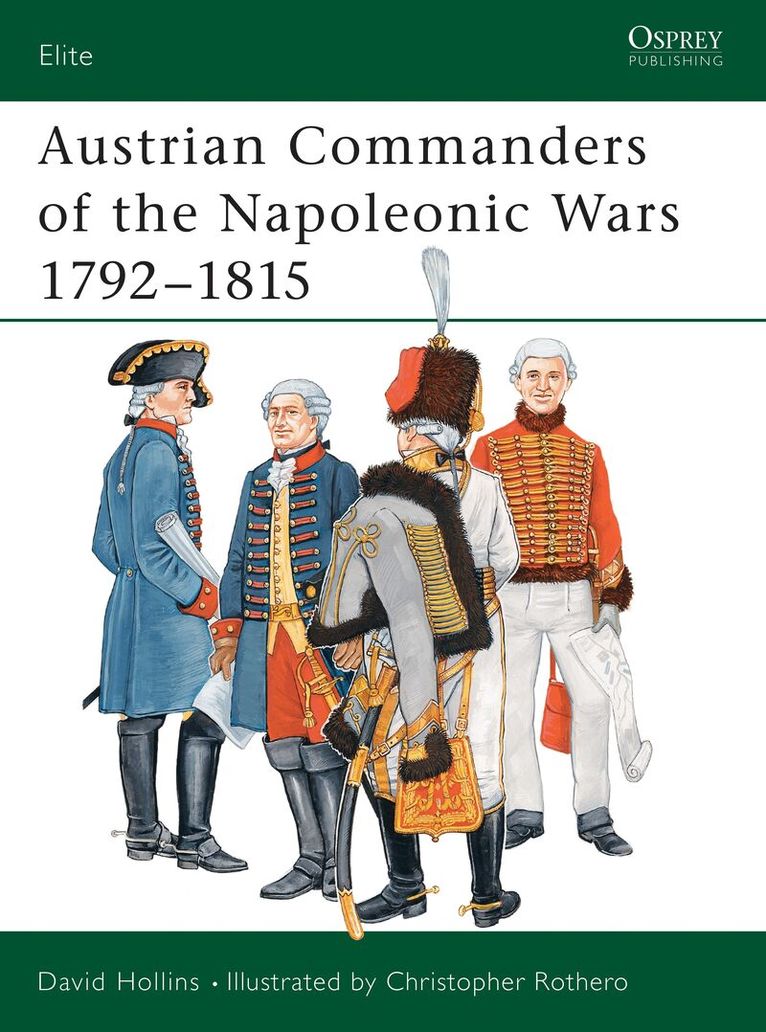
Austrian Commanders of the Napoleonic Wars 1792–1815
Häftad, 2004
186 kr
Lägg i varukorg
Throughout the Revolutionary and Napoleonic wars, France’s most consistent enemy on land was the Austrian Empire.Austria's huge armies played a central part in the several coalitions against France, from the 1790s, to the Austerlitz campaign of 1805, the closely-balanced battles of 1809, and the …
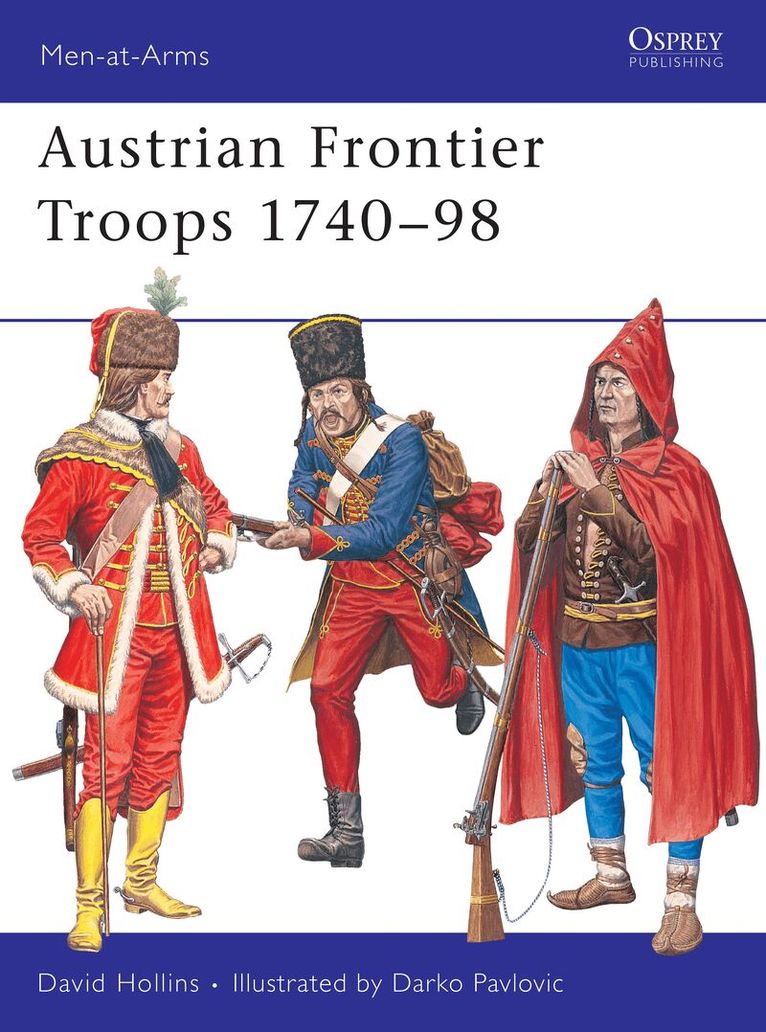
Austrian Frontier Troops 1740–98
Häftad, 2005
157 kr
Lägg i varukorg
Austria's Balkan frontier – the disputed borderland between Europe and the Ottoman Turks – was defended in the 18th century by a unique organization of hardy communities who were granted farmland in return for armed service.These Grenzers, masters of guerrilla warfare, were later incorporated into …
Austrian Grenadiers and Infantry 1788–1816
Häftad, 1998
186 kr
Lägg i varukorg
Aside from the Peninsula and Napoleon's 1807 campaign, Austrian troops played some part in every major campaign of the Napoleonic Wars.Unable to mobilize its population fully for both political and economic reasons, Austria recruited from territories as diverse as modern Belgium, the Czech …
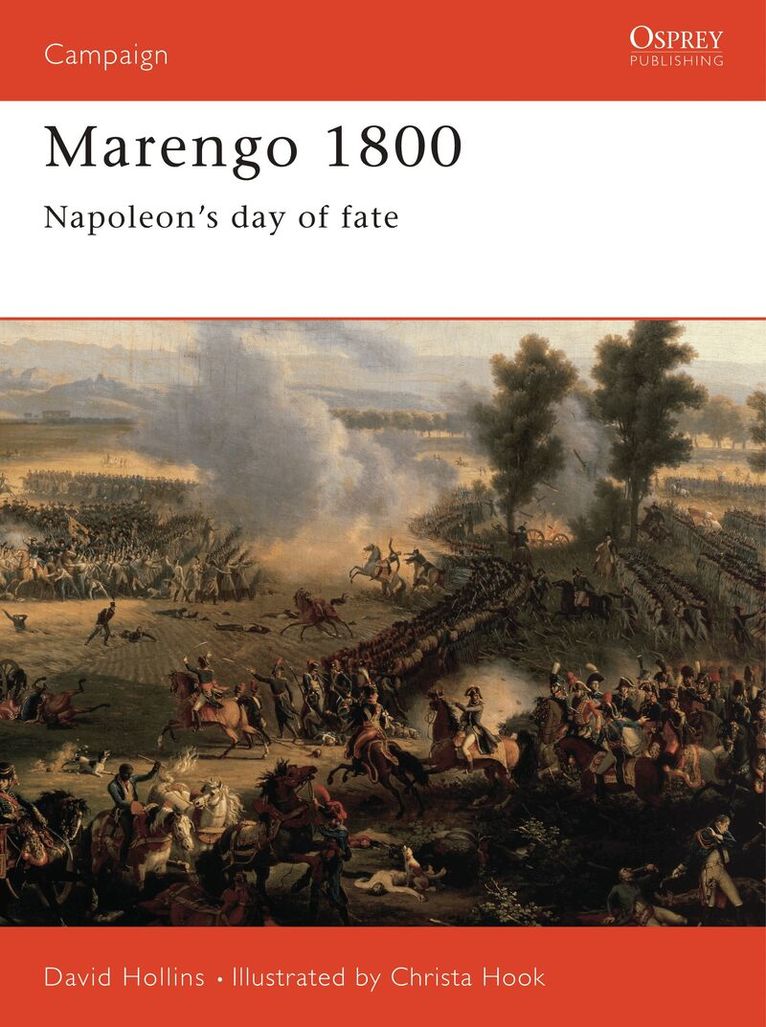
Marengo 1800
Napoleon's day of fate
Häftad, 2000
209 kr
Lägg i varukorg
A slim, illustrated volume on this key battle for Napoleon against Austria.Having returned from Egypt and seized power as First Consul, Napoleon led the Army of the Reserve against the Austrian Army besieging Genoa. After a period of skirmishing and manoeuvring, Melas, the Austrian commander, …