David Ingleby - Böcker
Visar alla böcker från författaren David Ingleby. Handla med fri frakt och snabb leverans.
3 produkter
3 produkter
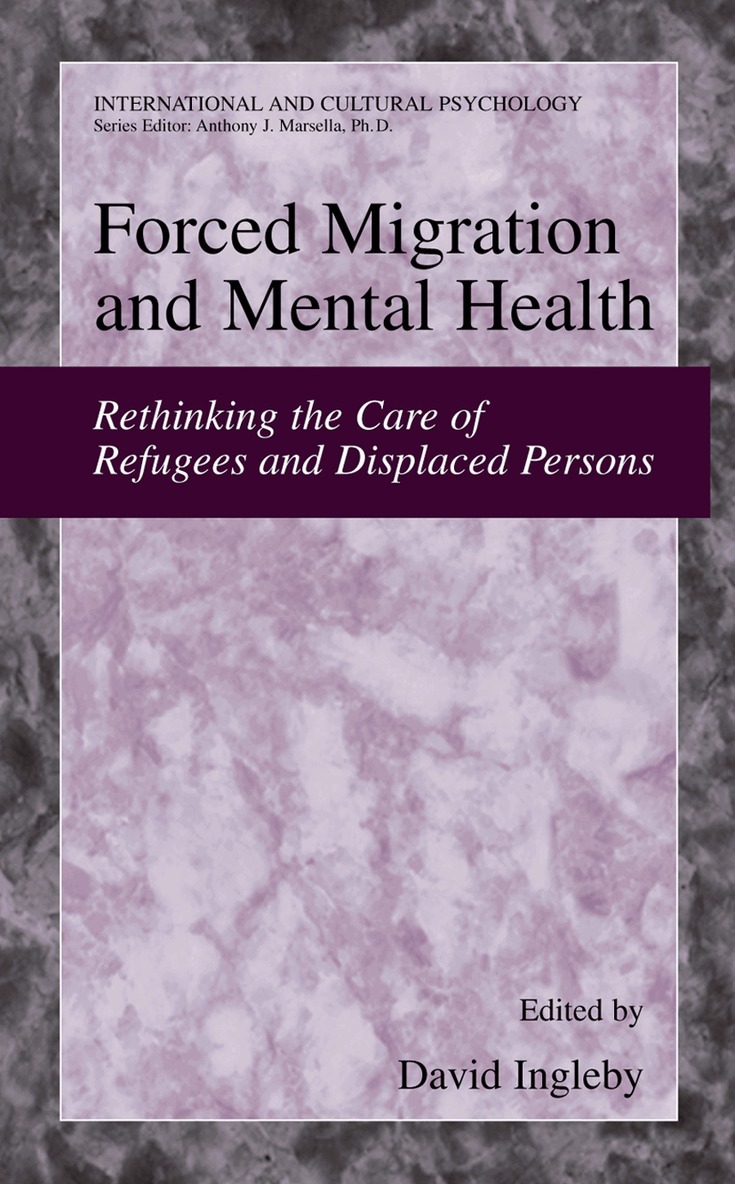
Forced Migration and Mental Health
Rethinking the Care of Refugees and Displaced Persons
Inbunden, Engelska, 2004
1 637 kr
Skickas inom 10-15 vardagar
Although forced migration is not new in human history it has become, in our time, one of the world's major problems. In the last few decades, armed conflict and political unrest have created vast numbers of asylum seekers, refugees and displaced persons. This has led, in turn to increasing involvement of professional care workers and agencies, both governmental and nongovernmental. While there is no doubt on the part of helping parties that care is necessary, there is considerable debate about the kind of care that is needed. This book presents a critical review of mental health care provisions for people who have had to leave their homeland, and explores the controversies surrounding this topic. Providing fresh perspectives on an age old problem, this book covers humanitarian aid and reconstruction programs as well as service provision in host countries. It is of interest to all those who provide health services, create policy, and initiate legislation for these populations.
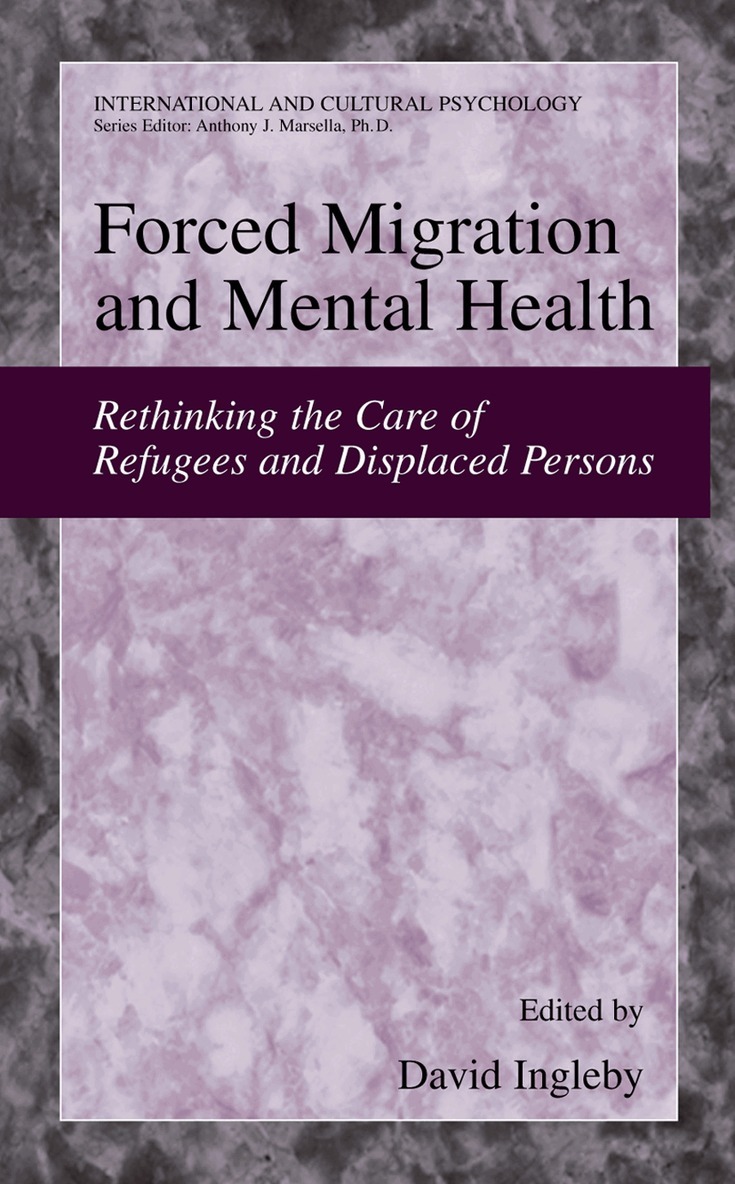
Forced Migration and Mental Health
Rethinking the Care of Refugees and Displaced Persons
Häftad, Engelska, 2010
1 637 kr
Skickas inom 10-15 vardagar
Although forced migration is not new in human history it has become, in our time, one of the world's major problems. In the last few decades, armed conflict and political unrest have created vast numbers of asylum seekers, refugees and displaced persons. This has led, in turn to increasing involvement of professional care workers and agencies, both governmental and nongovernmental. While there is no doubt on the part of helping parties that care is necessary, there is considerable debate about the kind of care that is needed. This book presents a critical review of mental health care provisions for people who have had to leave their homeland, and explores the controversies surrounding this topic. Providing fresh perspectives on an age old problem, this book covers humanitarian aid and reconstruction programs as well as service provision in host countries. It is of interest to all those who provide health services, create policy, and initiate legislation for these populations.
310 kr
Skickas inom 7-10 vardagar
From the Preface to the second impression: The reissue of this book, 24 years after its first publication, is a very welcome initiative by Free Association Books. When Critical Psychiatry saw the light of day, the debate over psychiatry which had raged in the 1960's and 1970's was well past its peak: sales of the book were modest and the publishers soon allowed it to fall out of print, although well-thumbed copies continued to circulate in limited circles. All of us who worked on the book are therefore delighted to see this old war-horse once more being led from the stables. We hope, of course, that the book will not simply be bought as a collector's item. Inevitably, after a quarter of a century many details have become out of date. However, the book's basic message seems even more relevant now than it did in 1980. Mental health services have gone on changing, and new research has continued to be generated - but the importance of the book's central topic has, if anything, become greater. What is this topic? In a nutshell, it is the discrepancy between the size of the problem of 'mental illness' and the inadequacy of responses to it.As far as the size of the problem is concerned, the figures cited in the original introduction to Critical Psychiatry have become even more alarming. In Holland, for example - a prosperous country rated highly by its inhabitants on 'quality of life'- one in four of all adults now experience a diagnosable mental health problem in the course of a year. Such figures are typical for Western countries. Worldwide, the WHO has estimated that depression will become the second most important cause of disability by 2020 - and in the developed world, the major cause.