David J. Briggs - Böcker
Visar alla böcker från författaren David J. Briggs. Handla med fri frakt och snabb leverans.
4 produkter
4 produkter
Del 49 - NATO Science Partnership Subseries: 2
Environmental Health for All
Risk Assessment and Risk Communication for National Environmental Health Action Plans
Inbunden, Engelska, 1998
2 164 kr
Skickas inom 10-15 vardagar
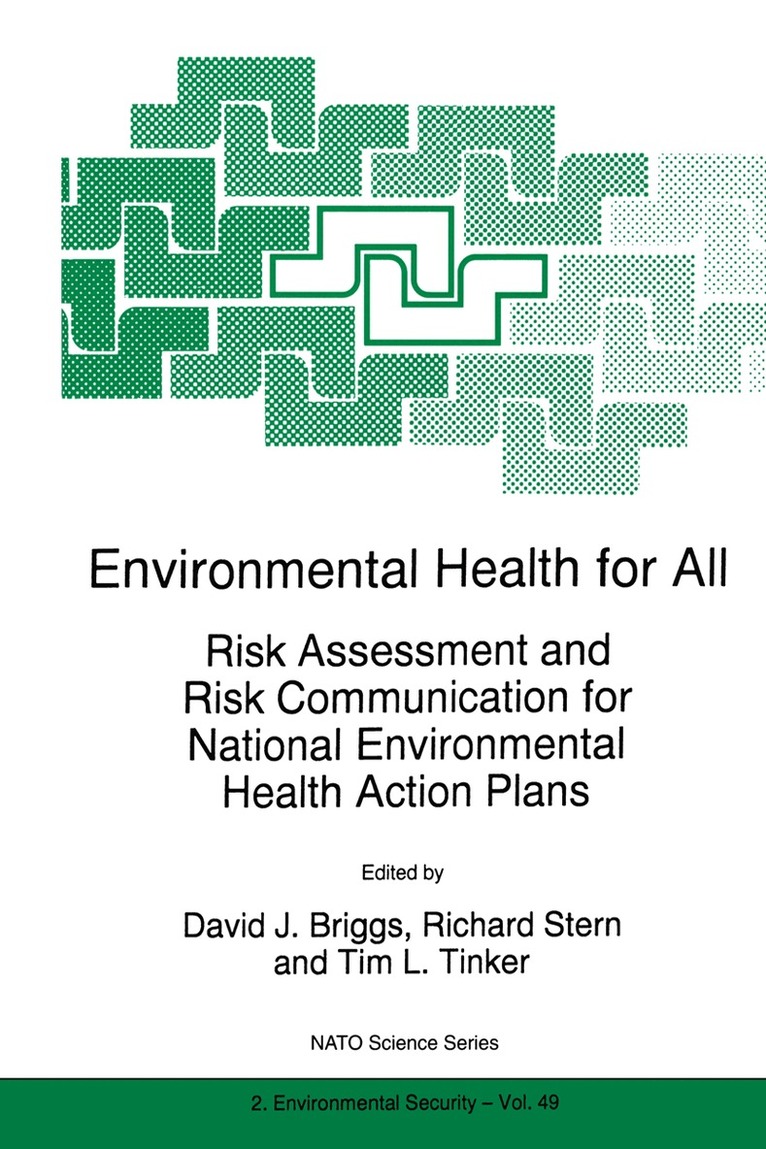
The development of "National environmental health action plans" (NEHAPs) has become a major initiative in Europe, with 51 countries now committed to introducing plans by the new millennium. This book is an attempt to review recent experience in formulating these plans, and to examine and assess the technical and psycho-sociological tools available to support such plans. It brings together results from four of the leading countries involved in NEHAP developments (Sweden, Czech Republic, Romania and Poland) and describes the techniques that were used to identify and prioritise key environmental issues, and to identify policy responses. The book also provides a review of the methods and tools available for risk assessment, risk communication and priority setting, which are relevant not only to NEHAPs but to environmental planning more generally, and to many other areas of public policy. The discussion of these techniques is supported by case studies, and is concluded by a series of chapters reflecting on the conceptual and research issues that still need to be addressed.
Environmental Health for All
Risk Assessment and Risk Communication for National Environmental Health Action Plans
Häftad, Engelska, 1998
2 164 kr
Skickas inom 10-15 vardagar
The development of "National environmental health action plans" (NEHAPs) has become a major initiative in Europe, with 51 countries now committed to introducing plans by the new millennium. This book is an attempt to review recent experience in formulating these plans, and to examine and assess the technical and psycho-sociological tools available to support such plans. It brings together results from four of the leading countries involved in NEHAP developments (Sweden, Czech Republic, Romania and Poland) and describes the techniques that were used to identify and prioritise key environmental issues, and to identify policy responses. The book also provides a review of the methods and tools available for risk assessment, risk communication and priority setting, which are relevant not only to NEHAPs but to environmental planning more generally, and to many other areas of public policy. The discussion of these techniques is supported by case studies, and is concluded by a series of chapters reflecting on the conceptual and research issues that still need to be addressed.
1 625 kr
Skickas inom 10-15 vardagar
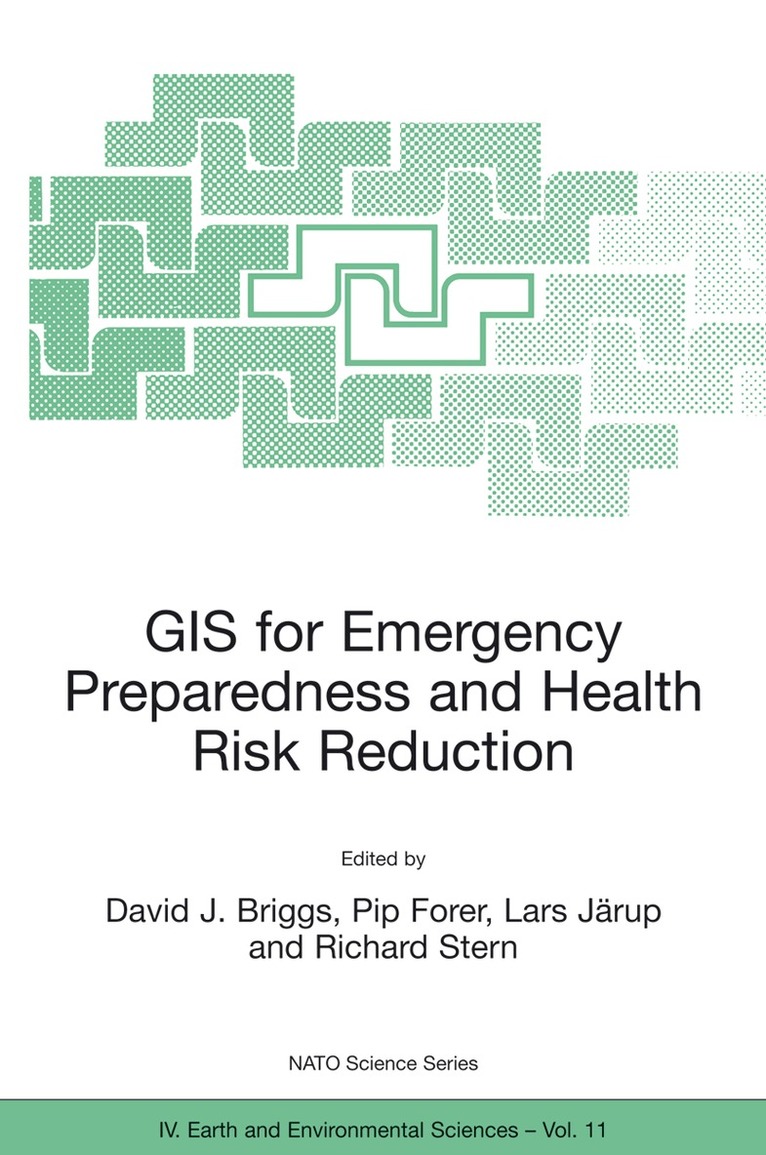
Geographical Information Systems (GIS) have developed rapidly and provide powerful tools for the capture, manipulation, integration, interrogation, modelling, analysis and visualisation of data - tools that are used for policy support in a wide range of areas at almost all geographic and administrative levels. This holds especially for emergency preparedness and health risk reduction, which are all essentially spatial problems. However, many initiatives have remained disconnected and uncoordinated, leading to less powerful, less compatible and less widely implemented systems than might otherwise have been the case. The matters discussed here include the probabilistic nature of most environmental hazards and the semi-random factors that influence interactions between these and human exposures; the effects of temporal and spatial scales on hazard assessment and imputed risk; the effects of measurement error in risk estimation and the stratification of risks and their impacts according to socioeconomic characteristics; and the quantification of socioeconomic differences in vulnerability and susceptibility to environmental hazards.GIS are powerful analytical tools in their own right, but what is needed is much more effective communication between the many disciplines, professions and stakeholders concerned - something which this book aims to help to achieve.
1 625 kr
Skickas inom 10-15 vardagar
Geographical Information Systems (GIS) have developed rapidly and provide powerful tools for the capture, manipulation, integration, interrogation, modelling, analysis and visualisation of data - tools that are used for policy support in a wide range of areas at almost all geographic and administrative levels. This holds especially for emergency preparedness and health risk reduction, which are all essentially spatial problems. However, many initiatives have remained disconnected and uncoordinated, leading to less powerful, less compatible and less widely implemented systems than might otherwise have been the case. The matters discussed here include the probabilistic nature of most environmental hazards and the semi-random factors that influence interactions between these and human exposures; the effects of temporal and spatial scales on hazard assessment and imputed risk; the effects of measurement error in risk estimation and the stratification of risks and their impacts according to socioeconomic characteristics; and the quantification of socioeconomic differences in vulnerability and susceptibility to environmental hazards.GIS are powerful analytical tools in their own right, but what is needed is much more effective communication between the many disciplines, professions and stakeholders concerned - something which this book aims to help to achieve.