David J. Des Marais - Böcker
Visar alla böcker från författaren David J. Des Marais. Handla med fri frakt och snabb leverans.
3 produkter
3 produkter
2 115 kr
Skickas inom 10-15 vardagar
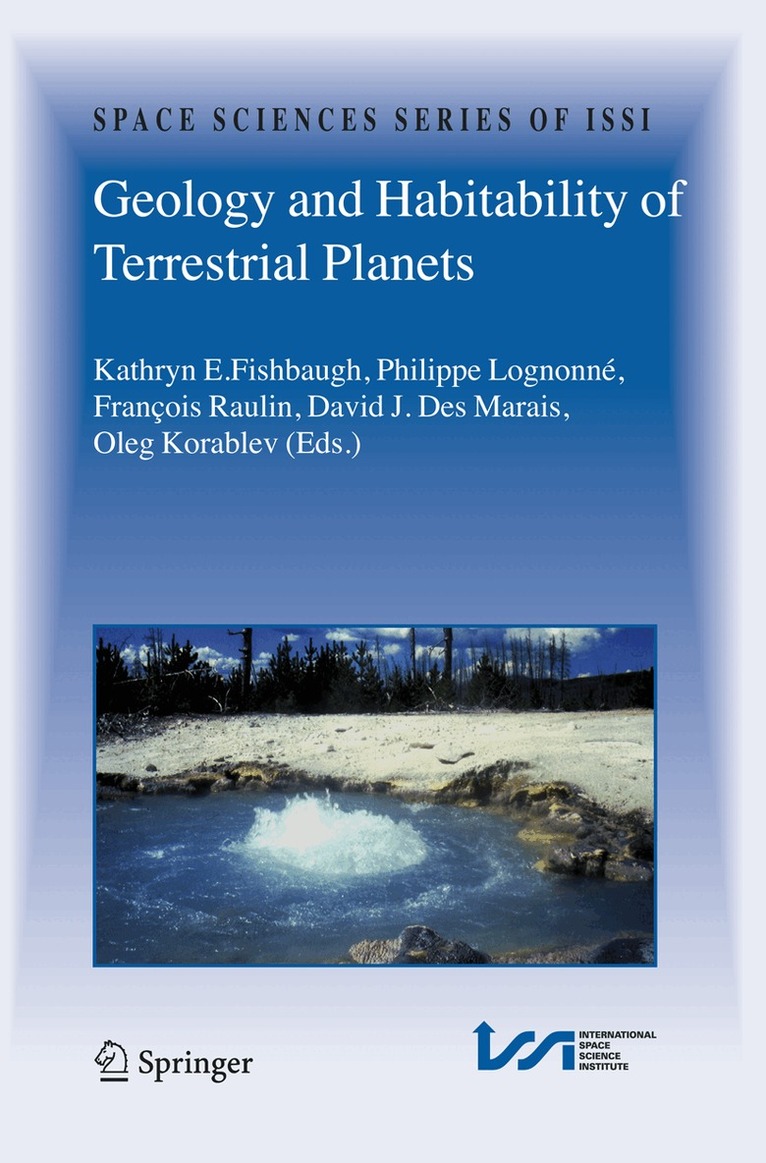
Given the fundamental importance of and universal interest in whether extraterrestrial life has developed or could eventually develop in our solar system and beyond, it is vital that an examination of planetary habitability go beyond simple assumptions such as, "Where there is water, there is life". This book has resulted from a workshop at the International Space Science Institute (ISSI) in Bern, Switzerland which brought together planetary geologists, geophysicists, atmospheric scientists and biologists to discuss the multi-faceted problem of how the habitability of a planet co-evolves with the geology of the surface and interior, the atmosphere, and the magnetosphere.Each of the six chapters have been written by authors with a range of expertise so that each chapter is itself multi-disciplinary, comprehensive, and accessible to scientists in all disciplines. These chapters delve into what life needs to exist and ultimately to thrive, the early environments of the young terrestrial planets, the role of volatiles in habitability, currently habitable (but possibly not inhabited) geologic environments, the connection between a planet’s inner workings and the habitability of its surface, and the effects on planetary atmospheres of solar evolution and the presence or absence of a magnetosphere.This book serves as an ideal reference for those planning missions that will hunt for biomarkers (especially on Mars), for biologists and geoscientists seeking the other side of the story, and for researchers and upper level students interested in an in-depth review of the geologic evolution of terrestrial planets, from their cores to their magnetospheres, and how that evolution shapes the habitability of the planetary surface.
847 kr
Skickas inom 11-20 vardagar
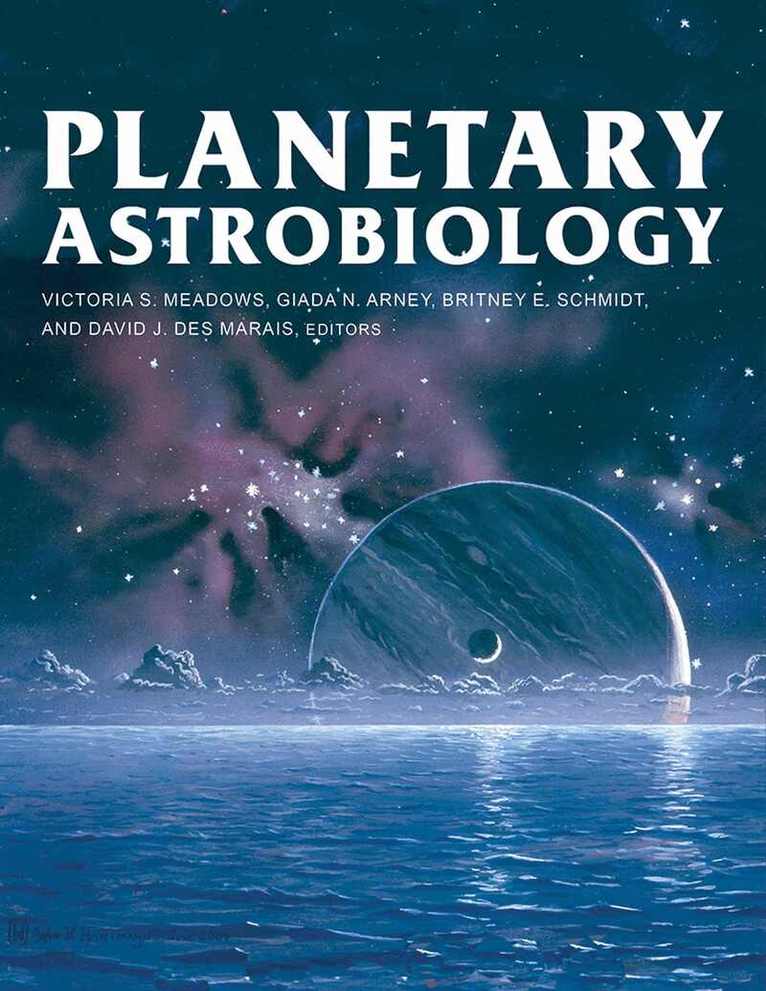
Are we alone in the universe? How did life arise on our planet? How do we search for life beyond Earth? These profound questions excite and intrigue broad cross sections of science and society. Answering these questions is the province of the emerging, strongly interdisciplinary field of astrobiology. Life is inextricably tied to the formation, chemistry, and evolution of its host world, and multidisciplinary studies of solar system worlds can provide key insights into processes that govern planetary habitability, informing the search for life in our solar system and beyond. Planetary Astrobiology brings together current knowledge across astronomy, biology, geology, physics, chemistry, and related fields, and considers the synergies between studies of solar systems and exoplanets to identify the path needed to advance the exploration of these profound questions.Planetary Astrobiology represents the combined efforts of more than seventy-five international experts consolidated into twenty chapters and provides an accessible, interdisciplinary gateway for new students and seasoned researchers who wish to learn more about this expanding field. Readers are brought to the frontiers of knowledge in astrobiology via results from the exploration of our own solar system and exoplanetary systems. The overarching goal of Planetary Astrobiology is to enhance and broaden the development of an interdisciplinary approach across the astrobiology, planetary science, and exoplanet communities, enabling a new era of comparative planetology that encompasses conditions and processes for the emergence, evolution, and detection of life.
2 115 kr
Skickas inom 10-15 vardagar
Given the fundamental importance of and universal interest in whether extraterrestrial life has developed or could eventually develop in our solar system and beyond, it is vital that an examination of planetary habitability go beyond simple assumptions such as, "Where there is water, there is life". This book has resulted from a workshop at the International Space Science Institute (ISSI) in Bern, Switzerland which brought together planetary geologists, geophysicists, atmospheric scientists and biologists to discuss the multi-faceted problem of how the habitability of a planet co-evolves with the geology of the surface and interior, the atmosphere, and the magnetosphere.Each of the six chapters have been written by authors with a range of expertise so that each chapter is itself multi-disciplinary, comprehensive, and accessible to scientists in all disciplines. These chapters delve into what life needs to exist and ultimately to thrive, the early environments of the young terrestrial planets, the role of volatiles in habitability, currently habitable (but possibly not inhabited) geologic environments, the connection between a planet’s inner workings and the habitability of its surface, and the effects on planetary atmospheres of solar evolution and the presence or absence of a magnetosphere.This book serves as an ideal reference for those planning missions that will hunt for biomarkers (especially on Mars), for biologists and geoscientists seeking the other side of the story, and for researchers and upper level students interested in an in-depth review of the geologic evolution of terrestrial planets, from their cores to their magnetospheres, and how that evolution shapes the habitability of the planetary surface.