David J. Downs - Böcker
Visar alla böcker från författaren David J. Downs. Handla med fri frakt och snabb leverans.
5 produkter
5 produkter
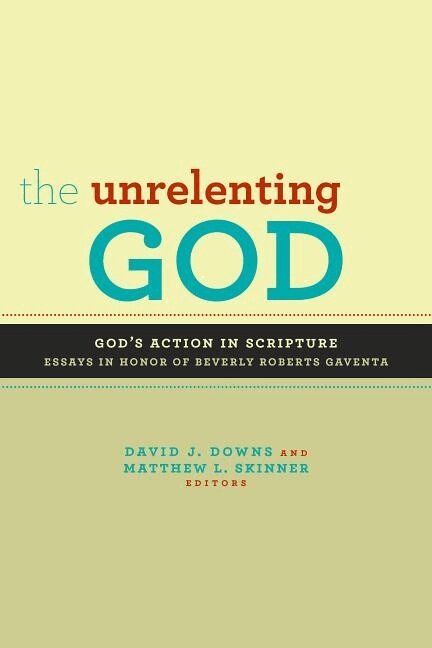
Unrelenting God
God's Action in Scripture: Essays in Honor of Beverly Roberts Gaventa
Häftad, Engelska, 2013
496 kr
Skickas inom 3-6 vardagar
The Offering of the Gentiles: Paul's Collection for Jerusalem in Its Chronological, Cultural, and Cultic Contexts
Häftad, Engelska, 2016
411 kr
Skickas inom 3-6 vardagar
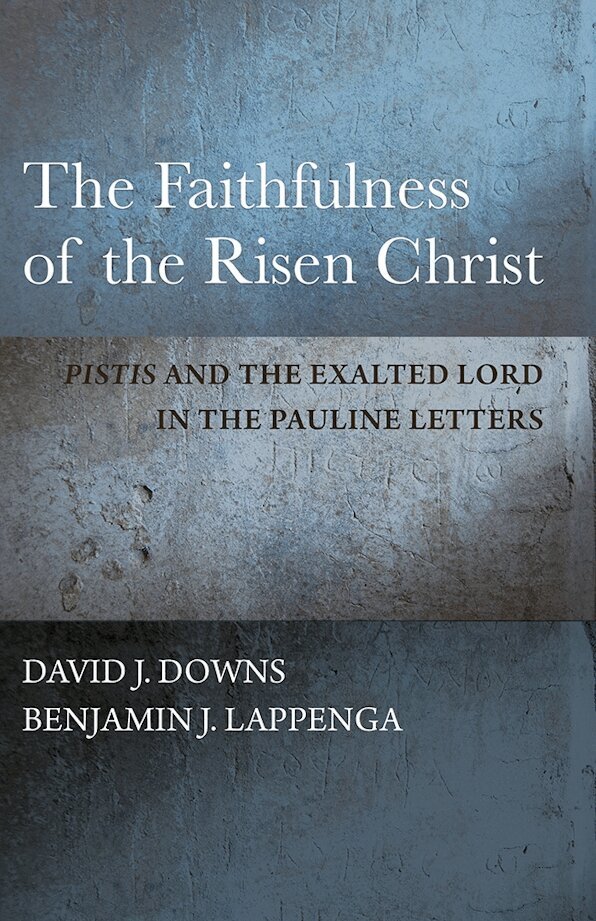
Faithfulness of the Risen Christ
Pistis"" and the Exalted Lord in the Pauline Letters
Inbunden, Engelska, 2019
484 kr
Skickas inom 7-10 vardagar
The pistis Christou construction in Paul's letters has ignited heated debates among Pauline scholars and theologians. On the one side, some claim that the phrase denotes human faith placed in Christ. Others, however, contend that pistis Christou in Paul alludes to the faithfulness of Christ himself, with Christ's pistis chiefly demonstrated in his willingness to suffer and die upon the cross. Yet both sides of this debate overlook Paul's emphasis on the faithfulness and continuing work of the risen and exalted Christ.In The Faithfulness of the Risen Christ, David J. Downs and Benjamin J. Lappenga focus upon the resurrection and exaltation of Jesus in their discussion of pistis Christou. They claim that when Paul writes of Christ's pistis, he refers to the faithfulness of the risen and exalted Christ. Downs and Lappenga carefully survey Paul's use of pistis in Philippians, the Corinthian letters, Galatians, Romans, and Ephesians, revealing how pistis epitomizes the risen Christ's continuing faithfulness toward all those who participate in him by pistis. Downs and Lappenga effectively reframe any future consideration of the pistis Christou construction for both New Testament scholars and theologians by showing that the story of Jesus in the letters of Paul extends to the faithfulness of the exalted Christ Jesus, who will remain faithful to those justified through union with Christ.
692 kr
Skickas inom 7-10 vardagar
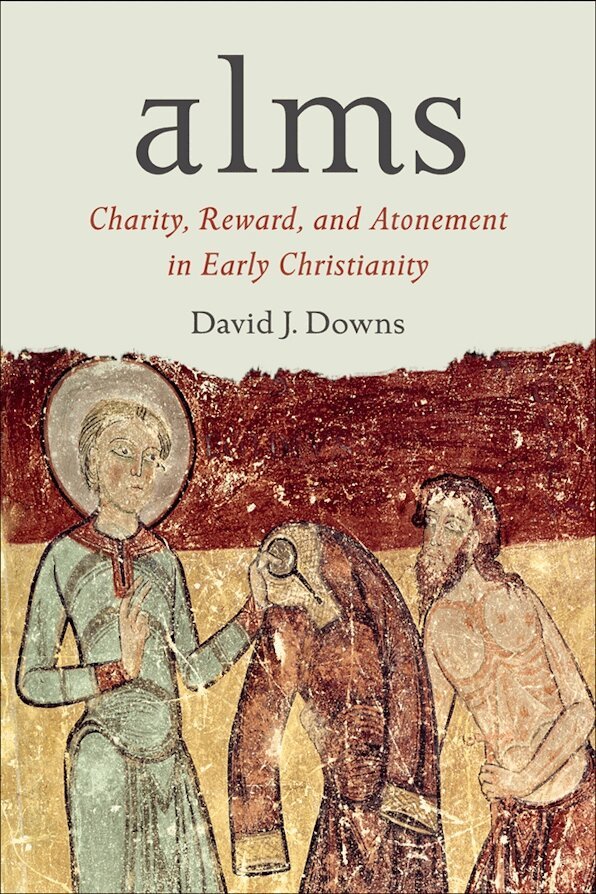
Christianity has often understood the death of Jesus on the cross as the sole means for forgiveness of sin. Despite this tradition, David Downs traces the early and sustained presence of yet another means by which Christians imagined atonement for sin: merciful care for the poor. In Alms: Charity, Reward, and Atonement in Early Christianity, Downs begins by considering the economic context of almsgiving in the Greco-Roman world, a context in which the overwhelming reality of poverty cultivated the formation of relationships of reciprocity and solidarity. Downs then provides detailed examinations of almsgiving and the rewards associated with it in the Old Testament, Second Temple Judaism, and the New Testament. He then attends to early Christian texts and authors in which a theology of atoning almsgiving is developed - 2 Clement, the Didache, the Epistle of Barnabas, Polycarp, Clement of Alexandria, Origen, and Cyprian. In this historical and theological reconstruction, Downs outlines the emergence of a model for the atonement of sin in Christian literature of the first three centuries of the Common Era, namely, atoning almsgiving, or the notion that providing material assistance to the needy cleanses or covers sin. Downs shows that early Christian advocacy of almsgiving's atoning power is located in an ancient economic context in which fiscal and social relationships were deeply interconnected. Within this context, the concept of atoning almsgiving developed in large part as a result of nascent Christian engagement with scriptural traditions that present care for the poor as having the potential to secure future reward, including heavenly merit and even the cleansing of sin, for those who practice mercy. Downs thus reveals how sin and its solution were socially and ecclesiologically embodied, a vision that frequently contrasted with disregard for the social body, and the bodies of the poor, in Docetic and Gnostic Christianity.Alms, in the end, illuminates the challenge of reading Scripture with the early church, for numerous patristic witnesses held together the conviction that salvation and atonement for sin come through the life, death, and resurrection of Jesus and the affirmation that the practice of mercifully caring for the needy cleanses or covers sin. Perhaps the ancient Christian integration of charity, reward, and atonement has the potential to reshape contemporary Christian traditions in which those spheres are separated.
Del 248 - Wissenschaftliche Untersuchungen zum Neuen Testament 2. Reihe
The Offering of the Gentiles
Paul's Collection for Jerusalem in Its Chronological, Cultural, and Cultic Contexts
Häftad, Engelska, 2008
1 228 kr
Skickas inom 5-8 vardagar
Eine wirtschaftliche Bemühung von großer Bedeutung für den Apostel Paulus waren die Gelder, die er in den weitgehend heidnischen Versammlungen für seine Mission und die jüdisch-christliche Gemeinde in Jerusalem sammelte. David J. Downs untersucht diese Kollekte in ihrem chronologischen, kulturellen und kultischen Kontext. Er vertritt die These, dass Paulus die verständnisvolle Beteiligung seiner Leser metaphorisch in die Kollekte als einen Akt kultischer Verehrung einfügt und damit hervorhebt, dass die Erfüllung beidseitiger Verpflichtungen innerhalb der gläubigen Gemeinde in Lobpreis erfolgt, der nicht an die Spender, sondern an Gott gerichtet ist, von dem jegliches Wohlwollen kommt. Diese rhetorische Vorgehensweise legt nahe, dass sogar die menschliche Tat des Geldsammelns für diejenigen, die in materieller Not leben, aus "der Gnade Gottes" entspringt und schließlich in der "Danksagung an Gott" (2 Kor. 9:14-15) endet.