Benjamin J. Lappenga – författare
Visar alla böcker från författaren Benjamin J. Lappenga. Handla med fri frakt och snabb leverans.
2 produkter
2 produkter
Inbunden, Engelska, 2019
492 kr
Skickas inom 5-8 vardagar
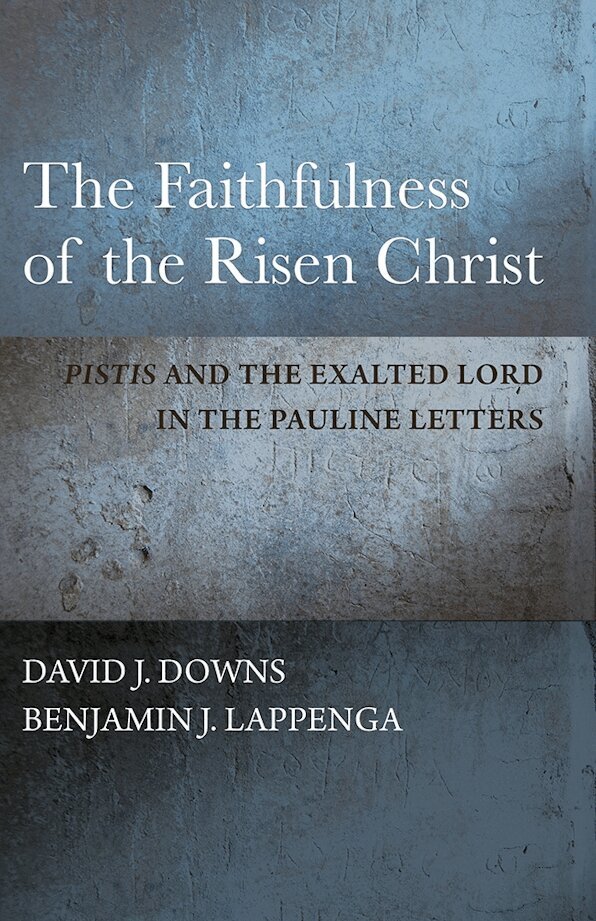
The pistis Christou construction in Paul's letters has ignited heated debates among Pauline scholars and theologians. On the one side, some claim that the phrase denotes human faith placed in Christ. Others, however, contend that pistis Christou in Paul alludes to the faithfulness of Christ himself, with Christ's pistis chiefly demonstrated in his willingness to suffer and die upon the cross. Yet both sides of this debate overlook Paul's emphasis on the faithfulness and continuing work of the risen and exalted Christ.In The Faithfulness of the Risen Christ, David J. Downs and Benjamin J. Lappenga focus upon the resurrection and exaltation of Jesus in their discussion of pistis Christou. They claim that when Paul writes of Christ's pistis, he refers to the faithfulness of the risen and exalted Christ. Downs and Lappenga carefully survey Paul's use of pistis in Philippians, the Corinthian letters, Galatians, Romans, and Ephesians, revealing how pistis epitomizes the risen Christ's continuing faithfulness toward all those who participate in him by pistis. Downs and Lappenga effectively reframe any future consideration of the pistis Christou construction for both New Testament scholars and theologians by showing that the story of Jesus in the letters of Paul extends to the faithfulness of the exalted Christ Jesus, who will remain faithful to those justified through union with Christ.
Del 137 - Biblical Interpretation Series
Paul’s Language of Ζῆλος
Monosemy and the Rhetoric of Identity and Practice
Inbunden, Engelska, 2015
2 497 kr
Skickas inom 3-6 vardagar
In Paul’s Language of Ζῆλος, Benjamin Lappenga harnesses linguistic insights recently formulated within the framework of relevance theory to argue that within the letters of Paul (specifically Galatians, 1-2 Corinthians, and Romans), the ζῆλος word group is monosemic. Linking the responsible treatment of lexemes in the interpretive process with new insight into Paul’s rhetorical and theological task, Lappenga demonstrates that the mental encyclopedia activated by the term ζῆλος is 'shaped' within Paul’s discourse and thus transforms the meaning of ζῆλος for attentive ('model') readers. Such identity-forming strategies promote a series of practices that may be grouped under the rubric of 'rightly-directed ζῆλος'; specifically, emulation of 'weak' people and things, eager pursuit of community-building gifts, and the avoidance of jealous rivalry.