David J. Vázquez - Böcker
Visar alla böcker från författaren David J. Vázquez. Handla med fri frakt och snabb leverans.
5 produkter
5 produkter
330 kr
Skickas inom 10-15 vardagar
Just as mariners use triangulation, mapping an imaginary triangle between two known positions and an unknown location, so, David J. VÁzquez contends, Latino authors in late twentieth-century America employ the coordinates of familiar ideas of self to find their way to new, complex identities. Through this metaphor, VÁzquez reveals how Latino autobiographical texts, written after the rise of cultural nationalism in the 1960s, challenge mainstream notions of individual identity and national belonging in the United States.In a traditional autobiographical work, the protagonist frequently opts out of his or her community. In the works that VÁzquez analyzes in Triangulations, protagonists instead opt in to collective groups-often for the express political purpose of redefining that collective. Reading texts by authors such as Ernesto Galarza, JesÚs ColÓn, Piri Thomas, Oscar “Zeta” Acosta, Judith Ortiz Cofer, John Rechy, Julia Alvarez, and Sandra Cisneros, VÁzquez engages debates about the relationship between literature and social movements, the role of cultural nationalism in projects for social justice, the gender and sexual problematics of 1960s cultural nationalist groups, the possibilities for interethnic coalitions, and the interpretation of autobiography. In the process, Triangulations considers the potential for cultural nationalism as a productive force for aggrieved communities of color in their struggles for equality.
1 399 kr
Skickas inom 7-10 vardagar
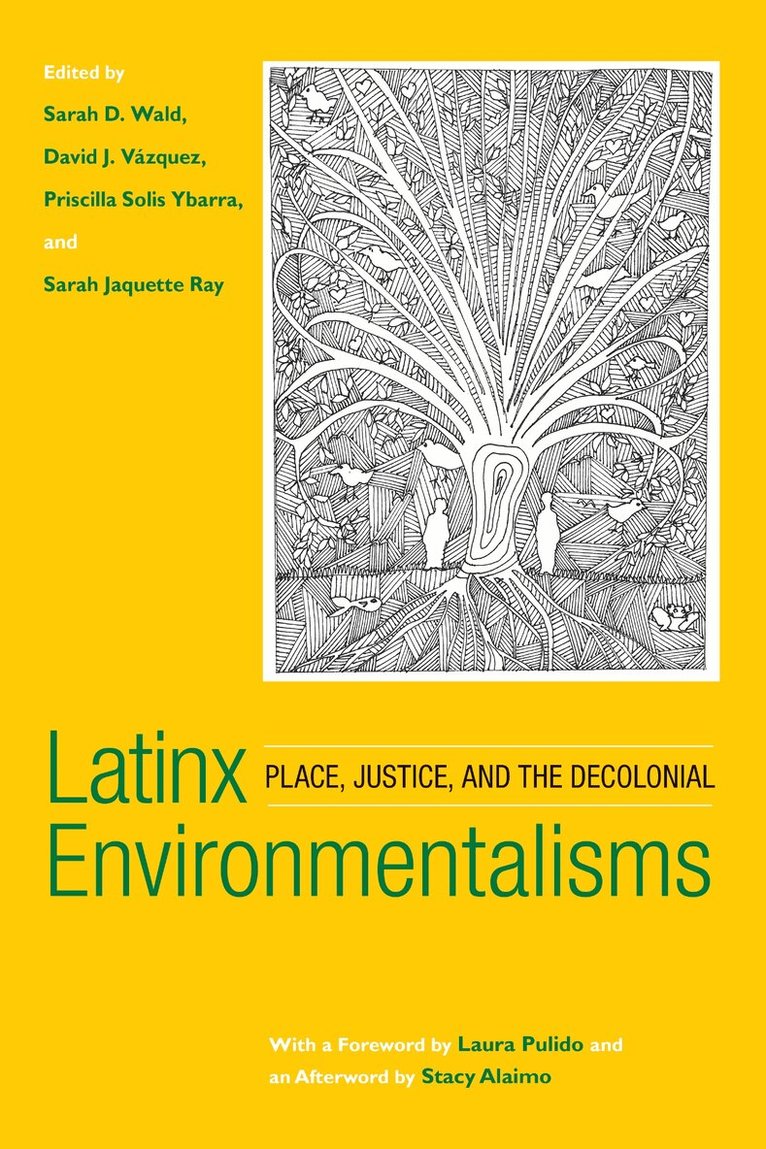
The whiteness of mainstream environmentalism often fails to account for the richness and variety of Latinx environmental thought. Building on insights of environmental justice scholarship as well as critical race and ethnic studies, the editors and contributors to Latinx Environmentalisms map the ways Latinx cultural texts integrate environmental concerns with questions of social and political justice. Original interviews with creative writers, including CherrÍe Moraga, Helena MarÍa Viramontes, and HÉctor Tobar, as well as new essays by noted scholars of Latinx literature and culture, show how Latinx authors and cultural producers express environmental concerns in their work. These chapters, which focus on film, visual art, and literature-and engage in fields such as disability studies, animal studies, and queer studies-emphasize the role of racial capitalism in shaping human relationships to the more-than-human world and reveal a vibrant tradition of Latinx decolonial environmentalism.Latinx Environmentalisms accounts for the ways Latinx cultures are environmental, but often do not assume the mantle of “environmentalism.”
477 kr
Skickas inom 7-10 vardagar
The whiteness of mainstream environmentalism often fails to account for the richness and variety of Latinx environmental thought. Building on insights of environmental justice scholarship as well as critical race and ethnic studies, the editors and contributors to Latinx Environmentalisms map the ways Latinx cultural texts integrate environmental concerns with questions of social and political justice. Original interviews with creative writers, including CherrÍe Moraga, Helena MarÍa Viramontes, and HÉctor Tobar, as well as new essays by noted scholars of Latinx literature and culture, show how Latinx authors and cultural producers express environmental concerns in their work. These chapters, which focus on film, visual art, and literature-and engage in fields such as disability studies, animal studies, and queer studies-emphasize the role of racial capitalism in shaping human relationships to the more-than-human world and reveal a vibrant tradition of Latinx decolonial environmentalism.Latinx Environmentalisms accounts for the ways Latinx cultures are environmental, but often do not assume the mantle of “environmentalism.”
Decolonial Environmentalisms
Climate Justice and Speculative Futures in Latinx Cultural Production
Inbunden, Engelska, 2025
1 278 kr
Skickas inom 7-10 vardagar
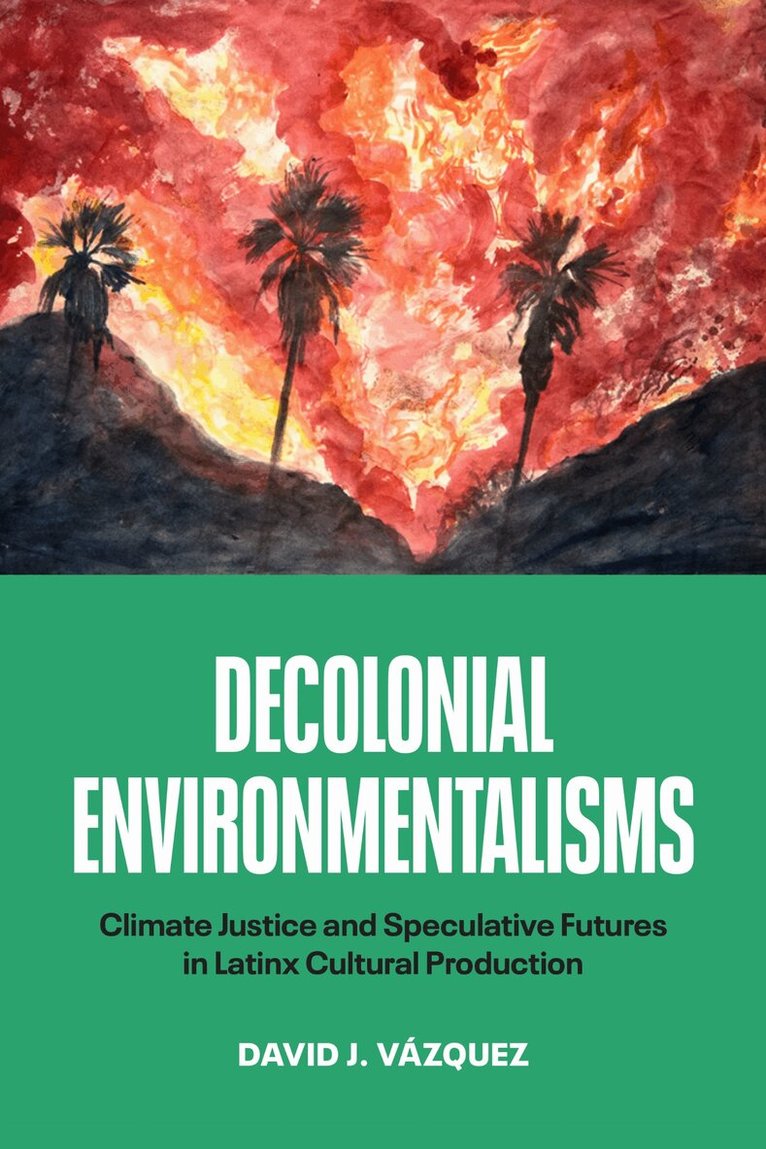
A critical examination of the environmental movement and the Latinx voices that are shifting how to think about a future shaped by climate change.In Decolonial Environmentalisms, David VÁzquez argues that the mainstream environmental movement is implicated in racial capitalism, not least through its ignorance of environmental justice as it pertains to Latinx people. Through close readings of eco-minded novels, films, visual art, and short stories by Chicanx, Puerto Rican, Dominican, Cuban American, Peruvian, and Central American culture makers, VÁzquez surfaces diverse Latinx visions for an equitable and sustainable humanity. In the creations of Helena MarÍa Viramontes, Ester HernÁndez, Salvador Plascencia, the printmaking collective Dominican York Proyecto GRAFICA, and others, VÁzquez locates a bracing critique of racist elisions and assumptions in hegemonic environmentalist thought. At the same time, he shows that the roles of Latinx people in the exploitation of the US West and the ruin of Indigenous communities are ripe for self-examination, in hopes of sparking reform. Indeed, Decolonial Environmentalisms is a work of guarded optimism, finding glimmers of possibility even in dystopic science fiction. The overlooked experiences of Latinx people, VÁzquez suggests, can inspire environmental movements capable of transformative advocacy.
Decolonial Environmentalisms
Climate Justice and Speculative Futures in Latinx Cultural Production
Häftad, Engelska, 2025
413 kr
Skickas
A critical examination of the environmental movement and the Latinx voices that are shifting how to think about a future shaped by climate change.In Decolonial Environmentalisms, David VÁzquez argues that the mainstream environmental movement is implicated in racial capitalism, not least through its ignorance of environmental justice as it pertains to Latinx people. Through close readings of eco-minded novels, films, visual art, and short stories by Chicanx, Puerto Rican, Dominican, Cuban American, Peruvian, and Central American culture makers, VÁzquez surfaces diverse Latinx visions for an equitable and sustainable humanity. In the creations of Helena MarÍa Viramontes, Ester HernÁndez, Salvador Plascencia, the printmaking collective Dominican York Proyecto GRAFICA, and others, VÁzquez locates a bracing critique of racist elisions and assumptions in hegemonic environmentalist thought. At the same time, he shows that the roles of Latinx people in the exploitation of the US West and the ruin of Indigenous communities are ripe for self-examination, in hopes of sparking reform. Indeed, Decolonial Environmentalisms is a work of guarded optimism, finding glimmers of possibility even in dystopic science fiction. The overlooked experiences of Latinx people, VÁzquez suggests, can inspire environmental movements capable of transformative advocacy.