David K. O'Rourke - Böcker
Visar alla böcker från författaren David K. O'Rourke. Handla med fri frakt och snabb leverans.
4 produkter
4 produkter
Del 56 - Berkeley Insights in Linguistics and Semiotics
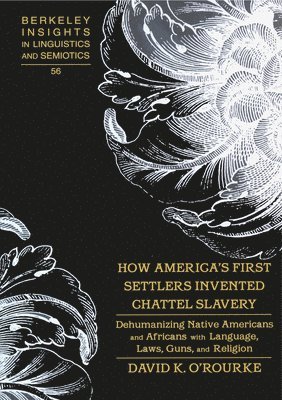
How America's First Settlers Invented Chattel Slavery
Dehumanizing Native Americans and Africans with Language, Laws, Guns, and Religion
Inbunden, Engelska, 2004
933 kr
Skickas inom 5-8 vardagar
162 kr
Skickas inom 5-8 vardagar
Del 83 - Berkeley Insights in Linguistics and Semiotics
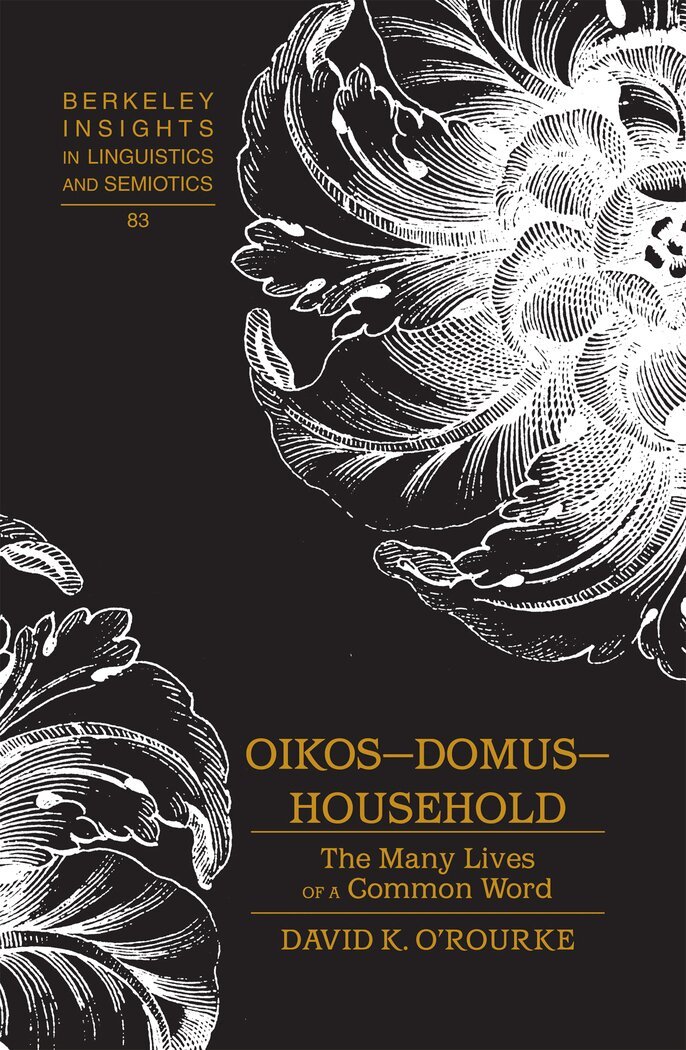
Oikos – Domus – Household
The Many Lives of a Common Word
Inbunden, Engelska, 2013
924 kr
Skickas inom 5-8 vardagar
Oikos – Domus – Household: The Many Lives of a Common Word describes historic episodes in the lives of these words, from the Greek oikos and Roman domus to our current family and home. The episodes highlight their function as controlling metaphors used very differently from culture to culture, but often as ways to control basic issues, like the context in which women become pregnant and the control of land and its transmission to heirs. This book also describes how these words and their current equivalents, home and family, are used as metaphors to illustrate how people who count are supposed to live and also to justify disinterest in people who do not count.One of the most important functions of the household is providing a dependable context in which pregnancy can be controlled. It describes how another key interest, continuing the male line, is embodied. Currently family is a politically useful, normative fiction. Family and home have little concrete meaning other than as metaphors for how people are supposed to live. There is no consistent meaning for these words from one era and one culture to another.Each episode is described on its own trying to avoid «history by hindsight.» There are no attempts to trace causes from one time or event to another, but rather an attempt, to the limited extent possible, to describe episodes seen within their own contexts and mindsets. However, the fact that women can now have control over their own pregnancy is seen as a radical change in the role and definition of family and household.
Del 91 - Berkeley Insights in Linguistics and Semiotics
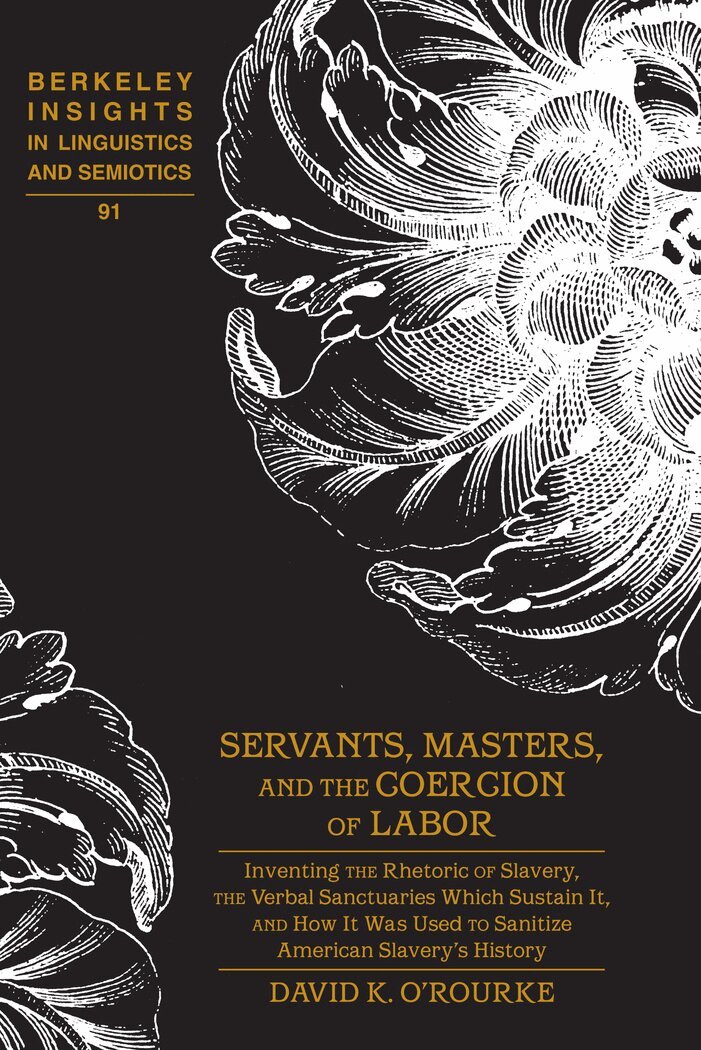
Servants, Masters, and the Coercion of Labor
Inventing the Rhetoric of Slavery, the Verbal Sanctuaries Which Sustain It, and How It Was Used to Sanitize American Slavery’s History
Inbunden, Engelska, 2015
1 044 kr
Skickas inom 5-8 vardagar
This book by David K. O’Rourke presents a study of language and linguistic forms and the roles they played in the initial imagining, developing, and maintaining of a society based on coerced labor. It focuses especially on the contexts of coercion and on the differences in the roles of masters and servants from society to society. In the interaction between colonial powers and conquered peoples, O’Rourke also describes how the European colonial nations imposed their own languages, social metaphors, and utopian views as a way to disconnect those they conquered from their historic roots and re-imagine, redefine, rename, and map them into new lands and places inhabited by inferior peoples needing control by masters who understand how they should now live.O’Rourke begins by describing how this rewriting of history is not new. He calls on well-established classical and biblical language studies to describe how older and historic oral histories and texts were rewritten to reshape the past to fit new and more useful views. He explains how rhetoric, metaphor, and pseudo-sciences were used to change Europe’s earlier contracted and coerced labor in colonial America into the chattel slavery that became the hallmark of the new and growing United States. O’Rourke also describes how the dominant culture’s current values, foundational metaphors, and sacred notions were woven together into linguistic shelters that served to enshrine the repressive process from questioning and dissent. These same linguistic elements were then used after emancipation to maintain and sanitize the remains of the slave system by presenting it as a benign institution.