David Kynaston - Böcker
Visar alla böcker från författaren David Kynaston. Handla med fri frakt och snabb leverans.
20 produkter
20 produkter
204 kr
Skickas
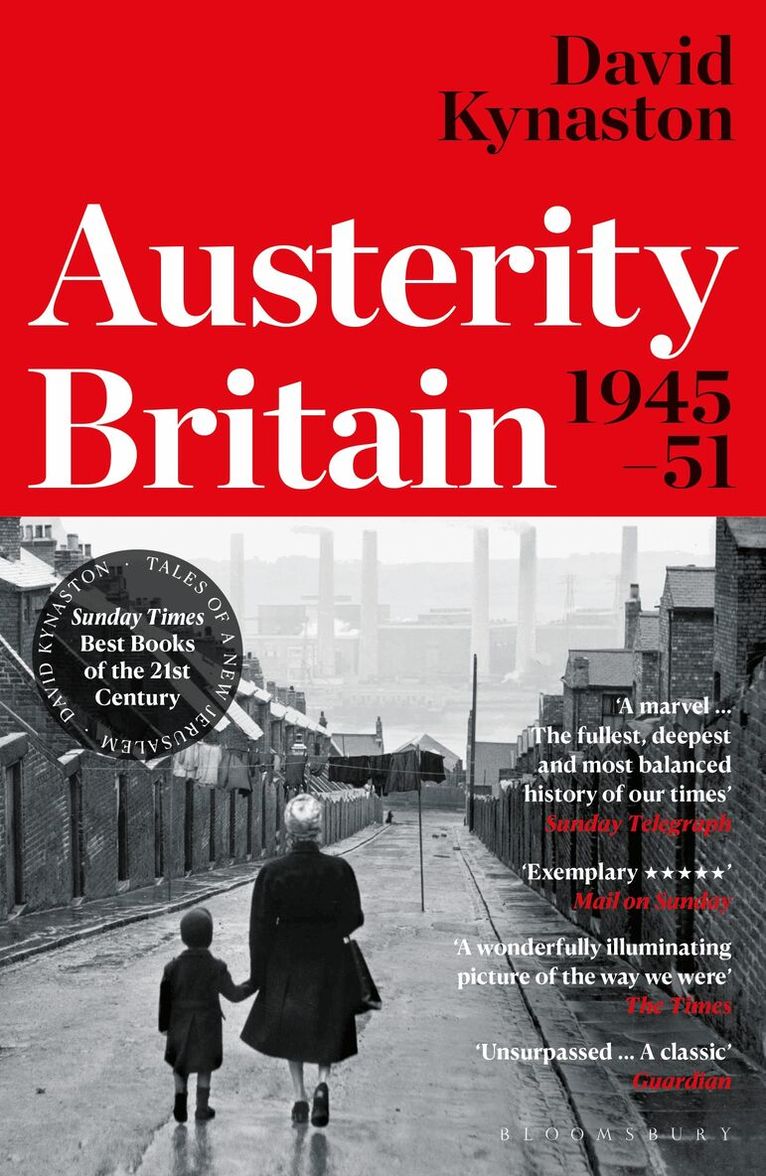
This edition collects both volumes of Austerity Britain together for the first time‘This is a classic; buy at least three copies - one for yourself and two to give to friends and family' GuardianThe first book in the groundbreaking series that tells the story of Britain from VE Day in 1945 to the coming of Margaret Thatcher in 1979 as never beforeCoursing through Austerity Britain is an astonishing variety of voices - vivid, unselfconscious, and unaware of what the future holds. A Chingford housewife endures the tribulations of rationing; a retired schoolteacher observes during a royal visit how well-fed the Queen looks; a pernickety civil servant in Bristol is oblivious to anyone's troubles but his own. An array of working-class witnesses describe how life in post-war Britain is, with little regard for liberal niceties or the feelings of their ‘betters'. Many of these voices will stay with the reader in future volumes, jostling alongside well-known figures like John Arlott (here making his first radio broadcast, still in police uniform), Glenda Jackson (taking the 11+) and Doris Lessing, newly arrived from Africa, struck by the levelling poverty of postwar Britain.David Kynaston weaves a sophisticated narrative of how the victorious 1945 Labour government shaped the political, economic and social landscape for the next three decades. Deeply researched, often amusing and always intensely entertaining and readable, the first volume of David Kynaston's ambitious history offers an entirely fresh perspective on Britain during those six momentous years.
1 738 kr
Skickas inom 5-8 vardagar
The Bank of England's tercentenary (July 1994), coming as it does with the future status of the Bank a subject of much discussion, is an apposite moment to offer an overview of the Bank's history as a whole. Obviously there have been several detailed histories of the Bank, but this collection of essays is the first attempt to identify the most important themes of the institution's history and put them in a long-term perspective. The main pieces will deal with the Bank's relations with government, its impact on the British economy, its role in international central banking, its position in the City of London, and its changing composition and management. In addition, in a piece likely to cause considerable interest, the Deputy Governor (Rupert Pennant Rea) will be looking at all these themes in a contemporary light and offering some thoughts about the Bank's future. Added value is given by two main appendices: a detailed chronology of the Bank's history; and a comprehensive listing of its governors, directors, and senior officials. In sum, this is a book that meets a clear intellectual need, while also being extremely convenient for those unwilling or unable to embark on the circa 2600 pages of the three main official histories.Contributors: D. Kynaston, A. Cairncross, P. Cottrell, R. Roberts, E. Hennessy, R. Pennant Rea,
629 kr
Skickas inom 3-6 vardagar
A World of Its Own tells the story of the City of London's nineteenth century ascent to its position as the world's leading international financial centre. We witness the rise of the merchant banks, the growth of the Stock Exchange, the internationalism of the money market, and the characters behind these developments, like the mercurial Nathan Rothschild or the dour Joshua Bates. High history is interwoven with high drama: the burning of the Royal Exchange on a snowy night in 1838, the hectic making of fortunes from South American guano; the Baring crisis of 1890, when the city's most respected house was rescued by its keenest rival. A World of Its Own is at once a powerful narrative, peopled with extraordinary characters, and a brilliant work of social and economic history.
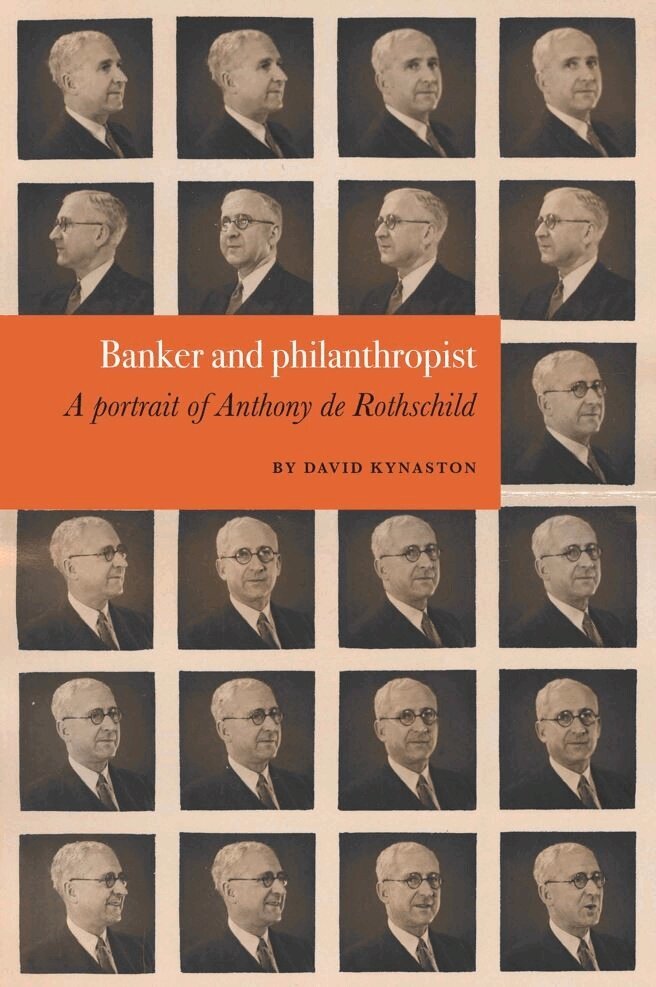
David Kynaston: Banker and philanthropist
A portrait of Anthony de Rothschild
Inbunden, Engelska, 2022
199 kr
Skickas inom 7-10 vardagar
Anthony de Rothschild: Banker and Philanthropist tells the story of the man who influenced modern history. De Rothschild was at the helm of international banking, steering the system from the chaos after the First World War into the modern world. In this evocative new book, historian David Kynaston tells the fascinating story of Anthony de Rothschild (1887–1961). Through access to never previously consulted diaries and letters, a three-dimensional picture emerges of a complex and thoughtful man guiding the City’s most famous merchant bank through the turbulent years between the 1920s and 1950s. In politics he was open-minded and constructive whilst in his philanthropy, not least through his leading role in helping Jewish refugees (especially children) to leave Nazi Germany for England, he was thoughtful and generous. Austere on the surface but warm beneath, impatient equally of fools and idealogues, always searching for how he could contribute to make a better world – Anthony de Rothschild deserves, arguably more than almost anyone else in the twentieth-century City, to be known properly by later generations.
1 679 kr
Skickas inom 10-15 vardagar
First published in 1976. This book covers working-class history from the decline of Chartism to the formation of the Labour Party and its early development to 1914. It gives a historical perspective to the essentially defensive, materialist orientation of twentieth century working-class politics. David Kynaston has sought to synthesise the wealth of recent detailed research to produce a coherent overall view of the particular dynamic of these formative years. He sees the course of working-class history in the second half of the nineteenth century as a necessary tragedy and suggests that a major reason for this was the inability of William Morris as a revolutionary socialist to influence organised labour. The treatment is thematic as much as chronological and special attention is given not only to the parliamentary rise of Labour, but also to deeper-lying intellectual, occupational, residential, religious, and cultural influences. The text itself includes a substantial amount of contemporary material in order to reflect the distinctive ‘feel’ of the period. The book is particularly designed for students studying the political, social and economic background to modern Britain as well as those specialising in nineteenth-century English history.
509 kr
Skickas inom 10-15 vardagar
First published in 1976. This book covers working-class history from the decline of Chartism to the formation of the Labour Party and its early development to 1914. It gives a historical perspective to the essentially defensive, materialist orientation of twentieth century working-class politics. David Kynaston has sought to synthesise the wealth of recent detailed research to produce a coherent overall view of the particular dynamic of these formative years. He sees the course of working-class history in the second half of the nineteenth century as a necessary tragedy and suggests that a major reason for this was the inability of William Morris as a revolutionary socialist to influence organised labour. The treatment is thematic as much as chronological and special attention is given not only to the parliamentary rise of Labour, but also to deeper-lying intellectual, occupational, residential, religious, and cultural influences. The text itself includes a substantial amount of contemporary material in order to reflect the distinctive ‘feel’ of the period. The book is particularly designed for students studying the political, social and economic background to modern Britain as well as those specialising in nineteenth-century English history.
197 kr
Skickas
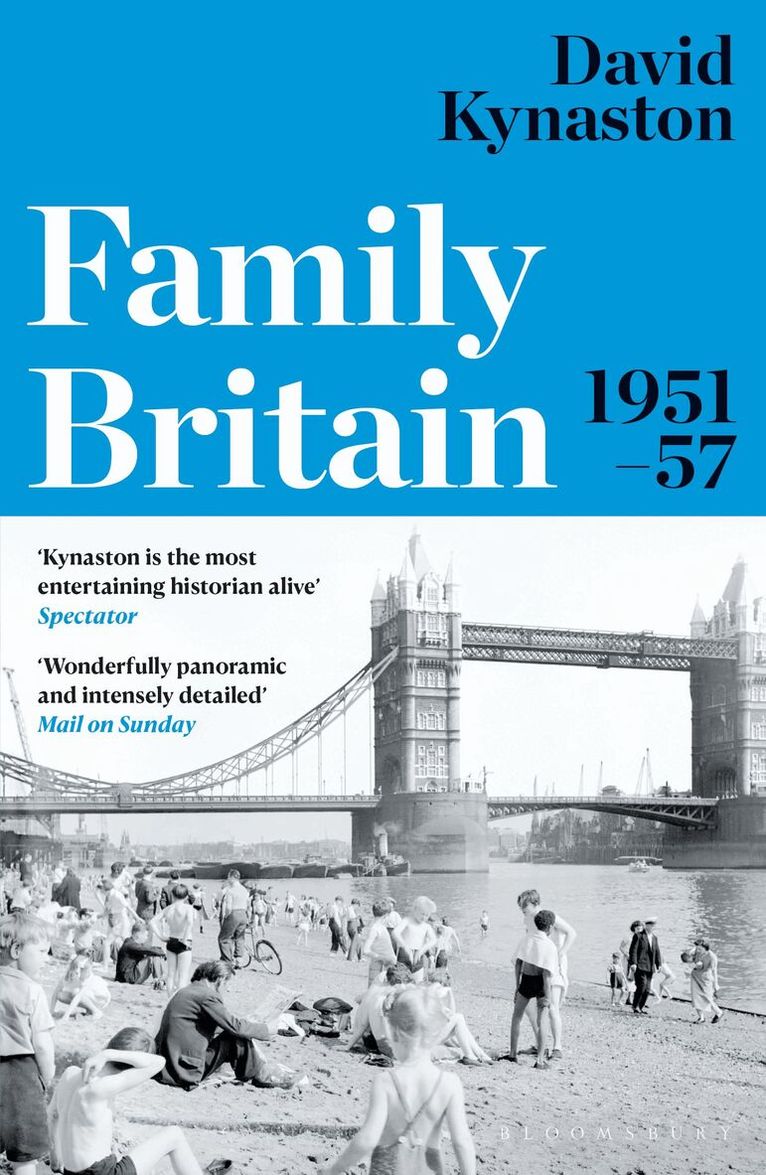
Family Britain continues David Kynaston's groundbreaking series Tales of a New Jerusalem, telling as never before the story of Britain from VE Day in 1945 to the election of Margaret Thatcher in 1979.‘The book is a marvel ... the level of detail is precise and fascinating' Sunday Telegraph‘A wonderfully illuminating picture of the way we were' The TimesAs in Austerity Britain, an astonishing array of vivid, intimate and unselfconscious voices drive the narrative. The keen-eyed Nella Last shops assiduously at Barrow Market as austerity and rationing gradually give way to relative abundance; housewife Judy Haines, relishing the detail of suburban life, brings up her children in Chingford; the self-absorbed civil servant Henry St John perfects the art of grumbling.These and many other voices give a rich, unsentimental picture of everyday life in the 1950s. We also encounter well-known figures on the way, such as Doris Lessing (joining and later leaving the Communist Party), John Arlott (sticking up on Any Questions? for the rights of homosexuals) and Tiger's Roy of the Rovers (making his goal-scoring debut for Melchester).All this is part of a colourful, unfolding tapestry, in which the great national events - the Tories returning to power, the death of George VI, the Coronation of Queen Elizabeth, the Suez Crisis - jostle alongside everything that gave Britain in the 1950s its distinctive flavour: Butlin's holiday camps, Kenwood food mixers, Hancock's Half-Hour, Ekco television sets, Davy Crockett, skiffle and teddy boys. Deeply researched, David Kynaston's Family Britain offers an unrivalled take on a largely cohesive, ordered, still very hierarchical society gratefully starting to move away from the painful hardships of the 1940s towards domestic ease and affluence.
131 kr
Skickas inom 10-15 vardagar
______________________A fascinating examination of cricket in the nineteenth century by 'the most entertaining historian alive' (Spectator)'Few historians have the power to make you feel you actually inhabit the times they are writing about. Kynaston does' Sunday Times, Books of the DecadeOn a hot morning in July 1898, the sporting world gathered at Lord's to celebrate the fiftieth birthday of WG Grace, the greatest cricketer the game has ever seen. Grace was cheered onto the field by a packed crowd as he captained the Gentlemen, the privileged old guard of the Establishment. Their opponents in this annual match were the Players, cricketers for whom the sport was a precarious livelihood rather than a summer pastime. This three-day encounter represented the climax of cricket's Golden Age, and the unstoppable arrival of the professional game that would dominate the twentieth century.In WG's Birthday Party, David Kynaston tells the story of one of the most thrilling matches in cricketing history, as well as the colourful and sometimes tragically moving lives of the members of both teams. Using the Gentlemen vs Players contest as a lens through which to examine the hierarchy and tensions endemic in cricket at the beginning of the modern era, he presents a lively, moving, richly detailed and massively entertaining portrait of late-Victorian society. It is social history at its most compelling, from ‘the most entertaining historian alive'.______________________'An absolute gem of a book' Guardian‘Kynaston writes brilliantly and readably' Independent on Sunday
183 kr
Skickas
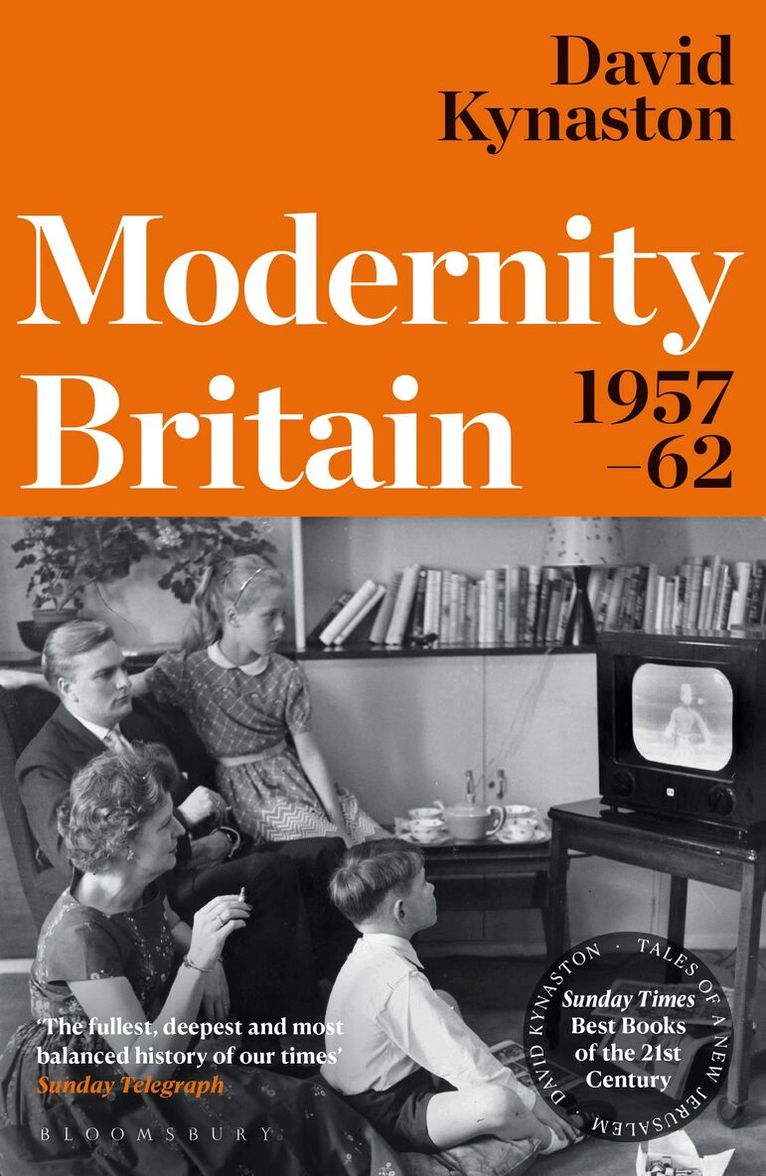
This edition collects both volumes of Modernity Britain for the first timeFollowing Austerity Britain and Family Britain, the third volume in David Kynaston's landmark social history of post-war Britain'Triumphant ... A historian of peerless sensitivity and curiosity about the lives of individuals' Financial Times'This superb history captures the birth pangs of modern Britain ... It is a part of Kynaston’s huge achievement that such moments of insight and pleasure should accompany what has become a monumental history of our recent past' The Times____________________David Kynaston’s history of post-war Britain has so far taken us from the radically reforming Labour governments of the late 1940s in Austerity Britain and through the growing prosperity of Family Britain’s more placid 1950s. Now Modernity Britain 1957–62 sees the coming of a new Zeitgeist as Kynaston gets up close to a turbulent era in which the speed of social change accelerated. The late 1950s to early 1960s was an action-packed, often dramatic time in which the contours of modern Britain began to take shape. These were the ‘never had it so good’ years, when the Carry On film series got going, and films like Room at the Top and the first soaps like Coronation Street and Z Cars brought the working class to the centre of the national frame; when CND galvanised the progressive middle class; when ‘youth’ emerged as a cultural force; when the Notting Hill riots made race and immigration an inescapable reality; and when ‘meritocracy’ became the buzz word of the day. In this period, the traditional norms of morality were perceived as under serious threat (Lady Chatterley’s Lover freely on sale after the famous case), and traditional working-class culture was changing (wakes weeks in decline, the end of the maximum wage for footballers).The greatest change, though, concerned urban redevelopment: city centres were being yanked into the age of the motor car, slum clearance was intensified, and the skyline became studded with brutalist high-rise blocks. Some of this transformation was necessary, but too much would destroy communities and leave a harsh, fateful legacy.This profoundly important story of the transformation of Britain as it arrived at the brink of a new world is brilliantly told through diaries, letters newspapers and a rich haul of other sources and published in one magnificent paperback volume for the first time.
156 kr
Skickas inom 7-10 vardagar
WINNER OF THE TELEGRAPH CRICKET BOOK OF THE YEAR AWARD 2019 'Beautifully written, meticulously researched and stuffed with rich sporting and social history ... Unputdownable' Mail on SundayAfter the Second World War, as the BBC tightened its grip on the national consciousness, two of the most famous English voices were commentators on games of cricket. John Arlott and E.W. ('Jim') Swanton transformed the broadcasting of the nation’s summer game into a national institution. Arlott and Swanton typified the contrasting aspects of post-war Britain. Because of their strong personalities and distinctive voices – Swanton's crisp and upper-class, Arlott's with its Hampshire burr – each had a loyal following. As England moved from a class-based to a more egalitarian society, nothing stayed the same – including professional cricket. Wise, lively and filled with rich social and sporting history, Arlott, Swanton and the Soul of English Cricket shows how, as the game entered a new era, these two very different men battled to save the soul of the game._______________________'Magnificent … One of the best cricket books I’ve read in years: it makes long-forgotten matches live and breathe as though they were played yesterday' Daily Mail, Books of the Year'A triumph … [Kynaston and Fay] both have inside-outside sensitivities that keep this near-seamless collaboration shrewd, worldly, balanced and fresh' Times Literary Supplement
211 kr
Tillfälligt slut
'An exemplary narrative history, with the archives plundered judiciously … [Kynaston's] portrait of a globally influential institution is, in characteristic style, rendered on an entertainingly human scale’ The Times‘Not an ordinary bank, but a great engine of state,’ Adam Smith declared of the Bank of England in 1776, which for over 320 years has been central to British history. Yet to most people, despite its increasingly high profile, its history is largely unknown.Till Time’s Last Sand is the first authoritative and accessible single-volume history of the Bank of England, from the Bank’s founding in 1694 to Mark Carney’s appointment as Governor in 2013. This history addresses the important debates about the Bank’s purpose and modes of operation. Yet this is also a narrative that does full justice to the leading episodes and characters of the Bank, while taking care to evoke a real sense of the place itself, with its often distinctively domestic side.Deploying an array of piquant and revealing material from the Bank’s rich archives, this is a multi-layered and insightful portrait of one of our most important national institutions, from one of our leading historians.
118 kr
Skickas inom 7-10 vardagar
'Thoroughly researched and written with such calm authority, yet makes you want to scream with righteous indignation' John O'Farrell‘We can expect the manifesto-writers at the next general election to pass magpie-like over these chapters ... The appeal to act is heartfelt’ Financial Times___________________Includes a new chapter, 'Moving Ahead?'Britain’s private, fee-paying schools are institutions where children from affluent families have their privileges further entrenched through a high-quality, richly-resourced education. Engines of Privilege contends that, in a society that mouths the virtues of equality of opportunity, of fairness and of social cohesion, the educational apartheid separating private schools from our state schools deploys our national educational resources unfairly; blocks social mobility; reproduces privilege down the generations; and underpins a damaging democratic deficit in our society.Francis Green and David Kynaston carefully examine options for change, while drawing on the valuable lessons of history. Clear, vigorous prose is combined with forensic analysis to powerful effect, illuminating the painful contrast between the importance of private schools in British society and the near-absence of serious, policy-shaping debate.___________________'An excoriating account of the inequalities perpetuated by Britain’s love affair with private schools' The Times
122 kr
Skickas inom 7-10 vardagar
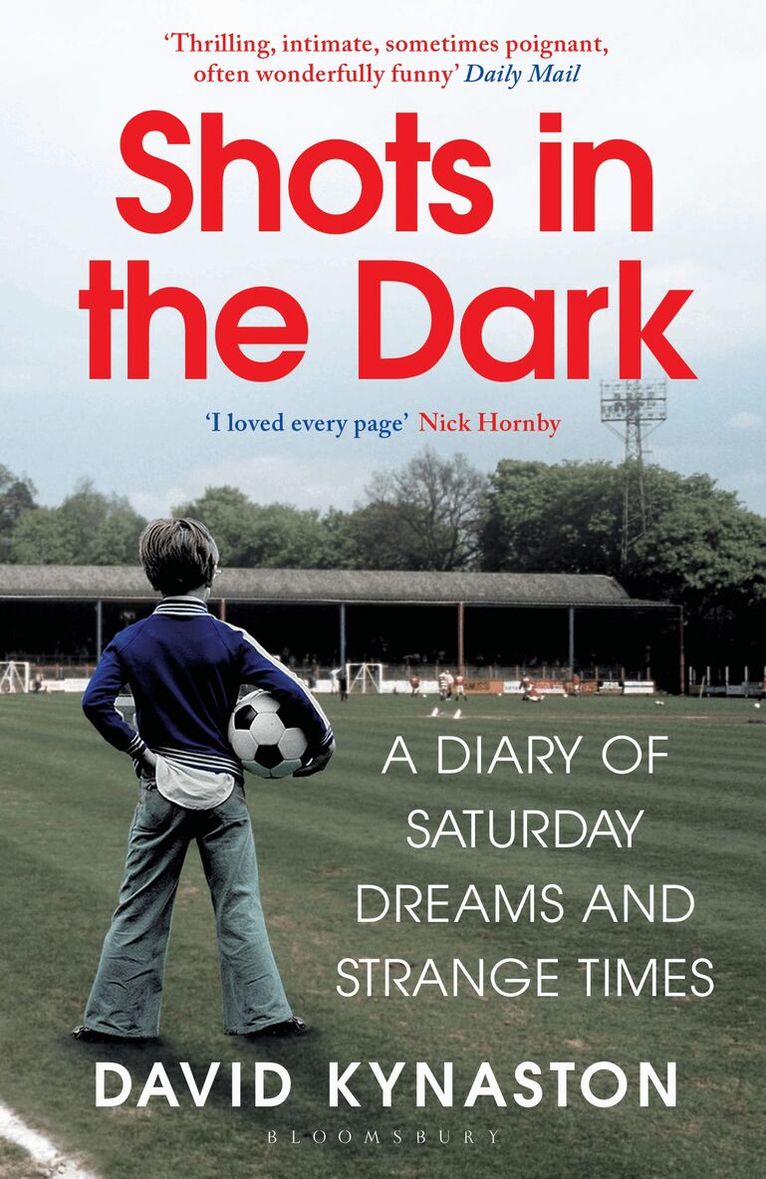
'I loved every page, and ended up admiring David Kynaston, our greatest social historian, even more than I already did' Nick HornbyBrimming with wisdom and humour, David Kynaston’s diaries written over one football season offer up his most personal take on social history to date.David Kynaston was seven and a half years old when he attended his first Aldershot match in the early months of 1959. So began a deep attachment to the game and a lifelong loyalty to an obscure, small-town football club. Though as he sits down to write his diaries almost sixty years on, he reflects that life might have been simpler if his father had never taken him to that first match at the Rec…Shots in the Dark is the diary David Kynaston kept in the football season of 2016/17, detailing the ups and downs of the ‘Shots’ in the year that saw a divisive referendum in the UK and the impending ascension of Donald Trump. Here Kynaston presents a social history of modern Britain with a difference – all through the prism of the beautiful game.A testament to the ways in which fandom gives solidity and security to our lives, particularly in these bewildering and rapidly changing times, Shots in the Dark gets to the heart of what it means to be a devoted follower of a sports team. This is a diary of the macro and the micro, as questions of loyalty, of identity, of liberalism and of nationalism all rub uncomfortably up against each other during nine charged months.____________________'A master socioeconomic craftsman' Guardian'[A] delightful book … This is a book about football but, like all the best books, it is about a thousand other things as well … This thrilling, intimate, sometimes poignant, often wonderfully funny book shows the workings in real time of a deeply civilised, humane and tolerant mind in an age when those virtues are in short supply. Here is a man with whom you would want to go to a match, and even share a beer afterwards. David Kynaston is one of the good guys, and this is one of the very good books' Daily Mail'A charming diary ... He’s the sort of fan I want to sit next to: partisan yet civil, eyes on the match but aware there are bigger things to worry about' Financial Times
152 kr
Skickas inom 7-10 vardagar
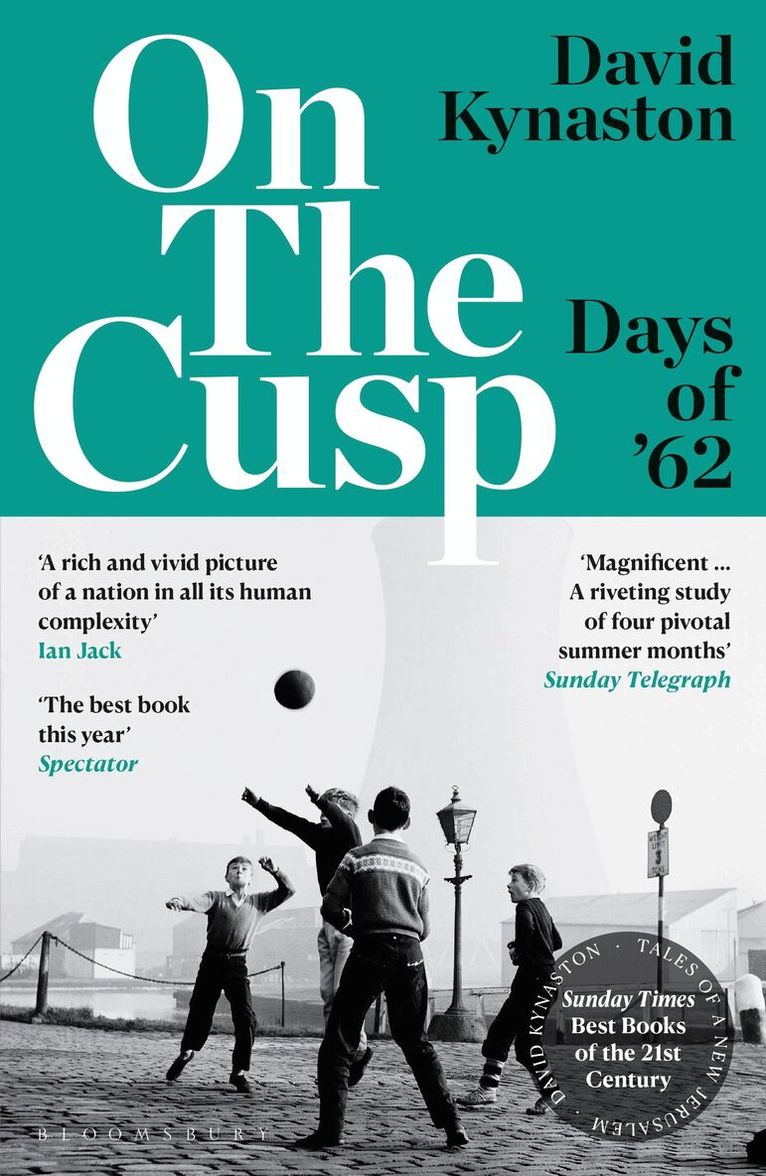
A TIMES BEST PAPERBACK OF 2022------------------'Glorious ... It's rare to read anything so teeming with life' SPECTATOR, Books of the Year'This is Kynaston at his best ... A rich and vivid picture of a nation in all its human complexity' IAN JACK'A compulsive read ... Generous as well as sharp' MARGARET DRABBLE'I was captivated by its brilliance' D. J. TAYLOR__________________The ‘real’ Sixties began on 5 October 1962. On that remarkable Friday, the Beatles hit the world with their first single, ‘Love Me Do’, and the first James Bond film, Dr No, had its world premiere in London: two icons of the future heralding a social and cultural revolution.On the Cusp, continuing David Kynaston’s groundbreaking history of post-war Britain, takes place during the summer and early autumn of 1962, in the charged months leading up to the moment that a country changed. The Rolling Stones’ debut at the Marquee Club, the last Gentlemen versus Players match at Lord’s, the issue of Britain’s relationship with Europe starting to divide the country, Telstar the satellite beaming live TV pictures across the world, ‘Telstar’ the record a siren call to a techno future – these were months thick with incident, all woven together here with an array of fresh contemporary sources, including diarists both famous and obscure.Britain would never be the same again after these months. Sometimes indignant, sometimes admiring, always empathetic, On the Cusp evokes a world of seaside holidays, of church fetes, of Steptoe andSon – a world still of seemingly settled social and economic certainties, but in fact on the edge of fundamental change.___________________'Sparkles with voices from a vanished world ... An entrancing representation, full of exquisite detail' KATE WILLIAMS'What a joy it has been to find myself wholly immersed in the richness of Kynaston's account ... Thrilling' JULIET NICOLSON
163 kr
Skickas
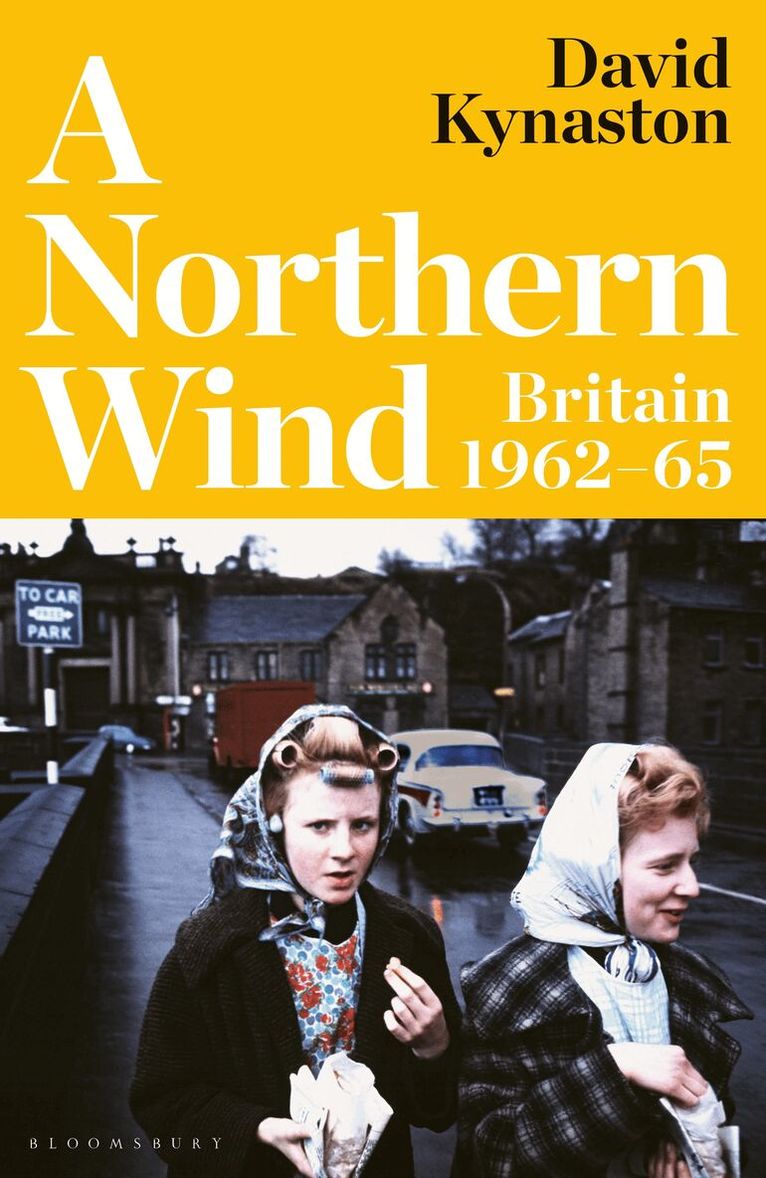
The early sixties in Britain told as only David Kynaston ('the most entertaining historian alive' Spectator) can. Running from 1962 to 1965, A Northern Wind is the anticipated new volume in the landmark ‘Tales of a New Jerusalem’ series.'From Daleks and dingy tower blocks to nuclear threats, this addictively readable book charts dizzying change . . . Sometimes moving, often comic, always fascinating'DOMINIC SANDBROOK, SUNDAY TIMESHow much can change in two and a half years? In the case of Britain in the Sixties, the answer is: almost everything. From the seismic coming of Liverpool's the Beatles to a sex scandal that rocked the Tory government to the arrival at No 10 of Harold Wilson, a Yorkshireman utterly different from his Old Etonian predecessors.A Northern Wind, the keenly anticipated next instalment of David Kynaston’s acclaimed Tales of a New Jerusalem series, brings to vivid life the period between October 1962 and February 1965. Drawing upon an unparalleled array of diaries, newspapers and first-hand recollections, Kynaston’s masterful storytelling refreshes familiar events – the Cuban Missile Crisis, the Big Freeze, the assassination of JFK, the funeral of Winston Churchill – while revealing in all their variety the experiences of the people living through this history.Major themes complement the compelling narrative: an anti-Establishment mood epitomised by the BBC’s controversial That Was The Week That Was; a welfare state only slowly becoming more responsive to the individual needs of its users; and the rise of consumer culture, as Habitat arrived and shopping centres like Birmingham’s Bull Ring proliferated. Multi-voiced, multi-dimensional and immersive, Tales of a New Jerusalem has transformed how we see and understand post-war Britain. A Northern Wind continues the journey.A WATERSTONES, TIMES, TELEGRAPH, NEW STATESMAN, SPECTATOR AND BBC HISTORY MAGAZINE BOOK OF THE YEAR'Magnificent . . . The early Sixties have never been recounted so well' THE TIMES, BOOKS OF THE YEAR'A breathtaking array of treasures . . . A book to savour' TLS'Extraordinarily atmospheric, capturing more than anything a sense of what this moment might have felt like to live through' FINANCIAL TIMES'Kynaston is the most humane and even-handed chronicler of our time, and the one best-qualified to carry this mightily compelling national story onwards' OBSERVER
344 kr
Tillfälligt slut
A WATERSTONES, TIMES, TELEGRAPH, NEW STATESMAN, SPECTATOR AND BBC HISTORY MAGAZINE BOOK OF THE YEARThe early sixties in Britain told as only David Kynaston ('the most entertaining historian alive' Spectator) can. Running from 1962 to 1965, A Northern Wind is the anticipated new volume in the landmark ‘Tales of a New Jerusalem’ series.'Addictively readable . . . Kynaston's tireless research turns up plenty of gems' Dominic Sandbrook, Sunday Times'A breathtaking array of treasures' TLS'Magisterial' Financial Times‘Here is an intricate tapestry that conveys the essence of time’ Literary ReviewHow much can change in less than two and a half years? In the case of Britain in the Sixties, the answer is: almost everything. From the seismic coming of the Beatles to a sex scandal that rocked the Tory government to the arrival at No 10 of Harold Wilson, a prime minister utterly different from his Old Etonian predecessors.A Northern Wind, the keenly anticipated next instalment of David Kynaston’s acclaimed Tales of a New Jerusalem series, brings to vivid life the period between October 1962 and February 1965. Drawing upon an unparalleled array of diaries, newspapers and first-hand recollections, Kynaston’s masterful storytelling refreshes familiar events – the Cuban Missile Crisis, the Big Freeze, the assassination of JFK, the funeral of Winston Churchill – while revealing in all their variety the experiences of the people living through this history.Major themes complement the compelling narrative: an anti-Establishment mood epitomised by the BBC’s controversial That Was The Week That Was; a welfare state only slowly becoming more responsive to the individual needs of its users; and the rise of consumer culture, as Habitat arrived and shopping centres like Birmingham’s Bull Ring proliferated. Multi-voiced, multi-dimensional and immersive, Tales of a New Jerusalem has transformed how we see and understand post-war Britain. A Northern Wind continues the journey.
370 kr
Kommande
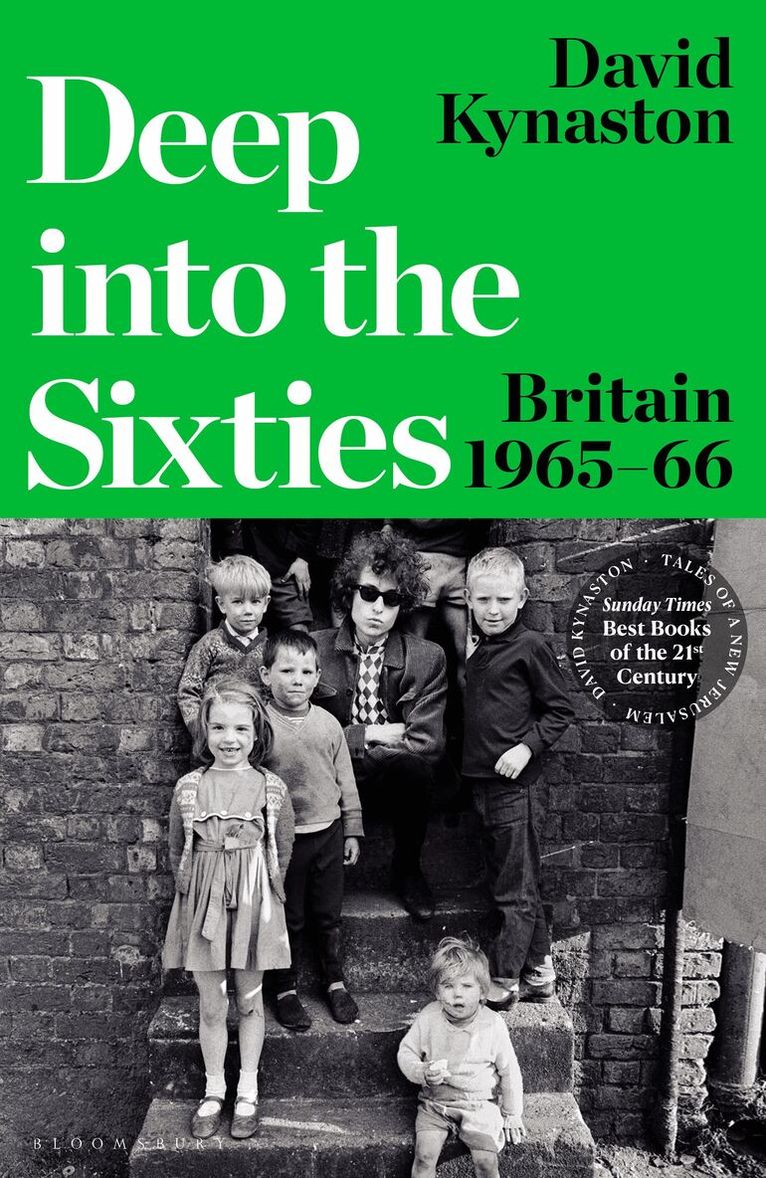
'The most entertaining historian alive' SPECTATOR'Addictively readable' DOMINIC SANDBROOK, SUNDAY TIMESA definitive portrait of Britain in the heady throes of the Swinging Sixties, from legendary historian David Kynaston.It’s the heart of the Sixties in Britain – the Beatles and the Stones vie at the top of the charts, England win the World Cup, and optimism and patriotism percolate through the streets. But this is not the full story of mid-Sixties Britain. Disaffection on the political left increasingly focuses on the escalating Vietnam War; and the ambitious hopes of Harold Wilson’s Labour government start to founder on the precarious state of the pound.This was a time of looking both backwards and forwards – sweeping reforms to secondary education, huge swathes of urban redevelopment, and the irresistible rise of a confident, free-spending youth culture. Yet everyday life for many, especially beyond the big cities, bore striking resemblance to decades earlier.Covering the short but intense period from after Churchill’s death in early 1965 to England’s Wembley triumph in July 1966, David Kynaston uses a plethora of contemporary sources, including diaries of ordinary people, to paint a richly nuanced picture of unrivalled detail. Deep Into the Sixties continues to revolutionise how we see post-war Britain.
260 kr
Skickas inom 7-10 vardagar
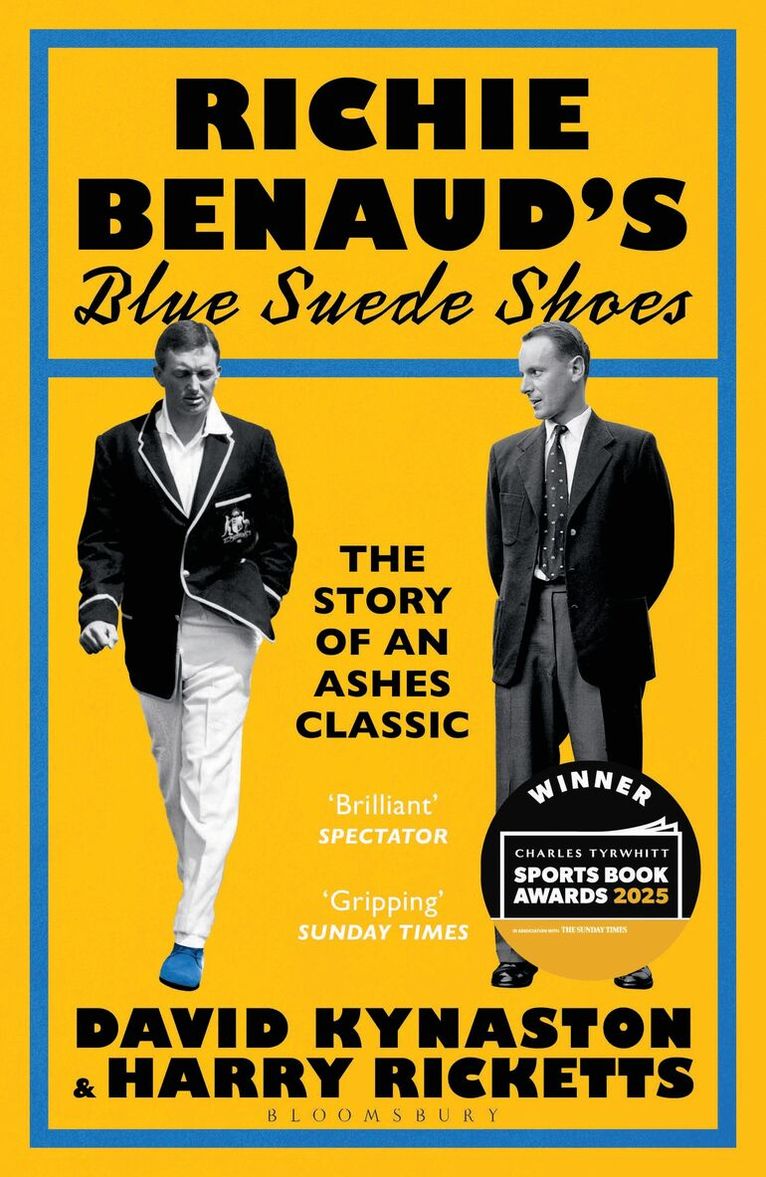
CHARLES TYRWHITT SPORTS BOOK AWARDS CRICKET BOOK OF THE YEARTHE CRICKET WRITERS’ CLUB DEREK HODGSON BOOK OF THE YEARLONGLISTED FOR THE WILLIAM HILL SPORTS BOOK OF THE YEAR PRIZE 2024'This entertaining book is gripping reading for any cricket buff' Sunday Times'An epic contest superbly retold . . . a fascinating slice of social history, it is a spellbinding read' Vic Marks'You should go out and buy it now, because the book is brilliant’ SpectatorDavid Kynaston and Harry Ricketts relive the compelling story of a gripping Ashes-deciding Test match that heralded the dawn of a new era for English cricket.The Ashes are on the line as England and Australia meet at Old Trafford in July 1961 for the fourth Test. For most of the match, England have their noses ahead – until a dramatic final day, of intensely fluctuating fortunes, as the tourists eventually storm to victory. In short, an Ashes classic, told here by David Kynaston and Harry Ricketts in vivid and immersive detail, recreating the sometimes agonising experience of millions of armchair viewers and listeners.At the heart of Richie Benaud’s Blue Suede Shoes are two strikingly contrasting personalities: England’s captain, the Cambridge-educated, risk-averse, establishment-minded Peter May; and Australia’s captain, the charismatic, risk-taking, open-minded Benaud – a contrast not only between two individuals, but between two cricketing and indeed national cultures. Whereas Benaud and Australia symbolised a new, meritocratic era, May and England seemed, in what was still an amateur-dominated game, to look back to an old imperial legacy out of sync with the dawning Sixties.The sharply observed final chapters take the story up to the present day. They relate the ‘after-lives’ of the match’s key participants, including Ted Dexter, Bill Lawry and Fred Trueman as well as May and Benaud; trace the continuing chequered relationship between English cricket and broader social change; and, after six more decades of fierce Ashes rivalry, wrestle with the perennial conundrum for all England supporters – why do the baggy green caps usually beat us?
133 kr
Skickas inom 7-10 vardagar
CHARLES TYRWHITT SPORTS BOOK AWARDS CRICKET BOOK OF THE YEARTHE CRICKET WRITERS’ CLUB DEREK HODGSON BOOK OF THE YEARLONGLISTED FOR THE WILLIAM HILL SPORTS BOOK OF THE YEAR PRIZE 2024'This entertaining book is gripping reading for any cricket buff' Sunday Times'An epic contest superbly retold . . . a fascinating slice of social history, it is a spellbinding read' Vic Marks'You should go out and buy it now, because the book is brilliant’ SpectatorDavid Kynaston and Harry Ricketts relive the compelling story of a gripping Ashes-deciding Test match that heralded the dawn of a new era for English cricket.The Ashes are on the line as England and Australia meet at Old Trafford in July 1961 for the fourth Test. For most of the match, England have their noses ahead – until a dramatic final day, of intensely fluctuating fortunes, as the tourists eventually storm to victory. In short, an Ashes classic, told here by David Kynaston and Harry Ricketts in vivid and immersive detail, recreating the sometimes agonising experience of millions of armchair viewers and listeners.At the heart of Richie Benaud’s Blue Suede Shoes are two strikingly contrasting personalities: England’s captain, the Cambridge-educated, risk-averse, establishment-minded Peter May; and Australia’s captain, the charismatic, risk-taking, open-minded Benaud – a contrast not only between two individuals, but between two cricketing and indeed national cultures. Whereas Benaud and Australia symbolised a new, meritocratic era, May and England seemed, in what was still an amateur-dominated game, to look back to an old imperial legacy out of sync with the dawning Sixties.The sharply observed final chapters take the story up to the present day. They relate the ‘after-lives’ of the match’s key participants, including Ted Dexter, Bill Lawry and Fred Trueman as well as May and Benaud; trace the continuing chequered relationship between English cricket and broader social change; and, after six more decades of fierce Ashes rivalry, wrestle with the perennial conundrum for all England supporters – why do the baggy green caps usually beat us?
193 kr
Skickas inom 7-10 vardagar