David L. Block – författare
Visar alla böcker från författaren David L. Block. Handla med fri frakt och snabb leverans.
14 produkter
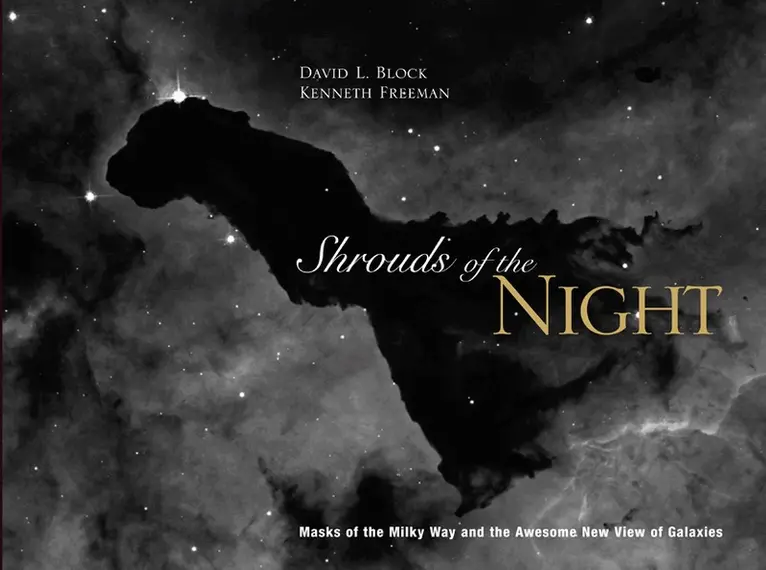
Shrouds of the Night
Masks of the Milky Way and Our Awesome New View of Galaxies
Av David L. Block, Kenneth C. Freeman
Inbunden, 2008
385 kr
Lägg i varukorg
The Milky Way has captivated the mind of multitudes ever since the beginning of time. Particularly striking are its apparent dusty gaping voids. With the advent of near-infrared technology, astronomers have discovered an awesome new view of its structure, and of the structure of other galaxies …
Shrouds of the Night
Masks of the Milky Way and Our Awesome New View of Galaxies
Av Kenneth C. Freeman, David L. Block
E-bok, 2009
554 kr
Lägg i varukorg
The Milky Way has captivated the mind of multitudes ever since the beginning of time. Particularly striking are its apparent dusty gaping voids. With the advent of near-infrared technology, astronomers have discovered an awesome new view of its structure, and of the structure of other galaxies …
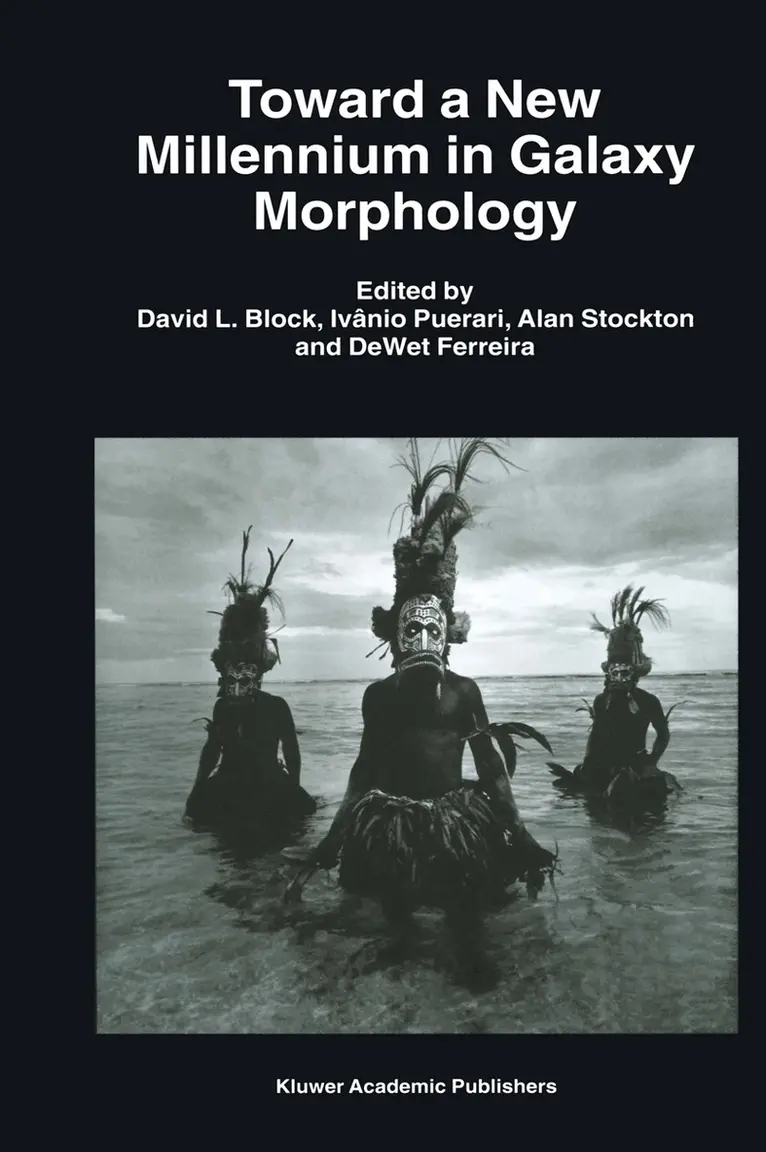
Toward a New Millennium in Galaxy Morphology
From z=0 to the Lyman Break
Av David L. Block, Ivânio Puerari m. fl.
2000
2570 kr
Lägg i varukorg
Traditional galaxy morphology has been mask-oriented, focusing on masks of dust and gas which may constitute only 5 per cent of the dynamical mass of a galaxy. Astronomers addressed morphologically related issues at an International Conference, the proceedings of which are contained in this volume. …
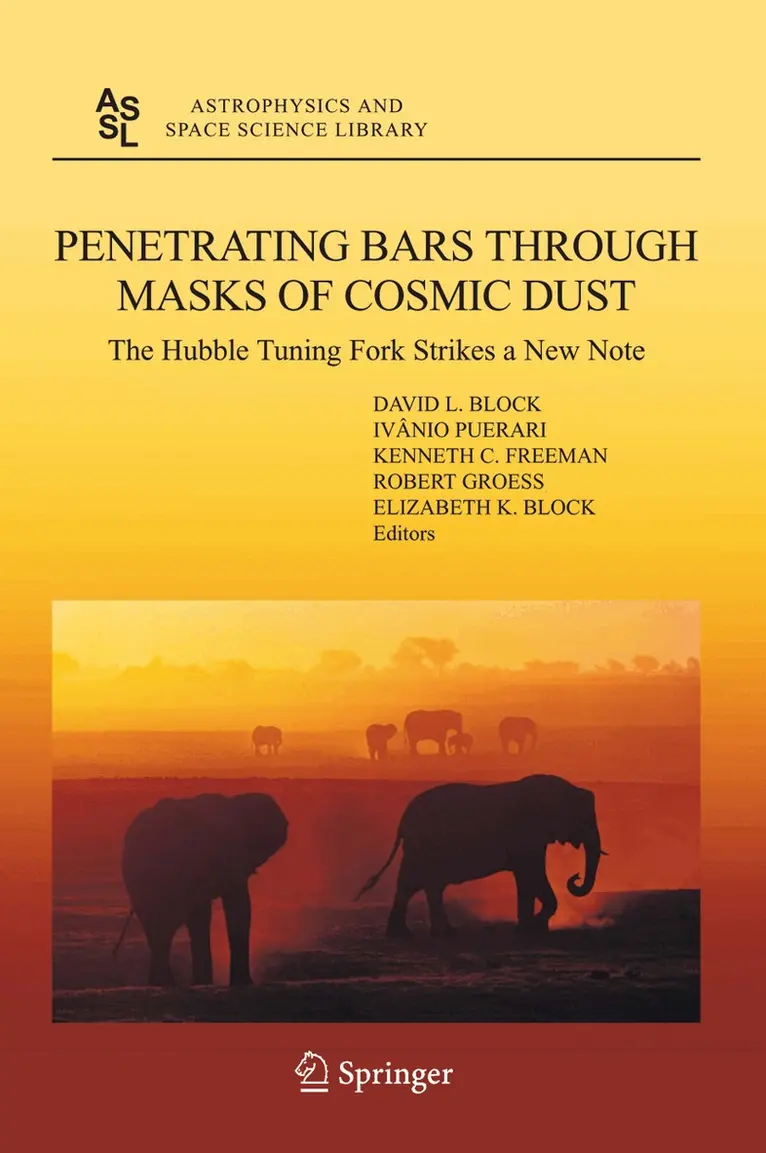
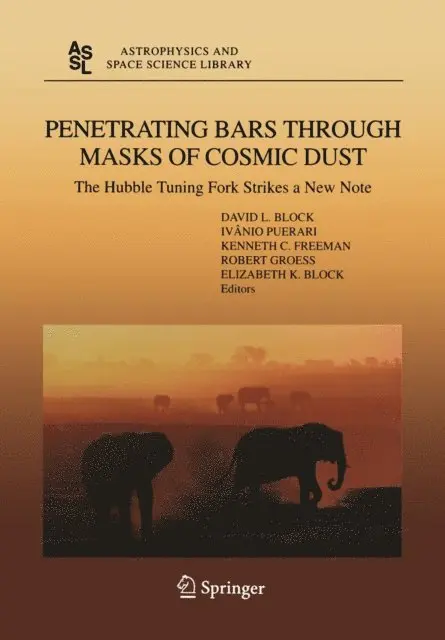
Penetrating Bars through Masks of Cosmic Dust
The Hubble Tuning Fork strikes a New Note
Av David L. Block, Ivânio Puerari m. fl.
Inbunden, 2004
3265 kr
Lägg i varukorg
THE EDITORS: DAVID L. BLOCK AND KENNETH C. FREEMAN (SOC CO-CHAIRS), IVANIO PUERARI, ROBERT GROESS AND LIZ K. BLOCK 1. Harvard College Observatory, 1958 The past century has truly brought about an explosive period of growth and discovery for the physical sciences as a whole, and for astronomy in …
Penetrating Bars through Masks of Cosmic Dust
The Hubble Tuning Fork strikes a New Note
Av Elizabeth K. Block, R. Groess m. fl.
E-bok, 2013
4066 kr
Lägg i varukorg
THE EDITORS: DAVID L. BLOCK AND KENNETH C. FREEMAN (SOC CO-CHAIRS), IVANIO PUERARI, ROBERT GROESS AND LIZ K. BLOCK 1. Harvard College Observatory, 1958 The past century has truly brought about an explosive period of growth and discovery for the physical sciences as a whole, and for astronomy in …
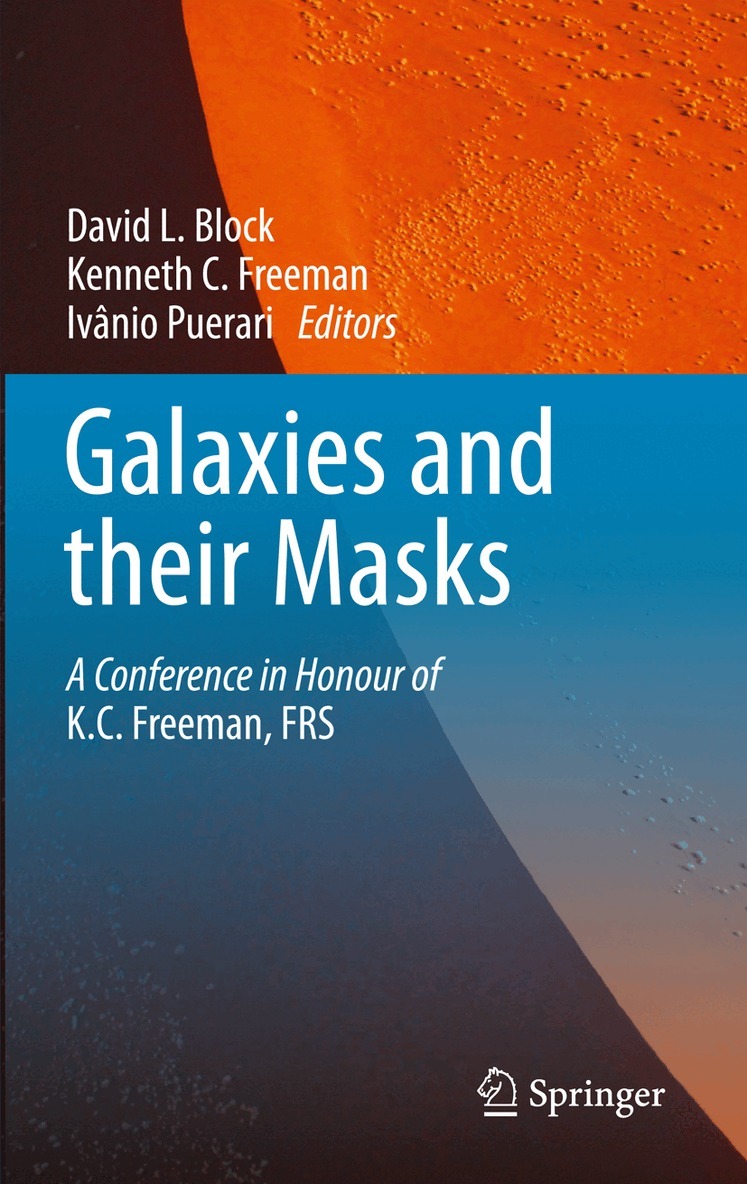
Galaxies and their Masks
A Conference in Honour of K.C. Freeman, FRS
Av David L. Block, Kenneth C. Freeman m. fl.
Inbunden, 2010
2179 kr
Lägg i varukorg
The year: 1660. The date: November 28. Present: The Lord Brouncker, Mr Boyle, Mr Bruce, Sir Robert Moray, Sir Paule Neile, Dr Wilkins, Dr Goddard, Dr Petty, Mr Ball, Mr Hooke, Mr Wren, and Mr Hill. Occasion: A lecture by Mr Wren at Gresham College, United Kingdom. …
Galaxies and their Masks
A Conference in Honour of K.C. Freeman, FRS
Av Ivanio Puerari, Kenneth C. Freeman m. fl.
E-bok, 2010
2862 kr
Lägg i varukorg
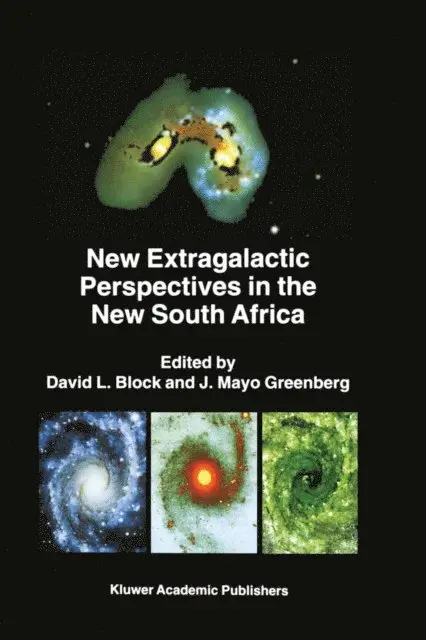
New Extragalactic Perspectives in the New South Africa
Proceedings of the International Conference on “Cold Dust and Galaxy Morphology” held in Johannesburg, South Africa, January 22–26, 1996
Av J. Mayo Greenberg, David L. Block
E-bok, 2012
734 kr
Lägg i varukorg
The date: September 30, 1880 The place: A private observatory in Hastings-on-Hudson Profession of the observer: A medical doctor The instrument: An l1-inch Clark refractor. The significance of that night marked one of the truly great turning points in the development of astronomical techniques: Dr …
Toward a New Millennium in Galaxy Morphology
From z=0 to the Lyman Break
Av David L. Block, Ivânio Puerari m. fl.
Häftad, 2012
2179 kr
Lägg i varukorg
South Africa - a land of paradigm shifts. A land where we are willing to leave behind the old, to bravely accept the new. What do we need to exit the dark ages in the morphology of galaxies? How prevalent is the cherishing of old concepts? Traditional morphology has been `mask-oriented', focusing …
New Extragalactic Perspectives in the New South Africa
Proceedings of the International Conference on “Cold Dust and Galaxy Morphology” held in Johannesburg, South Africa, January 22–26, 1996
Av David L. Block, J. Mayo Greenberg
Häftad, 2011
550 kr
Lägg i varukorg
The date: September 30, 1880 The place: A private observatory in Hastings-on-Hudson Profession of the observer: A medical doctor The instrument: An l1-inch Clark refractor. The significance of that night marked one of the truly great turning points in the development of astronomical techniques: Dr …
Toward a New Millennium in Galaxy Morphology
From z=0 to the Lyman Break
Av DeWet Ferreira, Alan Stockton m. fl.
E-bok, 2012
2833 kr
Lägg i varukorg
South Africa - a land of paradigm shifts. A land where we are willing to leave behind the old, to bravely accept the new. What do we need to exit the dark ages in the morphology of galaxies? How prevalent is the cherishing of old concepts? Traditional morphology has been `mask-oriented'', focusing …
Penetrating Bars through Masks of Cosmic Dust
The Hubble Tuning Fork strikes a New Note
Av David L. Block, Ivânio Puerari m. fl.
Häftad, 2014
3265 kr
Lägg i varukorg
THE EDITORS: DAVID L. BLOCK AND KENNETH C. FREEMAN (SOC CO-CHAIRS), IVANIO PUERARI, ROBERT GROESS AND LIZ K. BLOCK 1. Harvard College Observatory, 1958 The past century has truly brought about an explosive period of growth and discovery for the physical sciences as a whole, and for astronomy in …
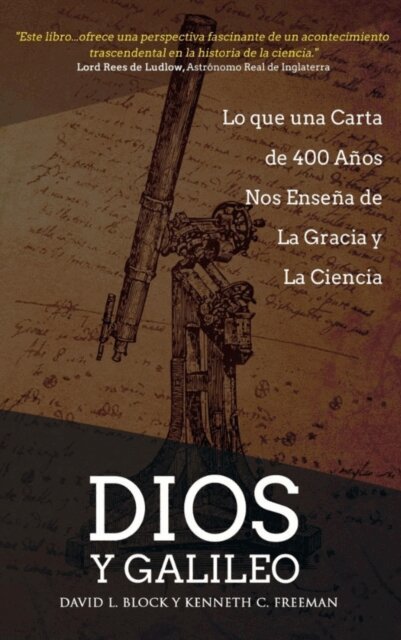
Dios y Galileo
Lo que Una Carta de 400 Anos Ensena de la Gracia y la Ciencia
Av Kenneth C. Freeman, David L. Block
E-bok, 1905
171 kr
Lägg i varukorg
El libro es una consideracion detallada del conflicto entre Galileo Galilei y la Iglesia Catolica Romana en el siglo XVI, el evento se utiliza a menudo para culpar a los cristianos en general, y la iglesia especificamente para una desaceleracion del progreso cientifico y la investigacion. Los …
Galaxies and their Masks
A Conference in Honour of K.C. Freeman, FRS
Av David L. Block, Kenneth C. Freeman m. fl.
Häftad, 2016
2948 kr
Tillfälligt slut