David L Prentice - Böcker
Visar alla böcker från författaren David L Prentice. Handla med fri frakt och snabb leverans.
2 produkter
2 produkter
441 kr
Tillfälligt slut
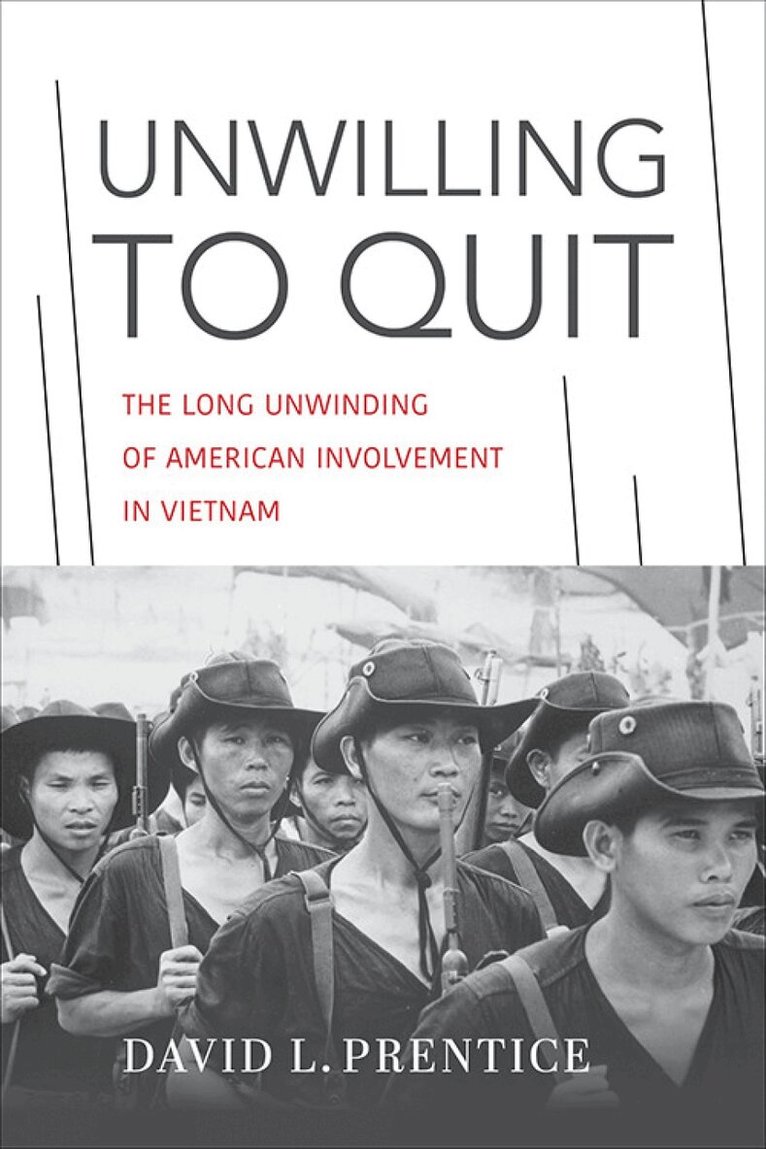
Although US involvement in the Vietnam conflict began long before 1965, Lyndon Johnson's substantial large commitment of combat troops that year marked the official beginning of America's longest twentieth-century war. By 1969, after years of intense fighting and thousands of casualties, an increasing number of Americans wanted the United States out of Vietnam. Richard Nixon looked for a way to pull out while preserving the dignity of the United States at home and abroad, and at the same time, to support the anticommunist Republic of Vietnam. Ultimately, he settled on the strategy of Vietnamization—the gradual replacement of US soldiers with South Vietnamese forces. Drawing on newly declassified documents and international archives, Unwilling to Quit dissects the domestic and foreign contexts of America's withdrawal from the Vietnam War. David L. Prentice demonstrates how congressional and presidential politics were a critical factor in Nixon's decision to abandon his hawkish sensibilities in favor of de-escalation. Prentice reframes Nixon's choices, emphasizes Secretary of Defense Melvin Laird's outsized yet subtle role in the decision-making process, and considers how South Vietnam's Nguyen Van Thieu and North Vietnam's Le Duan decisively shaped the American exit. Prentice brings Vietnamese voices into the discussion and underscores the unprecedented influence of American civilians on US foreign policy during the Vietnamization era.
750 kr
Skickas inom 7-10 vardagar
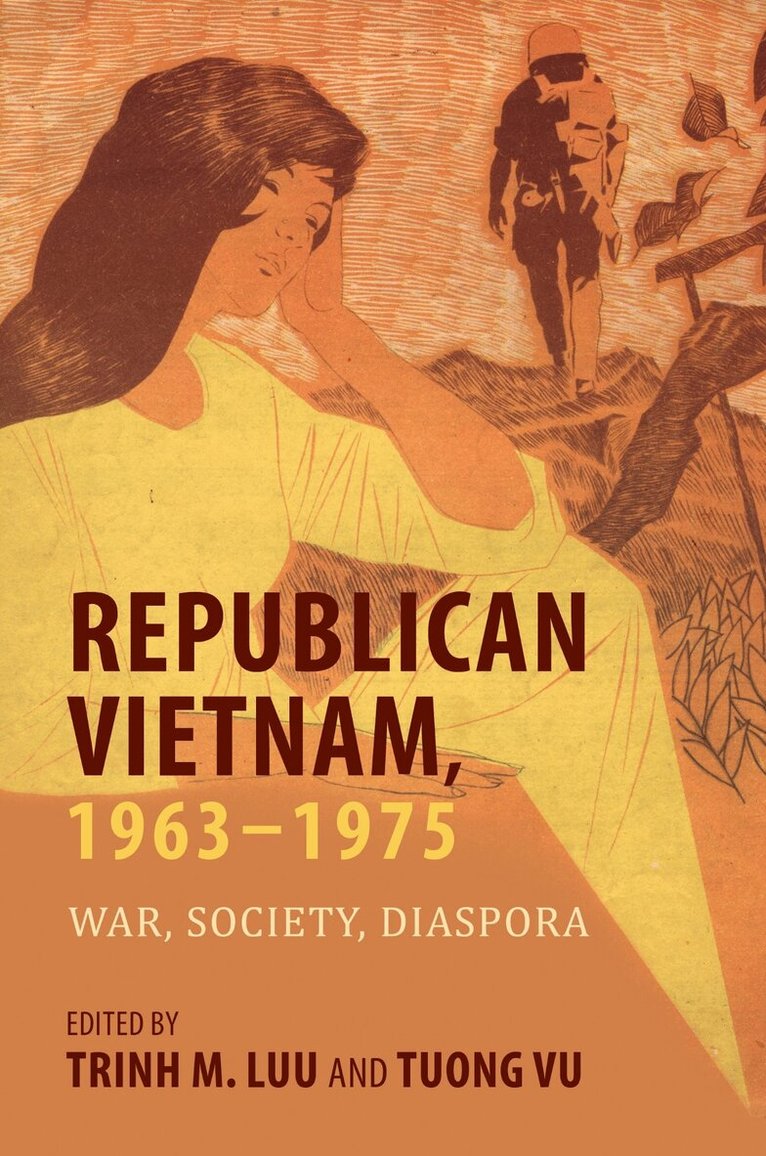
English-language scholarship all too often dismisses South Vietnam as an American creation, a product of US imperialism. Republican Vietnam boldly upends this depiction, exposing a diverse and dynamic portrait of the Second Republic. In twelve essays, each based on original archival research, the volume brings to life the Second Republic in all its complexities, displaying how politicians, students, educators, publishers, journalists, musicians, religious leaders, businessmen, and ordinary citizens built a highly intricate society—with dazzling entrepreneurial zeal, an outspoken press, globally engaged religions, a vibrant intellectual and associational culture, and a level of artistic production that remains unmatched since the Vietnam War. That inspired and frenzied age, though short lived, held a resilient spirit that Vietnamese refugees have kept alive. The trove of vernacular music and print media, not to mention the many associations the Vietnamese diaspora founded, exemplify the republican values that once energized South Vietnamese culture. But this nuanced society has appeared in popular media and American scholarship as a hopelessly dependent nation, led by corrupt dictators beholden to US interests. In contrast to such negative stereotypes, this account situates South Vietnamese front and center as agents of their own histories. Republican Vietnam is the first collection of scholarly essays on the Second Republic since the end of the Vietnam War. It is also among the first to use republicanism as a lens to re-examine twentieth-century Vietnamese history, the Vietnam War, and the diaspora. The twelve essays together show how war, in tandem with external intervention, shaped South Vietnam’s economy, culture, and the life of every individual and family. By featuring works from Vietnamese and Vietnamese diasporic studies, this text takes the important step of bridging the two fields, laying the foundation for cross-disciplinary projects in the future.