David L. Weisburd - Böcker
Visar alla böcker från författaren David L. Weisburd. Handla med fri frakt och snabb leverans.
5 produkter
5 produkter
611 kr
Skickas inom 7-10 vardagar
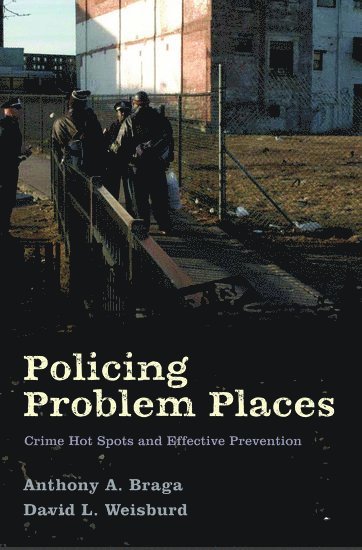
Both those who study crime and those who fight it agree that crime is not spread evenly across city landscapes. Rather, clusters of crime--a few "hot spots"--host a vastly disproportionate amount of criminal activity. Even within the most crime-ridden neighborhoods, crime concentrates at a few locations while other areas remain relatively crime-free. So if police focus their limited resources at these problem places-a practice known as hot spots policing-they will be better positioned to lower citywide crime rates, and do it more efficiently. In Policing Problem Places, Anthony Braga and David Weisburd demonstrate that hot spots policing is a powerful and cost-effective approach to crime prevention. While putting police officers where crime happens most is an old and well-established idea, in practice it is often avoided or not properly implemented. Braga and Weisburd draw on rigorous scientific evidence to show how police officers should use problem-oriented policing and situational crime-prevention techniques to address the place dynamics, situations, and characteristics that cause a spot to be "hot." But the benefits of hot spots policing do not end with conserving public dollars and police resources. Illustrating how policing problem places can benefit police-community relations, especially in minority neighborhoods where residents have long suffered from high crime and poor police service, Braga and Weisburd show how police can make efforts to develop positive and collaborative relationships with residents and avoid the indiscriminant enforcement tactics that undermine the legitimacy of the police. A vital resource for police departments everywhere, Policing Problem Places offers a blueprint for rethinking what police should do and how they should do it.
The Criminology of Place
Street Segments and Our Understanding of the Crime Problem
Inbunden, Engelska, 2012
1 521 kr
Skickas inom 5-8 vardagar
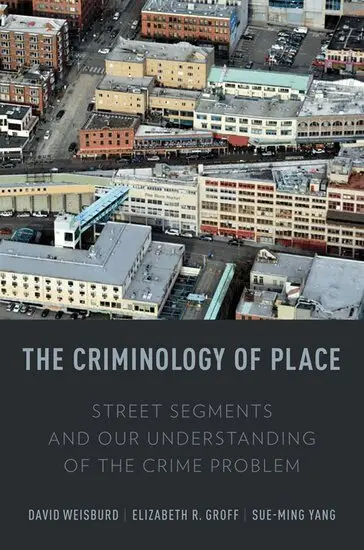
The study of crime has focused primarily on why particular people commit crime or why specific communities have higher crime levels than others. In The Criminology of Place, David Weisburd, Elizabeth Groff, and Sue-Ming Yang present a new and different way of looking at the crime problem by examining why specific streets in a city have specific crime trends over time. Based on a 16-year longitudinal study of crime in Seattle, Washington, the book focuses our attention on small units of geographic analysis-micro communities, defined as street segments. Half of all Seattle crime each year occurs on just 5-6 percent of the city's street segments, yet these crime hot spots are not concentrated in a single neighborhood and street by street variability is tremendous. Weisburd, Groff, and Yang set out to explain why. The Criminology of Place shows how much essential information about crime is inevitably lost when we focus on larger units like neighborhoods or communities. Reorienting the study of crime by focusing on small units of geography, the authors identify a large group of possible crime risk and protective factors for street segments and an array of interventions that could be implemented to address them. The Criminology of Place is a groundbreaking book that radically alters traditional thinking about the crime problem and what we should do about it."This is a very important book for policy-makers, practitioners and academics. The authors carefully and systematically build their case that effective crime prevention efforts must be focused first on a small number of high crime problem places. The detail of their arguments transforms hotspot policing and prevention in the same way keyhole surgery has transformed medical care. Their case is persuasive and, above all, evidence based" -- Peter Neyroud CBE QPM, University of Cambridge and Former Chief Constable and Chief Executive of the National Policing Improvement Agency
The Criminology of Place
Street Segments and Our Understanding of the Crime Problem
Häftad, Engelska, 2012
470 kr
Skickas inom 5-8 vardagar
The study of crime has focused primarily on why particular people commit crime or why specific communities have higher crime levels than others. In The Criminology of Place, David Weisburd, Elizabeth Groff, and Sue-Ming Yang present a new and different way of looking at the crime problem by examining why specific streets in a city have specific crime trends over time. Based on a 16-year longitudinal study of crime in Seattle, Washington, the book focuses our attention on small units of geographic analysis-micro communities, defined as street segments. Half of all Seattle crime each year occurs on just 5-6 percent of the city's street segments, yet these crime hot spots are not concentrated in a single neighborhood and street by street variability is tremendous. Weisburd, Groff, and Yang set out to explain why. The Criminology of Place shows how much essential information about crime is inevitably lost when we focus on larger units like neighborhoods or communities. Reorienting the study of crime by focusing on small units of geography, the authors identify a large group of possible crime risk and protective factors for street segments and an array of interventions that could be implemented to address them. The Criminology of Place is a groundbreaking book that radically alters traditional thinking about the crime problem and what we should do about it."This is a very important book for policy-makers, practitioners and academics. The authors carefully and systematically build their case that effective crime prevention efforts must be focused first on a small number of high crime problem places. The detail of their arguments transforms hotspot policing and prevention in the same way keyhole surgery has transformed medical care. Their case is persuasive and, above all, evidence based" -- Peter Neyroud CBE QPM, University of Cambridge and Former Chief Constable and Chief Executive of the National Policing Improvement Agency
2 077 kr
Kommande
This volume provides a broad framework for understanding hot spots policing in the context of contributions by Professor David Weisburd, recipient of the Stockholm Prize in Criminology for his work in this area.The book aims to bring together a wide array of studies that are seldom integrated into a broad general argument about why hot spots policing “makes sense,” why police agencies should be implementing this approach, and how police reform can be integrated into their efforts. In the 21st century, a series of rigorous evaluations of hot spots policing overturned the widespread assumption that the police could not prevent crime. Today, there is wide agreement that when the police focus on crimes clustered in individual locations, often called microgeographic units or hot spots, they can be effective in preventing and controlling crime. This collection examines the history of the development of the idea of crime hot spots and evidence of crime concentrations at place that underlie hot spots policing. It also presents key experimental studies that show that hot spots policing works and that it does not simply lead to displacement of crime. Finally, the volume addresses how police reform can be integrated into hot spots policing.Of interest to a wide range of criminologists and policing scholars, this volume brings together and synthesizes the evidence supporting a focus on hot spots to prevent crime.
568 kr
Kommande
This volume provides a broad framework for understanding hot spots policing in the context of contributions by Professor David Weisburd, recipient of the Stockholm Prize in Criminology for his work in this area.The book aims to bring together a wide array of studies that are seldom integrated into a broad general argument about why hot spots policing “makes sense,” why police agencies should be implementing this approach, and how police reform can be integrated into their efforts. In the 21st century, a series of rigorous evaluations of hot spots policing overturned the widespread assumption that the police could not prevent crime. Today, there is wide agreement that when the police focus on crimes clustered in individual locations, often called microgeographic units or hot spots, they can be effective in preventing and controlling crime. This collection examines the history of the development of the idea of crime hot spots and evidence of crime concentrations at place that underlie hot spots policing. It also presents key experimental studies that show that hot spots policing works and that it does not simply lead to displacement of crime. Finally, the volume addresses how police reform can be integrated into hot spots policing.Of interest to a wide range of criminologists and policing scholars, this volume brings together and synthesizes the evidence supporting a focus on hot spots to prevent crime.