David Lay Williams - Böcker
Visar alla böcker från författaren David Lay Williams. Handla med fri frakt och snabb leverans.
9 produkter
9 produkter
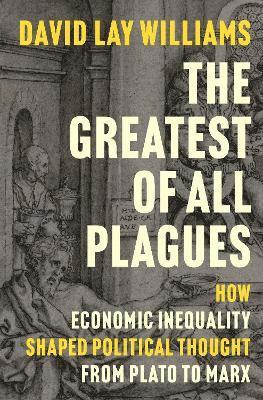
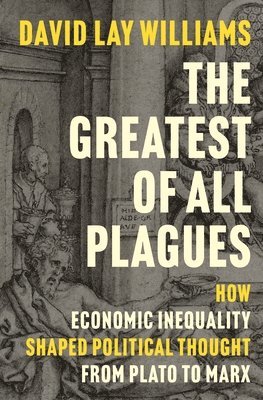
Greatest of All Plagues
How Economic Inequality Shaped Political Thought from Plato to Marx
Häftad, Engelska, 2026
203 kr
Skickas inom 7-10 vardagar
How the great political thinkers have persistently warned against the dangers of economic inequalityEconomic inequality is one of the most daunting challenges of our time, with public debate often turning to questions of whether it is an inevitable outcome of economic systems and what, if anything, can be done about it. But why, exactly, should inequality worry us? The Greatest of All Plagues demonstrates that this underlying question has been a central preoccupation of some of the most eminent political thinkers of the Western intellectual tradition.David Lay Williams shares bold new perspectives on the writings and ideas of Plato, Jesus, Thomas Hobbes, Jean-Jacques Rousseau, Adam Smith, John Stuart Mill, and Karl Marx. He shows how they describe economic inequality as a source of political instability and a corrupter of character and soul, and how they view unchecked inequality as a threat to their most cherished values, such as justice, faith, civic harmony, peace, democracy, and freedom. Williams draws invaluable insights into the societal problems generated by what Plato called “the greatest of all plagues,” and examines the solutions employed through the centuries.An eye-opening work of intellectual history, The Greatest of All Plagues recovers a forgotten past for some of the most timeless books in the Western canon, revealing how economic inequality has been a paramount problem throughout the history of political thought.
502 kr
Skickas inom 5-8 vardagar
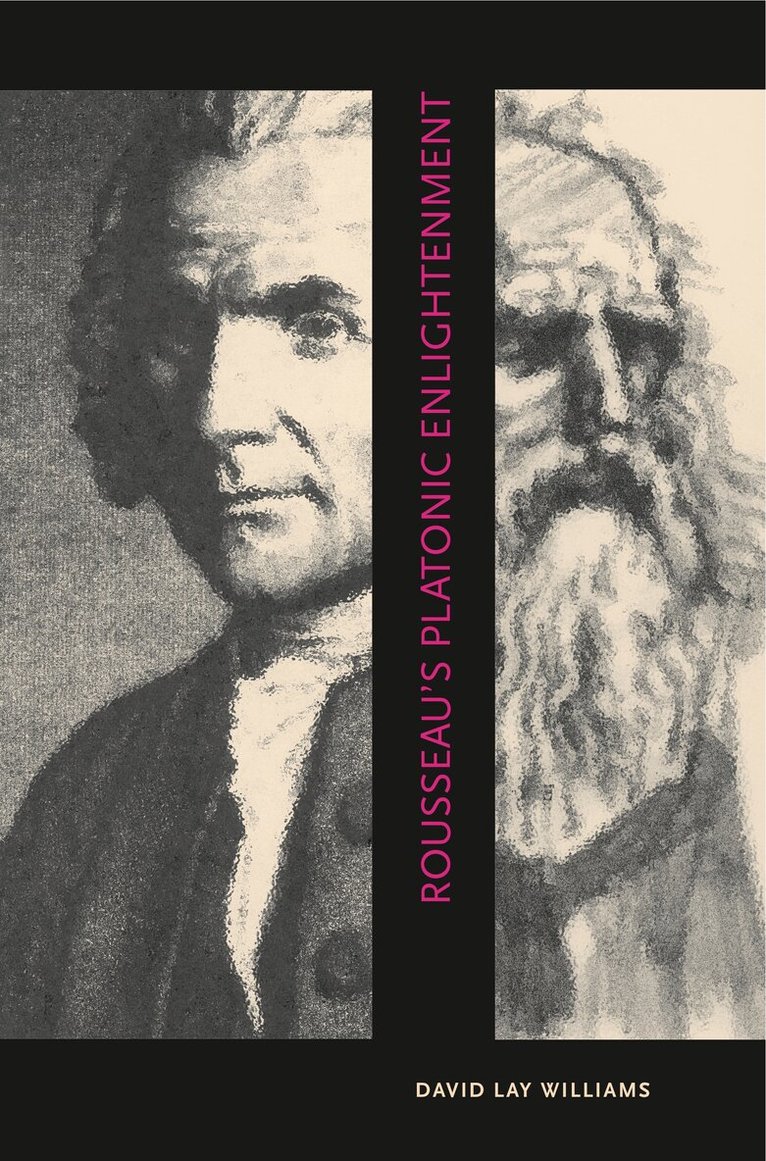
Although many commentators on Rousseau’s philosophy have noted its affinities with Platonism and acknowledged the debt that Rousseau himself expressed to Plato on numerous occasions, David Williams is the first to offer a thoroughgoing, systematic examination of this linkage. His contributions to the scholarship on Rousseau in this book are threefold: he enters the debate over whether Rousseau is a Hobbesian (in rejecting transcendent norms) or a Platonist (in accepting them) with a decisive argument supporting the latter position; he tackles from a new angle the ever-challenging question of unity in Rousseau’s thought; and he explores the dynamic metaphor of the chain throughout Rousseau’s writings as a key to understanding them as inspired by Platonism. The book is organized into three main parts. The first sketches the background of Platonism and materialist positivism in modern European metaphysics and political philosophy that provided the context for Rousseau’s intellectual development. The second examines Rousseau’s choice of Platonism over positivism and its consequences for his philosophy generally. The third addresses the legacy of Rousseau’s thought and its appropriation by Kant, Marx, and Foucault, suggesting that in an age where materialism and relativism are rife, Rousseau may have much to teach us about how we view our own society and can engage in constructive critique of it.
309 kr
Skickas inom 7-10 vardagar
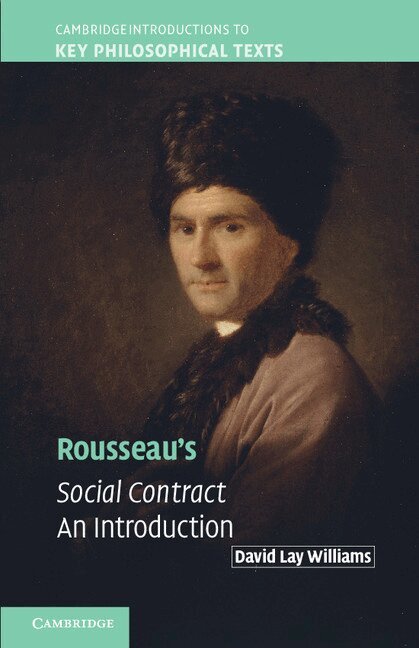
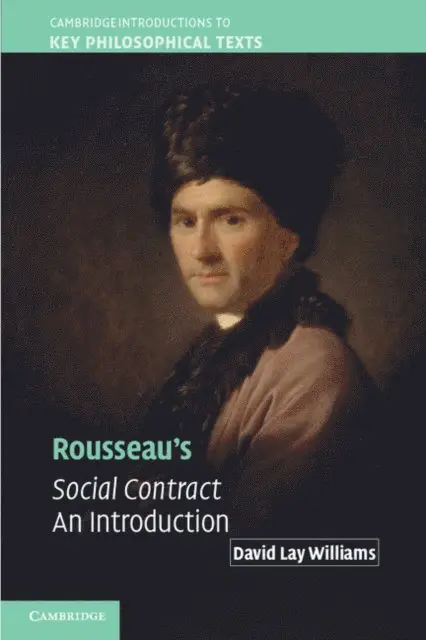
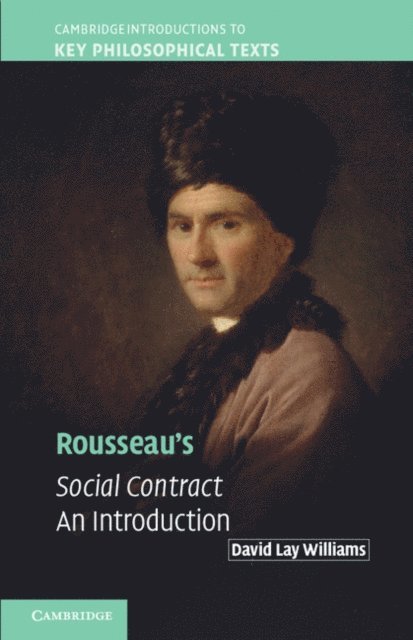
If the greatness of a philosophical work can be measured by the volume and vehemence of the public response, there is little question that Rousseau's Social Contract stands out as a masterpiece. Within a week of its publication in 1762 it was banished from France. Soon thereafter, Rousseau fled to Geneva, where he saw the book burned in public. At the same time, many of his contemporaries, such as Kant, considered Rousseau to be 'the Newton of the moral world', as he was the first philosopher to draw attention to the basic dignity of human nature. The Social Contract has never ceased to be read and debated in the 250 years since its publication. Rousseau's Social Contract: An Introduction offers a thorough and systematic tour of this notoriously paradoxical and challenging text. David Lay Williams offers readers a chapter-by-chapter reading of the Social Contract, squarely confronting these interpretive obstacles. The book also features a special extended appendix dedicated to outlining Rousseau's famous conception of the general will, which has been the object of controversy since the Social Contract's publication in 1762.
942 kr
Tillfälligt slut
If the greatness of a philosophical work can be measured by the volume and vehemence of the public response, there is little question that Rousseau's Social Contract stands out as a masterpiece. Within a week of its publication in 1762 it was banished from France. Soon thereafter, Rousseau fled to Geneva, where he saw the book burned in public. At the same time, many of his contemporaries, such as Kant, considered Rousseau to be 'the Newton of the moral world', as he was the first philosopher to draw attention to the basic dignity of human nature. The Social Contract has never ceased to be read and debated in the 250 years since its publication. Rousseau's Social Contract: An Introduction offers a thorough and systematic tour of this notoriously paradoxical and challenging text. David Lay Williams offers readers a chapter-by-chapter reading of the Social Contract, squarely confronting these interpretive obstacles. The book also features a special extended appendix dedicated to outlining Rousseau's famous conception of the general will, which has been the object of controversy since the Social Contract's publication in 1762.
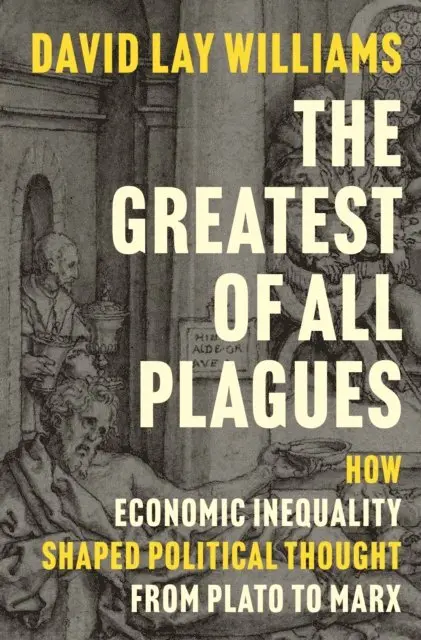
Greatest of All Plagues
How Economic Inequality Shaped Political Thought from Plato to Marx
Inbunden, Engelska, 2024
282 kr
Skickas inom 7-10 vardagar
How the great political thinkers have persistently warned against the dangers of economic inequalityEconomic inequality is one of the most daunting challenges of our time, with public debate often turning to questions of whether it is an inevitable outcome of economic systems and what, if anything, can be done about it. But why, exactly, should inequality worry us? The Greatest of All Plagues demonstrates that this underlying question has been a central preoccupation of some of the most eminent political thinkers of the Western intellectual tradition.David Lay Williams shares bold new perspectives on the writings and ideas of Plato, Jesus, Thomas Hobbes, Jean-Jacques Rousseau, Adam Smith, John Stuart Mill, and Karl Marx. He shows how they describe economic inequality as a source of political instability and a corrupter of character and soul, and how they view unchecked inequality as a threat to their most cherished values, such as justice, faith, civic harmony, peace, democracy, and freedom. Williams draws invaluable insights into the societal problems generated by what Plato called “the greatest of all plagues,” and examines the solutions employed through the centuries.An eye-opening work of intellectual history, The Greatest of All Plagues recovers a forgotten past for some of the most timeless books in the Western canon, revealing how economic inequality has been a paramount problem throughout the history of political thought.
1 653 kr
Skickas inom 7-10 vardagar
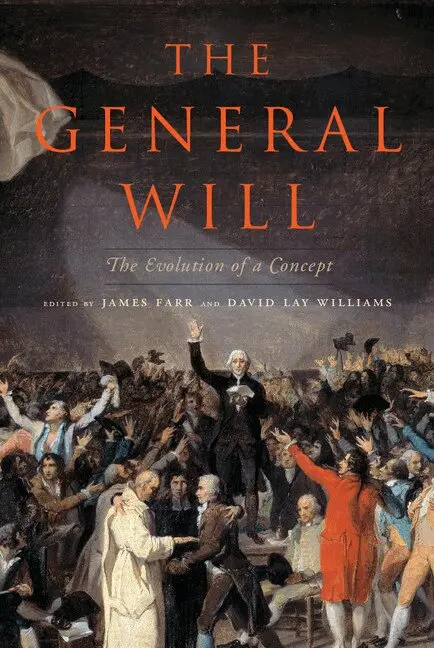
Although it originated in theological debates, the general will ultimately became one of the most celebrated and denigrated concepts emerging from early modern political thought. Jean-Jacques Rousseau made it the central element of his political theory, and it took on a life of its own during the French Revolution, before being subjected to generations of embrace or opprobrium. James Farr and David Lay Williams have collected for the first time a set of essays that track the evolving history of the general will from its origins to recent times. The General Will: The Evolution of a Concept discusses the general will's theological, political, formal, and substantive dimensions with a careful eye toward the concept's virtues and limitations as understood by its expositors and critics, among them Arnauld, Pascal, Malebranche, Leibniz, Locke, Spinoza, Montesquieu, Kant, Constant, Tocqueville, Adam Smith and John Rawls.
1 060 kr
Skickas inom 7-10 vardagar
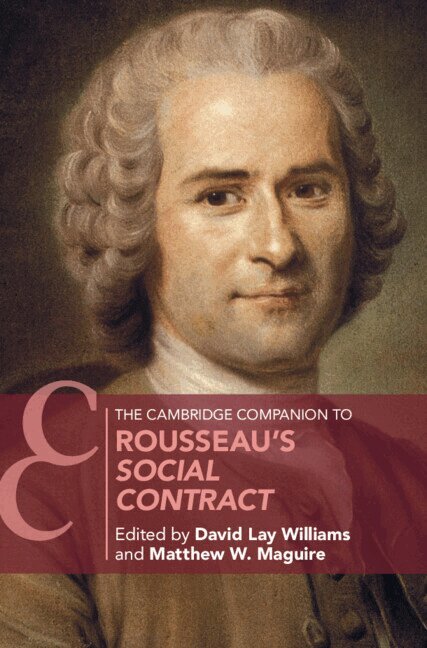
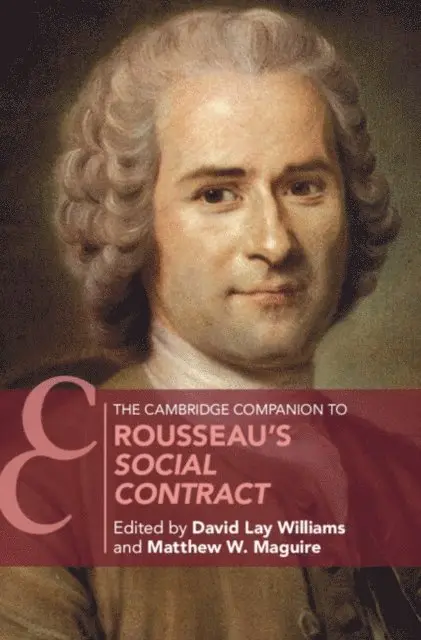
What is freedom? What is equality? And what is sovereignty? A foundational text of modern political philosophy, Rousseau's Social Contract has generated much debate and exerted extraordinary influence not only on political thought, but also modern political history, by way of the French Revolution and other political events, ideals, and practices. The Social Contract is regularly studied in undergraduate courses of philosophy, political thought, and modern intellectual history, as well as being the subject of graduate seminars in numerous disciplines. The book inspires an ongoing flow of scholarly articles and monographs. Few texts have offered more influential and important answers to research questions than Rousseau's Social Contract, and in this new Cambridge Companion, a multidisciplinary team of contributors provides new ways to navigate this masterpiece of political philosophy- and its animating questions.
334 kr
Skickas inom 7-10 vardagar
What is freedom? What is equality? And what is sovereignty? A foundational text of modern political philosophy, Rousseau's Social Contract has generated much debate and exerted extraordinary influence not only on political thought, but also modern political history, by way of the French Revolution and other political events, ideals, and practices. The Social Contract is regularly studied in undergraduate courses of philosophy, political thought, and modern intellectual history, as well as being the subject of graduate seminars in numerous disciplines. The book inspires an ongoing flow of scholarly articles and monographs. Few texts have offered more influential and important answers to research questions than Rousseau's Social Contract, and in this new Cambridge Companion, a multidisciplinary team of contributors provides new ways to navigate this masterpiece of political philosophy- and its animating questions.
320 kr
Skickas inom 3-6 vardagar