David Leedom Shaul - Böcker
Visar alla böcker från författaren David Leedom Shaul. Handla med fri frakt och snabb leverans.
3 produkter
3 produkter
1 062 kr
Skickas inom 3-6 vardagar
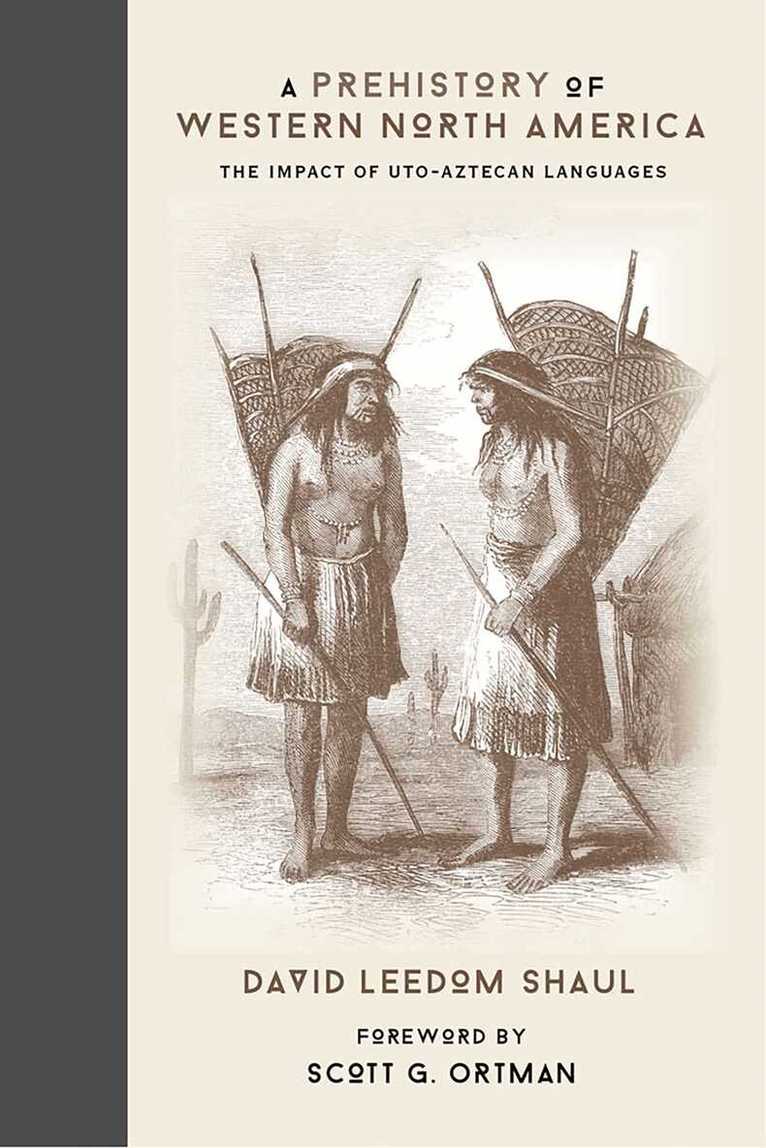
This book offers a new approach to the use of linguistic data to reconstruct prehistory. The author shows how a well-studied language family—in this case Uto-Aztecan—can be used as an instrument for reconstructing prehistory.The main focus of Shaul’s work is the mapping of Uto-Aztecan. By presenting various models of Uto-Aztecan prehistory, by assessing multiple models simultaneously, and by guiding readers through areas where the evidence is not so clear, Shaul helps nonspecialists develop the tools needed for evaluating various historical linguistics models themselves. He evaluates both archaeological and genetic evidence as well, placing it carefully alongside the linguistic evidence he knows best. Shaul’s thorough treatment provides many new avenues for future research on the historical anthropology of western North America.
789 kr
Skickas inom 11-20 vardagar
In Piros and Prehistory, David Leedom Shaul turns his attention to the Piro language, once spoken by the people of the Piro pueblos in New Mexico but extinct since approximately the year 1900. While arguments have been made in favor of Piro belonging to the Tiwa branch of the Tanoan family, Shaul counters this classification with a detailed rebuttal, firmly establishing Piro within the Tanoan family but outside of the Tiwa branch.Shaul’s arguments use linguistic analyses coupled with historic and prehistoric records of migration and cultural interaction. Following the establishment of Piro as a Tanoan language, much of the linguistic analysis involves determining the aspects of Piro that were inherited from the earlier Proto-Tanoan versus those that were incorporated later as a result of borrowing from other languages through cultural interaction. This book lays out the linguistic argument that the similarities between Piro and Tiwan languages result from borrowing, not common ancestry, and it provides a record of contact between groups and linguistic evolution based on these movements.
Linguistic Ideologies of Native American Language Revitalization
Doing the Lost Language Ghost Dance
Häftad, Engelska, 2014
586 kr
Skickas inom 10-15 vardagar
The concept of this volume is that the paradigm of European national languages (official orthography; language standardization; full use of language in most everyday contexts) is imposed in cookie-cutter fashion on most language revitalization efforts of Native American languages. While this model fits the sovereign status of many Native American groups, it does not meet the linguistic ideology of Native American communities, and creates projects and products that do not engage the communities which they are intended to serve. The concern over heritage language loss has generated since 1990 enormous activity that is supposed to restore full private and public function of heritage languages in Native American speech communities. The thinking goes: if you do what the volume terms the "Lost Language Ghost Dance," your heritage language will flourish once more. Yet the heritage language only flourishes on paper, and not in any meaningful way for the community it is trying to help. Instead, this volume proposes a model of Native American language revitalization that is different from the national/official language model, one that respects and incorporates language variation, and entertains variable outcomes. This is because it is based on Native American linguistic ideologies. This volume argues that the cookie-cutter application of the official language ideology is unethical because it undermines the intent of language revitalization itself: the continued daily, meaningful use of a heritage language in its speech community.