David M. McEvoy - Böcker
Visar alla böcker från författaren David M. McEvoy. Handla med fri frakt och snabb leverans.
3 produkter
3 produkter
2 061 kr
Skickas inom 10-15 vardagar
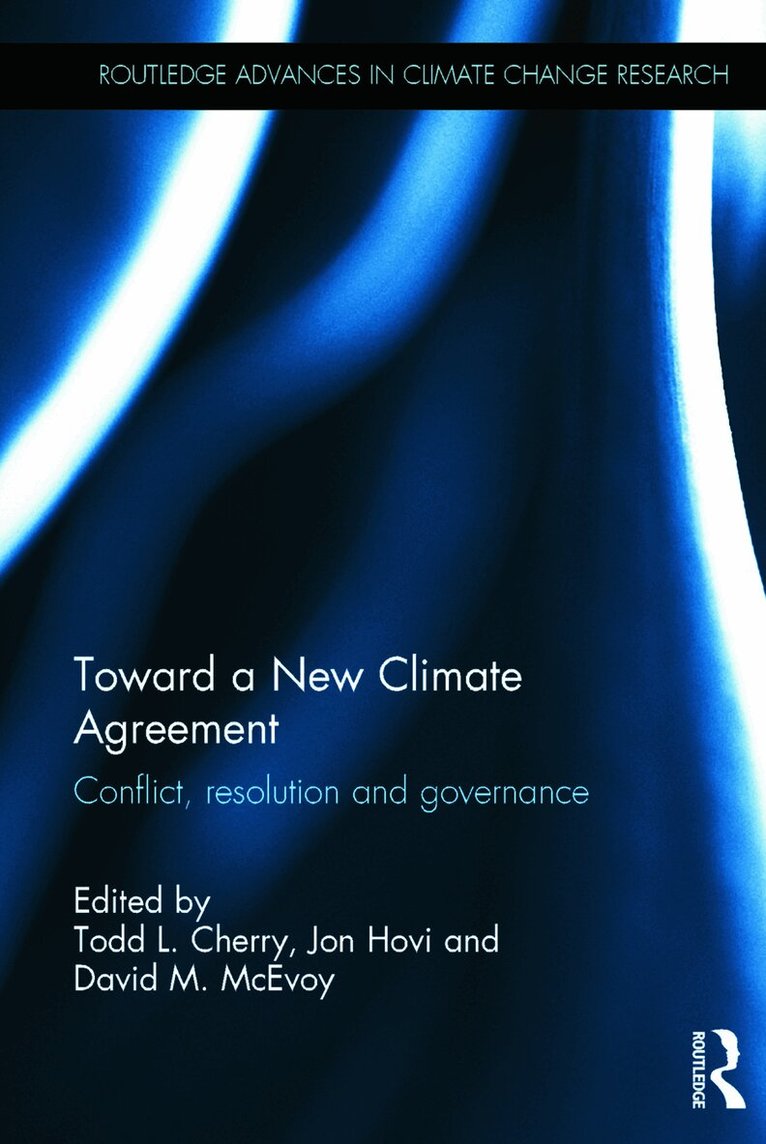
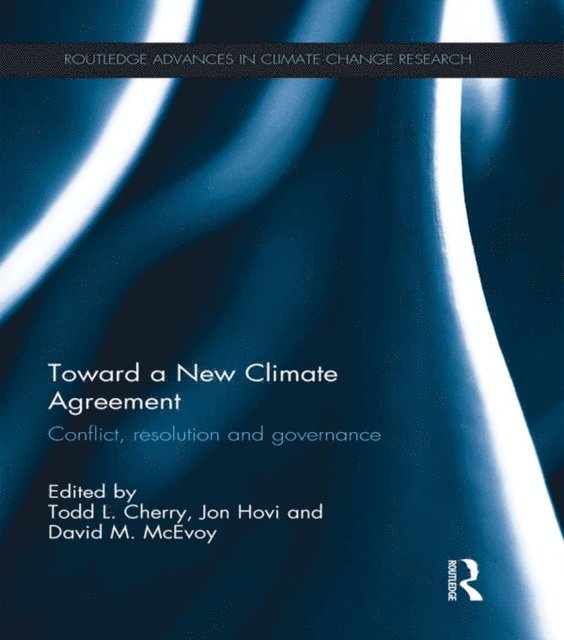
Climate change is one of the most pressing problems facing the global community. Although most states agree that climate change is occurring and is at least partly the result of humans’ reliance on fossil fuels, managing a changing global climate is a formidable challenge. Underlying this challenge is the fact that states are sovereign, governed by their own laws and regulations. Sovereignty requires that states address global problems such as climate change on a voluntary basis, by negotiating international agreements. Despite a consensus on the need for global action, many questions remain concerning how a meaningful international climate agreement can be realized. This book brings together leading experts to speak to such questions and to offer promising ideas for the path toward a new climate agreement. Organized in three main parts, it examines the potential for meaningful climate cooperation. Part 1 explores sources of conflict that lead to barriers to an effective climate agreement. Part 2 investigates how different processes influence states’ prospects of resolving their differences and of reaching a climate agreement that is more effective than the current Kyoto Protocol. Finally, part 3 focuses on governance issues, including lessons learned from existing institutional structures. The book is unique in that it brings together the voices of experts from many disciplines, such as economics, political science, international law, and natural science. The authors are academics, practitioners, consultants and advisors. Contributions draw on a variety of methods, and include both theoretical and empirical studies. The book should be of interest to scholars and graduate students in the fields of economics, political science, environmental law, natural resources, earth sciences, sustainability, and many others. It is directly relevant for policy makers, stakeholders and climate change negotiators, offering insights into the role of uncertainty, fairness, policy linkage, burden sharing and alternative institutional designs.
630 kr
Skickas inom 7-10 vardagar
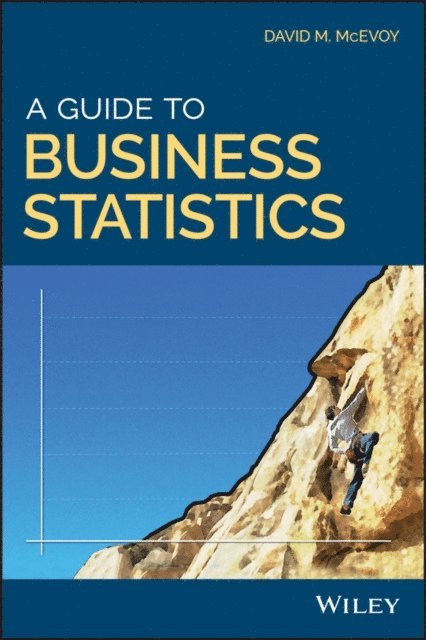
An accessible text that explains fundamental concepts in business statistics that are often obscured by formulae and mathematical notationA Guide to Business Statistics offers a practical approach to statistics that covers the fundamental concepts in business and economics. The book maintains the level of rigor of a more conventional textbook in business statistics but uses a more streamlined and intuitive approach. In short, A Guide to Business Statistics provides clarity to the typical statistics textbook cluttered with notation and formulae.The author—an expert in the field—offers concise and straightforward explanations to the core principles and techniques in business statistics. The concepts are introduced through examples, and the text is designed to be accessible to readers with a variety of backgrounds. To enhance learning, most of the mathematical formulae and notation appears in technical appendices at the end of each chapter. This important resource: Offers a comprehensive guide to understanding business statistics targeting business and economics students and professionalsIntroduces the concepts and techniques through concise and intuitive examplesFocuses on understanding by moving distracting formulae and mathematical notation to appendicesOffers intuition, insights, humor, and practical advice for students of business statisticsFeatures coverage of sampling techniques, descriptive statistics, probability, sampling distributions, confidence intervals, hypothesis tests, and regressionWritten for undergraduate business students, business and economics majors, teachers, and practitioners, A Guide to Business Statistics offers an accessible guide to the key concepts and fundamental principles in statistics.
741 kr
Skickas inom 10-15 vardagar
Climate change is one of the most pressing problems facing the global community. Although most states agree that climate change is occurring and is at least partly the result of humans’ reliance on fossil fuels, managing a changing global climate is a formidable challenge. Underlying this challenge is the fact that states are sovereign, governed by their own laws and regulations. Sovereignty requires that states address global problems such as climate change on a voluntary basis, by negotiating international agreements. Despite a consensus on the need for global action, many questions remain concerning how a meaningful international climate agreement can be realized. This book brings together leading experts to speak to such questions and to offer promising ideas for the path toward a new climate agreement. Organized in three main parts, it examines the potential for meaningful climate cooperation. Part 1 explores sources of conflict that lead to barriers to an effective climate agreement. Part 2 investigates how different processes influence states’ prospects of resolving their differences and of reaching a climate agreement that is more effective than the current Kyoto Protocol. Finally, part 3 focuses on governance issues, including lessons learned from existing institutional structures. The book is unique in that it brings together the voices of experts from many disciplines, such as economics, political science, international law, and natural science. The authors are academics, practitioners, consultants and advisors. Contributions draw on a variety of methods, and include both theoretical and empirical studies. The book should be of interest to scholars and graduate students in the fields of economics, political science, environmental law, natural resources, earth sciences, sustainability, and many others. It is directly relevant for policy makers, stakeholders and climate change negotiators, offering insights into the role of uncertainty, fairness, policy linkage, burden sharing and alternative institutional designs.