David Marquand - Böcker
Visar alla böcker från författaren David Marquand. Handla med fri frakt och snabb leverans.
8 produkter
8 produkter
259 kr
Tillfälligt slut
A reborn collectivism has begun to challenge the neo-liberal orthodoxies of the last fifteen years. But this new collectivism is very different from the state-centred collectivism of the post-war period. It is outward-looking, pluralistic and internationalist. It stands for strong communities, a diverse civil society, bottom-up development and constitutional checks and balances to prevent the abuse of power. It also stands for federalist power-sharing in the European Union, and for radical reform of the IMF and World Bank. This book sets out an agenda for the new collectivism which will provide the central themes of left and centre-left politics into the next century.
202 kr
Skickas inom 7-10 vardagar
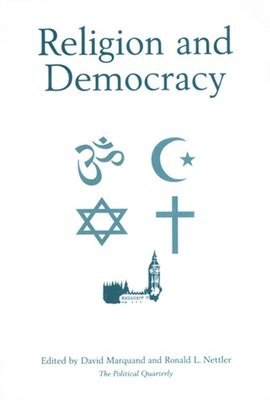
100 years ago, secular liberals thought religion would gradually recede from the public sphere and become an exclusively private concern. Today, organised religion is still a powerful political force in most parts of the world. In many its political significance has grown. But is it an ally or an enemy of pluralist democracy? That crucial question provides the theme for this path-breaking collection.
284 kr
Skickas inom 7-10 vardagar
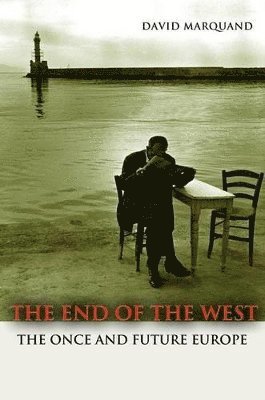
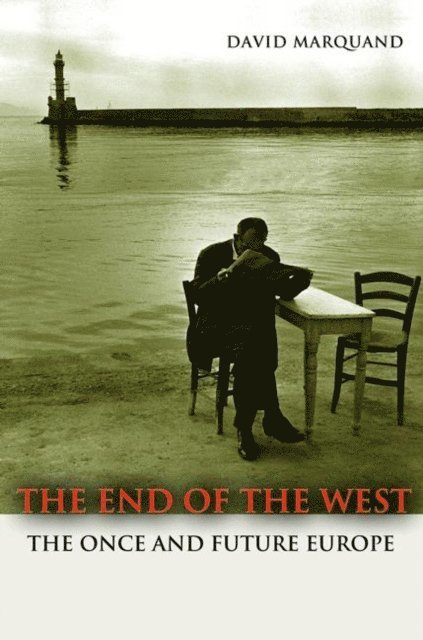
Has Europe's extraordinary postwar recovery limped to an end? It would seem so. The United Kingdom, Belgium, France, Italy, and former Soviet Bloc countries have experienced ethnic or religious disturbances, sometimes violent. Greece, Ireland, and Spain are menaced by financial crises. And the euro is in trouble. In The End of the West, David Marquand, a former member of the British Parliament, argues that Europe's problems stem from outdated perceptions of global power, and calls for a drastic change in European governance to halt the continent's slide into irrelevance. Taking a searching look at the continent's governing institutions, history, and current challenges, Marquand offers a disturbing diagnosis of Europe's ills to point the way toward a better future. Exploring the baffling contrast between postwar success and current failures, Marquand examines the rebirth of ethnic communities from Catalonia to Flanders, the rise of xenophobic populism, the democratic deficit that stymies EU governance, and the thorny questions of where Europe's borders end and what it means to be European.Marquand contends that as China, India, and other nations rise, Europe must abandon ancient notions of an enlightened West and a backward East. He calls for Europe's leaders and citizens to confront the painful issues of ethnicity, integration, and economic cohesion, and to build a democratic and federal structure. A wake-up call to those who cling to ideas of a triumphalist Europe, The End of the West shows that the continent must draw on all its reserves of intellectual and political creativity to thrive in an increasingly turbulent world, where the very language of "East" and "West" has been emptied of meaning. In a new preface, Marquand analyzes the current Eurozone crisis--arguing that it was inevitable due to the absurdity of combining monetary union with fiscal disunion--and raises some of the questions Europe will have to face in its recovery.
719 kr
Skickas inom 7-10 vardagar
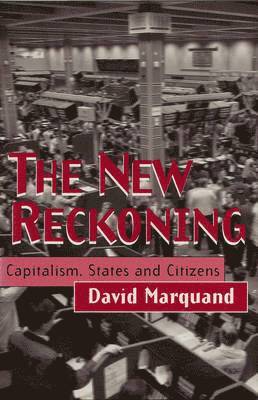
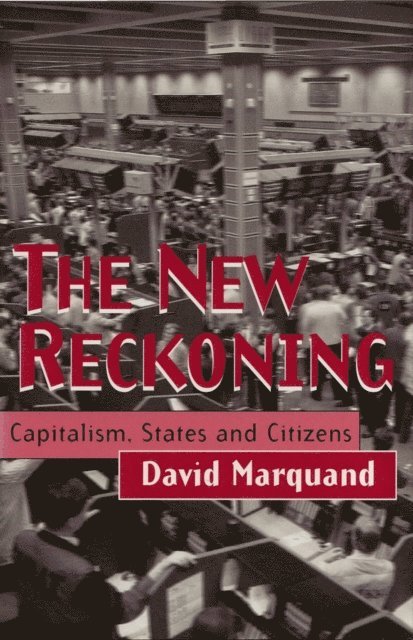
We are told that this is a new world, with which old theories cannot cope. But the dynamic driving the current global transformation is not as new as our pundits and politicians pretend. The global market-place of our day may have little in common with the tamed welfare capitalism of the post-war period but it is uncannily reminiscent of the untamed capitalism of 100 years ago. Keynes and Beveridge may be dead, but Marx, Malthus and Ricardo have had a new lease of life. In these timely essays, David Marquand challenges the fashionable amnesia of the 1990s and addresses the crucial questions raised by the capitalist renaissance which has followed the collapse of Communism and the end of the cold war. In this bewildering new world, which is at the same time an all-too-familiar old world, how can the values of social solidarity and democratic citizenship be realized? Granted that socialism is no longer with us, does it have anything to say from beyond the grave? How is socialism's great antagonist, liberalism, faring in this new world, and what are the prospects of an accommodation between the two? Where does the new medievalism of contemporary Europe fit in? How do the special peculiarities of the British state, the identity it embodies and the political economy over which it presides relate to those wider issues? What room for maneuver do they give the British left? These questions make up the agenda for The New Reckoning.
251 kr
Skickas inom 11-20 vardagar
We are told that this is a new world, with which old theories cannot cope. But the dynamic driving the current global transformation is not as new as our pundits and politicians pretend. The global market-place of our day may have little in common with the tamed welfare capitalism of the post-war period but it is uncannily reminiscent of the untamed capitalism of 100 years ago. Keynes and Beveridge may be dead, but Marx, Malthus and Ricardo have had a new lease of life. In these timely essays, David Marquand challenges the fashionable amnesia of the 1990s and addresses the crucial questions raised by the capitalist renaissance which has followed the collapse of Communism and the end of the cold war. In this bewildering new world, which is at the same time an all-too-familiar old world, how can the values of social solidarity and democratic citizenship be realized? Granted that socialism is no longer with us, does it have anything to say from beyond the grave? How is socialism's great antagonist, liberalism, faring in this new world, and what are the prospects of an accommodation between the two? Where does the new medievalism of contemporary Europe fit in? How do the special peculiarities of the British state, the identity it embodies and the political economy over which it presides relate to those wider issues? What room for maneuver do they give the British left? These questions make up the agenda for The New Reckoning.
536 kr
Skickas inom 7-10 vardagar
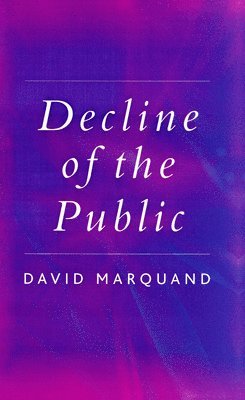
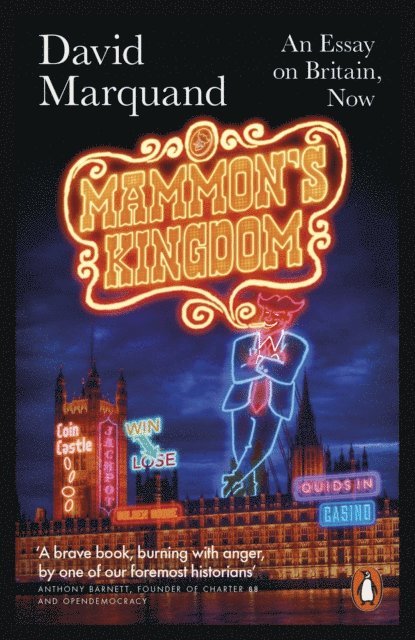
'To construct a civilization around the nostrum that the public realm is morally, economically and socially inferior to the private realm is to submit to an alien barbarism in which what we hold in common is permanently placed as second best. David Marquand has constructed a masterly and highly readable plea for the idea of the public once again to be celebrated in British life. His re-entry into the national conversation could not be better timed or more important. Let's hope our fellow citizens take arms in the battle he invites us to join.'--Will Hutton, Columnist, Observer Newspaper'A profound analysis of the decline of the public realm and the growth of unaccountable government in Britain. The summation of a life's work by one of Britain's leading political thinkers.'--John Gray, The London School of Economics The public domain of citizenship, equity and service is crucial for individual fulfilment and social well-being. But it has been under attack for thirty years – first from the market fundamentalists of the New Right, and then from their New Labour imitators. The results are everywhere – resource-starved public services; the marketization of the public sector; the soul-destroying targets and audits that go with it; the denigration of professionalism and the professional ethic; and the erosion of public trust. More damaging still are the hollowing out of citizenship, the manipulative populism that now pervades British government and a slide towards a new version of the 'Old Corruption' that our Victorian ancestors thought they had banished. David Marquand traces the growth of the public domain from Gladstone to Attlee, analyses the forces that began to undermine it in its post-war heyday and exposes the campaign that the Thatcher and Blair governments have waged against it. He ends with a call for a counter-attack, based on a re-statement of the civic ideal in a twenty-first century idiom. This book will appeal to all those who take an interest in current political events as well as those studying politics and social policy.
263 kr
Skickas inom 5-8 vardagar
'To construct a civilization around the nostrum that the public realm is morally, economically and socially inferior to the private realm is to submit to an alien barbarism in which what we hold in common is permanently placed as second best. David Marquand has constructed a masterly and highly readable plea for the idea of the public once again to be celebrated in British life. His re-entry into the national conversation could not be better timed or more important. Let's hope our fellow citizens take arms in the battle he invites us to join.'--Will Hutton, Columnist, Observer Newspaper'A profound analysis of the decline of the public realm and the growth of unaccountable government in Britain. The summation of a life's work by one of Britain's leading political thinkers.'--John Gray, The London School of Economics The public domain of citizenship, equity and service is crucial for individual fulfilment and social well-being. But it has been under attack for thirty years – first from the market fundamentalists of the New Right, and then from their New Labour imitators. The results are everywhere – resource-starved public services; the marketization of the public sector; the soul-destroying targets and audits that go with it; the denigration of professionalism and the professional ethic; and the erosion of public trust. More damaging still are the hollowing out of citizenship, the manipulative populism that now pervades British government and a slide towards a new version of the 'Old Corruption' that our Victorian ancestors thought they had banished. David Marquand traces the growth of the public domain from Gladstone to Attlee, analyses the forces that began to undermine it in its post-war heyday and exposes the campaign that the Thatcher and Blair governments have waged against it. He ends with a call for a counter-attack, based on a re-statement of the civic ideal in a twenty-first century idiom. This book will appeal to all those who take an interest in current political events as well as those studying politics and social policy.
163 kr
Skickas inom 7-10 vardagar
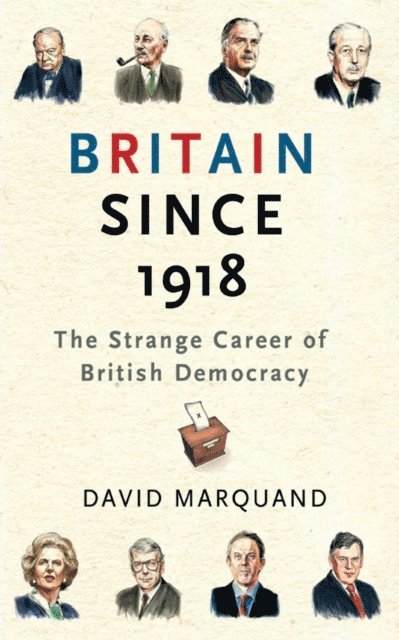
A new political history of modern Britain - entertaining, instructive and thought-provoking.The history of democratic politics in Britain since the coming of universal male suffrage in 1918 is a dramatic one, crowded with events and colourful figures. As well as the great events of war and economic crises, and the quieter drama of constitutional change, this era has been studded with democratic protests of every sort.The story opens more than 350 years ago. The Levellers of the 17th century, 18th-century radicals, the Chartists and the Reform Acts are all part of the unsteady and fiercely contested progress towards a democratic constitution. Dreams, visions and ideals are important too - of George Orwell, and Enoch Powell, Milton, Thomas Paine and Edmund Burke, Churchill and Lord Salisbury, Aneurin Bevan and Tony Benn - for they have also shaped our outlook.