David Montejano – författare
Visar alla böcker från författaren David Montejano. Handla med fri frakt och snabb leverans.
4 produkter
4 produkter
321 kr
Skickas inom 5-8 vardagar
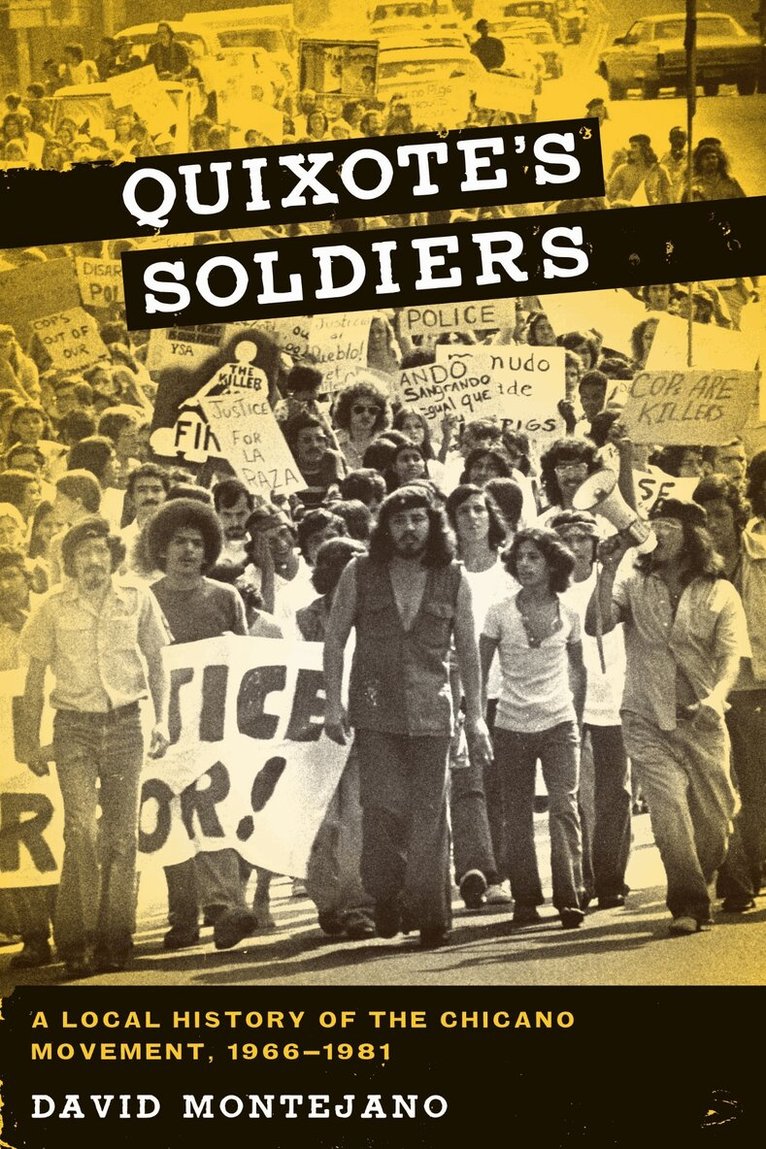
Winner, NACCS-Tejas Book Award, National Association for Chicana and Chicano Studies, Tejas Foco, 2011NACCS Book Award, National Association for Chicana and Chicano Studies, 2012In the mid-1960s, San Antonio, Texas, was a segregated city governed by an entrenched Anglo social and business elite. The Mexican American barrios of the west and south sides were characterized by substandard housing and experienced seasonal flooding. Gang warfare broke out regularly. Then the striking farmworkers of South Texas marched through the city and set off a social movement that transformed the barrios and ultimately brought down the old Anglo oligarchy. In Quixote's Soldiers, David Montejano uses a wealth of previously untapped sources, including the congressional papers of Henry B. Gonzalez, to present an intriguing and highly readable account of this turbulent period.Montejano divides the narrative into three parts. In the first part, he recounts how college student activists and politicized social workers mobilized barrio youth and mounted an aggressive challenge to both Anglo and Mexican American political elites. In the second part, Montejano looks at the dynamic evolution of the Chicano movement and the emergence of clear gender and class distinctions as women and ex-gang youth struggled to gain recognition as serious political actors. In the final part, Montejano analyzes the failures and successes of movement politics. He describes the work of second-generation movement organizations that made possible a new and more representative political order, symbolized by the election of Mayor Henry Cisneros in 1981.
263 kr
Skickas inom 10-15 vardagar
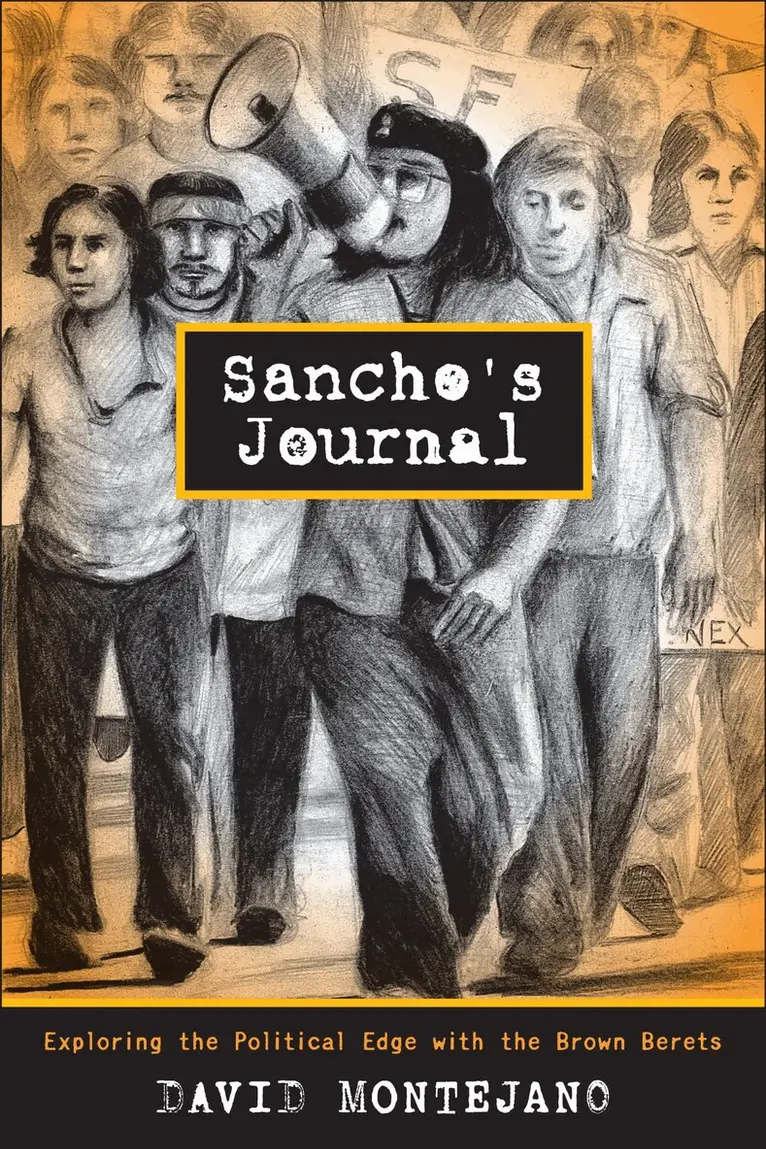
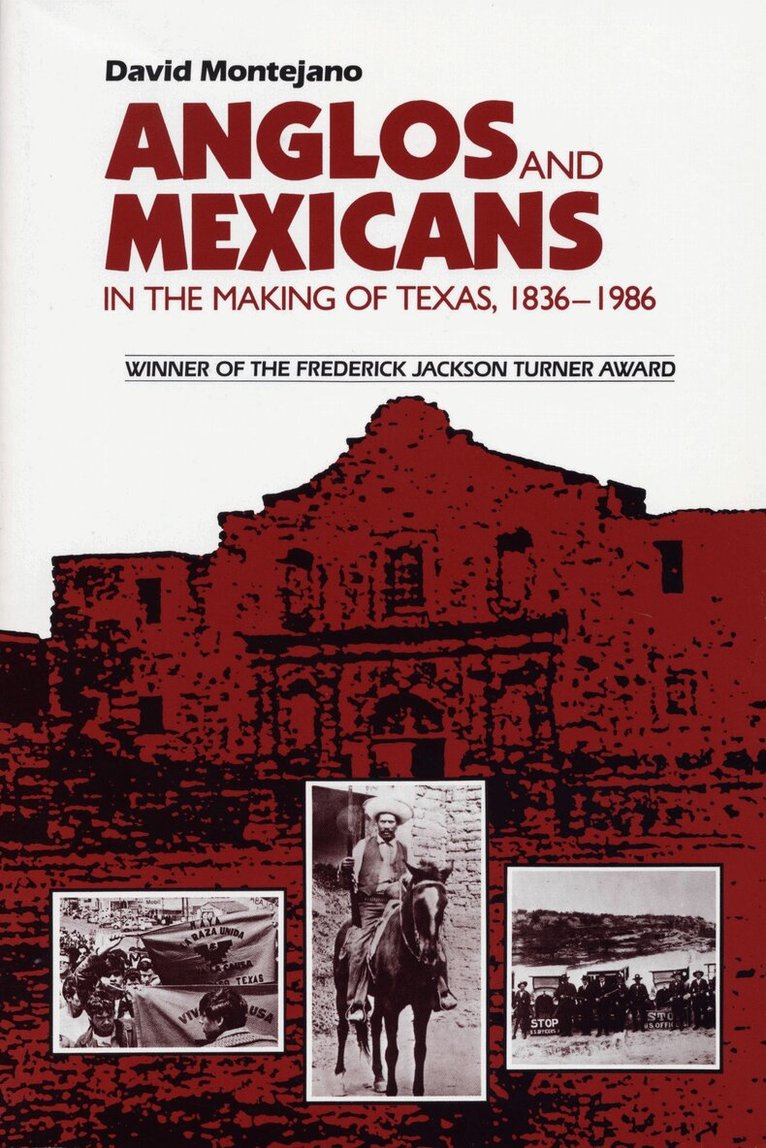
How do people acquire political consciousness, and how does that consciousness transform their behavior? This question launched the scholarly career of David Montejano, whose masterful explorations of the Mexican American experience produced the award-winning books Anglos and Mexicans in the Making of Texas, 1836–1986, a sweeping outline of the changing relations between the two peoples, and Quixote’s Soldiers: A Local History of the Chicano Movement, 1966–1981, a concentrated look at how a social movement “from below” began to sweep away the last vestiges of the segregated social-political order in San Antonio and South Texas. Now in Sancho’s Journal, Montejano revisits the experience that set him on his scholarly quest-“hanging out” as a participant-observer with the South Side Berets of San Antonio as the chapter formed in 1974.Sancho’s Journal presents a rich ethnography of daily life among the “batos locos” (crazy guys) as they joined the Brown Berets and became associated with the greater Chicano movement. Montejano describes the motivations that brought young men into the group and shows how they learned to link their individual troubles with the larger issues of social inequality and discrimination that the movement sought to redress. He also recounts his own journey as a scholar who came to realize that, before he could tell this street-level story, he had to understand the larger history of Mexican Americans and their struggle for a place in U.S. society. Sancho’s Journal completes that epic story.
353 kr
Skickas inom 10-15 vardagar
The various protest movements that together constituted the Chicano Movement of the 1960s and 1970s urged a "politics of inclusion" to bring Mexican Americans into the mainstream of United States political and social life. This volume of ten specially commissioned essays assesses the post-movement years, asking "what went wrong? what went right? and where are we now?" Collectively, the essays offer a wide-ranging portrayal of the complex situation of Mexican Americans as the twenty-first century begins.The essays are grouped into community, institutional, and general studies, with an introduction by editor Montejano. Geographically, they point to the importance of "Hispanic" politics in the Southwest, as well as in Chicago wards and in the U.S. Congress, with ramifications in Mexico and Central America. Thematically, they discuss "non-traditional" politics stemming from gender identity, environmental issues, theatre production, labor organizing, university policymaking, along with the more traditional politics revolving around state and city government, the Congressional Hispanic Caucus, and various advocacy organizations.
381 kr
Kommande
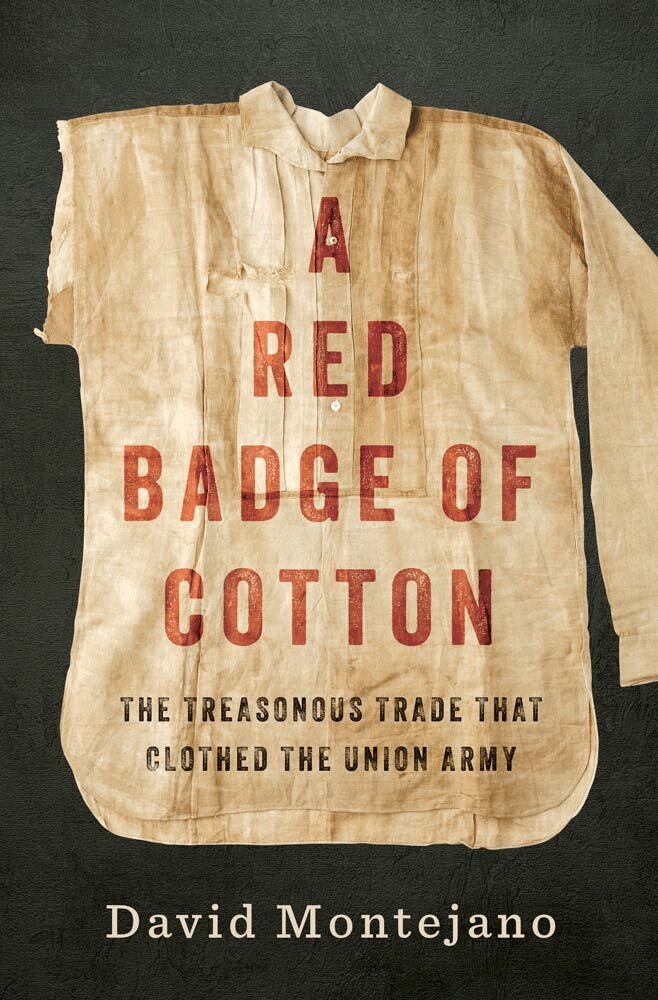
How Confederate cotton journeyed from Texas plantation to New England mill to become a Union uniform on a Virginia battlefieldThe bloodstained shirt of the Union soldier has long been celebrated as a “red badge of courage.” Yet seen as a finished cotton product, the shirt reveals a meaning not of heroism but of wartime opportunism and profiteering. After trade between North and South was outlawed, merchants established a new supply chain to link the cotton plantations of Louisiana and Texas to the merchants of New York and the mills of the Northeast. In the neutral Mexican port of Matamoros, northern agents bought “Mexican cotton” from Confederate merchants for processing in New England.The entire outfit of the Union soldier—shirt, underwear, sleeping bag, tent, knapsack, and even the regimental flags—was composed in part of southern cotton. In a literal sense, the Confederacy was fighting a Union army it was also clothing and sheltering.David Montejano traces the wartime trade in cotton from its origin to the battlefield. He does not show the invisible hand of the market but tells the stories of the countless human hands that touched the raw cotton—the slaves, planters, merchants, teamsters, mariners, mill workers—to describe barely disguised connections between the western Confederacy and the northern mill industry during the Civil War.