David Moos - Böcker
Visar alla böcker från författaren David Moos. Handla med fri frakt och snabb leverans.
2 produkter
2 produkter
426 kr
Skickas inom 11-20 vardagar
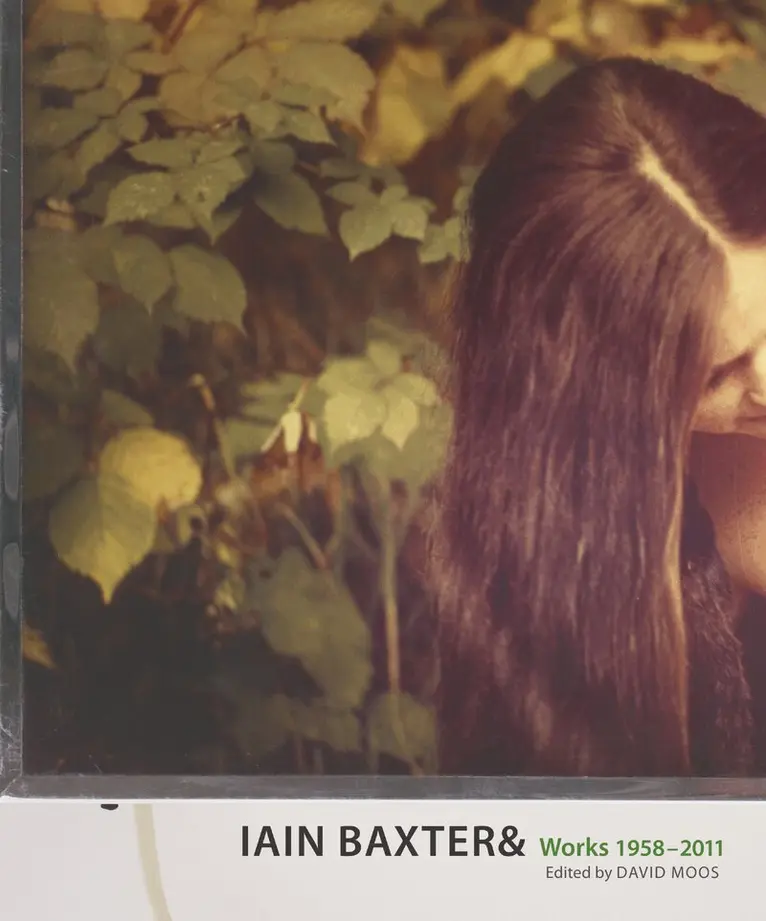
Winner, Canadian Museums Association Outstanding Achievement in Publication Winner, Melva J. Dwyer AwardIain Baxter legally changed his name to IAIN BAXTER& in 2005. He appended an ampersand to his name to underscore that art is about connectivity — about contingency and collaboration with a viewer. He also effected the name change to perpetuate a strategy of self re-definition that is central to his creative project. BAXTER& began making art in the late-1950s under his birth name but quickly realized that the name itself was creative material, to be deployed, manipulated, and shared. In 1965, he formed a collaborative art-making entity which evolved into N.E. Thing Company, a corporate-styled entity whose co-presidents were BAXTER& and his wife Ingrid. Producing a diverse array of projects that encompassed conceptually based photography, pioneering works of appropriation art, and gallery transforming installations, the N.E. Thing Company offered a new model of art making, allowing the artists to remain anonymous and masquerade in the guise of business people.Following the dissolution of N.E. Thing Company in 1978, BAXTER& produced extensive bodies of work with Polaroid film, created numerous installations that blended painting and sculpture, and made pedagogy a focus of his creative enterprise. Consistent themes permeate his work and vector through his thinking. And by assessing these themes — a relentless emphasis on reaching out to the viewer, a core concern with ecology and the environment, and a belief that art must assume plural means and media — one discerns BAXTER&'s creative credo, understanding that "art is all over."This comprehensive book reviews BAXTER&'s remarkable career across all media. It accompanies a major international touring exhibition, which opened at the Museum of Contemporary Art, Chicago in November 2011 and at the Art Gallery of Ontario in April 2012. Featuring more than 160 reproductions of BAXTER&'s work, it also includes essays by the exhibition's curator, David Moos, along with contributions by Michael Darling (James W. Alsdorf Chief Curator, Museum of Contemporary Art, Chicago), Alex Alberro (Associate Professor, University of Florida), and others. The book will also feature a comprehensive bibliography compiled by Adam Lauder (W.P. Scott Chair for Research in E-Librarianship, York University).
267 kr
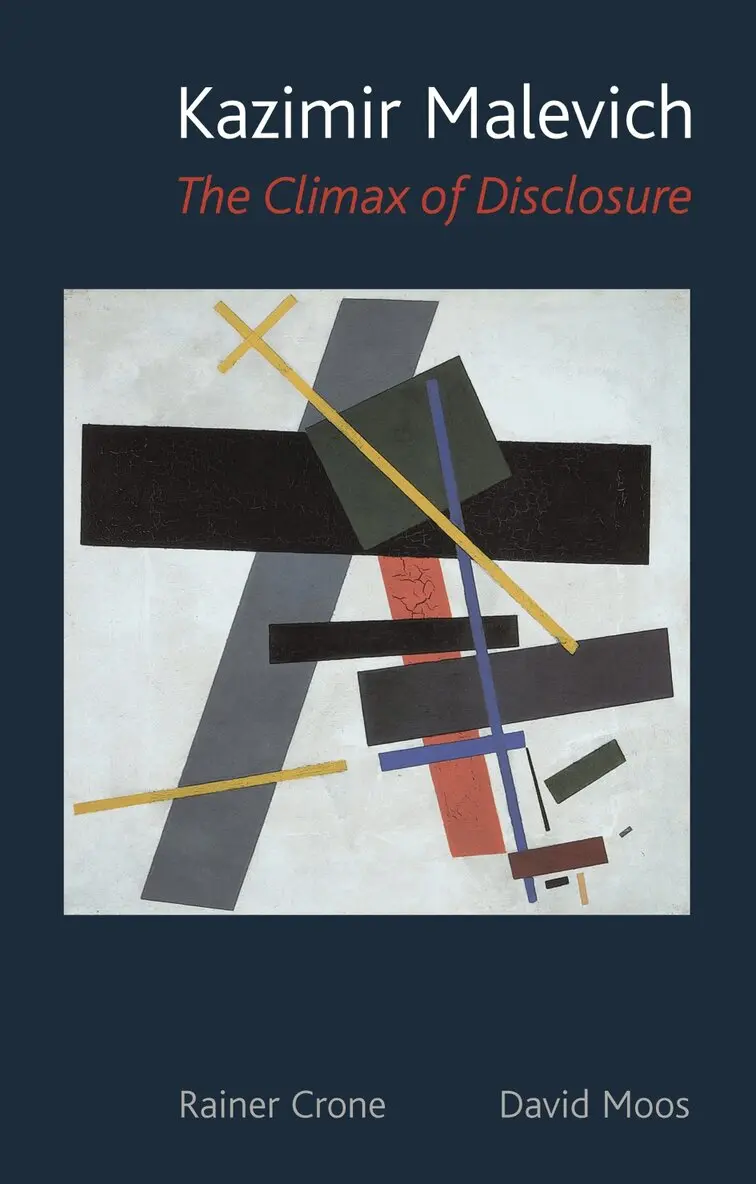
Kazimir Malevich (1878–1935) rose to instant prominence among the Russian avant-garde when, in December 1915, he contributed thirty-nine paintings to an exhibition in Leningrad which were of such a reduced and sophisticated abstract quality that even today they seem to possess a luminous conceptual power. Malevich’s sudden and startling realization of a non-objective way of painting – which he termed Suprematism – stands as a seminal moment in the history of 20th-century art.In Kazimir Malevich: The Climax of Disclosure, now available in a compact pocket format, Rainer Crone and David Moos trace the artist’s development from his beginnings in Ukraine and early years in Moscow – where he was closely involved in the Futurist circle – through to the late 1920s and beyond. The authors demonstrate that it is only through a close and sustained reading of Malevich’s late – and still widely misunderstood – painterly œuvre that his extraordinarily inventive stance can truly be comprehended. Crone and Moos trace the close relationship between Malevich’s practice and other contemporary non-political revolutions in physics, linguistics and poetry. They present Malevich as a uniquely creative artist, embodying in his work many of the insights and discoveries that define the twentieth century and the condition of modern life.