David Muggleton - Böcker
Visar alla böcker från författaren David Muggleton. Handla med fri frakt och snabb leverans.
9 produkter
9 produkter
560 kr
Skickas inom 10-15 vardagar
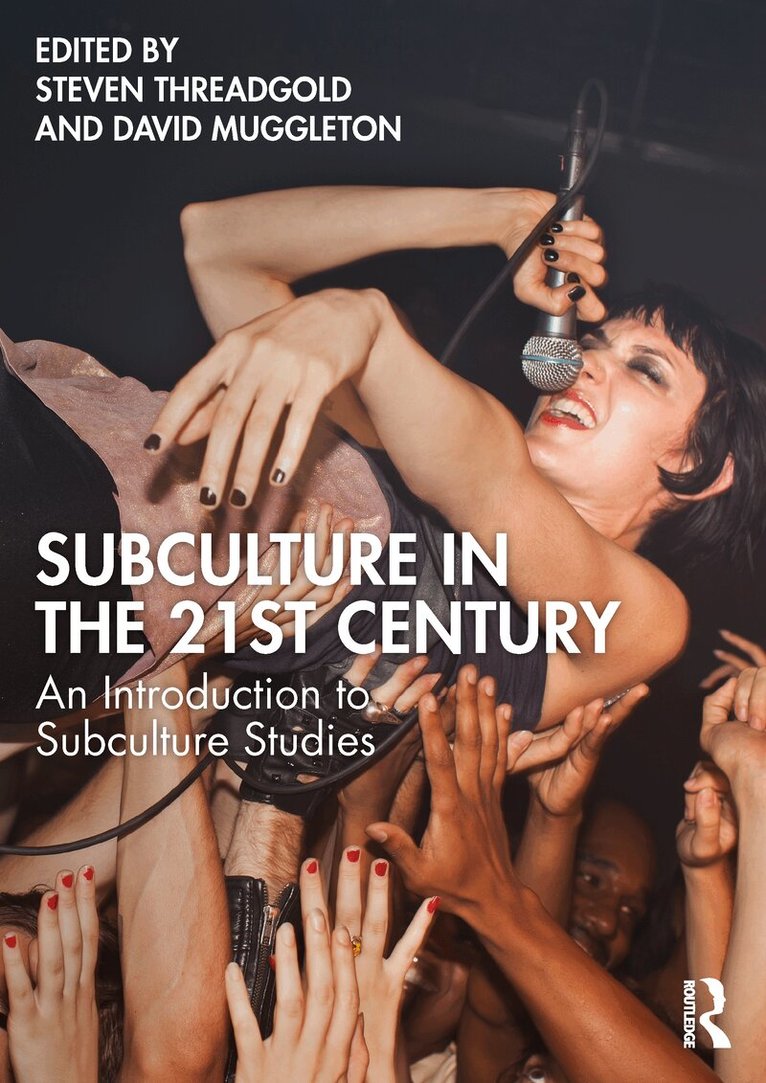
Subculture in the 21st Century is a key text for all students of sociology and cultural studies. Drawing on case studies and supported by a range of resources on its dedicated companion website, it is an introduction to the history, theory, tensions, and contemporary process that have shaped subcultures and their study.Offering an accessible overview, it examines subcultures and subculture studies and how they have been formed and critiqued; it considers how subcultures are structured by contours of inequality through the continued relevance of gender, sexuality, race and ethnicity, and social class; and how contemporary processes, such as globalisation, ageing, and digital technology, have given us new ways of thinking about subcultures. Key topics covered include theoretical frameworks and concepts central to subcultural studies today, including social stratification, identity and authenticity, style, and resistance; critical evaluation of lifestyle, scene, and neo-tribe in post-subcultural studies; femininity and masculinity, power and identity; how sexualities have produced and impacted subcultures; what subcultural groups can offer racial minorities; class and structures of power, and resistance; subcultures through the life course; the emotionality and effects of contemporary subcultures; the relation between globalisation and subcultures; and digital media, participation, and scalability of subculture. Three detailed case studies from international contributors examine diverse subcultures, including Bronie subculture amongst adolescent and adult men, the range of masculinities within skateboarding, and the punk and electronic music scenes in Romania.Brought to life with extracts of interviews and real-world examples and vignettes, Subculture in the 21st Century is an essential textbook for students of sociology and cultural studies as well as those interested in the study of contemporary movements in youth and popular culture.Access the support materials on https://subcultureinthe21stcentury.wordpress.com/
2 029 kr
Skickas inom 10-15 vardagar
Subculture in the 21st Century is a key text for all students of sociology and cultural studies. Drawing on case studies and supported by a range of resources on its dedicated companion website, it is an introduction to the history, theory, tensions, and contemporary process that have shaped subcultures and their study.Offering an accessible overview, it examines subcultures and subculture studies and how they have been formed and critiqued; it considers how subcultures are structured by contours of inequality through the continued relevance of gender, sexuality, race and ethnicity, and social class; and how contemporary processes, such as globalisation, ageing, and digital technology, have given us new ways of thinking about subcultures. Key topics covered include theoretical frameworks and concepts central to subcultural studies today, including social stratification, identity and authenticity, style, and resistance; critical evaluation of lifestyle, scene, and neo-tribe in post-subcultural studies; femininity and masculinity, power and identity; how sexualities have produced and impacted subcultures; what subcultural groups can offer racial minorities; class and structures of power, and resistance; subcultures through the life course; the emotionality and effects of contemporary subcultures; the relation between globalisation and subcultures; and digital media, participation, and scalability of subculture. Three detailed case studies from international contributors examine diverse subcultures, including Bronie subculture amongst adolescent and adult men, the range of masculinities within skateboarding, and the punk and electronic music scenes in Romania.Brought to life with extracts of interviews and real-world examples and vignettes, Subculture in the 21st Century is an essential textbook for students of sociology and cultural studies as well as those interested in the study of contemporary movements in youth and popular culture.Access the support materials on https://subcultureinthe21stcentury.wordpress.com/
181 kr
Skickas
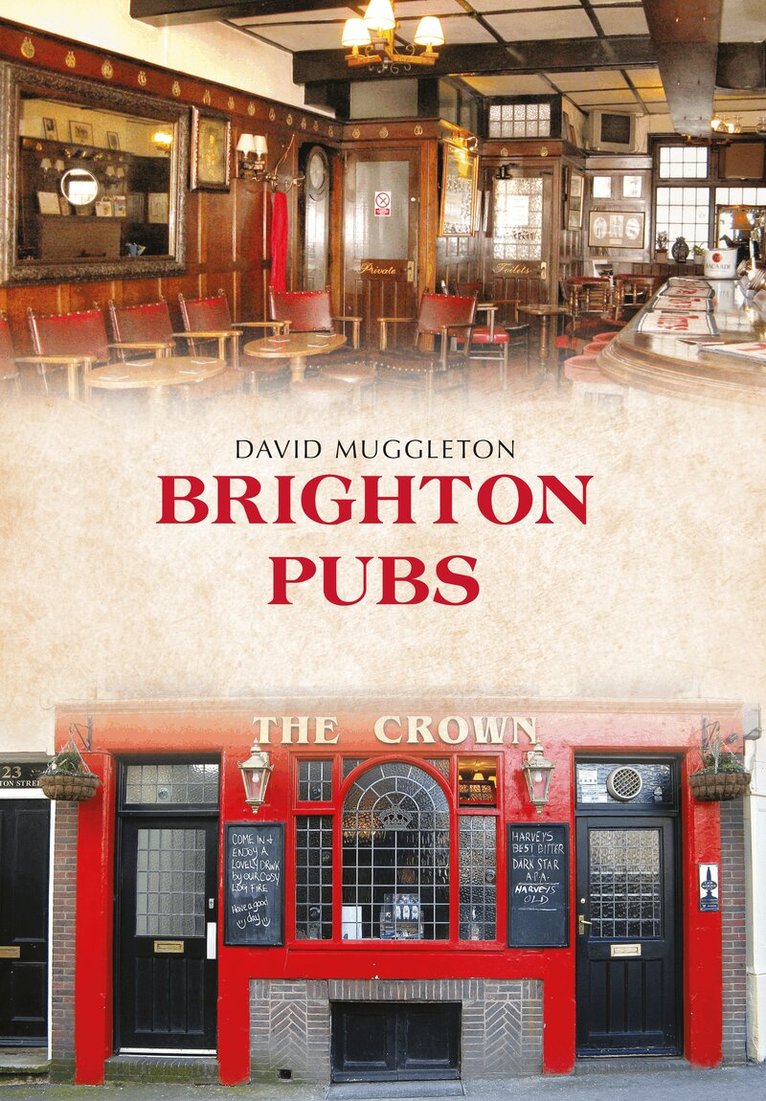
Brighton has long been an important seaside town, and today draws in visitors from all over Britain and beyond for its varied nightlife, rich history and attractive waterfront. In 1800, Brighton had forty-one inns and taverns, and by 1860 there were well over 450, echoing the town’s growth in popularity through the Regency and early Victorian eras. A recent resurgence of interest in real ale has also seen a welcome boom in micro-breweries, placing Brighton firmly on the beer-lover’s map.David Muggleton takes us on a tour of these watering holes, including the long-established venerable Greyhound, elegant Regency Cricketers, high-Victorian Colonnade, elaborate mock-Tudor King & Queen and the English Renaissance revivalist Good Companions, the pub reputed to have opened on the very day that the Second World War began. Brimming with quirky tales and fascinating facts, this carefully crafted guide initiates readers into the fascinating history of Brighton’s pubs.
178 kr
Skickas
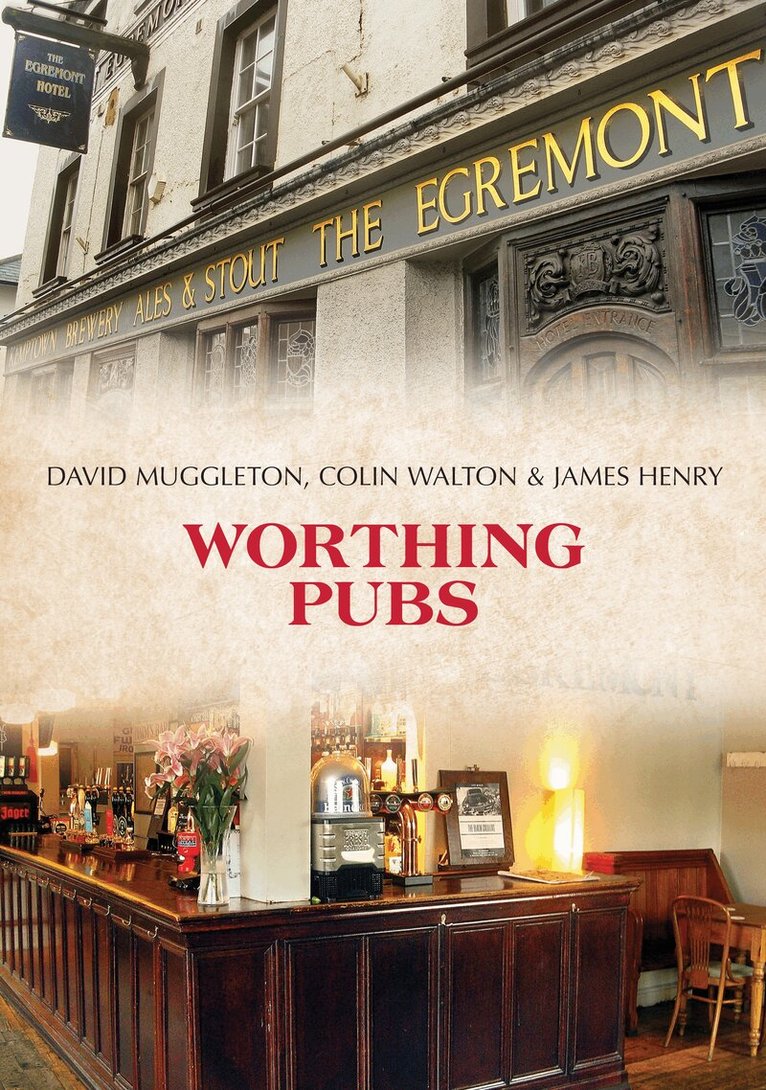
The hamlet of Worthing began to develop as a fashionable seaside resort during the late eighteenth century. It attained town status in 1803 when its administration was invested in a board of commissioners that first met at the Nelson Hotel. Inns of greater antiquity were the White Horse at West Tarring, the Maltsters Arms at Broadwater and the Anchor in Worthing High Street. Other well-established pubs, such as the town centre Warwick and the Cricketers at Broadwater, began as basic beer retailers and brewing victuallers of the early Victorian period.Several pubs in the area are of architectural interest. The ornate Grand Victorian opened in 1900 as the Central Hotel, the half-timbered design of the Thomas á Becket (1910) was in homage to the nearby medieval Parsonage Row cottages, while the imposing Downlands was built in 1939 in the classic roadhouse style. Worthing Pubs takes us on a fully illustrated tour of the historical hostelries in the district, yet also acknowledges how the local drinking culture has been shaped by the contemporary craft-beer bar and the burgeoning micropub scene.
178 kr
Kommande
Horsham is the natural capital of the western end of Sussex’s forest ridge, its significance and development dating from the medieval period when it became an important market centre and home to the county assizes. Horsham also became a very significant brewing town, being the home of King & Barnes. Although the family firm, closed in 2000, the legacy continues to be reflected in the town’s drinking culture today and with the opening of a number of small breweries in the town and surrounding area in recent years.In Horsham Pubs David Muggleton guides us through this high Wealden town to visit its fascinating and varied hostelries, many of which have retained features and traditions of previous ages. The originally expanded around The Carfax, in which stands the eighteenth-century Crown Inn. The Bishopric is another ancient street and home to the Kings Arms, known by 1667, and the probably even older Olive Branch, originally the Green Dragon and timber-framed with wattle and daub panels. Other pubs include the Brewhouse & Kitchen recently opened in the former Horse & Groom pub; the Malt Shovel, formerly the Michell Arms after one of the town’s former brewers and rebuilt in 1939; and the Anchor Tap, once appurtenant to the Anchor Hotel and reopened as a pub in 2016 – the local branch of the Campaign for Real Ale was founded here in 1975. Our tour also takes us out of the town centre to the Foresters Arms, a genuine community pub for a residential area; the Boars Head, a country farmhouse that became the Fox & Hounds until being renamed in 1971; and the new Chapeau Brewery taproom located on an industrial estate. This carefully crafted guide will initiate readers into the fascinating history of Horsham’s pubs.
1 403 kr
Skickas
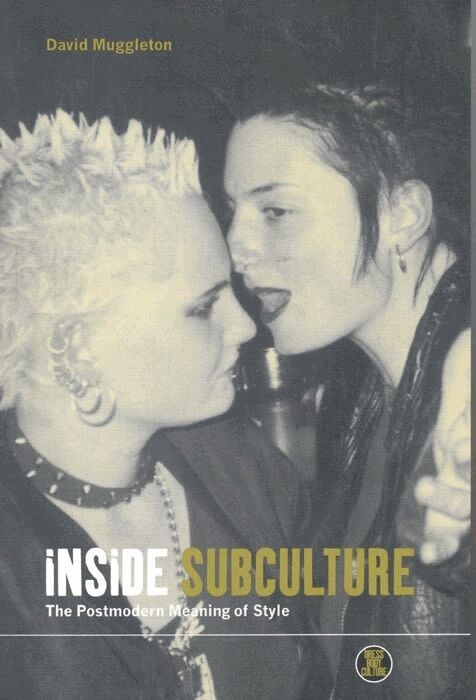
What motivates people to dress in a manner that marks them out as different to the conventional norm? Is it true that, with dress, 'anything goes' in our mix-and-match postmodern culture? Have easily recognizable, authentic subcultures imploded in a glut of ironic revivals and stylistic fragmentation? Does this supposed 'post-subcultural' generation actively celebrate ephemerality, transience and disposability, merely casting off and trying on one alternative identity after another in an ever-accelerating fashion frenzy? This exciting book is a considered sociological examination of such questions. By listening to the voices of the subcultural stylists themselves - their subjective perceptions of their style and the ideas that lie behind them - the author provides original insights into issues of subjectivity and identity. Situating an empirical case study within a wider consideration of postmodernism and cultural change, the author rejects cultural studies perspectives that attempt to 'read' subcultures as texts.Drawing on extensive interviews with people who dress in what might be deemed a stylistically unconventional manner, he seeks instead to establish whether contemporary subcultures display modern or postmodern sensibilities and forms. He argues persuasively that they do both - a stress on postmodern hyperindividualism, fluidity and fragmentation runs alongside a modernist emphasis on authenticity and underlying essence. He concludes that a Romantic libertarianism has permeated working-class culture and that the distinction between 'individualistic' middle-class countercultures and 'collectivist' working-class subcultures has been over-emphasized.
420 kr
Skickas inom 10-15 vardagar
What motivates people to dress in a manner that marks them out as different to the conventional norm? Is it true that, with dress, 'anything goes' in our mix-and-match postmodern culture? Have easily recognizable, authentic subcultures imploded in a glut of ironic revivals and stylistic fragmentation? Does this supposed 'post-subcultural' generation actively celebrate ephemerality, transience and disposability, merely casting off and trying on one alternative identity after another in an ever-accelerating fashion frenzy? This exciting book is a considered sociological examination of such questions. By listening to the voices of the subcultural stylists themselves - their subjective perceptions of their style and the ideas that lie behind them - the author provides original insights into issues of subjectivity and identity. Situating an empirical case study within a wider consideration of postmodernism and cultural change, the author rejects cultural studies perspectives that attempt to 'read' subcultures as texts.Drawing on extensive interviews with people who dress in what might be deemed a stylistically unconventional manner, he seeks instead to establish whether contemporary subcultures display modern or postmodern sensibilities and forms. He argues persuasively that they do both - a stress on postmodern hyperindividualism, fluidity and fragmentation runs alongside a modernist emphasis on authenticity and underlying essence. He concludes that a Romantic libertarianism has permeated working-class culture and that the distinction between 'individualistic' middle-class countercultures and 'collectivist' working-class subcultures has been over-emphasized.
1 964 kr
Skickas inom 10-15 vardagar
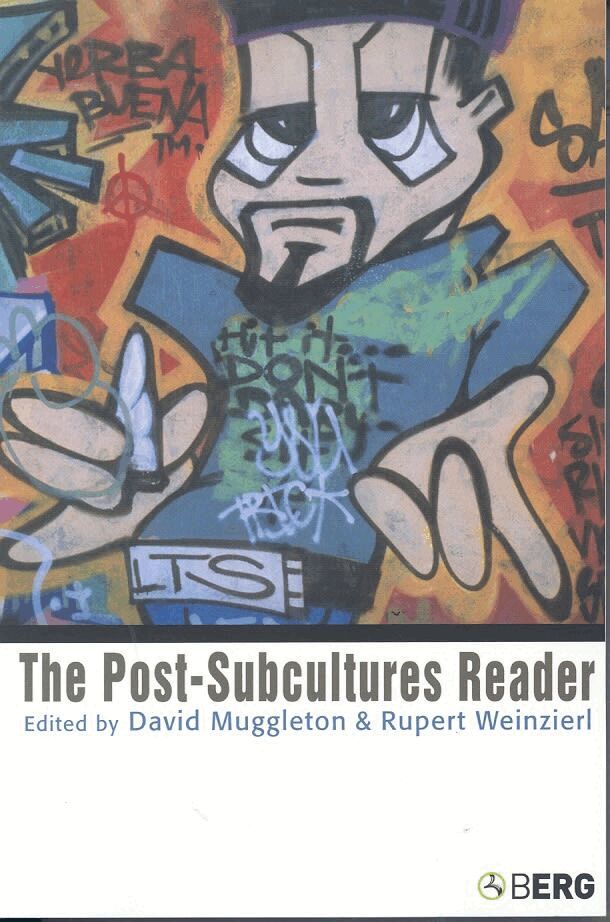
Once it was just Mods and Rockers or Hippies and Skinheads. Now we have Riot Grrls and Rappers; Modern Primitives and Metalheads; Goths, Clubcultures and Fetishists; Urban Tribes, New Age Travellers and Internet fan groups. In a global society with a rapid proliferation of images, fashions and lifestyles, it is -unsurprisingly - becoming increasingly difficult to pinpoint what 'subculture actually means. Enthusiastically adopted by the media and academia, subculture may be a convenient way to describe more unconventional aspects of youth culture, but it does little to help us comprehend the diverse range of youth groups in todays so-called postmodern world. How can we begin to rethink, reformulate and replace outdated notions of subcultures to make them applicable to the experiences of youth in the twenty-first century? And to what extent does this involve the challenging of past orthodoxies about spectacular subcultural styles?From Seattle anarchist punks to UK Asian underground music, Canadian female X-Files fans to Australian dance cultures, this groundbreaking book draws on a wide variety of international case studies to investigate the new relationships among youth subcultural music, politics and taste. Is it possible to work within the existing limitations of subculture, or has the concept exhausted its usefulness? Can attempts at re-conceptualization, such as neo-tribes, sub-streams and micro-networks, adequately capture the experience of fragmentation, flux and fluidity that is central to contemporary youth culture? This timely book is the first to challenge and reconsider the use of subculture. In doing so, it questions the possibility and relevance of what might be termed post-subcultural studies and helps to chart the emergence of a new paradigm for the study of youth subculture.
434 kr
Skickas inom 10-15 vardagar
Once it was just Mods and Rockers or Hippies and Skinheads. Now we have Riot Grrls and Rappers; Modern Primitives and Metalheads; Goths, Clubcultures and Fetishists; Urban Tribes, New Age Travellers and Internet fan groups. In a global society with a rapid proliferation of images, fashions and lifestyles, it is -unsurprisingly - becoming increasingly difficult to pinpoint what 'subculture actually means. Enthusiastically adopted by the media and academia, subculture may be a convenient way to describe more unconventional aspects of youth culture, but it does little to help us comprehend the diverse range of youth groups in todays so-called postmodern world. How can we begin to rethink, reformulate and replace outdated notions of subcultures to make them applicable to the experiences of youth in the twenty-first century? And to what extent does this involve the challenging of past orthodoxies about spectacular subcultural styles?From Seattle anarchist punks to UK Asian underground music, Canadian female X-Files fans to Australian dance cultures, this groundbreaking book draws on a wide variety of international case studies to investigate the new relationships among youth subcultural music, politics and taste. Is it possible to work within the existing limitations of subculture, or has the concept exhausted its usefulness? Can attempts at re-conceptualization, such as neo-tribes, sub-streams and micro-networks, adequately capture the experience of fragmentation, flux and fluidity that is central to contemporary youth culture? This timely book is the first to challenge and reconsider the use of subculture. In doing so, it questions the possibility and relevance of what might be termed post-subcultural studies and helps to chart the emergence of a new paradigm for the study of youth subculture.