David Neumeyer - Böcker
Visar alla böcker från författaren David Neumeyer. Handla med fri frakt och snabb leverans.
4 produkter
4 produkter
697 kr
Skickas inom 5-8 vardagar
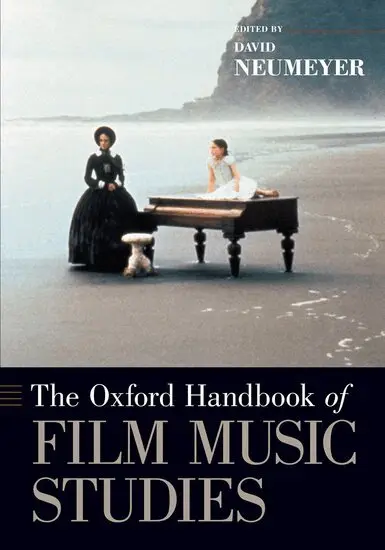
Music has been an integral part of film exhibition from its beginnings in the late nineteenth century. With the arrival of sound film in the late 1920s, music became part of a complex multimedia text. Although industry, fan-oriented, and scholarly literatures on film music have existed from early on, and music was frequently among the topics discussed and disputed, only in the past thirty years has sustained scholarly attention gone to music in visual media, beginning with the feature film. The Oxford Handbook of Film Music Studies charts that interdisciplinary activity in its primary areas of inquiry: history, genre and medium, analysis and criticism, and interpretation.The handbook provides an overview to the field on a large scale. Chapters in Part I range from the relations of music and the soundtrack to opera and film, textual representation of film sound, and film music as studied by cognitive scientists. Part II addresses genre and medium with chapters focusing on cartoons and animated films, the film musical, music in arcade and early video games, and the interplay of film, music, and recording over the past half century. The chapters in Part III offer case studies in interpretation along with extended critical surveys of theoretical models of gender, sexuality, and subjectivity as they impinge on music and sound. The three chapters on analysis in Part IV are diverse: one systematically models harmonies used in recent films, a second looks at issues of music and film temporality, and a third focuses on television. Chapters on history (Part V) cover topics including musical antecedents in nineteenth-century theater, the complex issues in sychronization of music in performance of early (silent) films, international practices in early film exhibition, and the symphony orchestra in film.
2 258 kr
Skickas inom 5-8 vardagar
The Oxford Handbook of Film Music Studies charts the interdisciplinary activity around music in visual media, addressing the primary areas of inquiry: history, genre and medium, analysis and criticism, and interpretation. Chapters in Part I cover the range most broadly, from the relations of music and the soundtrack to opera and film, textual representation of film sound, film music as studied by cognitive scientists, and Hanns Eisler's work as film composer and co-author of the foundational text Composing for the Films (1947). Part II addresses genre and medium with chapters focusing on cartoons and animated films, the film musical, music in arcade and early video games, and the interplay of film, music, and recording over the past half century. The chapters in Part III offer case studies in interpretation along with extended critical surveys of theoretical models of gender, sexuality, and subjectivity as they impinge on music and sound. The three chapters on analysis in Part IV are diverse: one systematically models harmonies used in recent films, a second looks at issues of music and film temporality, and a third focuses on television. Chapters on history (Part V) cover topics including musical antecedents in nineteenth-century theater, the complex issues in sychronization of music in performance of early (silent) films, international practices in early film exhibition, and the symphony orchestra in film.
695 kr
Skickas inom 10-15 vardagar
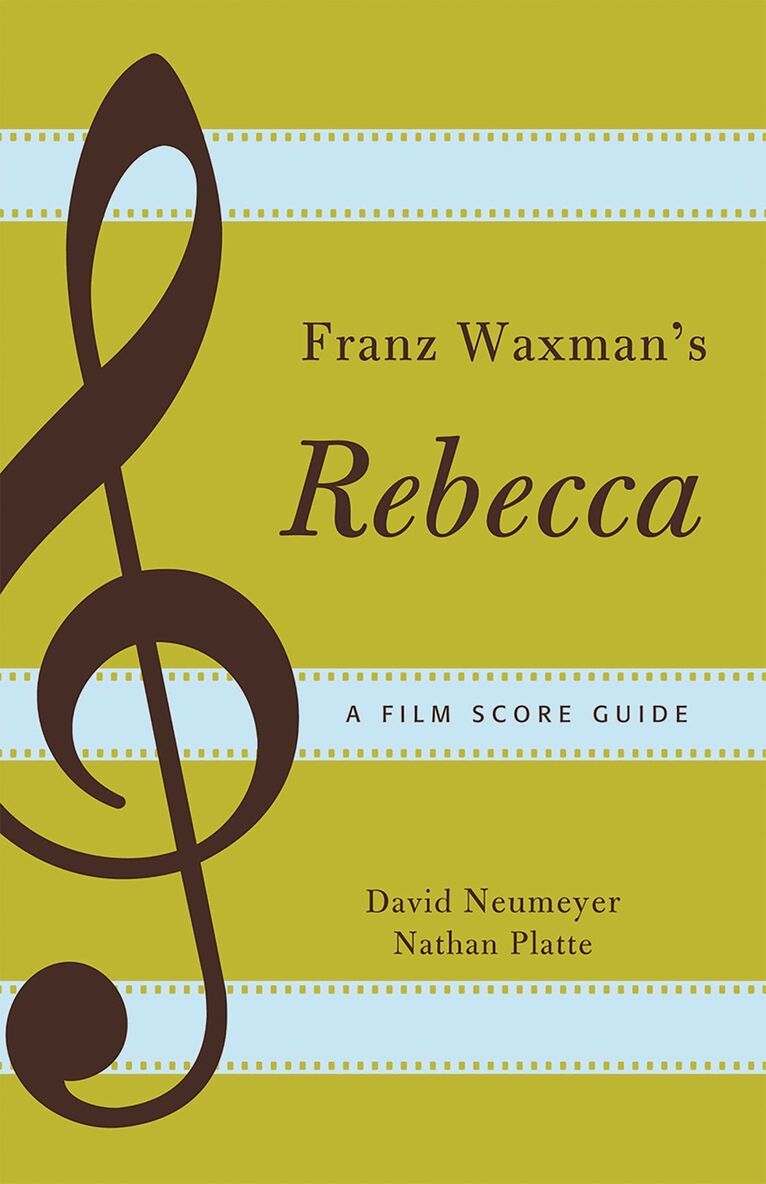
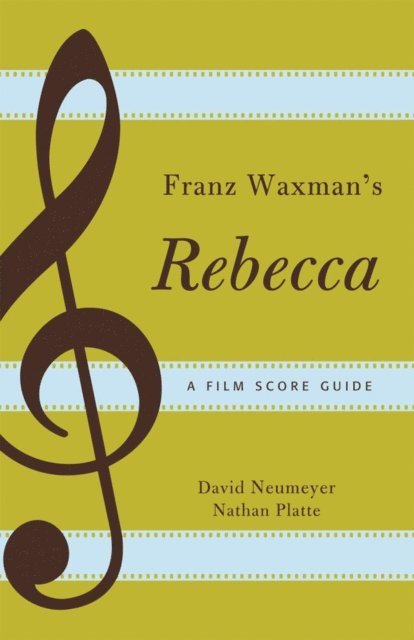
Upon his arrival in Hollywood, Alfred Hitchcock began work on his first American film, an adaptation of Daphne du Maurier’s best-selling novel. Produced by David O. Selznick and featuring compelling performances by Laurence Olivier, Joan Fontaine, and Judith Anderson, Rebecca became one of Hitchcock’s most successful films. It was nominated for eleven Academy Awards and received the Oscar for Best Picture, the only Hitchcock work to be so honored. Without question, one of the reasons for the film’s success is its ninety minutes of dramatic musical underscoring by Franz Waxman.In Franz Waxman’s Rebecca: A Film Score Guide, David Neumeyer and Nathan Platte situate the score for this classic work within the context of the composer’s life and career. Beginning with Waxman’s early training and professional experience as a jazz musician and film-music arranger-orchestrator in Berlin, the authors also recount the composer’s work in the music department at MGM between 1936 and 1942. During this period, Waxman was loaned out to Selznick International Pictures and wrote the music for Rebecca. Through manuscript and archival research, Neumeyer and Platte untangle the threads of the film’s complicated music production process, which was strongly influenced by Selznick’s habit of micromanaging music choices and placement. This volume concludes with a thematic analysis and reading of the score that incorporates commentary on scenes and cues.The first book devoted to the music of a single film by this great composer from Hollywood’s golden age, Franz Waxman’s Rebecca: A Film Score Guide will be of interest to musicologists and film scholars, as well as fans of Alfred Hitchcock and Franz Waxman.
511 kr
Skickas inom 3-6 vardagar
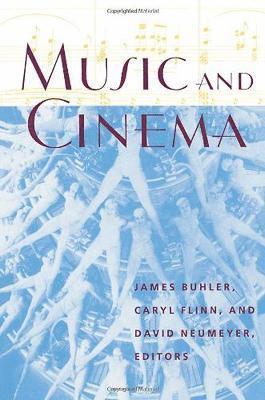
Music and Cinema brings together leading scholars from musicology, music theory, film studies, and cultural studies to explore the importance of music in the cinematic construction of ideologies. The 15 essays include "Songlines: Alternative Journeys in Contemporary European Cinema" by Wendy Everett; "Strategies of Remembrance: Music and History in the New German Cinema" by Caryl Flinn; "Designing Women: Art Deco, the Musical, and the Female Body" by Lucy Fischer; "Kansas City Dreamin': Robert Altman's Jazz History Lesson" by Krin Gabbard; "Disciplining Josephine Baker: Gender, Race, and the Limits of Disciplinarity" by Kathryn Kalinak; "Finding Release: Storm Clouds and The Man Who Knew Too Much" by Murray Pomerance, and many more.