David Oldroyd - Böcker
Visar alla böcker från författaren . Handla med fri frakt och snabb leverans.
4 produkter
4 produkter
875 kr
Skickas inom 10-15 vardagar
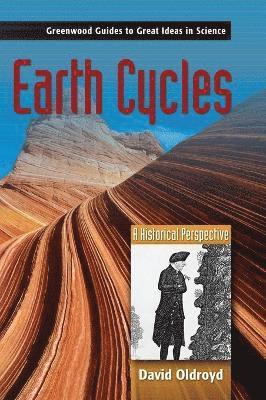
Humans have tried to figure out what formed the landscape of the earth for thousands of years. How were mountains created? Where did lakes and rivers come from? What lies under the surface of the earth? And one concept that greatly aided the scientific advance of the earth sciences was that of geological cycles. Once scientists understood that many geological actions are cyclic, the scientific knowledge of the earth exploded. These ideas are central to the nature of the earth sciences, and appreciating how scientists arrived at these ideas is essential for understanding the nature of the earth sciences.
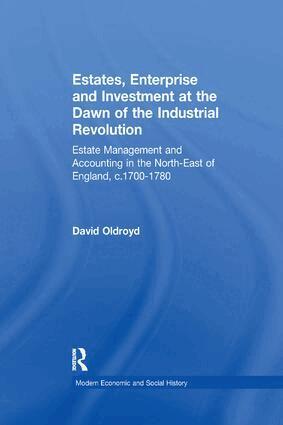
Estates, Enterprise and Investment at the Dawn of the Industrial Revolution
Estate Management and Accounting in the North-East of England, c.1700-1780
Inbunden, Engelska, 2007
2 246 kr
Skickas inom 10-15 vardagar
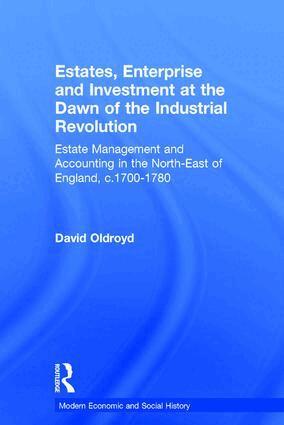
At the beginning of the eighteenth century the landed estate represented the largest and most clearly defined type of business organisation in existence in pre-industrial England. Given the need for capital, wayleave rights and a ready supply of coal, iron and other raw materials it is unsurprising that most historians tend to place Britain's formative industrial development on such estates where all these elements were available. Yet despite this consensus, relatively little attention has been paid to the management and accountancy practices of these estates, which have the potential to reveal much about the development of the industrial revolution. In this study the management practice on estates in the north-east of England (c.1700-1780) is examined through the lens of the accounts and supporting documentation. Accounts encompassed every aspect of estate operations from the housekeeper's groceries to the lead and coal mines, and thus provide direct evidence of the underlying management systems over a diverse range of activities. The information flows on estates serve as an excellent medium for testing hypotheses concerning the management of estates and the attitudes of their owners and stewards. Focusing on the surviving accounts of three leading gentry families, Bowes, Ridley and Cotesworth, who came from contrasting social backgrounds, two main issues are addressed. The first concerns the productivity of estates. Were estates managed efficiently as productive investments, and more specifically, to what extent can the landowners and their stewards legitimately be described as capitalists? The second, related, question asks in what ways did accounting aid managerial activity at this early stage of industrial development? These are the central questions this book addresses through examination of the nature and function of accounts within the organisation. By looking in detail at records from this crucial region during the period of transition to an industrial
1 459 kr
Tillfälligt slut
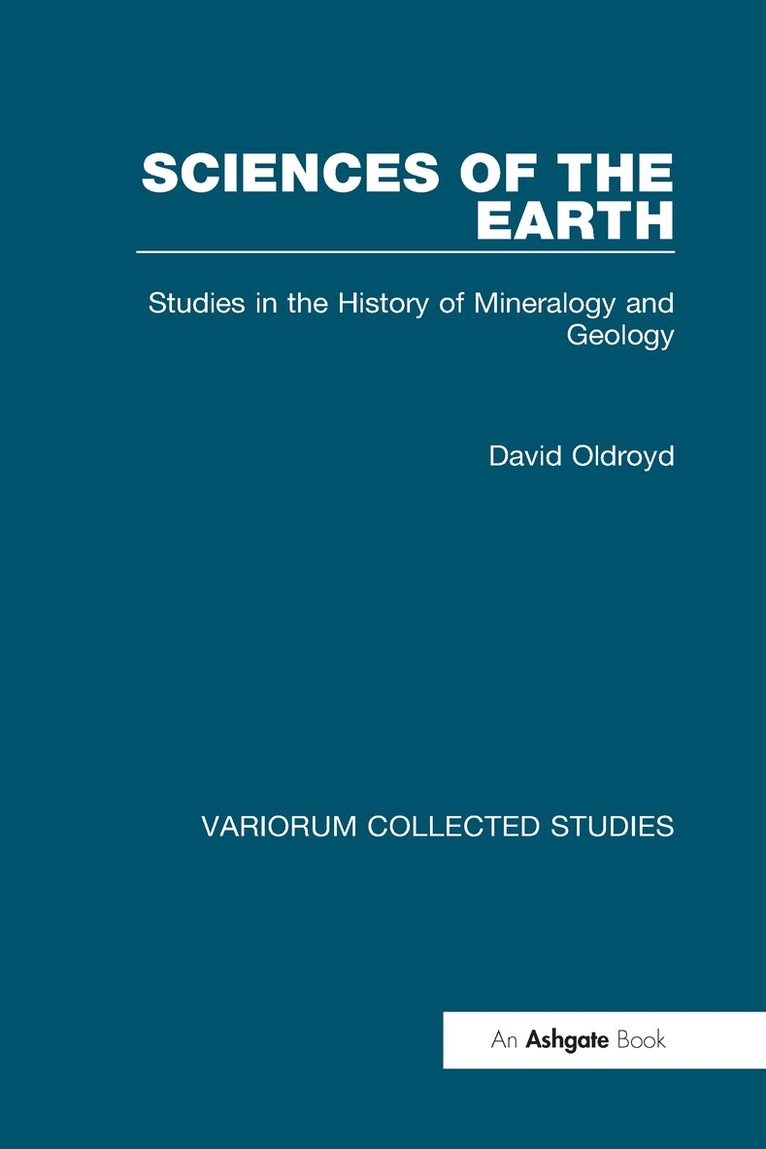
Sciences of the Earth first presents a connected series of papers on the history of mineralogy in relation to chemistry, from the Renaissance to the beginning of the 19th century. It considers some of the important philosophical ideas that underpinned early thinking about minerals and earths, and also the practicalities of mineral analysis. Other papers in the volume examine the influence of historicist thinking in the emergence of historical geology; the application of Michel Foucault's ideas to the mineral kingdom; the geological ideas of Robert Hooke, with reference to his views on scientific method; the 'problem' of Whig history of science, considering as example Archibald Geikie's work as historian of geology; and the application of 'grid/group' theory to early 19th-century English geology. To open, there is a paper dealing with a Roman theory of volcanic activity, little known to historians of science.
Estates, Enterprise and Investment at the Dawn of the Industrial Revolution
Estate Management and Accounting in the North-East of England, c.1700-1780
Häftad, Engelska, 2017
847 kr
Skickas inom 10-15 vardagar
At the beginning of the eighteenth century the landed estate represented the largest and most clearly defined type of business organisation in existence in pre-industrial England. Given the need for capital, wayleave rights and a ready supply of coal, iron and other raw materials it is unsurprising that most historians tend to place Britain's formative industrial development on such estates where all these elements were available. Yet despite this consensus, relatively little attention has been paid to the management and accountancy practices of these estates, which have the potential to reveal much about the development of the industrial revolution. In this study the management practice on estates in the north-east of England (c.1700-1780) is examined through the lens of the accounts and supporting documentation. Accounts encompassed every aspect of estate operations from the housekeeper's groceries to the lead and coal mines, and thus provide direct evidence of the underlying management systems over a diverse range of activities. The information flows on estates serve as an excellent medium for testing hypotheses concerning the management of estates and the attitudes of their owners and stewards. Focusing on the surviving accounts of three leading gentry families, Bowes, Ridley and Cotesworth, who came from contrasting social backgrounds, two main issues are addressed. The first concerns the productivity of estates. Were estates managed efficiently as productive investments, and more specifically, to what extent can the landowners and their stewards legitimately be described as capitalists? The second, related, question asks in what ways did accounting aid managerial activity at this early stage of industrial development? These are the central questions this book addresses through examination of the nature and function of accounts within the organisation. By looking in detail at records from this crucial region during the period of transition to an industrial