David Prochaska - Böcker
Visar alla böcker från författaren David Prochaska. Handla med fri frakt och snabb leverans.
3 produkter
3 produkter
803 kr
Skickas inom 11-20 vardagar
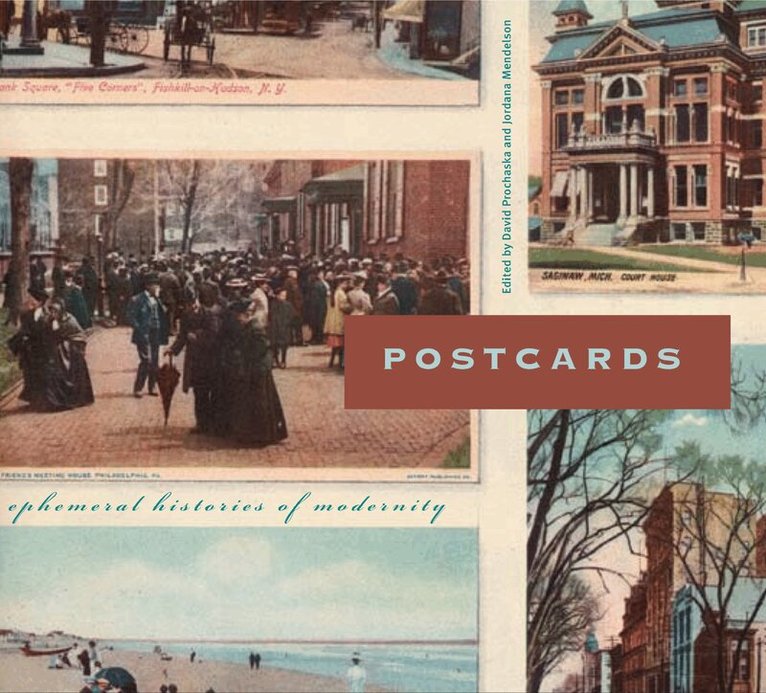
Products of modernity, postcards continue to provoke comment today as in the nineteenth century. With their unique status as interdisciplinary image-objects that cross lines of geography, economy, and gender, postcards epitomize the complex history of visual culture. These often sweet, nostalgic, inexpensive mementos of commercial culture have also been carriers, even instigators, of colonialist exoticism and political propaganda. They straddle the by now largely obliterated line between “high” and “low” art, between an earlier modernist art history and more recent work in visual culture. This fully illustrated volume is the first of its kind to bring together the latest interdisciplinary research on postcards as a significant area of scholarly inquiry.In addition to the editors, the contributors are Rebecca J. DeRoo, Ellen Handy, Elizabeth B. Heuer, Timothy Van Laar, Annelies Moors, Cary Nelson, John O’Brian, Naomi Schor, Kimberly A. Smith, Rachel Snow, Nancy Stieber, and Andrés Mario Zervigón.
373 kr
Skickas inom 7-10 vardagar
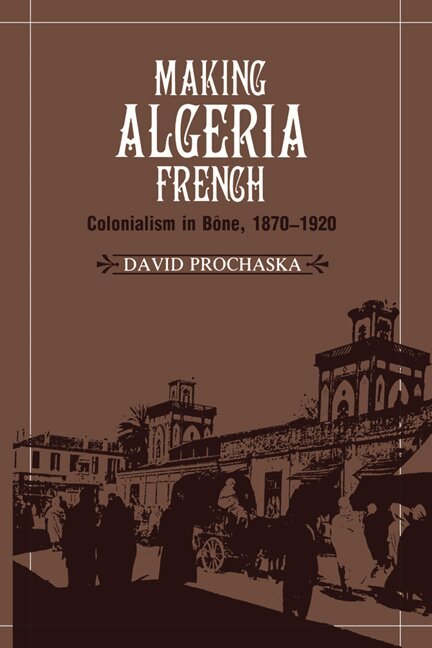
Making Algeria French relates the history of the pieds noirs and Algerians in colonial Bône, renamed Annaba in 1962. Located in eastern Algeria, this Mediterranean port city staked an early claim to world historical fame as the site of St. Augustine's Hippo. Long after the Romans, as well as the Arabs and Turks, the French tried their hand at settling Algeria. Not content with mere occupation, they constructed colonial cities along the Mediterranean littoral -Algiers, Oran, Bône - and populated them with twice as many European settlers - French, Spanish, Italians, and Maltese - as native Algerians. Using the history of Bône as a lens, David Prochaska looks at the nature of French colonialism in Algeria. His study is based on research in the former Bône municipal archives, generally barred to researchers since 1962. Prochaska concentrates on the formative decades of settler society and culture between 1870 and 1920. After an overview of Bône in 1830, and a survey of French rule from 1830 to 1870, he describes in turn the economic, social, political, and cultural history of Bône through the First World War. He argues that, in making Bône a European city in the nineteenth and early twentieth centuries, the settlers effectively blocked social evolution, attempted to contain history, and thereby precluded any genuine rapprochement with the Algerians in the twentieth century.
323 kr
Skickas inom 10-15 vardagar
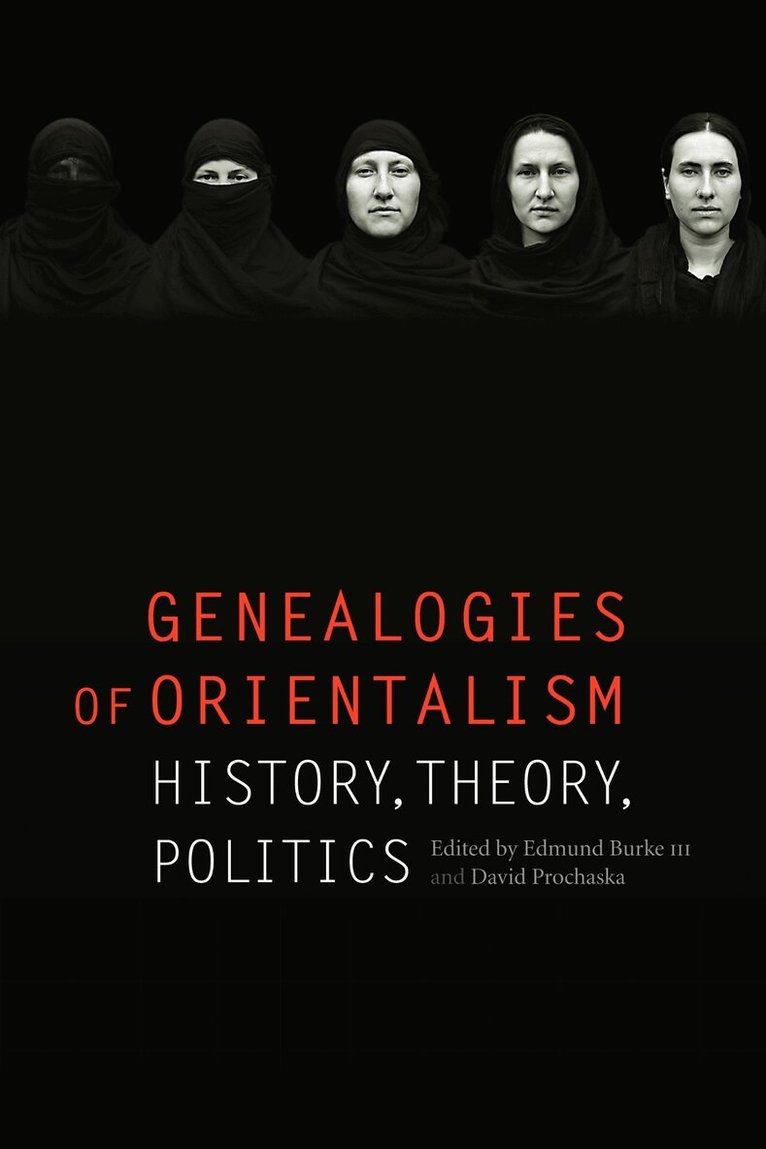
Orientalism, as explored by Edward Said in 1978, was a far more complex phenomenon than many suspected, being homogenous along the lines of neither culture nor time. Instead, it is deeply embedded in the collective reimaginings that were—and are—nationalism. The dozen essays in Genealogies of Orientalism argue that the critique of orientalism, far from being exhausted, must develop further. To do so, however, a historical turn must be made, and the ways in which modernity itself is theorized and historicized must be rethought. According to Joan W. Scott, author of The Politics of the Veil, the essays in this collection "develop a remarkable perspective on Edward Said's Orientalism, placing it in a long historical context of critiques of colonial representations, and deepening our understanding of the very meaning of modernity." Looking beyond the usual geography of colonial theory, this work broadens the focus from the Middle East and India to other Asian societies. By exploring orientalism in literary and artistic representations of colonial subjects, the authors illuminate the multifaceted ways in which modern cultures have drawn on orientalist images and indigenous self-representations. It is in this complex, cross-cultural collision that the overlapping of orientalism and nationalism can be found.