David Rieff - Böcker
Visar alla böcker från författaren David Rieff. Handla med fri frakt och snabb leverans.
22 produkter
22 produkter
166 kr
Tillfälligt slut
Timely and controversial, A Bed for the Night reveals how humanitarian organizations trying to bring relief in an ever more violent and dangerous world are often betrayed and misused, and have increasingly lost sight of their purpose. Drawing on first-hand reporting from hot war zones around the world - Bosnia, Rwanda, Congo, Kosovo, Sudan and, most recently, Afghanistan - David Rieff shows us what humanitarian aid workers do in the field and the growing gap between their noble ambitions and their actual capabilities for alleviating suffering. Tracing the origins of major humanitarian organizations such as the International Committee of the Red Cross, Doctors Without Borders, and CARE, he describes how many of them have moved from their founding principle of neutrality, which gave them access to victims, to encouraging the international community to take action to stop civil wars and ethnic cleansing. Rieff demonstrates how this advocacy has come at a high price. By overreaching, the humanitarian movement has allowed itself to be hijacked by the major powers, sometimes to become a fig leaf for actions that major powers take in their own national interests, as in Afghanistan, sometimes for their inaction, as in Bosnia and Rwanda. With the exception of cases of genocide, where the moral imperative to act overrides all other considerations, Rieff contends that if humanitarian organisations are to continue doing what they do best - alleviating suffering - they must remain independent.
129 kr
Skickas
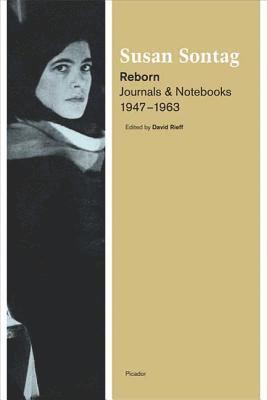
'In the journal I do not just express myself more openly than I could do to any person; I create myself'Intimate, vulnerable and unsparing, Reborn bears witness to the evolution of Susan Sontag.With entries dating from 1947-1963, the first instalment from Susan Sontag's diaries charts her ascension from early adolescence to her early thirties. Unabashed, though thoroughly self-reflective, Sontag's diaries reveal the inner workings of her mind, her insecurities and her passions. This compelling account of the evolution of America's greatest post-war intellectual allows us to behold the moral and political awakening of the artist and critic.'An exceptionally vivid, and often moving, account of a young woman's painful journey towards acceptance of her own nature' Sunday Telegraph'Moving on several levels . . . thrilling . . . fascinating . . . often reads like a brilliant postmodern bildungsroman' New York Magazine'One can feel Sontag's mind beginning to ripen and bloom, and the full force of the intellectual originality that would be her hallmark emerging' Guardian
270 kr
Kommande
An original perspective on the father of the atomic bomb, shedding new light on Oppenheimer’s personality and psychologyBoth to his contemporaries and to posterity J. Robert Oppenheimer (1904–1967) has gone down in history as the “father” of the atomic bomb. He was a brilliant theoretical physicist, who, as a teacher, was the central figure in the development of theoretical physics in the United States. During World War II Oppenheimer served as the scientific director of the Los Alamos Laboratory, where the bombs dropped on Hiroshima and Nagasaki were designed and tested. Oppenheimer’s meteoric rise continued after the war, when he became principal scientific advisor to the US Atomic Energy Commission, which in effect made him the US government’s chief scientist. But his fall was equally meteoric, when he became the best known victim of the Red Scare of the early Cold War period and was stripped of his security clearances and excluded from any policymaking role.The public’s fascination with Oppenheimer, both as the indispensable figure in the creation of the atomic age and as the liberal martyr to the political excesses of that age, remains extremely strong, and is reflected both in the biographies of him that have appeared and in artistic renderings of his life including an opera and, most recently, the acclaimed 2023 biopic Oppenheimer. In this biography, David Rieff offers a fresh perspective, focusing on Oppenheimer’s personality and psychology, above all his closed down nature as a person that so puzzled and fascinated his contemporaries. To do this, Rieff pays particular attention to the traumatic character of Oppenheimer’s childhood, and to his extremely ambivalent relation to his Jewishness, an ambivalence that partly explains Oppenheimer’s affinity for the universalist promise of science.
210 kr
Skickas
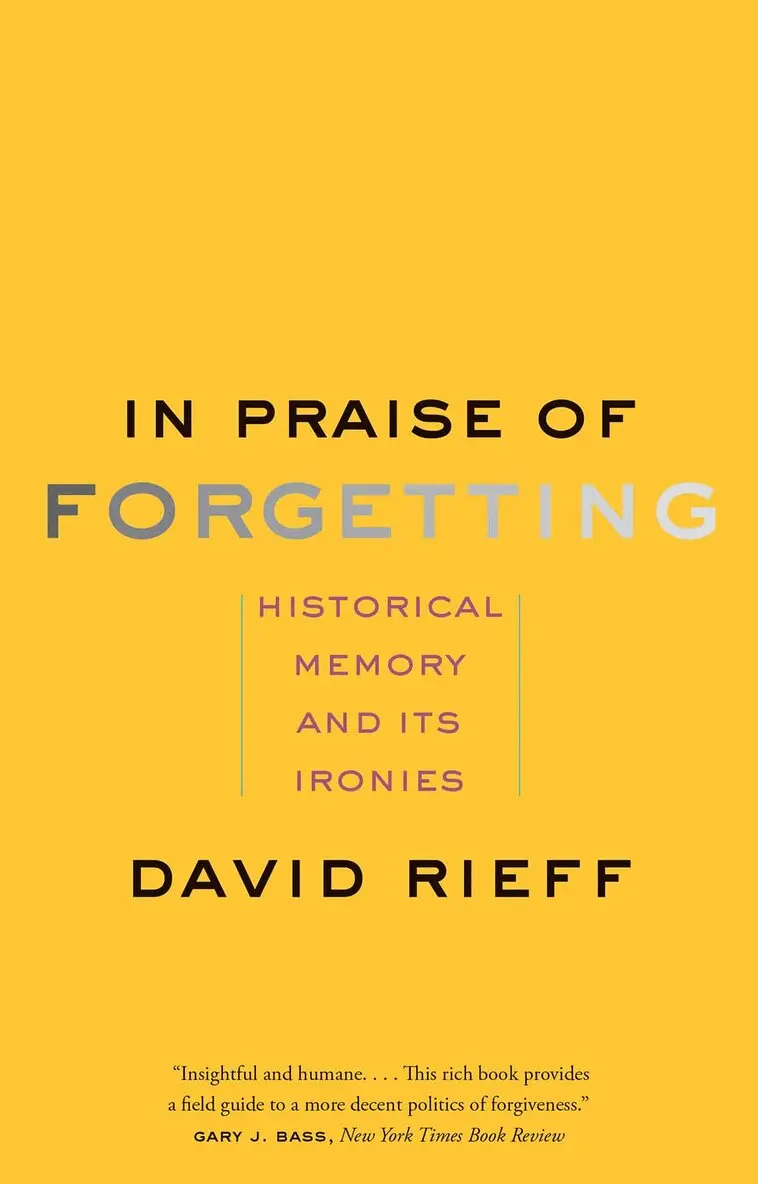
A leading contrarian thinker explores the ethical paradox at the heart of history's woundsThe conventional wisdom about historical memory is summed up in George Santayana’s celebrated phrase, “Those who cannot remember the past are condemned to repeat it.” Today, the consensus that it is moral to remember, immoral to forget, is nearly absolute. And yet is this right?David Rieff, an independent writer who has reported on bloody conflicts in Africa, the Balkans, and Central Asia, insists that things are not so simple. He poses hard questions about whether remembrance ever truly has, or indeed ever could, “inoculate” the present against repeating the crimes of the past. He argues that rubbing raw historical wounds—whether self-inflicted or imposed by outside forces—neither remedies injustice nor confers reconciliation. If he is right, then historical memory is not a moral imperative but rather a moral option—sometimes called for, sometimes not. Collective remembrance can be toxic. Sometimes, Rieff concludes, it may be more moral to forget. Ranging widely across some of the defining conflicts of modern times—the Irish Troubles and the Easter Uprising of 1916, the white settlement of Australia, the American Civil War, the Balkan wars, the Holocaust, and 9/11—Rieff presents a pellucid examination of the uses and abuses of historical memory. His contentious, brilliant, and elegant essay is an indispensable work of moral philosophy.
310 kr
Skickas inom 3-6 vardagar
227 kr
Skickas inom 7-10 vardagar
Originally published in 1999, this A-to-Z guidebook of wartime atrocities has received worldwide acclaim and has been translated into eleven languages. Now substantially updated, with sixteen new entries, this concise guide to the broken rules of war remains unique and essential. More than 140 distinguished experts from the media, military, law, and human rights groups examine recent conflicts in light of international humanitarian law, including: Afghanistan (Patricia Gossman), the Congo (Gerard Prunier), terrorism (Anthony Dworkin), Guantánamo (Mark Huband), Darfur (John Prendergast and Colin Thomas-Jensen), occupation (George Packer), independent contractors (Peter Singer), war and insurgency (John Burns), and detention and interrogation (Dana Priest). Christiane Amanpour writes on Bosnian paramilitaries, Jeremy Bowen on Chechnya, and Gwynne Roberts on Saddam Hussein. Through case studies, definitions of key terms, and explanations of what is legal and what is not—illuminated by 150 stunning duotone photographs—Crimes of War reveals what every citizen should know about war and the law.
258 kr
Skickas inom 3-6 vardagar
239 kr
Skickas inom 3-6 vardagar
258 kr
Skickas inom 3-6 vardagar
Writing from the front lines of the hot wars of the post-Cold War world -- the Balkans, Africa, the Middle East, and most recently Afghanistan and Iraq for The New York Times Magazine -- David Rieff witnessed firsthand most of the armed interventions waged by the West or the United Nations in the name of human rights and democratization. His report is anything but reassuring. In this timely collection of his most illuminating articles, Rieff, one of our leading experts on the subject, reassesses some of his own judgments about the use of military might to solve the world's most pressing humanitarian problems and curb the world's cruelest human rights abusers, presenting what, taken as a whole, is a thoughtful and impassioned argument against armed intervention in all but the most extreme cases. At the Point of a Gun raises critical questions we cannot ignore in this era of gunboat democracy. When, if ever, is it appropriate to intervene militarily in the domestic affairs of other nations?Are human rights and humanitarian concerns legitimate reasons for intervening, or is the assault on sovereignty -- sovereignty that is as much an article of faith at the UN as it is in Washington -- a flag of convenience for the recolonization of part of the world? What role should the United Nations play in alleviating humanitarian crises? And, above all, can democracy be imposed through the barrel of an M16? Collected here for the first time, Rieff's essays draw a searing portrait of what happens when the grandiose schemes of policymakers and the grandiose ethical ambitions of human rights activists go horribly wrong in the field. Again and again, they ask the question: Do these moral ambitions of ours to protect people from massacre and want match either our means or our wisdom? Rieff's articles appear as they were written. Some, however, are accompanied by brief reconsiderations in which the author describes how and why his thinking has changed both as he has reflected on what it means, as in Iraq, to impose democracy by force, and as he has witnessed, firsthand, what that redemptive project actually looks like in practice. This is not an optimistic report.To the contrary, it is the chastened conclusion of a writer who was once one of the leading advocates of such interventions. But the questions Rieff raises are of the essence as the United States grapples with the harsh consequences of what it has wrought on the ground in Afghanistan and Iraq.
224 kr
Skickas inom 3-6 vardagar
418 kr
Skickas inom 3-6 vardagar
205 kr
Skickas
233 kr
Skickas inom 3-6 vardagar
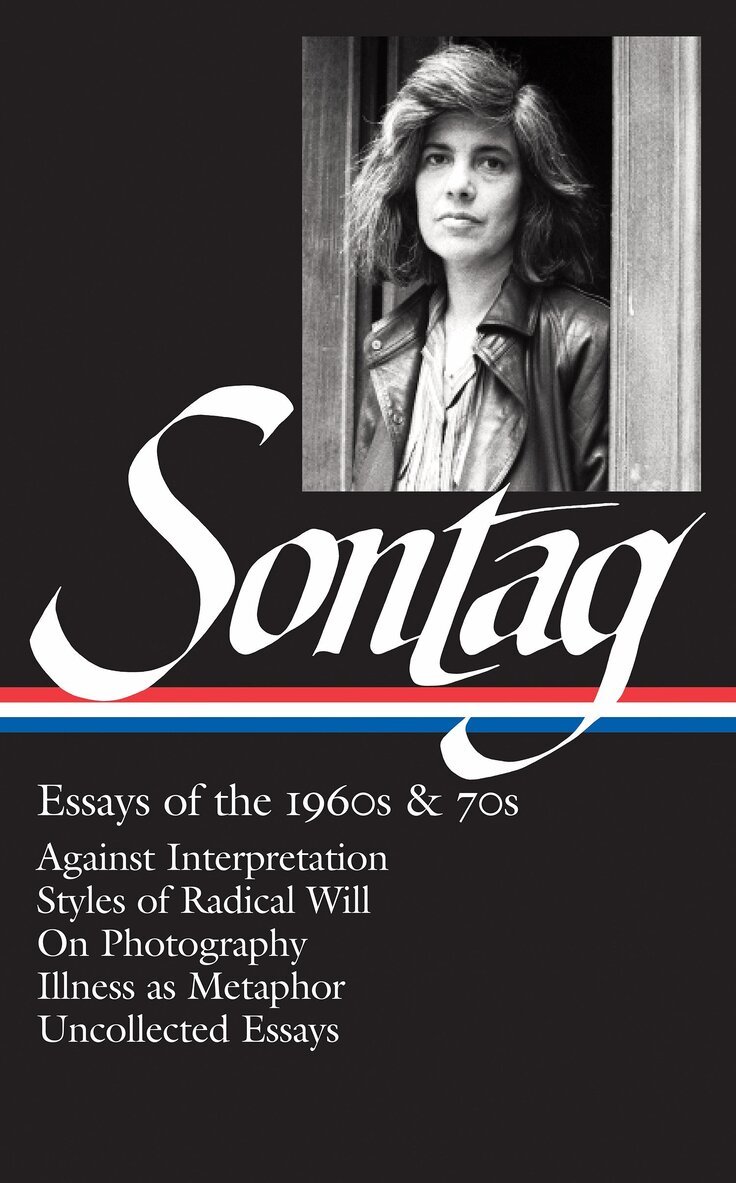
Susan Sontag: Essays of the 1960s & 70s (LOA #246)
Against Interpretation / Styles of Radical Will / On Photography / Illness as Metaphor / Uncollected Essays
Inbunden, Engelska, 2013
509 kr
Skickas inom 3-6 vardagar
With the publication of her first book of criticism, Against Interpretation, in 1966, Susan Sontag placed herself at the forefront of an era of cultural and political transformation. “What is important now,” she wrote, “is to recover our senses . . . . In place of a hermeneutics we need an erotics of art.” She would remain a catalyzing presence, whether writing about camp sensibility, the films of Jean-Luc Godard and Alain Resnais, her experiences as a traveler to Hanoi at the height of the Vietnam War, the aesthetics of science-fiction and pornography, or a range of modern thinkers from Simone Weil to E. M. Cioran. She opened dazzling new perspectives on any subject she addressed, whether the nature of photography or cultural attitudes toward illness. This volume, edited by Sontag’s son David Rieff, presents the full texts of four essential books: Against Interpretation, Styles of Radical Will (1969), On Photography (1977), and Illness as Metaphor (1978). Also here as a special feature are six previously uncollected essays including studies of William S. Burroughs and the painter Francis Bacon and a series of reflections on beauty, aging, and the emerging feminist movement.LIBRARY OF AMERICA is an independent nonprofit cultural organization founded in 1979 to preserve our nation’s literary heritage by publishing, and keeping permanently in print, America’s best and most significant writing. The Library of America series includes more than 300 volumes to date, authoritative editions that average 1,000 pages in length, feature cloth covers, sewn bindings, and ribbon markers, and are printed on premium acid-free paper that will last for centuries.
906 kr
Kommande
193 kr
Skickas
100 kr
Skickas
In spring 2004, Susan Sontag was diagnosed with the incurable blood cancer. She had a huge appetite for experience, and a wild, extravagant desire to live. Rieff writes movingly about being by her side during that last year and at her death, and about his own contradictory emotions: his guilt both for not consoling her enough, and for somehow colluding with her in her belief that she could beat the disease. Drawing on Sontag's journals and letters, which Rieff read after her death, and on the writings about the deaths of other great thinkers, Swimming in a Sea of Death provides a vivid portrait of Sontag in the last year of her life and a haunting meditation on mortality.
229 kr
Skickas inom 7-10 vardagar
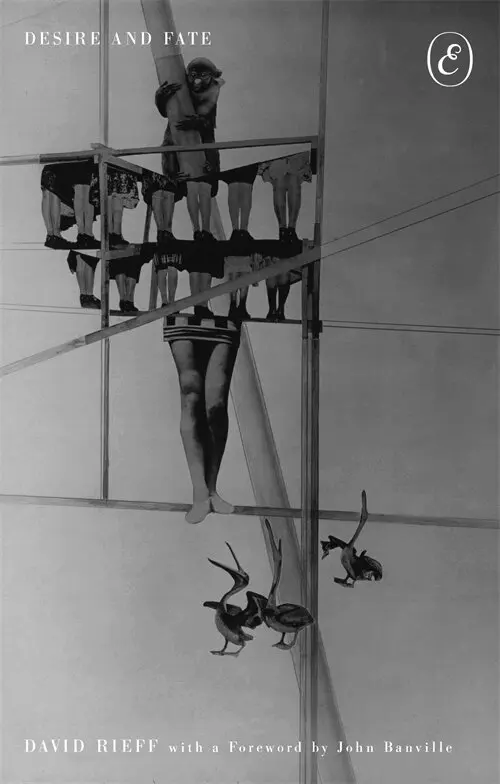
“Ours is an ill-mannered society that wears those bad manners as a badge not just of its moral rectitude but of its millenarian ethical ambitions. At the same time, in no society in recent memory have people been so easily affronted.”At a time when political writing and cultural criticism have come to be dominated by an insipid and unthinking moralism, David Rieff’s essays offer a bracing antidote. As well as being one of the English-speaking world’s most perceptive commentators on global politics, Rieff has in recent years been one of its most courageous and outspoken critics of the pathologies of identity politics—in particular, its grossly simplistic understanding of what it means to belong to a culture or a community, its fundamental failure to grasp the real value of the creative arts, and its increasing disregard for due process and freedom of expression.The essays that appear in Desire and Fate serve both as a crucial record of and a fierce protest against these developments. Covering topics as diverse as censorship in contemporary publishing, the cultural ubiquity of the notion of trauma, and the future of democracy on a global level, they are all characterised by an incisive intelligence and a refreshing lack of wishful thinking. Together they confirm Rieff’s status as an indispensable writer and thinker.
928 kr
Skickas inom 7-10 vardagar
272 kr
Skickas inom 3-6 vardagar
191 kr
Skickas inom 3-6 vardagar
208 kr
Skickas inom 3-6 vardagar