David Rundle - Böcker
Visar alla böcker från författaren David Rundle. Handla med fri frakt och snabb leverans.
4 produkter
4 produkter
Del 30 - Medium Ævum Monographs (New Series)
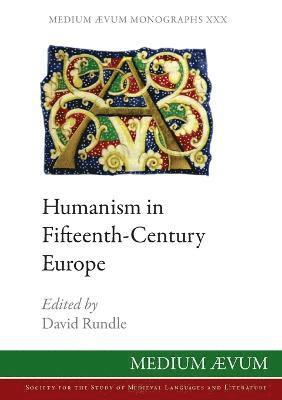
Humanism in Fifteenth-Century Europe
Häftad, Engelska, 2016
334 kr
Skickas inom 5-8 vardagar
494 kr
Skickas inom 5-8 vardagar
Del 17 - Cambridge Studies in Palaeography and Codicology
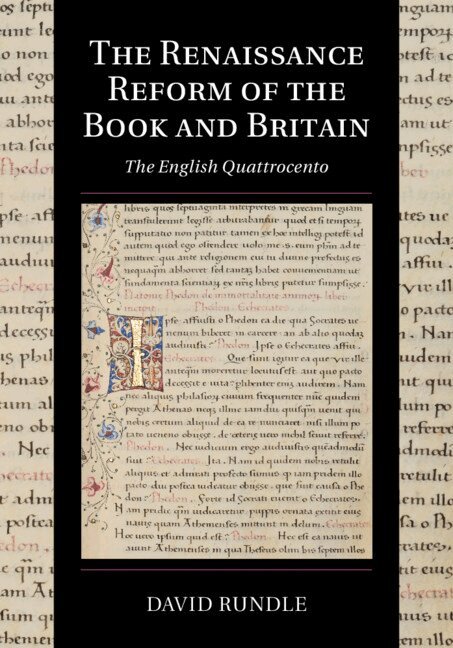
The Renaissance Reform of the Book and Britain
The English Quattrocento
Inbunden, Engelska, 2019
1 485 kr
Skickas inom 7-10 vardagar
What has fifteenth-century England to do with the Renaissance? By challenging accepted notions of 'medieval' and 'early modern' David Rundle proposes a new understanding of English engagement with the Renaissance. He does so by focussing on one central element of the humanist agenda - the reform of the script and of the book more generally - to demonstrate a tradition of engagement from the 1430s into the early sixteenth century. Introducing a cast-list of scribes and collectors who are not only English and Italian but also Scottish, Dutch and German, this study sheds light on the cosmopolitanism central to the success of the humanist agenda. Questioning accepted narratives of the slow spread of the Renaissance from Italy to other parts of Europe, Rundle suggests new possibilities for the fields of manuscript studies and the study of Renaissance humanism.
Del 17 - Cambridge Studies in Palaeography and Codicology
The Renaissance Reform of the Book and Britain
The English Quattrocento
Häftad, Engelska, 2021
523 kr
Skickas inom 7-10 vardagar
What has fifteenth-century England to do with the Renaissance? By challenging accepted notions of 'medieval' and 'early modern' David Rundle proposes a new understanding of English engagement with the Renaissance. He does so by focussing on one central element of the humanist agenda - the reform of the script and of the book more generally - to demonstrate a tradition of engagement from the 1430s into the early sixteenth century. Introducing a cast-list of scribes and collectors who are not only English and Italian but also Scottish, Dutch and German, this study sheds light on the cosmopolitanism central to the success of the humanist agenda. Questioning accepted narratives of the slow spread of the Renaissance from Italy to other parts of Europe, Rundle suggests new possibilities for the fields of manuscript studies and the study of Renaissance humanism.