David S. Danaher – författare
Visar alla böcker från författaren David S. Danaher. Handla med fri frakt och snabb leverans.
3 produkter
3 produkter
827 kr
Skickas inom 7-10 vardagar
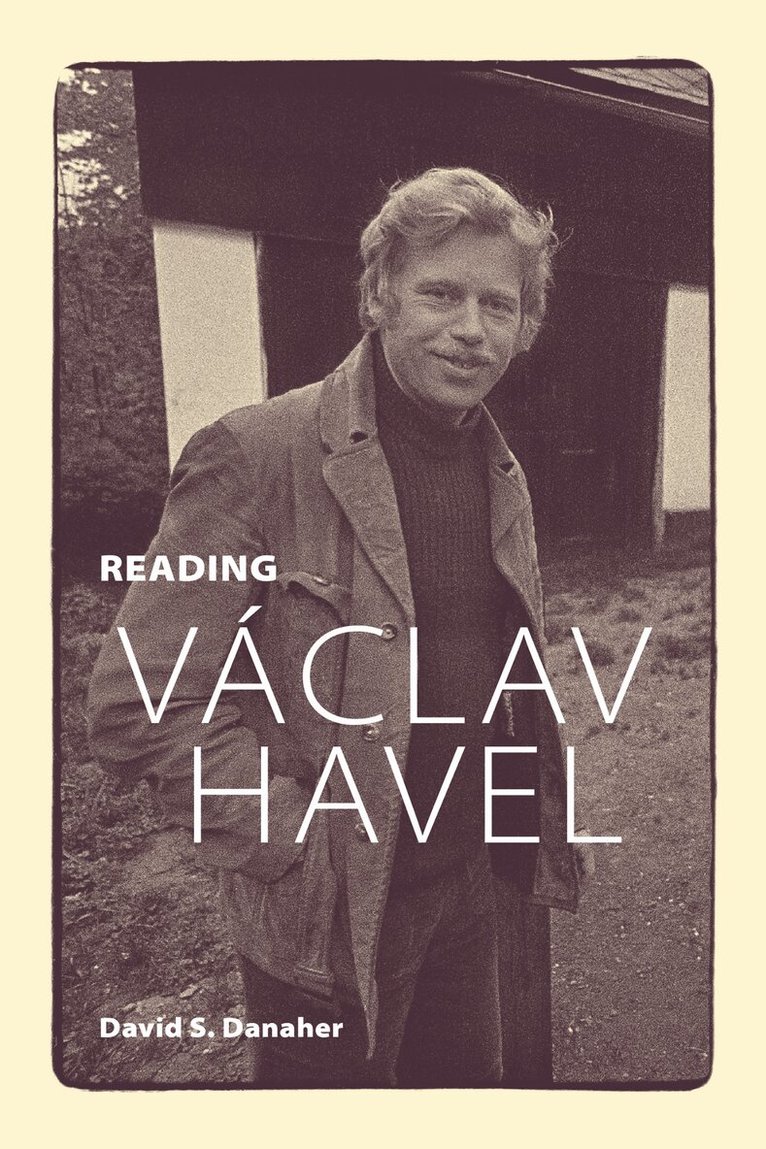
As a playwright, a dissident, and a politician, VÁclav Havel was one of the most important intellectual figures of the late twentieth century. Working in an extraordinary range of genres – poetry, plays, public letters, philosophical essays, and political speeches – he left behind a range of texts so diverse that scholars have had difficulty grappling with his oeuvre as a whole.In Reading VÁclav Havel, David S. Danaher approaches Havel’s remarkable body of work holistically, focusing on the language, images, and ideas which appear and reappear in the many genres in which Havel wrote. Carefully reading the original Czech texts alongside their English versions, he exposes what in Havel’s thought has been lost in translation. A passionate argument for Havel’s continuing relevance, Reading VÁclav Havel is the first book to capture the fundamental unity of his vast literary legacy.
Lessons From the Revolutions of 1989 in East Central Europe
So You Say You Want a Revolution?
Inbunden, Engelska, 2026
1 533 kr
Kommande
This book explores the lessons that can be gleaned through a look from the East Central European experience of dissent for dissent and resistance as general modern phenomena.Lessons from the Revolutions of 1989 in East Central Europe has a two-fold purpose: (1) to teach about, in an accessible way, the East Central European culture of dissent, and (2) to explore connections between that time and place and our own post-1989 globalized world where dissent and resistance are more prominent and necessary than ever. Scholars of the pre-1989 East Central European culture of dissent do not, as a matter of course, look for lessons in their subject, and the scarcity of scholarly literature that explores this angle only confirms our point. At the same time, this avoidance, perhaps for good methodological reasons, does seem rather odd. Why not try to draw lessons—for us in the here and now—from studying the cultural-historical space of pre-1989 East Central Europe? This question seems especially important given that the intellectual dissidents did not think that what was happening in their time and place was isolated from the modern world as a whole: they thought that there were lessons to be drawn for the "West" from the experience of the "East."
Lessons from the Revolutions of 1989 in East Central Europe: So You Say You Want a Revolution?
Häftad, Engelska, 2028
654 kr
Kommande