David S. Whitley - Böcker
Visar alla böcker från författaren David S. Whitley. Handla med fri frakt och snabb leverans.
9 produkter
9 produkter
1 358 kr
Skickas inom 10-15 vardagar
This Reader in Archaeological Theory presents sixteen articles of key theoretical significance, in a format which makes this notoriously complex area easier for students to understand.This volume:* provides an intellectual history of different approaches to archaeology which contextualizes the complex traditions of cognitive archaeology and postprocessualism on which it focuses* organizes theories of archaeology, the meanings of things, the prehistoric mind and cognition, gender, ideology and social theory and archaeology's relationship to today's society and politics* includes lucid section introductions to each section which provide context, explain why the papers are so significant and summarize their key points* emphasizes research from the 'New World', making archaeological theory especially relevant and accessible to students in North America.
481 kr
Skickas inom 10-15 vardagar
This Reader in Archaeological Theory presents sixteen articles of key theoretical significance, in a format which makes this notoriously complex area easier for students to understand.This volume:* provides an intellectual history of different approaches to archaeology which contextualizes the complex traditions of cognitive archaeology and postprocessualism on which it focuses* organizes theories of archaeology, the meanings of things, the prehistoric mind and cognition, gender, ideology and social theory and archaeology's relationship to today's society and politics* includes lucid section introductions to each section which provide context, explain why the papers are so significant and summarize their key points* emphasizes research from the 'New World', making archaeological theory especially relevant and accessible to students in North America.
2 166 kr
Skickas inom 10-15 vardagar
This Reader in Gender Archaeology presents nineteen current, controversial and highly influential articles which confront and illuminate issues of gender in prehistory. The question of gender difference and whether it is natural or culturally constructed is a compelling one. The articles here, which draw on evidence from a wide range of geographic areas, demonstrate how all archaeological investigation can benefit from an awareness of issues of gender. They also show how the long-term nature of archaeological research can inform the gender debate across the disciplines. The volume:* organizes this complex area into seven sections on key themes in gender archaeology: archaeological method and theory, human origins, division of labour, the social construction of gender, iconography and ideology, power and social hierarchies and new forms of archaeological narrative* includes section introductions which outline the history of research on each topic and present the key points of each article* presents a balance of material which rewrites women into prehistory, and articles which show how the concept of gender informs our understanding and interpretation of the past.
592 kr
Skickas inom 10-15 vardagar
This Reader in Gender Archaeology presents nineteen current, controversial and highly influential articles which confront and illuminate issues of gender in prehistory. The question of gender difference and whether it is natural or culturally constructed is a compelling one. The articles here, which draw on evidence from a wide range of geographic areas, demonstrate how all archaeological investigation can benefit from an awareness of issues of gender. They also show how the long-term nature of archaeological research can inform the gender debate across the disciplines. The volume:* organizes this complex area into seven sections on key themes in gender archaeology: archaeological method and theory, human origins, division of labour, the social construction of gender, iconography and ideology, power and social hierarchies and new forms of archaeological narrative* includes section introductions which outline the history of research on each topic and present the key points of each article* presents a balance of material which rewrites women into prehistory, and articles which show how the concept of gender informs our understanding and interpretation of the past.
Cognitive Archaeology
Mind, Ethnography, and the Past in South Africa and Beyond
Häftad, Engelska, 2021
648 kr
Skickas inom 10-15 vardagar
Cognitive Archaeology: Mind, Ethnography, and the Past in South Africa and Beyond aims to interpret the social and cultural lives of the past, in part by using ethnography to build informed models of past cultural and social systems and partly by using natural models to understand symbolism and belief.How does an archaeologist interpret the past? Which theories are relevant, what kinds of data must be acquired, and how can interpretations be derived? One interpretive approach, developed in southern Africa in the 1980s, has been particularly successful even if still not widely known globally. With an expressed commitment to scientific method, it has resulted in deeper, well-tested understandings of belief, ritual, settlement patterns and social systems. This volume brings together a series of papers that demonstrate and illustrate this approach to archaeological interpretation, including contributions from North America, Western Europe and sub-Saharan Africa, in the process highlighting innovative methodological and substantive research that improves our understanding of the human past.Professional archaeological researchers would be the primary audience of this book. Because of its theoretical and methodological emphasis, it will also be relevant to method and theory courses and postgraduate students.
Cognitive Archaeology
Mind, Ethnography, and the Past in South Africa and Beyond
Inbunden, Engelska, 2019
2 166 kr
Skickas inom 10-15 vardagar
Cognitive Archaeology: Mind, Ethnography, and the Past in South Africa and Beyond aims to interpret the social and cultural lives of the past, in part by using ethnography to build informed models of past cultural and social systems and partly by using natural models to understand symbolism and belief.How does an archaeologist interpret the past? Which theories are relevant, what kinds of data must be acquired, and how can interpretations be derived? One interpretive approach, developed in southern Africa in the 1980s, has been particularly successful even if still not widely known globally. With an expressed commitment to scientific method, it has resulted in deeper, well-tested understandings of belief, ritual, settlement patterns and social systems. This volume brings together a series of papers that demonstrate and illustrate this approach to archaeological interpretation, including contributions from North America, Western Europe and sub-Saharan Africa, in the process highlighting innovative methodological and substantive research that improves our understanding of the human past.Professional archaeological researchers would be the primary audience of this book. Because of its theoretical and methodological emphasis, it will also be relevant to method and theory courses and postgraduate students.
420 kr
Skickas inom 3-6 vardagar
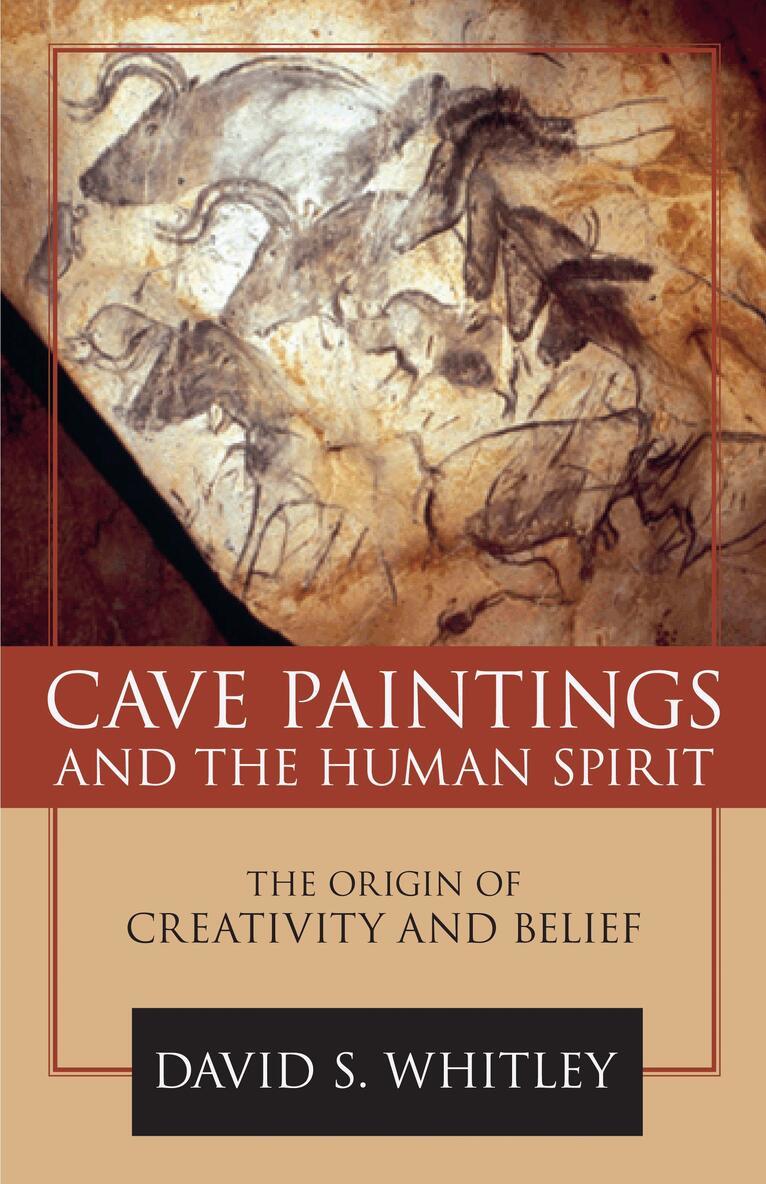
The magnificent prehistoric art discovered in caves throughout France and Spain raises many questions about early human culture. What do these superbly rendered paintings of horses, bison, and enigmatic human figures and symbols mean? How can we explain the sudden flourishing of artistic creativity at such a high level? And in what ways does this artwork reflect the underlying belief system, worldview, and life of the people who created it?In this fascinating discussion of ancient art and religion, Dr. David S. Whitley—one of the world's leading experts on cave paintings—guides the reader in an exploration of these intriguing questions, while sharing his firsthand experiences in visiting these exquisite, breathtaking sites.To grasp what drove these ancient artists to create these masterpieces, and to understand the origin of myth and religion, as Whitley explains, is to appreciate what makes us human. Moreover, he broadens our understanding of the genesis of creativity and myth by proposing a radically new and original theory that weds two seemingly warring camps from separate disciplines.On the one hand, archaeologists specializing in prehistoric cave paintings have argued that the visionary rituals of shamans led to the creation of this expressive art. They consider shamanism to be the earliest known form of religion. By contrast, evolutionary psychologists view the emergence of religious beliefs as a normal expression of the human mind. In their eyes, the wild and ecstatic trances of shamans were a form of aberrant behavior. Far from being typical representatives of ancient religion, shamans were exceptions to the normal rule of early religion.Whitley resolves the controversy by interweaving the archaeological evidence with the latest findings of cutting-edge neuroscience. He thereby rewrites our understanding of shamanism and its connection with artistic creativity, myth, and religion.Combining a colorful narrative describing Whitley's personal explorations at key archaeological sites with robust scientific research, Cave Paintings and the Human Spirit makes for engrossing reading. It provides a profound and poignant perspective on what it means to be human.
2 238 kr
Skickas inom 10-15 vardagar
Human actions are often deeply intertwined with religion and can be understood in a strictly religious context. Yet, many volumes and articles pertaining to discussions of religion in the archaeological past have focused primarily on the sociopolitical implications of such remains. The authors in this volume argue that while these interpretations certainly have a meaningful place in understanding the human past, they provide only part of the picture. Because strictly religious contexts have often been ignored, this has resulted in an incomplete assessment of religious behavior in the past. This volume considers exciting new directions for considering an archaeology of religion, offering examples from theory, tangible archaeological remains, and ethnography.
683 kr
Skickas inom 10-15 vardagar
Human actions are often deeply intertwined with religion and can be understood in a strictly religious context. Yet, many volumes and articles pertaining to discussions of religion in the archaeological past have focused primarily on the sociopolitical implications of such remains. The authors in this volume argue that while these interpretations certainly have a meaningful place in understanding the human past, they provide only part of the picture. Because strictly religious contexts have often been ignored, this has resulted in an incomplete assessment of religious behavior in the past. This volume considers exciting new directions for considering an archaeology of religion, offering examples from theory, tangible archaeological remains, and ethnography.