David Singerman - Böcker
Visar alla böcker från författaren David Singerman. Handla med fri frakt och snabb leverans.
2 produkter
2 produkter
398 kr
Skickas
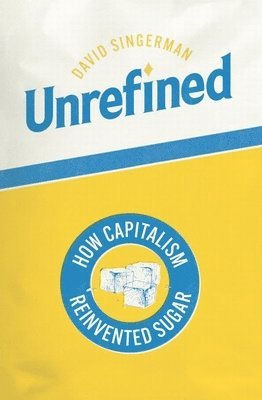
A surprising look at how modern capitalism changed sugar from a natural food to a scientific commodity.Sugar is everywhere in the western diet, blamed for epidemics of obesity, diabetes, and other modern maladies. Our addiction to sweetness has a long and unsavory history. Over the past five hundred years, sugar has shaped empires, made fortunes for a few, and brought misery for millions of workers both enslaved and free. How did sugar become a defining modern food and an essential global commodity?In Unrefined, David Singerman recasts our thinking about this crucial substance in the history of capitalism. Before the nineteenth century, sugar’s value depended on natural qualities: its color, its taste, where it was grown, and who had made it. But beginning around 1850, a combination of plantation owners, industrialists, and scientists set out to redefine sugar itself. Deploying the tools and rhetoric of science, they transformed not just how sugar was produced or traded but even how people thought about it. By changing sugar into a pure chemical object, these forces stripped power from workers and enabled—and obscured—new kinds of fraud, corruption, and monopoly.Taking us to unexplored spaces in the world of sugar, from laboratories and docks to refineries and the halls of Congress, Singerman illuminates dark intersections of the histories of corruption, science, and capitalism.
773 kr
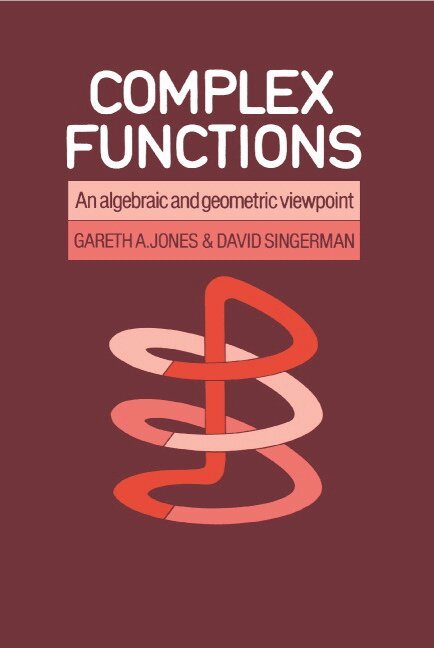
Elliptic functions and Riemann surfaces played an important role in nineteenth-century mathematics. At the present time there is a great revival of interest in these topics not only for their own sake but also because of their applications to so many areas of mathematical research from group theory and number theory to topology and differential equations. In this book the authors give elementary accounts of many aspects of classical complex function theory including Möbius transformations, elliptic functions, Riemann surfaces, Fuchsian groups and modular functions. A distinctive feature of their presentation is the way in which they have incorporated into the text many interesting topics from other branches of mathematics. This book is based on lectures given to advanced undergraduates and is well-suited as a textbook for a second course in complex function theory. Professionals will also find it valuable as a straightforward introduction to a subject which is finding widespread application throughout mathematics.