
David W. Fagerberg - Böcker
Visar alla böcker från författaren David W. Fagerberg. Handla med fri frakt och snabb leverans.
10 produkter
10 produkter
1 232 kr
Skickas inom 10-15 vardagar
English writer Gilbert Keith Chesterton was widely known not only for his newspaper columns, novels, poetry, plays, and detective stories, but also for his theological and Catholic apologetical works. This celebration of Chesterton's passion for his faith builds on his own words to reveal the Catholic paradox he was so fond of exploring and which he articulated with zeal, wit, and total lack of animosity. David W. Fagerberg draws on Chesterton's theological writings—avoiding secondary sources so that the reader can encounter his thought as directly as possible—to show how Chesterton championed a Catholicism of great robustness accessible by a thousand doors.Through these doors, Fagerberg shows that Chesterton believed the Church to be a living institution that confounds its critics. He organizes Chesterton's material around seven themes, fashioning a mosaic from the illustrations and arguments found in these apolegetical works. We see how Chesterton responded to accusations that the Church avoids the world with his defense of ordinary life and to the allegation of blind obedience with a defense of doctrinal complexity. We explore his interest in paganism and ritual and learn his response to the objections of liberal Protestantism.Chesterton is shown to be an apologist for a "catholic" Catholicism and he saw in every heresy an effort to narrow the Church. Chesterton said about the Church "that it is not only larger than me, but larger then anything in the world; that it is indeed larger than the world."Fagerberg suggests that the ultimate apology Chesterton made for Catholicism is that it is capacious enough to accommodate the paradoxical combinations which reveal reality—that the Church is a trysting-place for all the truths in the world.
345 kr
Skickas inom 10-15 vardagar
English writer Gilbert Keith Chesterton was widely known not only for his newspaper columns, novels, poetry, plays, and detective stories, but also for his theological and Catholic apologetical works. This celebration of Chesterton's passion for his faith builds on his own words to reveal the Catholic paradox he was so fond of exploring and which he articulated with zeal, wit, and total lack of animosity. David W. Fagerberg draws on Chesterton's theological writings—avoiding secondary sources so that the reader can encounter his thought as directly as possible—to show how Chesterton championed a Catholicism of great robustness accessible by a thousand doors.Through these doors, Fagerberg shows that Chesterton believed the Church to be a living institution that confounds its critics. He organizes Chesterton's material around seven themes, fashioning a mosaic from the illustrations and arguments found in these apolegetical works. We see how Chesterton responded to accusations that the Church avoids the world with his defense of ordinary life and to the allegation of blind obedience with a defense of doctrinal complexity. We explore his interest in paganism and ritual and learn his response to the objections of liberal Protestantism.Chesterton is shown to be an apologist for a "catholic" Catholicism and he saw in every heresy an effort to narrow the Church. Chesterton said about the Church "that it is not only larger than me, but larger then anything in the world; that it is indeed larger than the world."Fagerberg suggests that the ultimate apology Chesterton made for Catholicism is that it is capacious enough to accommodate the paradoxical combinations which reveal reality—that the Church is a trysting-place for all the truths in the world.
313 kr
Skickas inom 10-15 vardagar
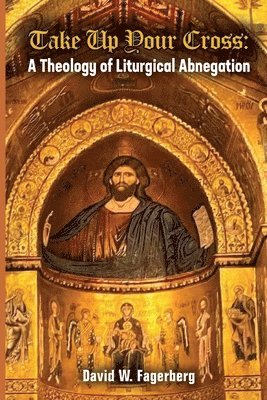
Drawing on the Eastern Orthodox tradition of asceticism and integrating it with recent Western thought on liturgy, David W. Fagerberg examines the interaction between the two and presents a powerful argument that asceticism is necessary for understanding liturgy as the foundation of theology. Asceticism may have been perfected in the sands of the desert, but it is demanded of every theologian and, indeed, every Christian. It grants the capacity for pondering liturgy and sharing the life of Christ. Fagerberg brings to light asceticism's essential importance in liturgical theology.Fagerberg's earlier work, Theologia Prima, understood liturgy as the foundation of theology. To that framework, he now adds the relevance of asceticism. Asceticism was understood to overcome the passions by cooperating with grace. It detailed how to train the life of grace and produce what the ancient church called a theologian. Fagerberg carries the wisdom of the earliest centuries forward. He develops a new framework called liturgical asceticism that combines discipline with sharing the life of Christ.
255 kr
Skickas inom 5-8 vardagar
410 kr
Skickas inom 5-8 vardagar
255 kr
Skickas inom 5-8 vardagar
394 kr
Skickas inom 5-8 vardagar
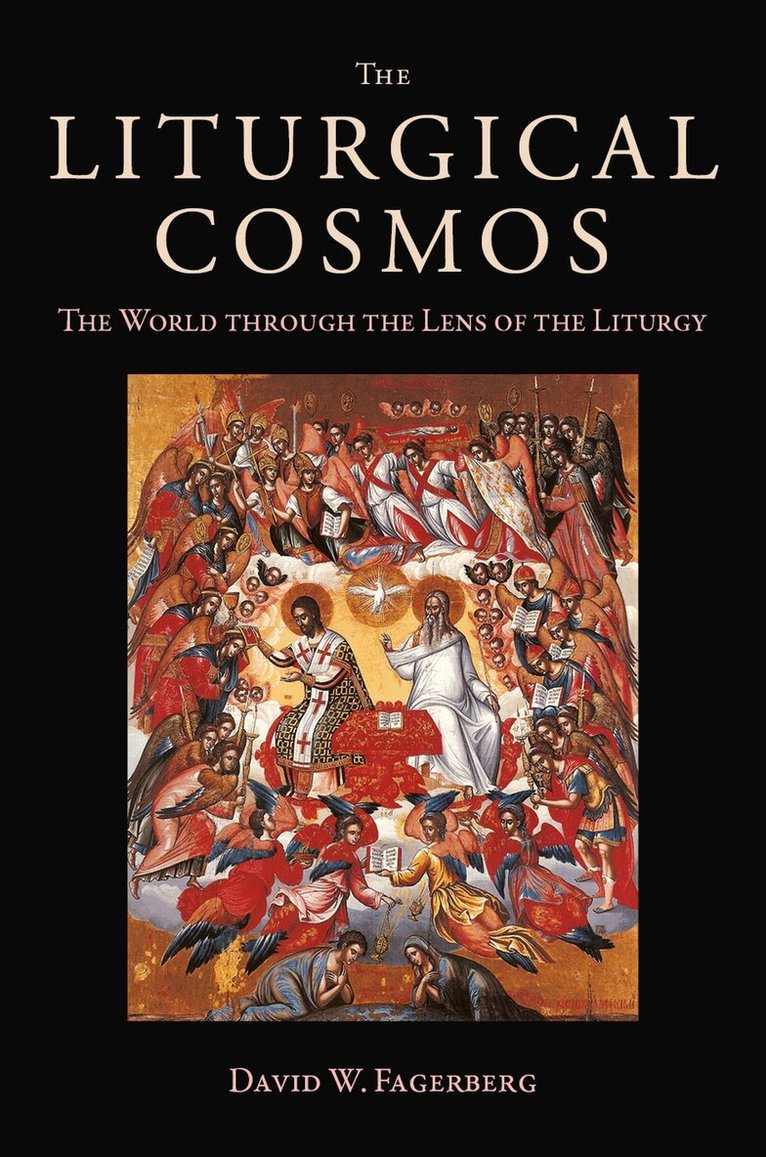
374 kr
Skickas inom 7-10 vardagar
The Church's liturgy is an appropriate object for academic study, but it is first and foremost the object of the faithful's participation in divine worship, the site of humanity's deification by the Trinity. The liturgy is thus not just something that we can look at, but, like a window, it is also something we can look from, viewing other matters of Christian doctrine and practice - indeed, the entire created world - through the lens of the liturgy.In this collection of essays representing nearly two decades of writing and reflecting on liturgical theology, David Fagerberg sets out to explore the liturgical cosmos, attending to how the lex orandi of the liturgy illuminates and shapes the lex credendi of the Church's faith and the lex vivendi of the Christian moral life. Addressing such topics as asceticism, beauty, Scripture, spirituality, sacrifice, and social renewal, The Liturgical Cosmos directs our gaze to the ways in which the abundant life that Christ came to offer - a life communicated sacramentally and celebrated cultically - is a life lived daily, and liturgically, as the Holy Spirit refreshes our world and conforms us to Christ, the image of the Father.
322 kr
Skickas inom 7-10 vardagar
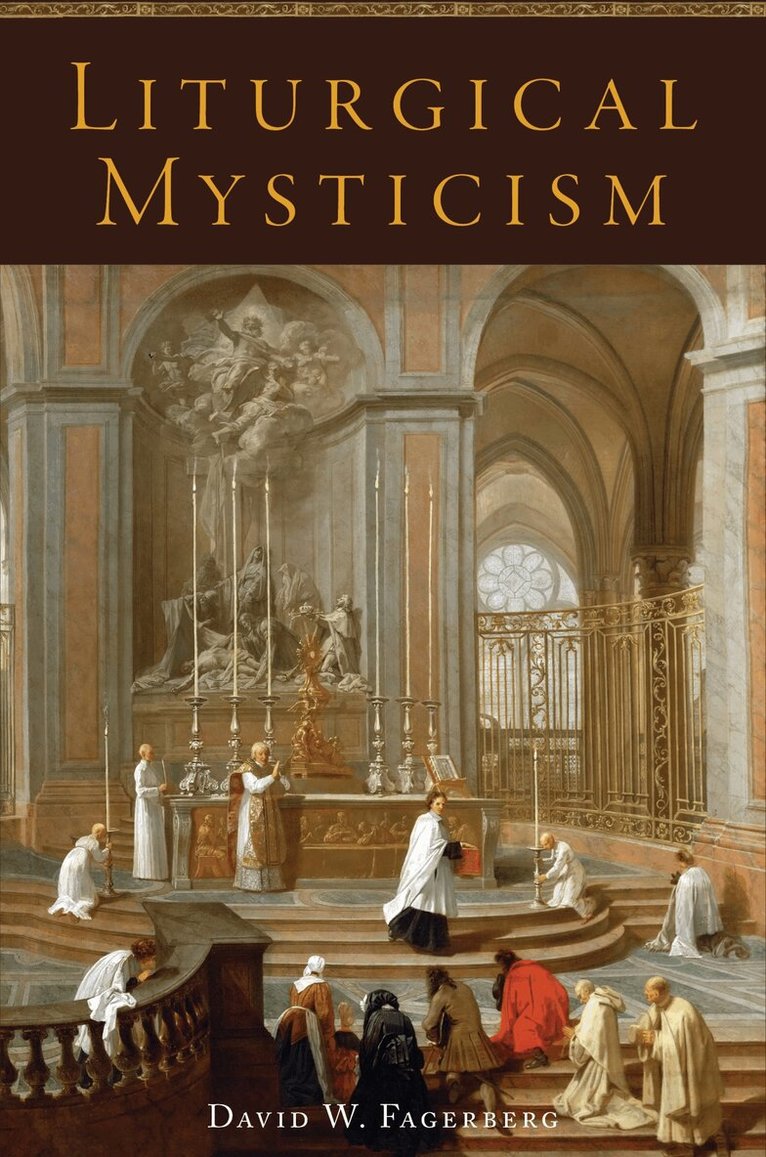
Some think that liturgy is formal, public, and for ordinary people, while mysticism is uncontrollable, private, and for extraordinary saints. Is there a connection between the two? In this volume, David Fagerberg proposes that mysticism is the normal crowning of the Christian life, and the Christian life is liturgical.We intuitively sense that liturgy and theology and mysticism have an affinity. Liturgical theology should reveal liturgy's mystical heart. Liturgical theology asks "What happens in liturgy?" and liturgical mysticism asks "What happens to us in liturgy?", and perfects our interior liturgy.In Liturgical Mysticism, Fagerberg directs the reader to look fixedly at Christ, who is the Mystery present in liturgy, and who bestows his resurrection power upon his adopted children.
177 kr
Skickas inom 5-8 vardagar